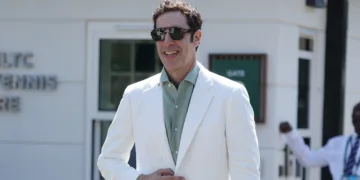

























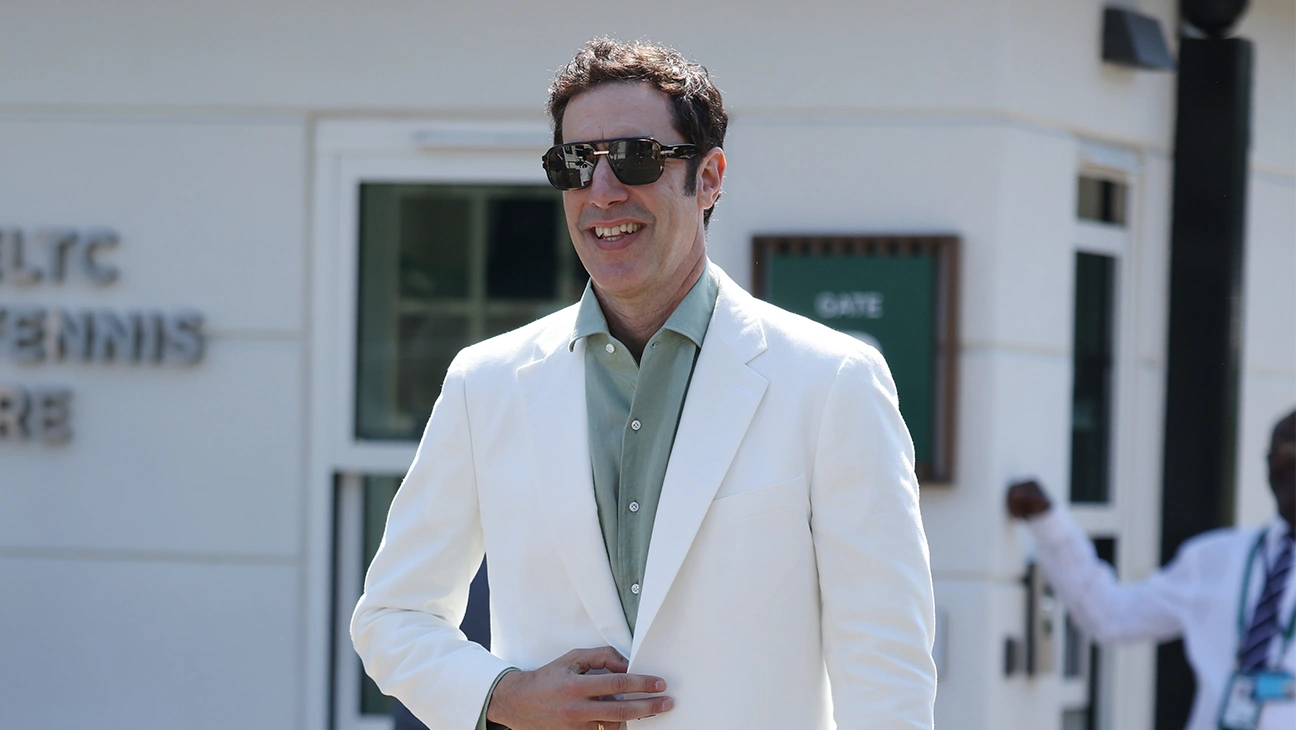

Sacha Baron Cohen brought his Ali G character out of retirement Sunday, appearing in full costume at the Wimbledon men’s singles final and posting a video to a newly created Instagram account dedicated to the character. In the clip, Ali G wanders the tournament grounds joking that tennis is a lesser cousin of ping pong while offering to sell attendees marijuana disguised as a nod to the sport traditionally played on grass courts.
The character declared himself back in the caption accompanying the post, framing his return as a way to liven up what he called a dull final. The stunt marks Ali G’s first public appearance in roughly two years and lands just days after multiple outlets confirmed that Cohen quietly wrapped production on a new feature film built around the character, more than two decades after “Ali G Indahouse” hit theaters in 2002.
Details on the new project remain scarce. Cohen shot the film in secret, reportedly across locations in Oxfordshire and the United States, mirroring the guerrilla production tactics he used for “Borat” and its 2020 sequel, both of which relied on unsuspecting real-world participants to generate their comedy. A representative for Cohen has declined to comment on the project, and no release date or title has surfaced.
Ali G first emerged in 1998 on Channel 4’s “The 11 O’Clock Show” before headlining “Da Ali G Show,” which ran three seasons and built an American following once it aired on HBO. The character built a reputation for luring prominent figures, including Donald Trump and Noam Chomsky, into interviews where his exaggerated slang and comic misunderstandings exposed their views and, at times, their prejudices.
Cohen, a three-time Oscar nominee, has spent recent years balancing dramatic work, including turns in “The Trial of the Chicago 7” and “Disclaimer,” with comedy, most recently starring in Netflix’s poorly reviewed but commercially successful “Ladies First.” Industry observers have noted that reviving a character built on ambushing unsuspecting subjects presents a different challenge in today’s media environment, where public figures are far more alert to hidden-camera setups than they were when Ali G first became a cultural fixture.