












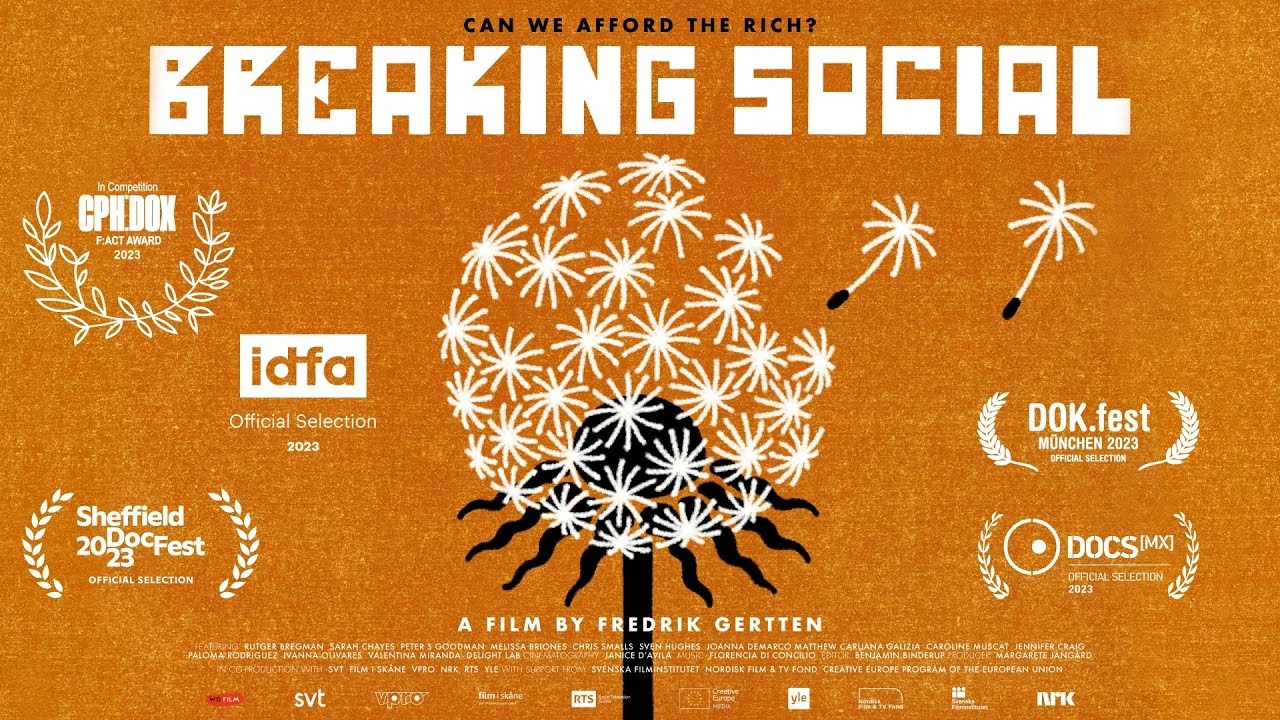

Fredrik Gertten builds Breaking Social around an alarming contradiction: democratic societies keep promising equal participation while their economies reward people wealthy enough to escape every shared obligation. The documentary moves through Malta, Chile, the United States, and the Netherlands, linking political corruption to labor exploitation, resource extraction, and a growing loss of public trust.
Dutch historian Rutger Bregman provides the film’s most accessible description of that crisis. Democracy, he argues, rests beneath its constitutions and procedures on a basic belief that every person matters. Once that trust disappears, the institutions remain standing, yet their authority becomes largely theatrical. It is a useful idea, and Gertten repeatedly tests it against communities where citizens follow the rules while corporations and political insiders appear free to rewrite them.
Bregman calls himself a “possibilist” rather than an optimist. The distinction suits the film. Optimism can wait for conditions to improve. Possibilism requires people to identify what can change and then organize around it.
Mapping the Extraction
Journalist Sarah Chayes gives Breaking Social its clearest analytical spine. Drawing on her work in Afghanistan, she explains corruption as a hierarchy rather than a collection of isolated bribes. Money passes upward from low-level officials to increasingly powerful figures, turning misconduct into a functioning system. Her surprise comes from recognizing how closely the United States fits the same model.
Gertten makes that argument visible during Chayes’ trip through West Virginia. The camera moves across scarred forests, abandoned buildings, and communities left behind by industries that extracted enormous value from the land. These images explain “extractivism” with greater force than a definition could. Resources leave. Profits leave. The damage stays.
The documentary finds a closely related landscape in Chile’s Valle Choapa, where mining operations consume water while local residents receive limited daily access. Ivanna Olivares Miranda describes people rationing a resource that surrounds an industry built beside them. Gertten cuts between dry ground, protest marches, and mining infrastructure, showing environmental damage as a political choice rather than an unfortunate side effect.
This is where the documentary’s global structure works best. Placing Chile beside West Virginia reveals a shared visual grammar: damaged land, depleted towns, and residents asked to accept sacrifice as economic necessity. The editing turns geography into argument.
Citizenship for Sale
The Maltese section carries the film’s darkest material. Investigative journalist Daphne Caruana Galizia was murdered in 2017 after exposing corruption involving political and financial elites. Her son Matthew and other journalists continue tracing the networks she investigated, including Malta’s “golden passport” scheme.
Gertten presents the scheme as a corruption of citizenship itself. Wealthy buyers gain passports, mobility, and the freedom to relocate whenever laws or taxes become inconvenient. Citizenship becomes a product stripped of civic responsibility. Ordinary people remain tied to public systems. The rich shop for exits.
The filmmakers attempt to map links among government officials, corporate interests, political consultants, and international money. The complexity is part of the story, since these arrangements survive through layers of paperwork and intermediaries. Still, the film moves through the details too quickly. Names and relationships arrive before the viewer has time to place them, and some interviewees appear before captions identify their role or location.
The assassination of Caruana Galizia gives this material a human cost that the documentary cannot fully explore within its crowded design. Her story could sustain an entire film. Here, it becomes one urgent thread among many.
Resistance Across Borders
Gertten is strongest when he observes activism as practical work rather than inspirational spectacle. Teacher Jennifer Craig helps organize educators seeking adequate pay. Amazon workers in New York pursue union protection and laugh at Jeff Bezos’s space flight, a sharp response to a system where billionaire adventure receives global attention while employees fight for basic workplace conditions.
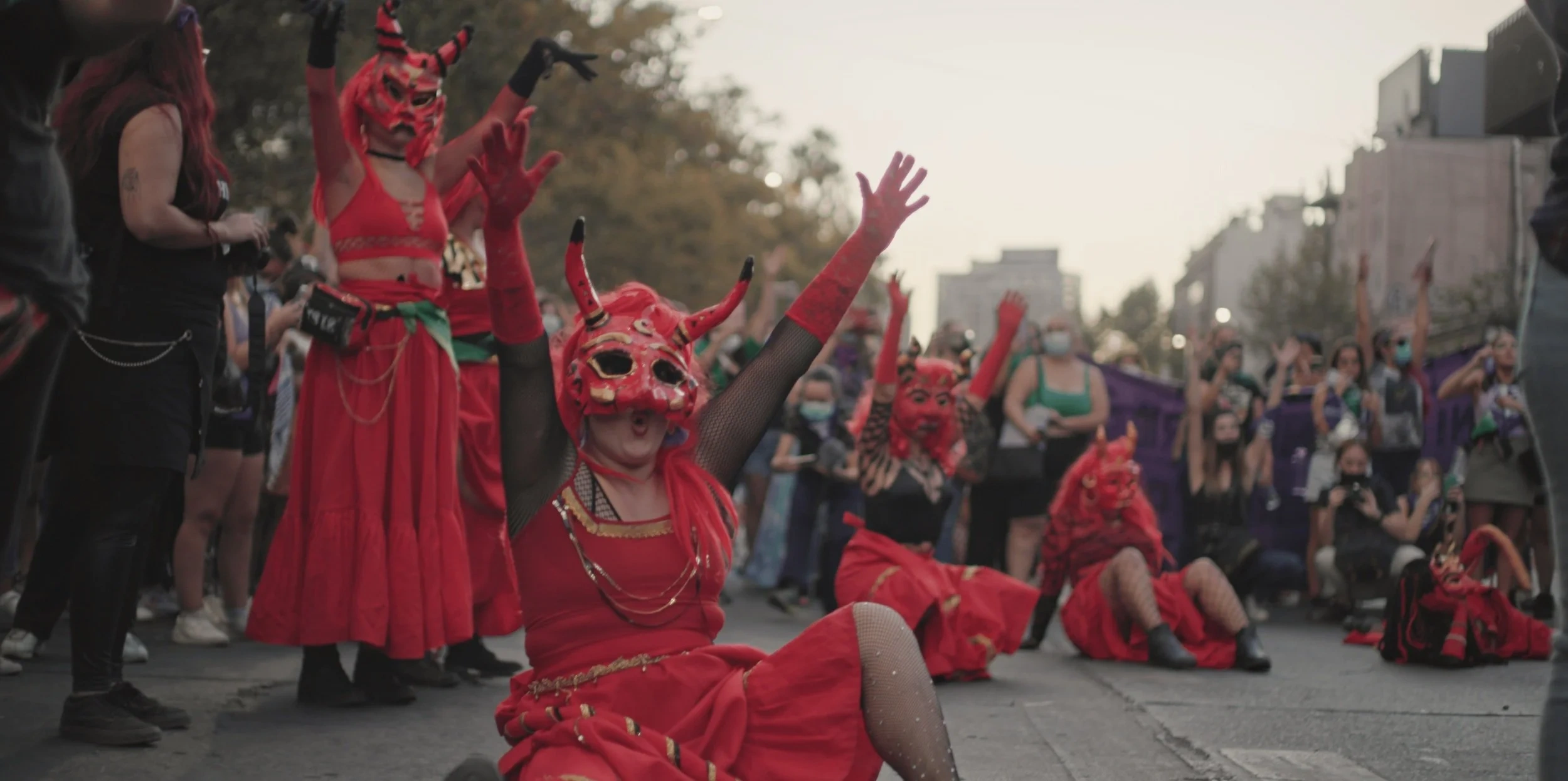
In Chile, protests that began with students opposing a transport fare increase spread to workers, mothers, artists, and previously disengaged citizens. Street performers and dancers transform public spaces into places of political expression. Valentina Miranda later enters the Constitutional Convention at 21, giving the film a concrete example of protest reaching formal power.
These sequences clarify Gertten’s faith in collective action. None of the activists is presented as a lone savior. Their influence comes from organization, repetition, and shared pressure. The film understands that political change usually looks less like one heroic speech and closer to many people attending another meeting.
Bregman’s “survival of the friendliest” idea fits these scenes better than some of his lighter reflections on cycling or blinking. Cooperation becomes a survival method when institutions cease protecting the people who sustain them.
An Argument Fighting Its Edit
Breaking Social contains enough material for several focused documentaries, and its editing rarely allows one story to gather full momentum. The film jumps from Maltese corruption to Chilean drought, American labor disputes, Dutch cycling, West Virginian extraction, and Bregman’s philosophical commentary. Each connection makes intellectual sense. The dramatic rhythm remains unsettled.
Chayes and Bregman are meant to provide continuity, yet returning to them can interrupt stronger location-based sequences. Chayes’ commentary is sometimes paired with routine footage of her making coffee, while Bregman’s amiable observations soften transitions that need sharper definition. Slow-motion dancing at the beginning and end creates energy, though it cannot supply the missing structure between those points.
The final stretch captures the film’s central difficulty. Valentina Miranda’s election generates a burst of celebration, then references to constitutional uncertainty, violence, and disappeared women disturb that sense of progress. Political reality rarely offers a clean ending, but documentary form still needs a deliberate stopping point.
Gertten’s case is persuasive because the locations keep producing the same evidence: wealth rises, responsibility disappears, and communities inherit the cost. His film has found the pattern. It simply keeps adding examples after the pattern is already clear.
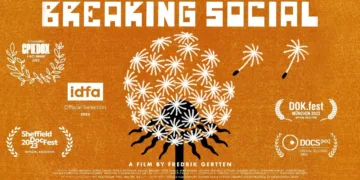
Breaking Social is a documentary feature film that premiered at the CPH:DOX film festival on March 16, 2023. The film investigates patterns of systemic corruption, societal inequality, and how grassroots movements fight back against global injustices. Viewers can watch the film through independent streaming services and digital rental platforms.
Full Credits
Title: Breaking Social
Distributor: Kino Lorber
Release date: March 16, 2023
Running time: 92 minutes
Director: Fredrik Gertten
Writers: Fredrik Gertten
Producers and Executive Producers: Margarete Jangård, Ina Holmqvist
Cast: Rutger Bregman, Sarah Chayes, Jayati Ghosh, Rebecca Solnit, George Monbiot, Janine Di Giovanni, Mariana Mazzucato
Director of Photography (Cinematographer): Benjamin Bernhard, Joseph Mangat
Editors: Michal Leszczylowski, Essie Marin
Composer: Jon Ekstrand
The Review
Breaking Social
Breaking Social assembles a persuasive case that corruption, labor exploitation, and environmental damage share the same economic machinery. Fredrik Gertten’s cross-cutting between Chile, Malta, and the United States creates revealing visual parallels, especially when drought-stricken communities and abandoned mining towns appear side by side. The editing keeps interrupting stories before they gather full emotional force, and several interviewees deserved entire films of their own. Sarah Chayes provides the clearest analysis, while Rutger Bregman gives the documentary its guarded faith in collective action.
PROS
- Sarah Chayes’ lucid analysis
- Powerful global parallels
- Memorable activist voices
- Strong environmental imagery
- Hope grounded in collective action
CONS
- Overcrowded narrative structure
- Abrupt geographic transitions
- Uneven final movement
- Underdeveloped individual stories