





















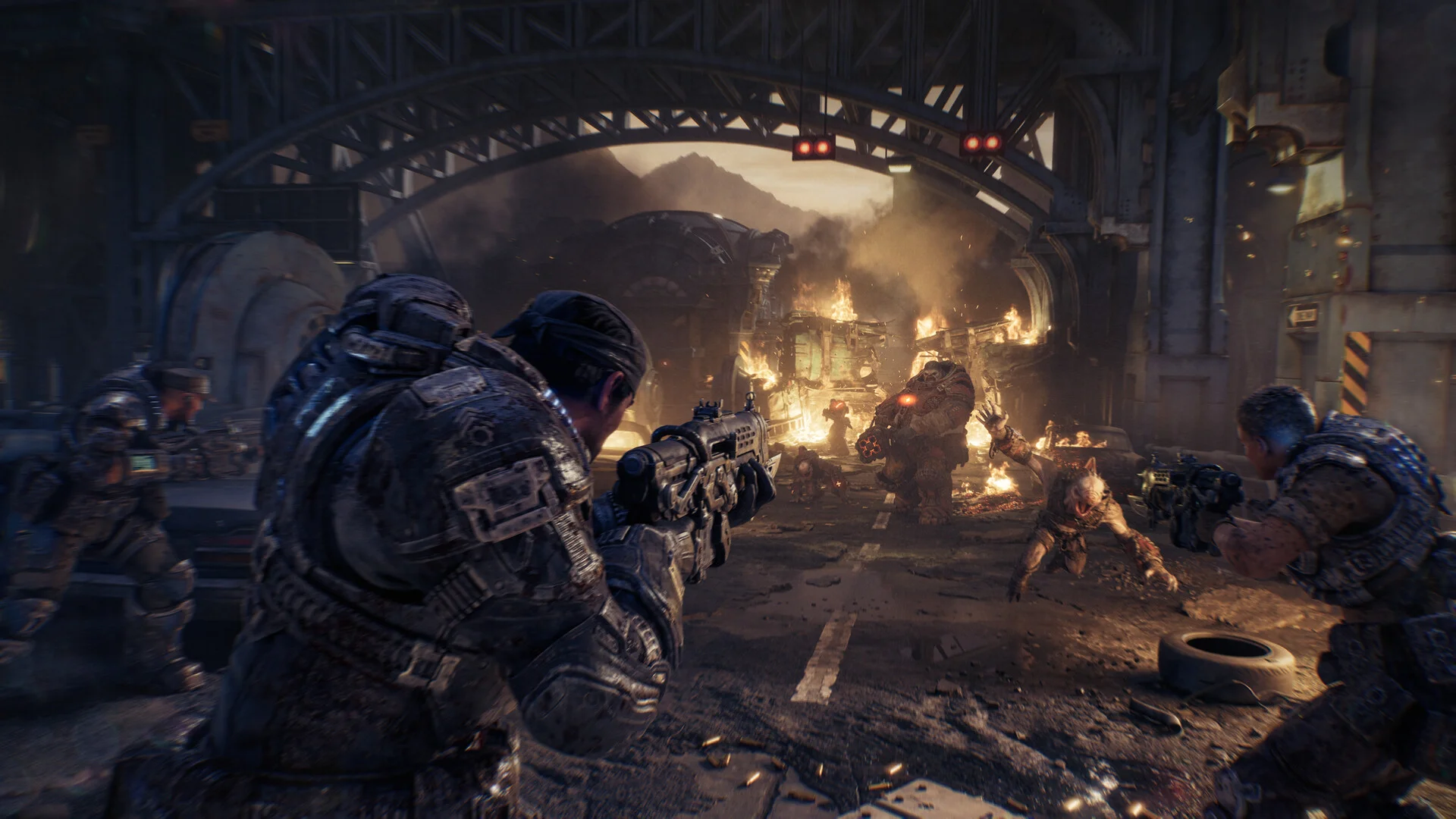
Leaving cover in Gears of War: E-Day can be a planned attack with several moving parts. Activate an adrenaline Injector to reduce incoming damage, sprint toward a Locust, slide into close range, and fire the Gnasher on the way through. Each action supports the next: temporary protection makes the approach less punishing, movement shortens exposure, and the shotgun rewards closing the distance. Jumping gaps, climbing objects, and moving smoothly around cover expand that calculation across the arena. The useful change is the number of positions from which an attack becomes practical.
Equipment customization gives those routes different purposes. Fit the initially unscoped Breechshot with a scope and it becomes better suited to distant targets; modify Pulse so highlighted enemies take extra damage from all sources and identifying a threat becomes useful to the whole squad.
These are readable changes to familiar tasks. Weapon Depots let players equip discovered gear and install modifications, turning exploration into preparation for later encounters. Cover, active reloads, and the weapons’ heavy impact remain essential, but the player has greater influence over the distance and tempo of a fight.
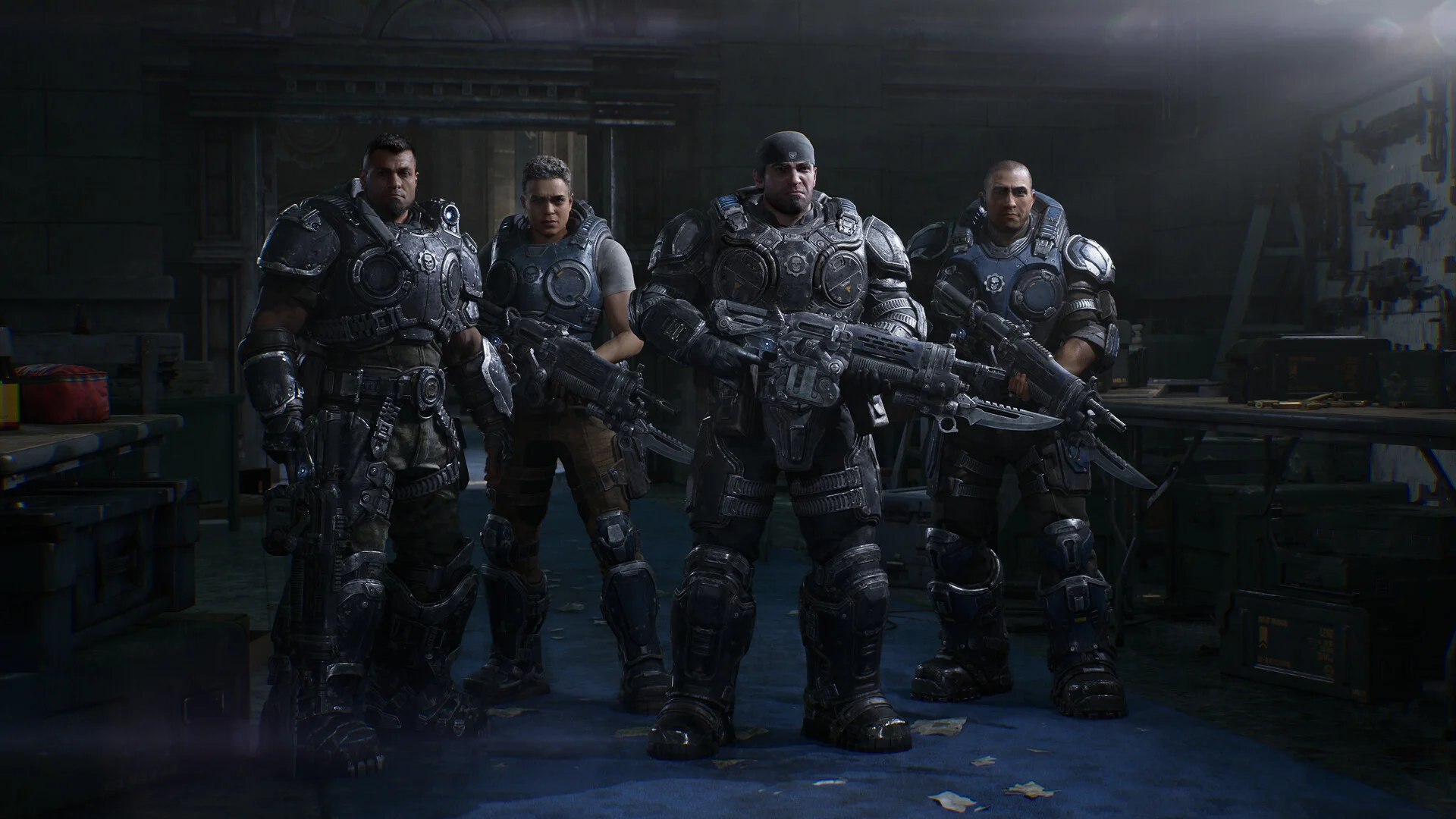
That competence creates an interesting tension with the prequel’s setting. Young Marcus Fenix and Dom Santiago are in Kalona after the Pendulum Wars, remembering Carlos, Dom’s brother and Marcus’s friend. Dom wants civilian life with Maria and their children. Then holes tear through the streets and Wretches emerge, forcing the pair to improvise weapons before they can organize a response.
The interruption gives the invasion an immediate human cost: peace has barely become imaginable before it disappears. Their military experience, however, quickly supplies a familiar way of handling the catastrophe. The combat teaches players how to master creatures the characters have only just encountered, pulling the experience toward capable resistance rather than prolonged helplessness.
Kalona’s changing geography sustains the disaster beyond that initial shock. Linear action sequences give way to larger areas explored on foot, with roadblocks and chokepoints showing other Gears attempting to contain the invasion. Later visits reveal monuments or buildings replaced by emergence holes and rubble.
Fire spreads, and recognizable districts become difficult to identify. This is effective environmental storytelling because familiarity supplies the comparison. A damaged street means something different after the player has learned its earlier arrangement. Lighting, destruction, and dense urban detail support the impression of a functioning place being dismantled, rather than a succession of unrelated shooting arenas.
Optional rescues bring players closer to that process, though their consequences are limited. Helping trapped civilians or another COG unit means stepping away from the main objective, fighting through a local crisis, and potentially collecting equipment modifications. The encounters can be demanding, and the rewards feed directly into the combat system.
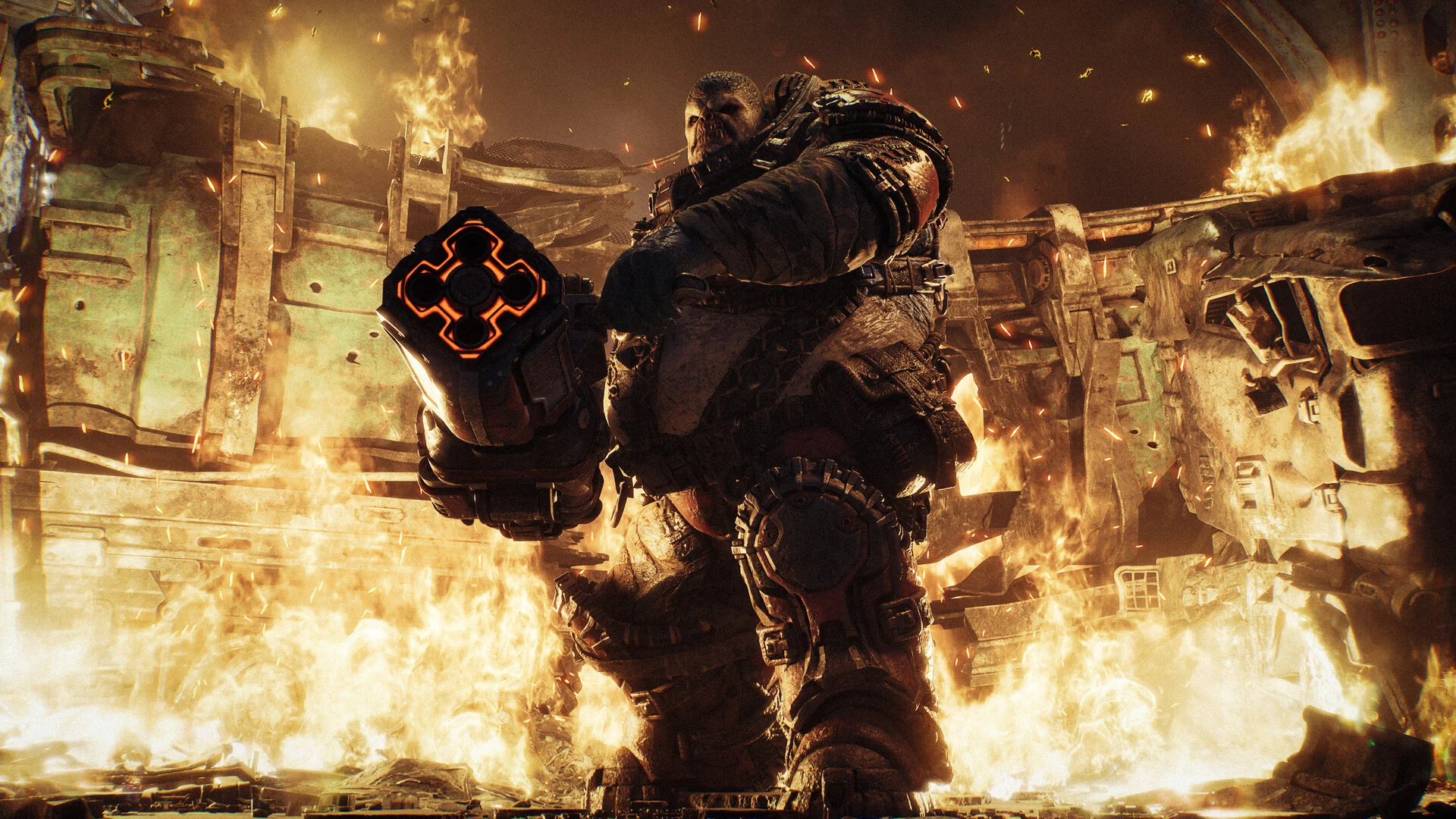
Saving people offers little lasting narrative acknowledgment, however, and some civilians remain unnamed. The distinction matters: these missions provide worthwhile action without making the campaign particularly responsive to the lives preserved. A linear story can acknowledge assistance without developing an elaborate branching plot. Here, equipment often gives the clearest account of what the intervention changed.
The detours also create a pacing tradeoff that cannot be settled by calling exploration unnecessary. Walking through Kalona exposes the invasion’s dispersed effects and lets players discover resistance outside Marcus’s immediate assignment. It interrupts the urgency of the main route at the same time.
Hard Cases containing modifications reinforce the incentive to search, so the campaign repeatedly offers a choice between maintaining momentum and improving a loadout. That choice suits the equipment game better than the emergency unfolding around it. The slower passages earn their place through the city’s transformation, but rescue missions need stronger personal follow-through to carry equivalent dramatic weight.
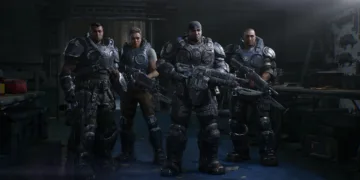
Cooperation supplies another kind of follow-through. Lucas Reyes and Mags Carter complete Bravo Squad, bringing communications expertise and local knowledge to Marcus and Dom’s response. Four-player online play turns their collective survival into a practical arrangement: different weapons and abilities allow players to cover approaches, concentrate damage, and assist someone whose attack has gone wrong. The opening’s concern with friendship finds a playable expression in that dependence. Two-player split-screen preserves the same opportunity locally. With another person watching the fight, an aggressive push can become a shared decision instead of an individual gamble.
AI assistance makes that relationship less dependable in solo play. Companions can fail to intervene while a Rager pins the player, precisely when their presence ought to matter most. This is a specific failure of support, and its importance exceeds the damage teammates contribute during an ordinary exchange. Expanded movement encourages exposure; unreliable rescue makes the cost of that exposure harder to anticipate.
Technical performance deserves similar qualification. PC traversal stutter under Dynamic Multi Frame Generation, particularly in Act 4’s refinery, interrupts the visual continuity. Smooth split-screen performance under different conditions does not establish consistency across hardware and settings.
Horde Siege extends cooperation across a larger structure. Twelve players form three squads of four, pursuing objectives through broad areas of Kalona before their activities can converge around events or powerful enemies. Energy funds defenses, ammunition, and preparation between engagements, while Raven extraction gives the session a destination beyond surviving another wave.
The resulting decisions operate at several scales. Players must sustain their immediate squad, spend resources for the next encounter, and respond when another group’s problem becomes their own. Separate objectives make convergence valuable because help arrives from people who were doing something elsewhere.
Travel between those objectives is the mode’s corresponding weakness. Space permits separate squads to operate, but moving through it can interrupt the combat without adding an equally useful decision. Short sorties and longer objective chains offer different commitments, yet both depend on the relationship between preparation, movement, and resistance. Horde Siege works best when its geography changes who needs assistance and where resources should go. Its expanded scale has a clear cooperative purpose, even when the connecting stretches soften the pressure.
Versus deliberately removes some of the campaign’s customization. Four-player teams begin with identical loadouts, modifications are absent, and Power Weapons must be contested on the map. That shared starting point gives movement a different role: climbing routes, vertical positions, and familiar wall-bouncing become ways to secure an advantage that equipment selection cannot provide beforehand. Crucible makes the team dependency especially explicit. Carrying the Power Core prevents a player from fighting, while scoring requires holding it inside an area that shifts and contracts. Teammates must create space for someone who cannot independently defend it.
Bot matches make learning that competitive system less dependent on the available human opposition. Adjustable difficulty permits practice, and XP and achievement credit keep those sessions connected to progression. Beginners can learn routes and objective demands without abandoning their account’s progress. The same provision leaves a usable path into Versus for players arriving after its busiest period, when finding an appropriate human match may become a different challenge from winning one.
The Review
Gears of War: E-Day
E-Day’s movement and equipment systems make aggression a considered choice, while cooperative play gives its brotherhood practical meaning. Kalona’s destruction makes exploration worthwhile, but civilian rescues receive little lasting acknowledgment. Unreliable AI support and PC traversal stutter weaken the campaign’s execution. Horde Siege expands shared responsibility, and Crucible turns protecting a teammate into an explicit objective. The strongest design work lies in how players fight together; the story is less responsive to the people they save.
PROS
- Expanded movement creates meaningful combat options.
- Equipment modifications support distinct tactical approaches.
- Kalona’s changing geography makes destruction tangible.
- Cooperative modes give teamwork concrete responsibilities.
- Bot matches preserve access to Versus progression.
CONS
- Civilian rescues receive limited narrative acknowledgment.
- AI companions can fail during critical rescue situations.
- Exploration and objective travel sometimes interrupt momentum.
- PC traversal stutter disrupts visual continuity.