




























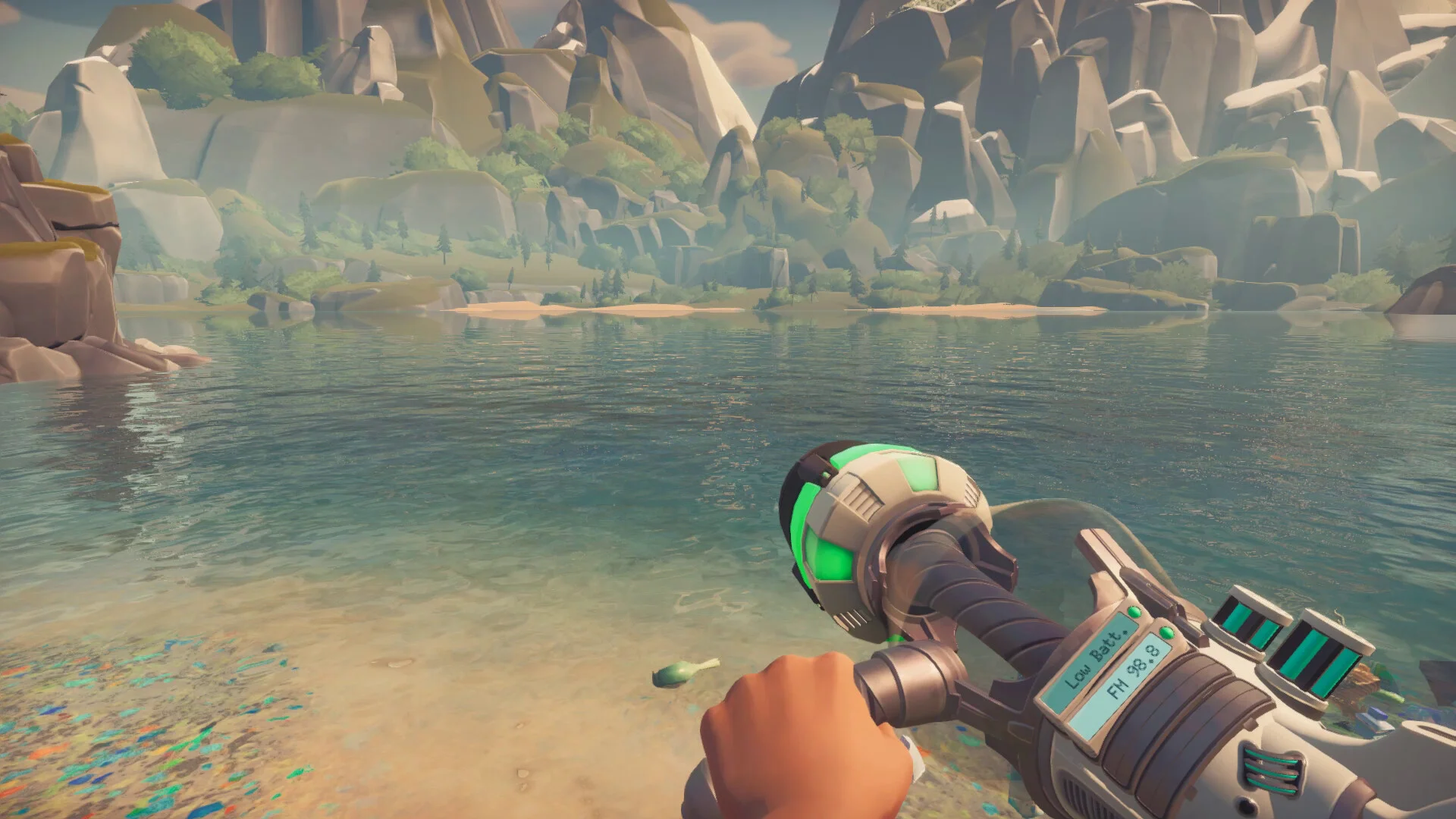

The returning wildlife is the reward I care about in Clean Up Earth. Clearing rubbish lets plants regrow and animals repopulate the environment, so the satisfaction keeps moving beyond the patch you have just emptied. You make room, and something living takes it. Magic Pockets gives the familiar pleasure of tidying a gentle sense of responsibility here. Watching the landscape recover supplies a reason to care about the next piece of plastic without needing a character to explain why it matters.
Repairing a bridge gives that care a practical direction. Waste collected with your Terra Cleaner goes to recycling stations, earning coins that can fund improvements or resources such as wood and rope. Those resources let you restore structures, including bridges and ladders that open routes through the map. The place you are helping becomes a place you can explore. This cycle is quietly persuasive because removal leads to construction: progress includes something made usable again, alongside everything taken away.
Your role as an eco-engineer supplies enough narrative framing for those actions. Different nozzles handle different categories of rubbish, from discarded clothes and furniture to radioactive waste. Colleague tips and a flora-and-fauna codex give the cleanup an informational accompaniment, while uncovered artifacts suggest histories beneath the mess.
Area 51 and the Bermuda Triangle widen the range of places to investigate. These discoveries offer a little curiosity between tasks, though the emotional attachment rests chiefly on the environment changing under your attention. A complex plot would have a different job to do; its absence does not make the recovery feel empty.
The presentation helps you settle into that attention. Lightly painted environments, quiet music, wind, and birdsong leave space for the routine instead of constantly asking you to admire it. The simplified scenery makes the transition from clutter to regrowth easy to register, but sparse detail gives individual locations limited character. It is easier to appreciate that a place has recovered than to become attached to its particular appearance. The gentle soundscape supports the immediate calm without supplying much additional personality to carry through a long session.
There is room for a game that asks so little of your concentration. The appeal familiar from PowerWash Simulator and House Flipper includes doing a comprehensible job while your thoughts loosen their grip on everything else. Clean Up Earth earns some of that ease through its straightforward collection-and-recycling cycle. Repeated actions can be comforting when their consequences remain satisfying. The difficulty arrives when the game increases the quantity of work much faster than it develops your relationship with that work.
Exploration unlocks nozzles and improvements, and recycling coins pay for upgrades at stations. Better battery capacity and the ability to collect heavier waste offer welcome relief from the tool’s initial limitations. Yet the same nozzle and upgrade types recur across maps, leaving progression with little capacity to surprise. You get better equipped to perform an increasingly familiar task. That can sustain a short, undemanding session, but it gives the next location a weaker invitation: curiosity about what you will learn gives way to an estimate of how much rubbish awaits.
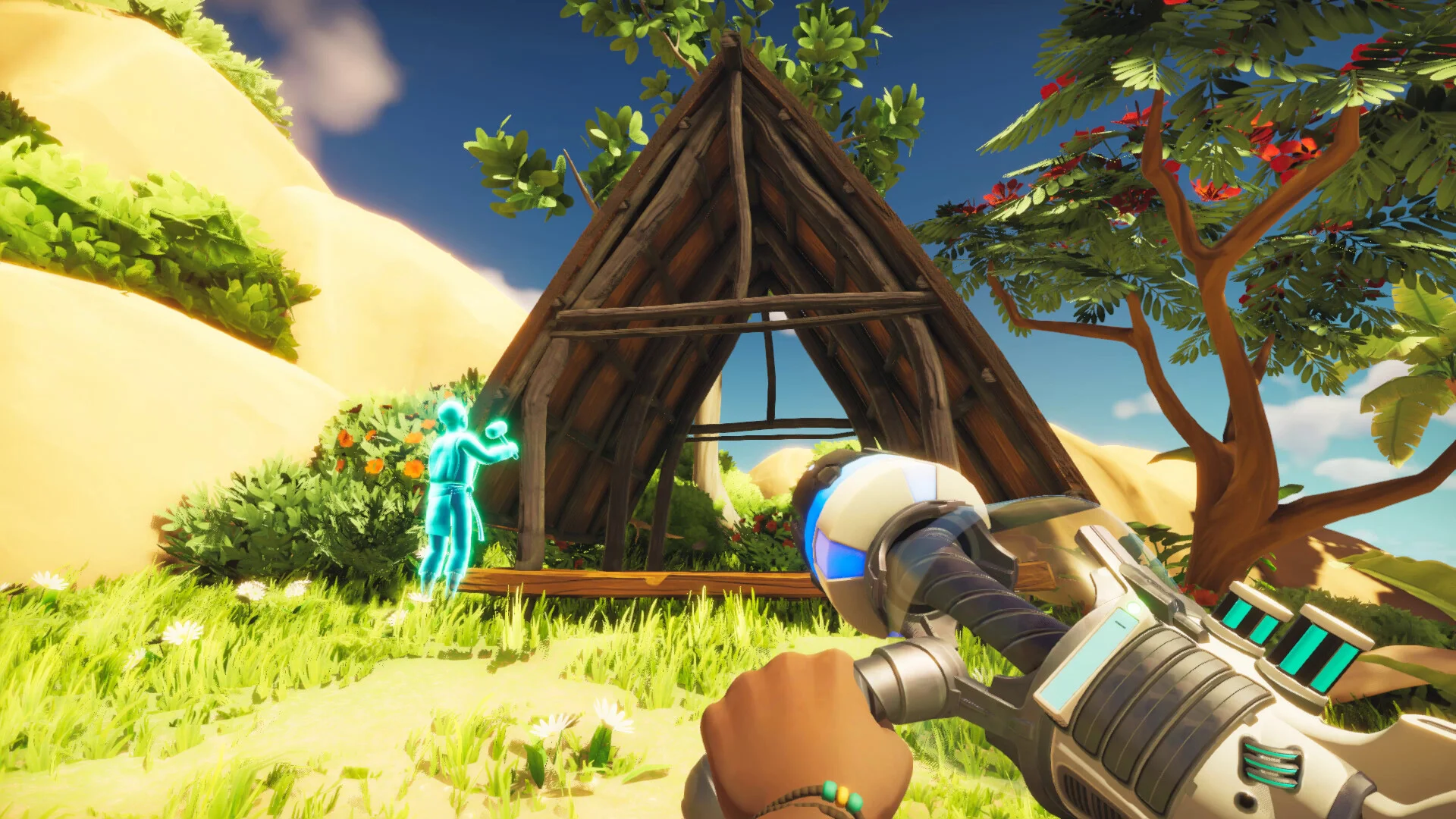
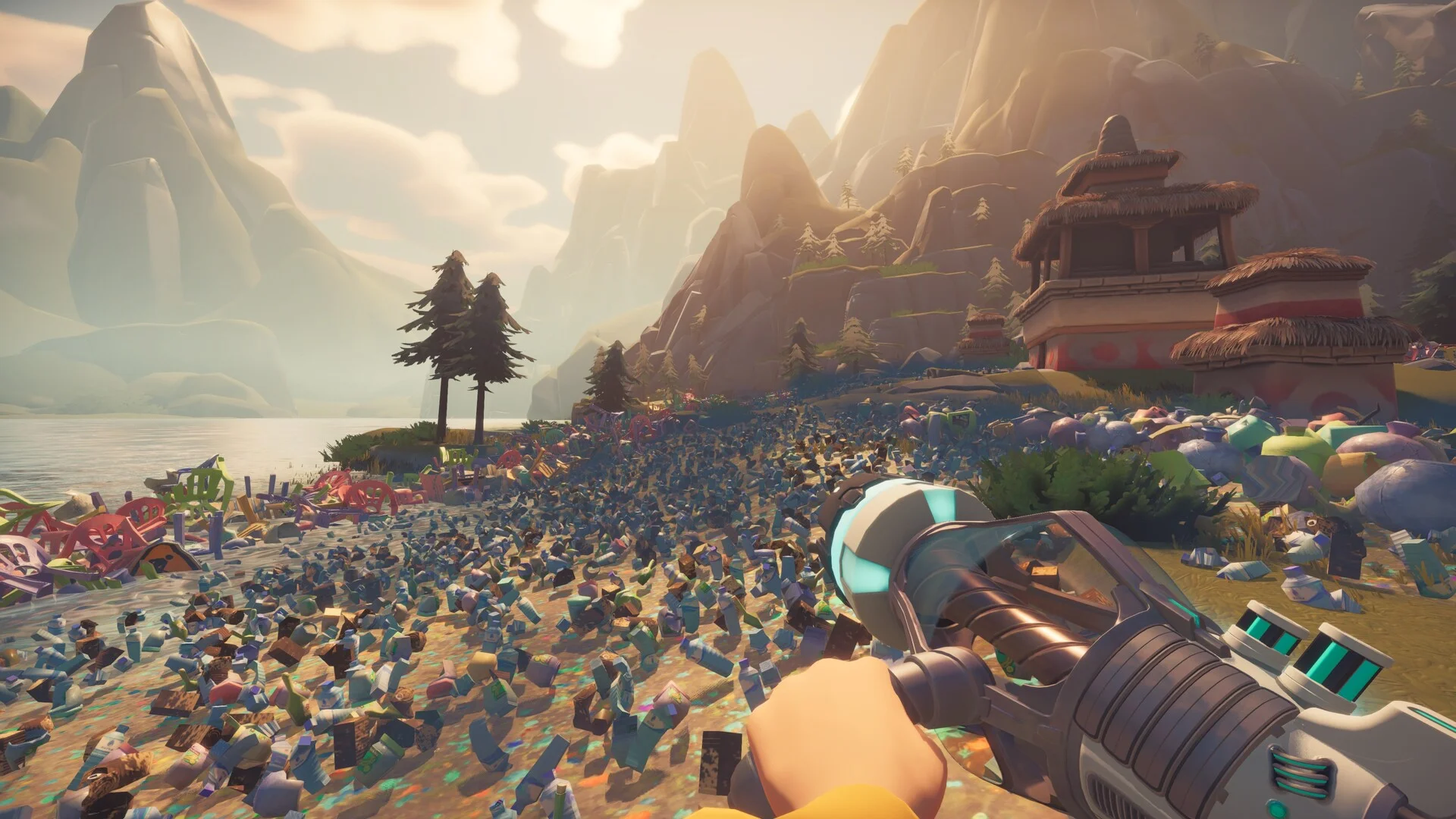
Large later maps sharpen the problem because clearing one alone can take several hours. Plants and animals still provide an appealing response, but the stretches of collection surrounding that response grow heavy. The game depends on your desire to finish sustaining the activity after discovery has thinned out. That is a precarious arrangement for something built around relaxation. A larger environment can give you extra time in a pleasant routine; here, the repeated tools and actions too often make its size feel like an extension of the assignment.
Early solo progression introduces a different kind of strain. The first three levels serve as tutorials, and levels unlock sequentially, tying access to completion. Missing a remaining piece of rubbish, or reaching an item your current tool cannot collect, can leave you unable to move on. A waste scanner offers some assistance, yet the search for a final piece can still leave progress stalled. The emotional change is sharp: you may still want to play, just somewhere else, and the game keeps you on the unfinished task. A calm activity becomes a condition you must satisfy before receiving another environment.
Co-op offers a meaningful change in pace. Standard sessions support up to eight players, while larger shared cleanup zones accommodate up to 25. Dividing an extensive map among people reduces completion time and lets recovery accumulate faster. That matters because it addresses the long stretches in which solo progress feels laborious. Company can give the routine a social purpose, too. The pleasure of helping restore a place has someone else to share it with, even as the nozzles and collection tasks remain substantially the same.
There is an unusual external purpose attached to that shared work. Players can represent a partner environmental organization, and community progress during large online sessions can trigger micro-donations to environmental initiatives without additional purchases.
The feature gives collective effort a connection beyond the recovering landscape on screen. Its significance needs proportion: without amounts or payment details, it cannot establish the scale of the project’s environmental impact. It can still provide a personal reason to participate, especially for players already drawn to the premise of practical care.
That reason makes the distinction between wanting to help and enjoying the work particularly important. Community progress can make a familiar task worth doing for someone who has grown tired of doing it. Sharing the workload reduces the time spent with the same tools; the donation feature changes what that person may consider the time to be worth.
The Review
Clean Up Earth
Watching plants regrow and wildlife return gives Clean Up Earth a warmth worth protecting. Recycling waste into repaired routes makes that recovery feel like your own work, and sharing the cleanup helps its quiet pleasures last. Yet familiar upgrades, sprawling solo maps, and completion gates steadily wear down the relaxation. Environmental donations give participation an extra purpose, but wanting to help and wanting to keep playing remain separate feelings. There is a welcoming communal pastime here, with too little discovery to sustain the solitary hours.
PROS
- Returning wildlife and regrowth make cleanup satisfying.
- Recycling and repairs connect care with exploration.
- Co-op eases the workload of large maps.
- Community progress can support environmental initiatives.
CONS
- Repeated tools and upgrades offer little fresh discovery.
- Large solo maps stretch the routine into hours of work.
- Completion gates can trap progression behind missing rubbish.
- Sparse scenery gives locations limited personality.