























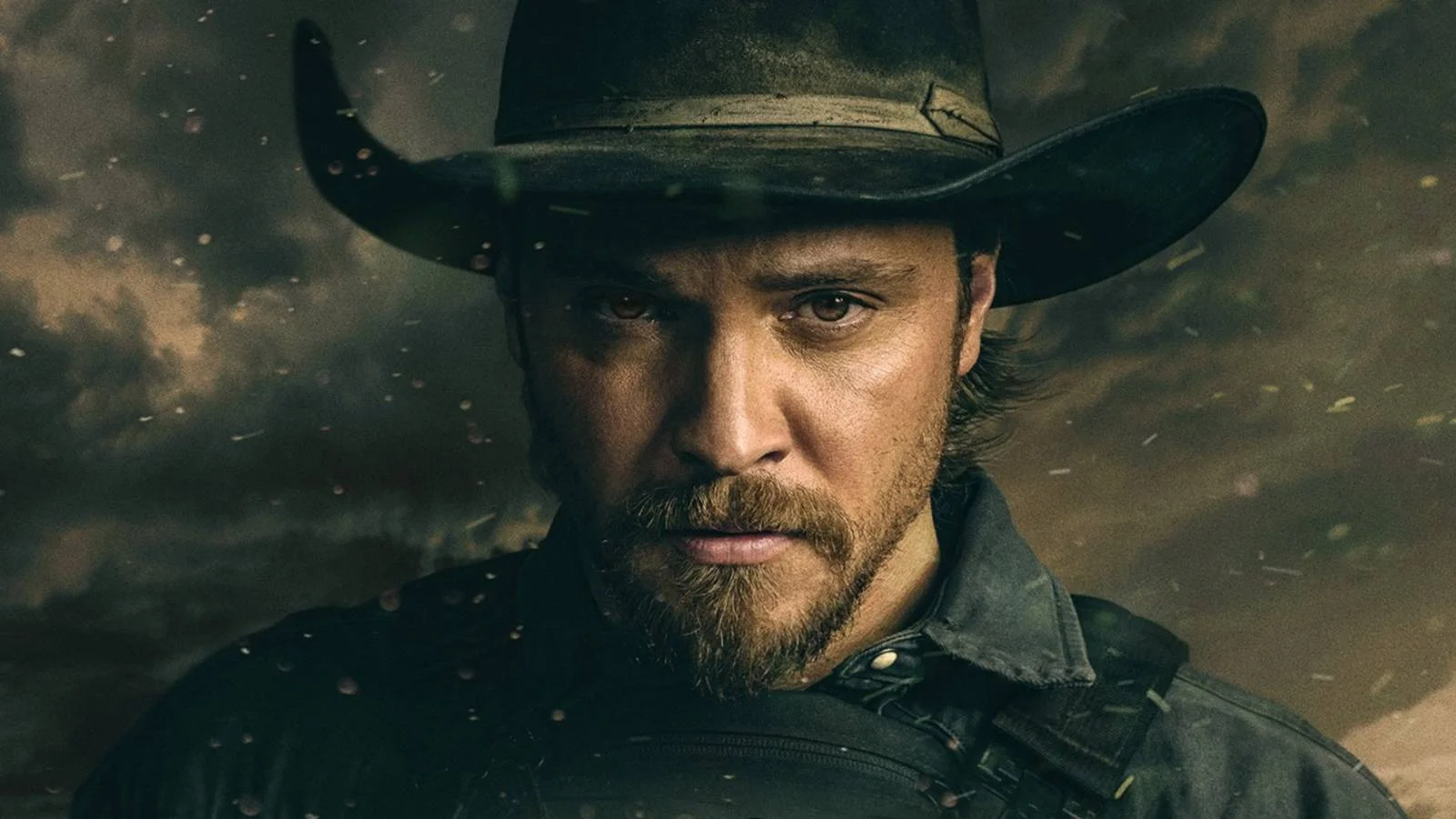

Kayce Dutton has a son to rescue, a heavily armed enemy to confront, and colleagues whose actual job involves handling situations like this. He elects to keep the colleagues uninformed. That decision supplies the Season 2 premiere of Marshals, “All Hat No Cattle,” with its most useful complication: while Kayce attempts to retrieve Tate through a private exchange, the rest of the cast must first discover that they have a rescue operation to perform. Professional backup apparently requires an invitation.
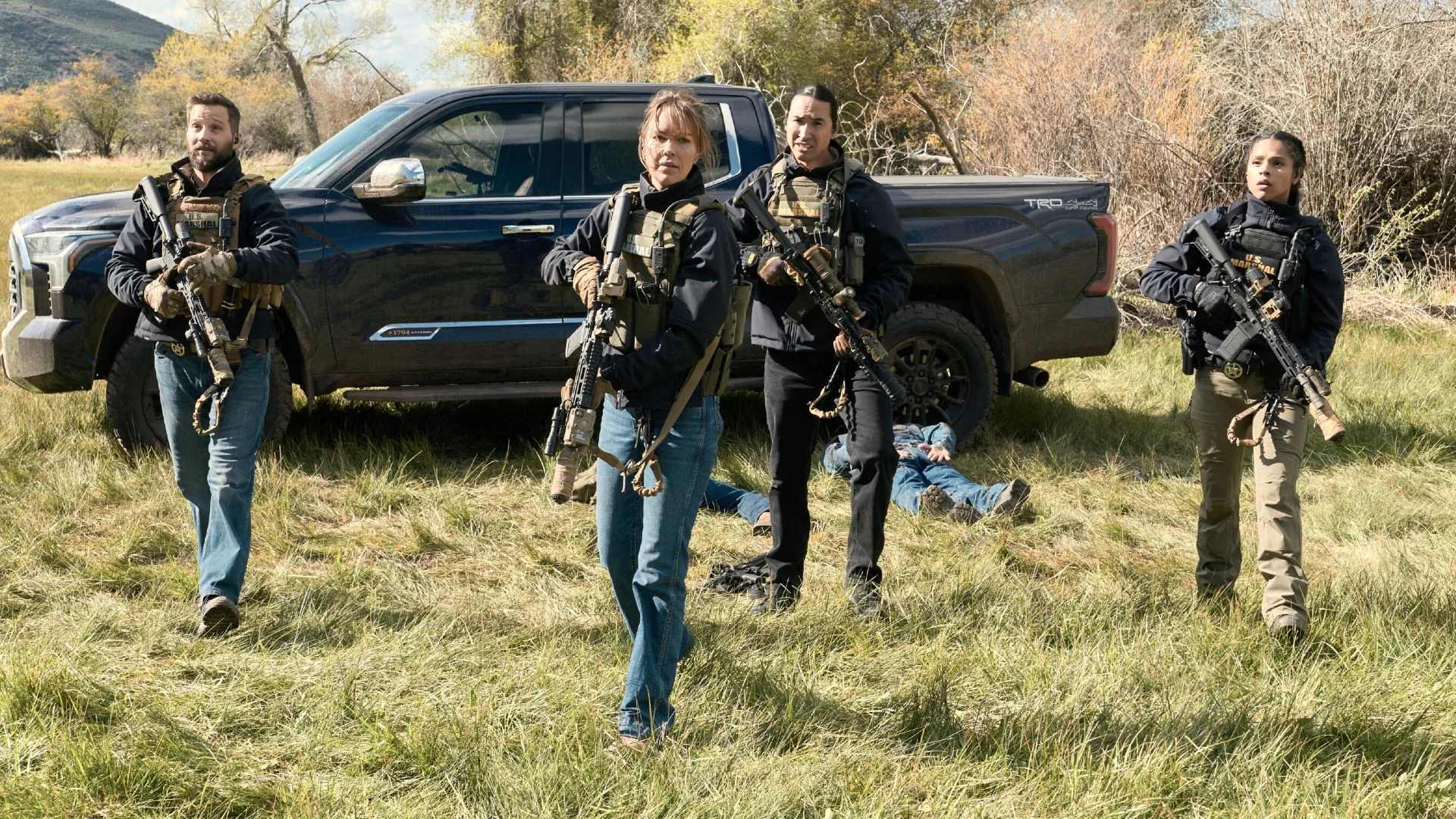
Andrea Cruz’s interrupted departure gives that second line of action a credible starting point. She notices Kayce’s anxious, guarded behavior when she visits to say goodbye, and her concern keeps her from leaving for Washington. The team’s discovery of Tom Weaver’s Ponzi scheme then connects the threat to East Camp with a financial motive. Their eventual helicopter arrival is certainly punctual, but the episode has supplied investigative work before delivering the cavalry. Kayce’s secrecy creates something for his colleagues to solve, allowing them to earn their place in a story he would happily monopolize.
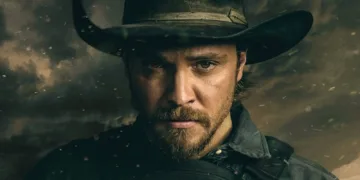
This arrangement suits a Yellowstone offshoot still working out how much Dutton trouble a weekly procedural can accommodate. Kayce, played by Luke Grimes, carries the history of family violence and the loss of Monica into his new life with the Montana-based Marshals. Yet the premiere gives his colleagues a practical function within that history. They cannot prevent his impulsive choices; they can follow the evidence those choices leave behind. Across the first three episodes, the series looks increasingly comfortable letting its ensemble participate in Kayce’s life through the work, rather than standing nearby while he suffers.
The premiere also resists making his recklessness synonymous with stupidity. Once Weaver’s attorney, Stan Cobb, threatens Tate, Kayce agrees to surrender East Camp, demands proof that his son is safe, then attacks after seeing him on a video call. Later, he gives Dolly Weaver a concealed gun for their exchange at her father’s Wyoming ranch. Trusting her allegiance is a considerable gamble, but leaving the first firing position unloaded means he has anticipated betrayal. He can prepare for the weapon changing hands while remaining dangerously optimistic about everything surrounding it. Tactical intelligence and good judgment are evidently separate qualifications.
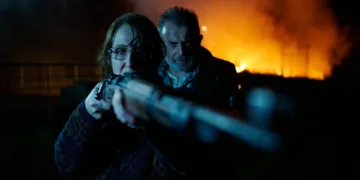
The action benefits from having physical territory to work with. Tate’s attempted drowning puts the river directly into the rescue, while the helicopter brings the team into a confrontation spread across open land. Weaver’s escape ends against a boulder and down a hillside.
These features give the climax scale through obstacles and routes, with the landscape participating in the danger instead of simply supplying attractive scenery. The episode moves from coercion inside Kayce’s home to an exchange on hostile ground and then to a rescue with several simultaneous threats. Its energy comes from enlarging the problem.
Dolly’s part in that enlargement is where the writing becomes less satisfying. Ellyn Jameson’s character initially appears horrified by her father’s methods and helps Kayce locate Tate. Kayce suspects she has been used to entrap him, threatens her, then makes her essential to his escape plan.
At the ranch, she briefly aims his gun at Weaver before surrendering it when her father insists that he is protecting her. The reversal has an intelligible emotional basis. Family allegiance can survive a shocking amount of evidence against the family. The difficulty is how quickly the episode converts that pressure into another action beat.
Dolly has barely chosen her father when she is asking him to surrender. His refusal leads to the truck crash that kills her, ending both the hostage plot and a potential relationship for Kayce. Each decision pushes the episode efficiently toward its finish, but the sequence leaves little space for Dolly to exist between decisions. She is frightened, useful, disloyal, regretful, dead. That is a busy premiere for a character whose most interesting problem has only just become visible.
The later explanation from Cruz makes the compression sharper. Dolly helped bring money into Weaver’s operation without understanding where it went. This separates her ignorance of the fraud from her conscious decision to return the gun, a distinction worth preserving. Yet the clarification arrives after her death, when it can chiefly influence Kayce’s understanding of her. The episode answers a question about Dolly while removing the person who might have complicated the answer.
Kayce’s refusal to shoot Weaver produces a stronger final turn in the confrontation. Both men have justified their actions through protecting their children, but Kayce is willing to relinquish property for Tate while Weaver continues escalating until Dolly dies. Leaving Weaver alive with that responsibility interrupts the expected revenge payoff.
Grimes remains an effective anchor because Kayce’s protective role keeps changing its demands: surrender, suspicion, violence, restraint. The same devotion that makes him dangerous can also make him stop. Dolly, unfortunately, receives no comparable opportunity to act after the catastrophe.
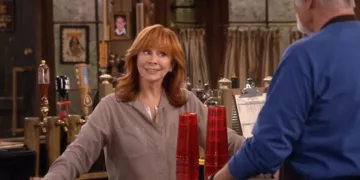
The following episodes suggest that this hurried handling of a relationship is a choice the series makes selectively. By Episode 2, the team is spending evenings at the Bullet ’N Barrel Saloon again, and the pace permits personal business to remain unfinished. Cal and Belle’s attraction continues without an immediate decisive turn. Cal’s cancer and his strained relationship with his daughter carry uncertainty beyond one emergency. The saloon earns its place as a recurring setting where the cast can remain together without needing someone to be abducted first. A sustainable workplace benefit.
Cal’s continuing troubles also give Kayce’s parenting story a useful counterpart inside the ensemble. Illness brings mortality into their working relationship, while Cal’s difficulties with his daughter raise a less spectacular question about staying close to a child.
Tate explicitly reminds Kayce that he is eighteen, even as the premiere assigns him the familiar position of someone his father must save. That rescue is justified by the danger. It cannot provide the entire relationship indefinitely. Kayce knows how to fight for his son; the continuing episodes have a harder task in finding out what he does when his son wants room to act for himself.
Marshals Season 2 premiered on October 4, 2026, available to stream on Paramount+. The contemporary Western drama series follows Kayce Dutton as he leaves the Yellowstone ranch behind to join a specialized U.S. Marshals unit bringing justice to the rugged landscapes of Montana.
Where to Watch Marshals Season 2 Online










Full Credits
Title: Marshals Season 2
Distributor: Paramount Global Content Distribution, Paramount+
Release date: October 4, 2026
Rating: TV-14
Running time: 43 minutes per episode
Director: Taylor Sheridan
Writers: Taylor Sheridan
Producers and Executive Producers: Taylor Sheridan, David C. Glasser, Ron Burkle, Bob Yari, Christina Alexandra Voros
Cast: Luke Grimes, Logan Marshall-Green, Arielle Kebbel, Gil Birmingham, Mo Brings Plenty, Dawn Olivieri, Forrie J. Smith
Director of Photography (Cinematographer): Christina Alexandra Voros
Composer: Brian Tyler
The Review
Marshals Season 2
Marshals Season 2 finds firmer footing when Kayce’s private trouble becomes the team’s shared assignment. The opening three episodes offer expansive action, useful ensemble work, and quieter relationships allowed to remain unresolved. Grimes keeps Kayce’s protective instincts interesting even when his judgment needs supervision. Dolly’s hurried reversals and death expose the cost of clearing the schedule too quickly. There is room for continuing complications here; the show should let its characters occupy it.
PROS
- Investigation gives the ensemble an earned role in Kayce’s rescue.
- Landscape contributes directly to the action.
- Grimes anchors Kayce’s conflicting protective impulses.
- Continuing relationships receive welcome breathing room.
CONS
- Dolly’s rapid reversals receive insufficient development.
- Her motives are clarified after death, chiefly through Kayce’s perspective.