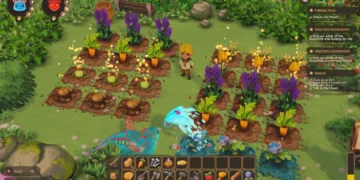




























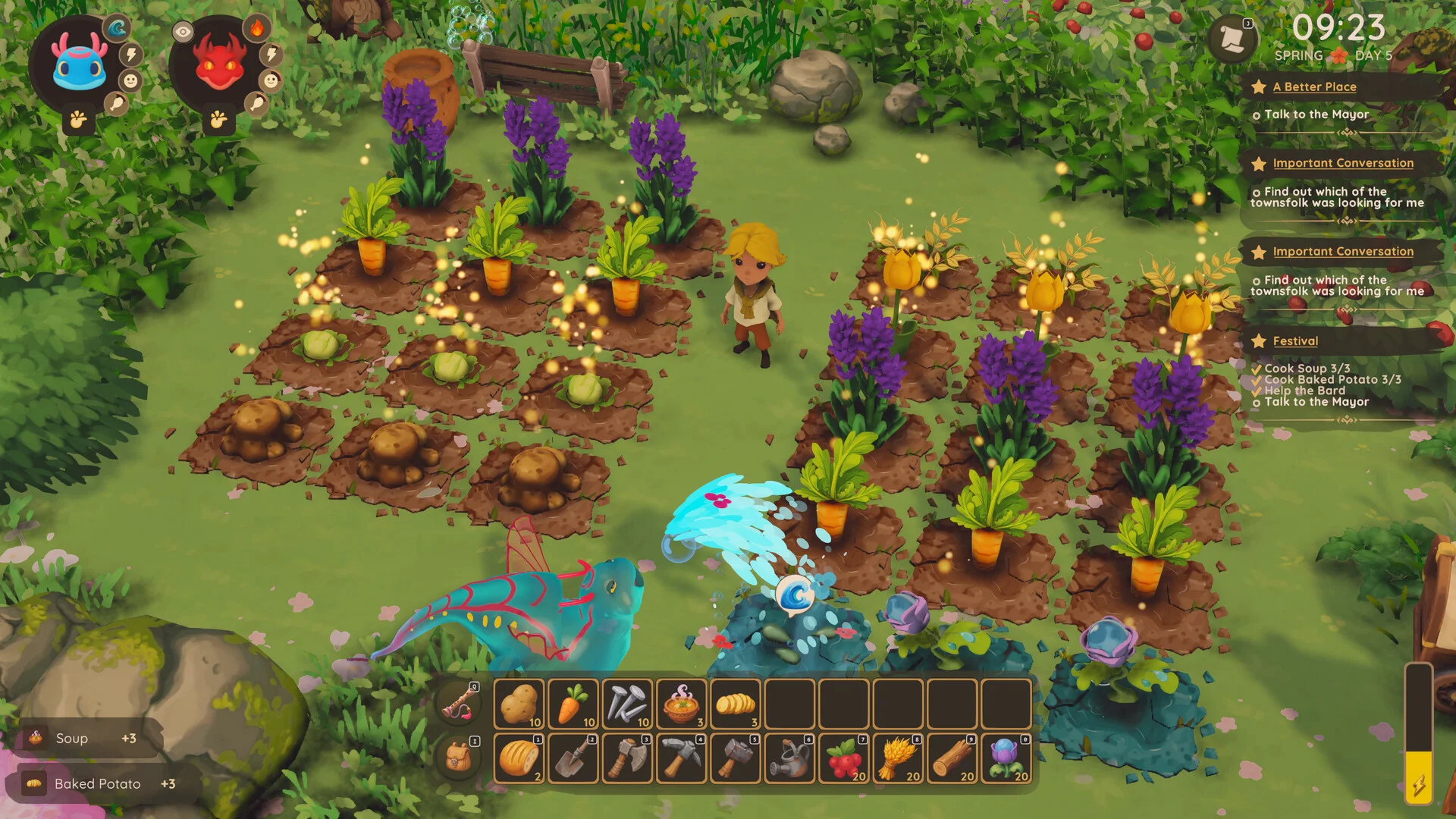

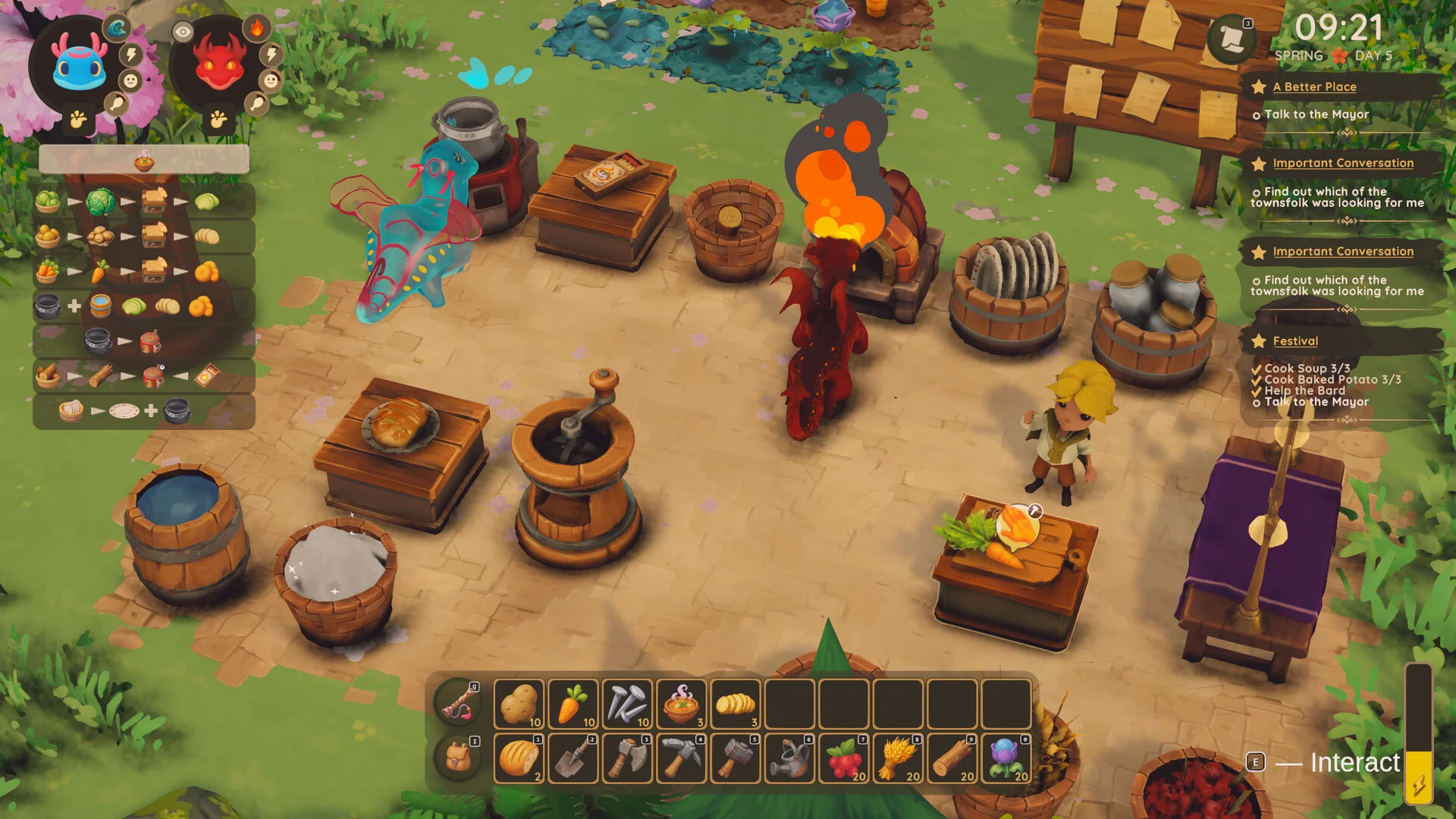
Players coming from Harvest Moon or Stardew Valley will recognize the work waiting on Dragon Shelter’s inherited estate: clear the neglected land, plant crops, and help restore the nearby village. The interesting departure is how much of that restoration passes through the kitchen. Growing an ingredient is often only the first stage of a request, with food preparation becoming a substantial activity of its own.
Making jam means crushing berries, mixing them with water and sugar, then cooking the mixture over a stove that needs wood and matches. Moving between stations gives the open-air kitchen a modest resemblance to Overcooked, though without that game’s defining timed coordination. Here, the pleasure comes from physically assembling a recipe. Each ingredient has a use, and preparing food involves a sequence you can learn. It is a welcome change of pace after clearing trees and tending beds, giving the harvest a destination beyond a sales counter.
The trouble appears when that recipe becomes a daily necessity. Food feeds your dragons, restores your own energy, satisfies villagers, and earns the money needed for future seeds. These uses compete for the same output. Selling a jar helps fund another crop, but giving it to a hungry companion removes that income; eating it buys the energy to continue working. Farming games routinely ask players to divide resources between immediate needs and future growth. Dragon Shelter makes the production process laborious enough that maintaining the present can consume the time intended for improving the farm.
Energy sharpens the problem. Early tree cutting drains the player quickly, so even clearing space can require a disproportionate share of the day’s resources. The kitchen’s detailed steps then have to be repeated to replenish what ordinary work has spent. Familiarity stops making those steps satisfying once the game repeatedly demands the same preparation without much room to change the routine. This is where the promise of dragon helpers becomes important: they should allow an established farm to operate differently from the struggling property you inherited.
As companions, the creatures make a convincing first impression. The blue water dragon emerges from the pond with expressive animation and a collection of gurgles, snorts, and eating noises that give small interactions character. Petting, playing ball, and using a trampoline provide reasons to spend time with it outside an assignment. Its interest in sticking its head into flowerpots is particularly endearing. The colorful surroundings suit these creatures, and their behavior supplies the personality that the village’s subdued inhabitants often lack. Caring for them feels like a worthwhile part of the premise.
Their usefulness is less convincing. The water dragon can irrigate crops, while tools allow companions to help gather resources, but assistance arrives slowly enough that doing a task yourself can be quicker. A helper that ambles toward the garden after the player has finished watering contributes little to the morning routine. Hunger, energy, and enjoyment meters also mean that delegated work carries upkeep. That is a reasonable foundation for a companion system, yet the balance makes it difficult to feel the benefit: producing food for the worker becomes another substantial assignment.
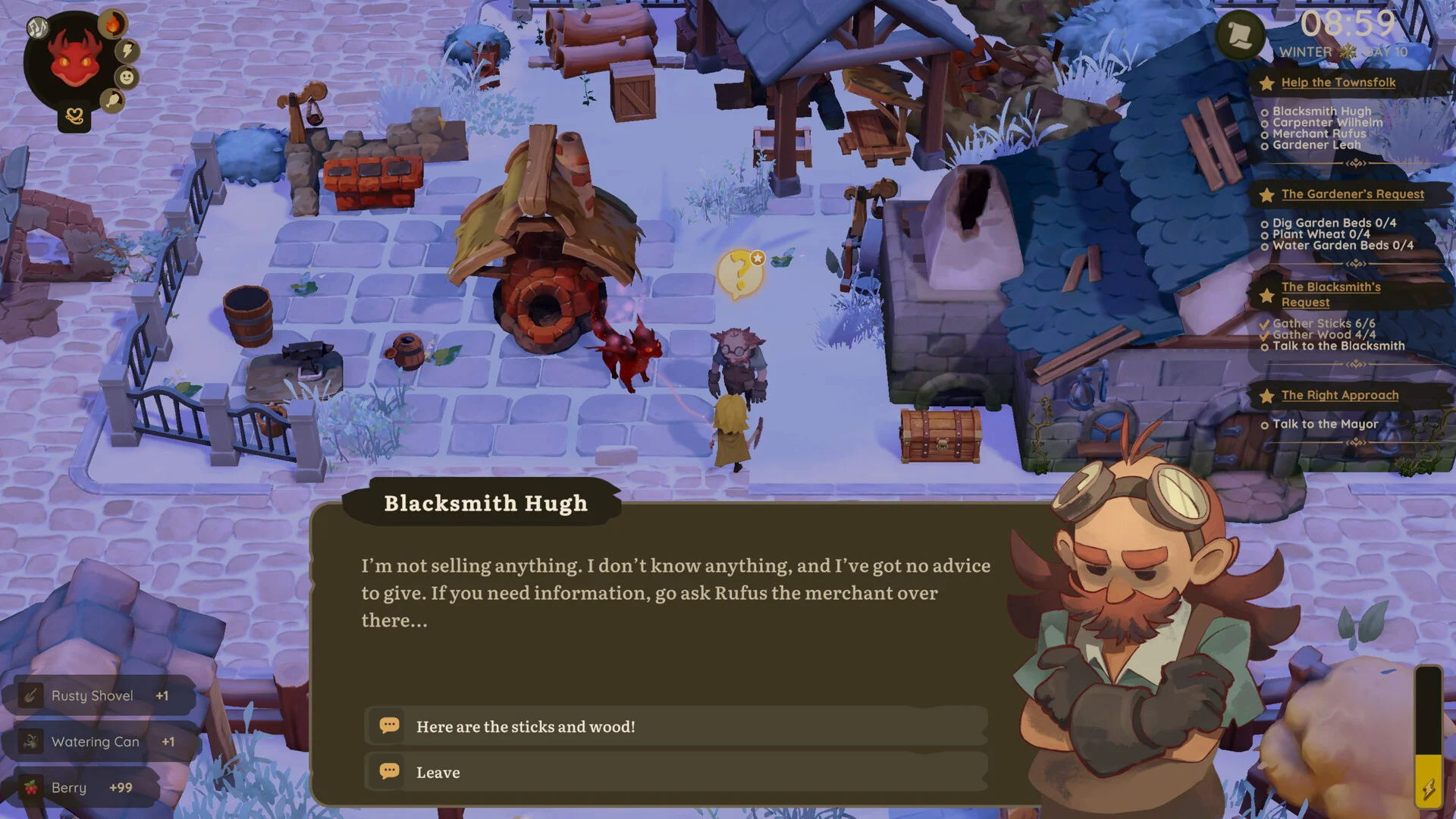
Cooking exposes the awkwardness most clearly. Letting a dragon handle the kitchen should free time for other pursuits, but preparation is slow, and stepping in can confuse its process. The player loses direct involvement in one of the game’s most developed activities without gaining an equally rewarding alternative. There are also task interruptions associated with leaving for town, with dragons abandoning work to play despite having energy available. Such behavior belongs in the assessment of reliability. It cannot carry the same charm as a creature deliberately entertaining itself during free time.
The village gives this labor a purpose, but its response is thin. Residents run shops, request meals and materials, and gain trust through deliveries. Repairs visibly improve the settlement, while quests unlock recipes, crops, and further dragons. Those are real rewards, and decorating the estate gives the player some personal input. Yet brief dialogue reveals little about the people receiving your help. Their persistent gloom makes repeated assistance feel transactional, especially when an improved relationship chiefly leads to another order. The buildings can register change more clearly than the community living inside them.
That distinction matters beside the genre benchmarks. Harvest Moon and Stardew Valley make repeated farm work part of a longer relationship with a place, its inhabitants, and the player’s growing capabilities. Dragon Shelter understands the recognizable components, but its requests too often return the player to the same production chain. Unlocking another recipe can expand the list of things to cook while leaving the day’s choices largely intact. With limited rewarding diversions between deliveries and harvests, waiting for crops can become an invitation to sleep through the remaining hours.
Unclear guidance makes planning harder than it needs to be. Shops emphasize pictures and prices, requiring hovering to identify goods, while crafting requirements and recipe icons can leave essential steps uncertain. Useful information about favorite foods and the calendar is insufficiently explained.
Interaction targeting creates another practical hazard: chopping a tree can destroy a nearby berry bush, taking away an ingredient source the food economy relies on. Crashes, clipped trading displays, and a fire dragon failing to accompany the player into town further undermine dependable progress. Fixing those faults would help, but the repeated cooking and sluggish assistance need design attention too.
Seasonal farming shows how the two problems reinforce each other. Seasons last fourteen days, and an early request for water flowers requires a crop available in spring and autumn. A clearly understood planting deadline could encourage preparation, which is a familiar pleasure of this genre. Missing that window while trying to decipher the requirements instead leaves a quest waiting through summer. During that delay, the dragons still need feeding and production still needs funding, so the player returns to the recipes already learned while waiting for the calendar to permit the next step.
The Review
Dragon Shelter
Dragon Shelter gives the familiar Harvest Moon and Stardew Valley routine an appealing companion twist, but its dragons rarely make farm life easier. Expressive creatures and hands-on cooking provide genuine pleasures; constant feeding, slow assistance, and repetitive requests wear them down. Village repairs offer visible progress without enough rewarding changes to the daily routine. Unclear guidance and progression-blocking bugs make an already demanding farm difficult to recommend.
PROS
- Expressive dragon animations, sounds, and playful behavior.
- Hands-on cooking makes recipe preparation tangible.
- Visible village repairs and estate decoration.
CONS
- Repetitive cooking serves too many competing demands.
- Slow dragon assistance offers limited relief.
- Thin dialogue weakens attachment to villagers.
- Unclear menus and tutorials complicate planning.
- Crashes and unreliable companions can block progress.