





















Three arrows interrupt the duel Criston Cole has already composed in his head. He has wrapped Alicent’s favor around his sword, offered his life for those of his men, and prepared to meet two opponents beneath the gaze of armies. The first arrow enters his side. The next finds his gut. The third takes his cheek. No charge follows, no exchange of names, no final proof that the knight he imagined himself to be had ever existed.
The cruelty of the Butcher’s Ball lies in how completely it separates ability from identity. Criston is still a superb fighter. The ambush lets Fabien Frankel move from morningstar to sword to dagger as Cole cuts his way through men who had been hiding among corpses. His violence has speed, weight, and a practical ugliness. This is the warrior who once believed skill entitled him to honor. Episode 6 grants the skill and withholds the entitlement.
Cole’s final offer contains a small measure of nobility. He tries to save his remaining soldiers and asks for no mercy for himself. Yet one decent act cannot retroactively purify years of resentment, broken vows, and cruelty dressed as service. Honor lives in repeated conduct, never in a white cloak or grand title, and Criston abandoned the conduct long before the arrows arrived. The episode understands this with unusual precision. His death is unsung because the song existed only in his imagination.
Placing such a major death at the start carries a cost. Fifty minutes of plotting follow, and Criston is soon another body left behind by a war moving toward Tumbleton. Still, the abrupt transition has purpose. The image of his hand clutching Alicent’s token cuts to Alicent and Helaena after their escape has failed. A symbol meant to preserve devotion instead links two people trapped by the stories they told themselves about loyalty.
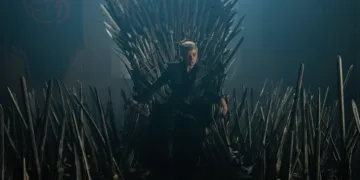
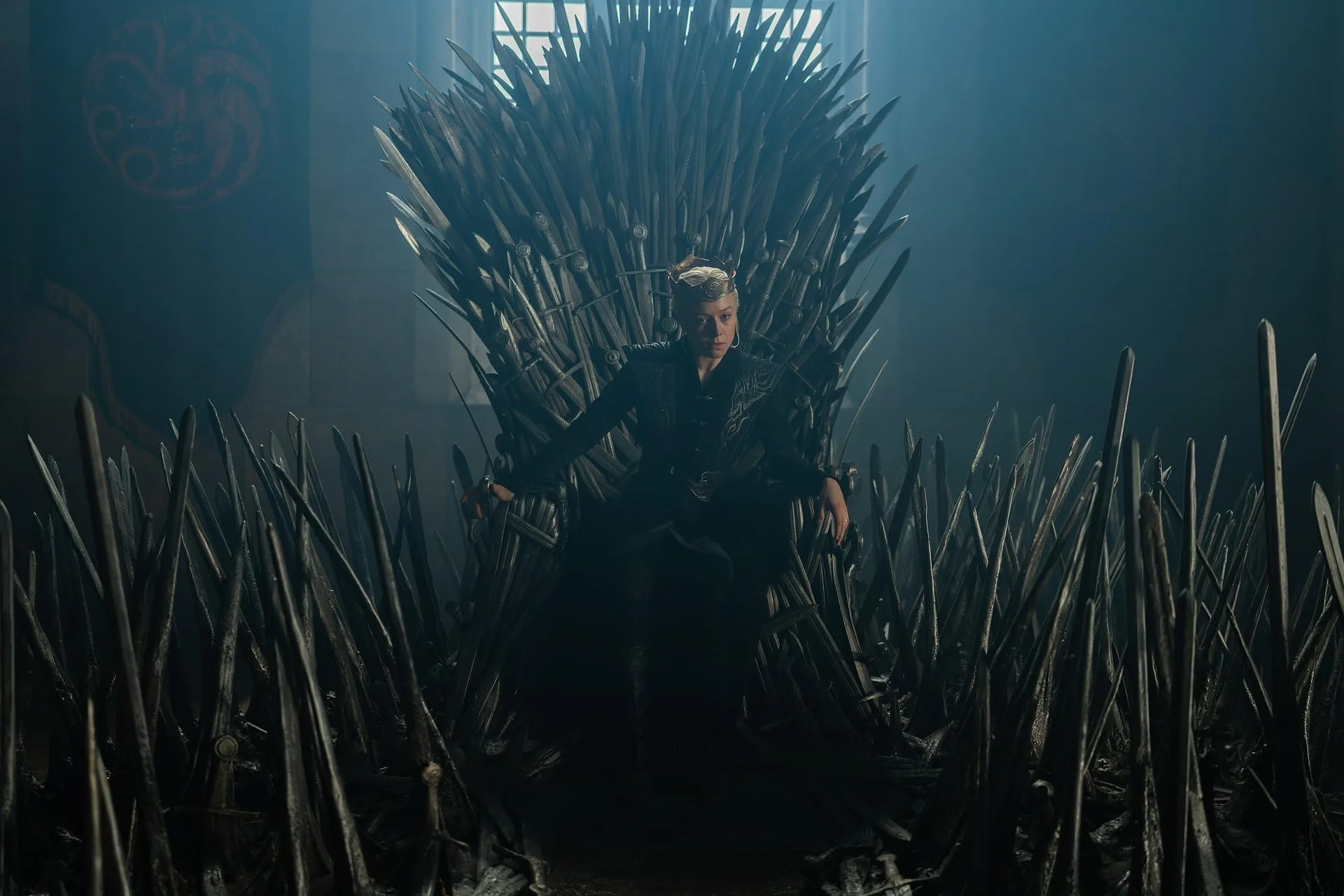
Rhaenyra faces the same judgment on a larger stage. A frightened petitioner comes before the Iron Throne to report a disappearance. The queen offers to light a candle, redirects blame toward the Hightowers, and treats the audience as one problem among many. Then the throne cuts her hand. The moment could have been heavy-handed; Emma D’Arcy prevents that through the quick concealment of pain and the refusal to linger. Rhaenyra leaves with the wound hidden, which is becoming her preferred method of rule.
Her political reasoning is coherent within narrow limits. She refuses to burn Tumbleton because dead civilians would poison her claim. She wants to defeat Ormund without proving his portrait of her as a tyrant. Yet she soon dresses assassins in Baratheon colors and sends them to kill Ormund and Daeron. Mercy has become a question of optics. Dragonfire is unacceptable because the realm would see it. A blade carried under another house’s sigil feels cleaner, at least until the blade is caught.
Episode 6 grows sharper here than a simple account of Rhaenyra’s decline. Ormund is vain, sexist, homophobic, and squeamish. He calls Rhaenyra too soft to descend on Tumbleton, then vomits across the table after Gwayne and Jon Roxton kill the disguised assassins. James Norton plays the contradiction with delicious specificity: Ormund performs command until actual blood enters the room.
His hypocrisy coexists with strategic intelligence. Gwayne spots the false envoys. Ormund’s campaign of fear has emptied much of King’s Landing’s Gold Cloak force. He understands that armies and dragons depend on people who can be frightened, bought, insulted, or abandoned. Rhaenyra and Daemon keep treating those dependencies as administrative irritations.
Daemon’s treatment of Ulf supplies the ugliest example. Ulf has been raised from obscurity, placed on Silverwing, confined inside the Red Keep, and expected to accept discipline as gratitude. When Daemon finds him in the city, he knocks him down and humiliates him in public. The prince reads disobedience correctly and loyalty badly. A dragonrider who feels chained remains a dragonrider, which seems like information worth considering before striking him.
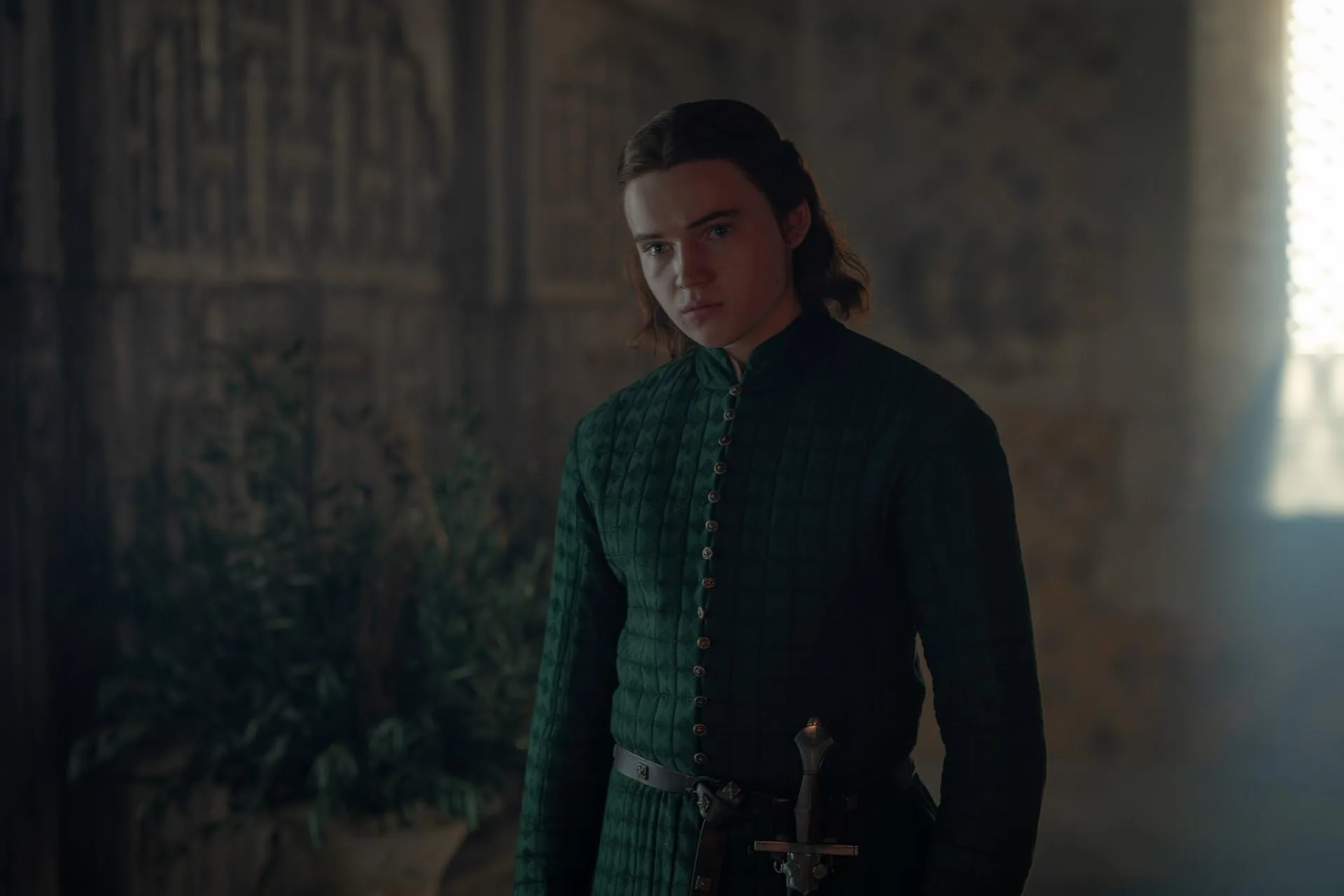
Hugh meets a quieter version of the same failure in Tumbleton. He enters the city expecting his new power to rescue his wife. Kat sees absence where he sees protection. Their argument resists a single clean judgment: Hugh has risked himself for a future together, while Kat has endured the present alone. When he tries to force the choice, rescue begins to resemble possession. The war keeps turning private bonds into claims of ownership.
Aegon, of all people, becomes the episode’s exception. While Tyland digs a grave and Larys argues for flight to Essos, Aegon asks Tyland if he is a terrible man. Tyland’s stammering answer confirms what Larys told him last week. Tom Glynn-Carney gives the scene a strange stillness. Aegon has spent much of the series surrounded by people trained to protect his appetites from judgment. Losing power has finally removed that protection.
The question earns no redemption. Rape, murder, neglect, and vanity remain. It does reveal a capacity absent from the rulers still issuing commands. Aegon hears an answer he hates and changes course. Rhaenyra receives warnings from subjects, advisers, prisoners, and the throne itself, then continues to interpret resistance as disloyalty.
The episode is less persuasive when it abandons consequence for placement. Rhaenyra’s decision to send Alicent to Harrenhal to kill Aemond places Emma D’Arcy and Olivia Cooke opposite each other across another ultimatum, yet the plan feels built backward from a desired reunion. Alicent is a recognisable face, a compromised prisoner, and Aemond’s mother. Her value as an assassin exists mainly because the final episodes need her near him.
Corlys’s ambush carries a similar strain. After granting Alyn authority to raise Velaryon forces, the Sea Snake is attacked by Jon Roxton and Hightower soldiers with startling ease. Ormund’s blood-written warning to Rhaenyra gives the assault a neat rhetorical shape, and the cut to Corlys being subdued supplies the expected cliffhanger. The logistics remain thin. A seasoned commander surrounded by Velaryon soldiers becomes accessible because the story requires Ormund to reach Rhaenyra’s Hand.
These shortcuts matter because the rest of the episode has argued that power produces consequences through behavior. Criston dies from the life he lived. Daemon pushes Ulf toward resentment. Rhaenyra’s covert attack invites retaliation. Aegon’s isolation forces self-recognition. Alicent and Corlys, by comparison, are moved like pieces whose destination was chosen before their conduct could carry them there.
Aegon asks Tyland what sort of man he has become. Rhaenyra hides the cut the throne has made in her hand. One ruler has lost a crown and found a question. The other has gained a crown and concealed the answer.
The sixth episode of Season 3 of House of the Dragon premiered on July 26, 2026, on HBO and is available to stream on Max. As the Targaryen civil war escalates across Westeros, the narrative focuses on crucial turning points in the Dance of the Dragons, including the climactic confrontation known as the Butcher’s Ball in the Riverlands.
Where to Watch House of the Dragon Season 3 Episode 6 Online






Full Credits
Title: House of the Dragon (Season 3, Episode 6)
Distributor: HBO, Max
Release date: July 26, 2026
Rating: TV-MA
Running time: 60 minutes
Director: Loni Peristere
Writers: David Hancock, Shyam Popat, Ryan Condal, George R. R. Martin
Producers and Executive Producers: Ryan Condal, George R. R. Martin, Miguel Sapochnik, Sara Hess, Vince Gerardis, Alan Taylor, Ron Schmidt
Cast: Emma D’Arcy, Matt Smith, Olivia Cooke, Fabien Frankel, Ewan Mitchell, Steve Toussaint, Tom Glynn-Carney, Sonoya Mizuno
Director of Photography (Cinematographer): Vanja Černjul
Editors: Katie Weiland, Tim Porter
Composer: Ramin Djawadi
The Review
House of the Dragon Season 3 Episode 6 (Faceless Men)
Episode 6 finds its sharpest idea in the distance between power and self-knowledge. Criston dies before he can turn failure into legend, Rhaenyra hides the throne’s warning, and Aegon gains clarity only after losing his crown. The Butcher’s Ball, Ormund’s hypocrisy, and the dragonriders’ fraying loyalty give the hour moral and political force. Alicent’s mission and Corlys’s ambush expose writing that sometimes moves characters toward the finale faster than consequence can carry them.
PROS
- Criston’s unsung battlefield death
- Rhaenyra’s political self-deception
- Ormund’s strategic hypocrisy
- Aegon’s late self-recognition
- Purposeful connective editing
CONS
- Alicent’s implausible assassination mission
- Corlys’s convenient ambush
- Criston’s death buried early
- Thin late-episode logistics