

























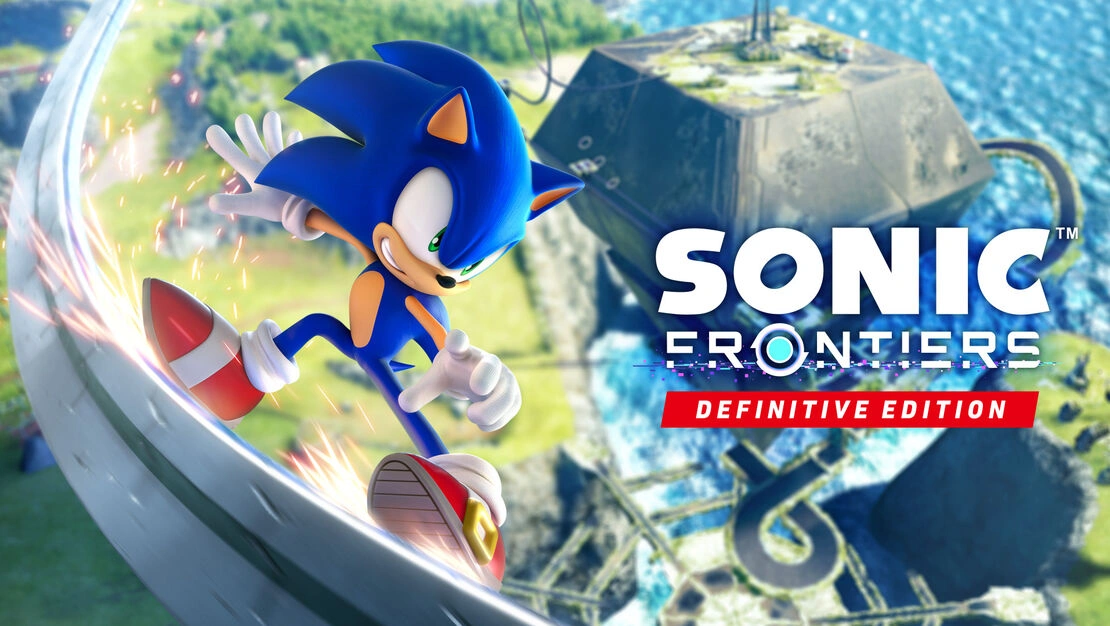

Sonic Frontiers – Definitive Edition asks Switch 2 owners to pay for a technical correction disguised as a celebration. Sega has bundled the 2022 game with its post-launch updates, Sonic’s Birthday Bash content, starter items, and The Final Horizon, which added playable friends and an alternate ending. Nearly all of that material was already free on other platforms.
The genuinely new choice is mechanical in a very literal sense: Performance Priority or Graphics Priority. There is no fresh island, new combat system, or major redesign of the progression loop. Existing Switch owners cannot buy an upgrade pack, either.
That framing matters because this is still Sonic Frontiers, a game built around transforming Sonic’s familiar speed into an open-zone exploration system. The Switch 2 version makes that system easier to enjoy. Sega’s packaging makes the improvement harder to recommend.
Speed Finds a Larger Playground
The Starfall Islands work as giant movement spaces filled with small tasks. Sonic collects Memory Tokens and Chaos Emeralds, completes short platforming challenges, enters Cyberspace stages, and trades collected Kocos for increases to speed or ring capacity. Rails, springs, loops, and boost pads cover both the ground and sky, giving each island considerable verticality.
At its best, the movement loop rewards experimentation. A spring can throw Sonic toward a rail, the rail leads into a boost ring, and a well-timed jump sends him onto a platform carrying a collectible. Reaching the reward feels good because the player has read the geography and connected several movement tools.
Frontiers also has a habit of taking control away once the sequence starts. Hit the correct spring or rail and Sonic can spend several seconds racing through a prepared obstacle course with little meaningful input. The game alternates between letting players manipulate its movement systems and asking them to watch those systems perform.
Progression shares that inconsistency. Memory Tokens and Chaos Emeralds drive each island’s advancement, yet gathering them again after moving to a new island turns collection into repetition. The rewards unlock progress rather than reshape how the player explores.
Combat fares better during the Titan encounters. Regular enemies can encourage button-heavy attack strings, with Sonic rushing into range, unloading unlocked skills, and using parries to trigger counters. Against the Titans, those same tools gain scale. Climbing a massive opponent, turning into Super Sonic, and countering attacks while a vocal battle track pounds through the fight gives combat a clearer sense of escalation.
Cyberspace stages return Sonic to compact, timed courses with red rings and target completion times. Their reliance on familiar layouts and ideas from earlier games limits their identity, especially beside the tighter stage design of Sonic X Shadow Generations. They still provide useful changes of pace because their goals are precise. Reach the finish. Beat the clock. Learn the route.
Sixty Frames Changes the Loop
Performance Priority is the most important improvement in this release because Sonic’s movement depends on immediate visual feedback. At 60fps, boosting across an island, changing direction during combat, and chaining rails together feels considerably cleaner than on the original Switch version.
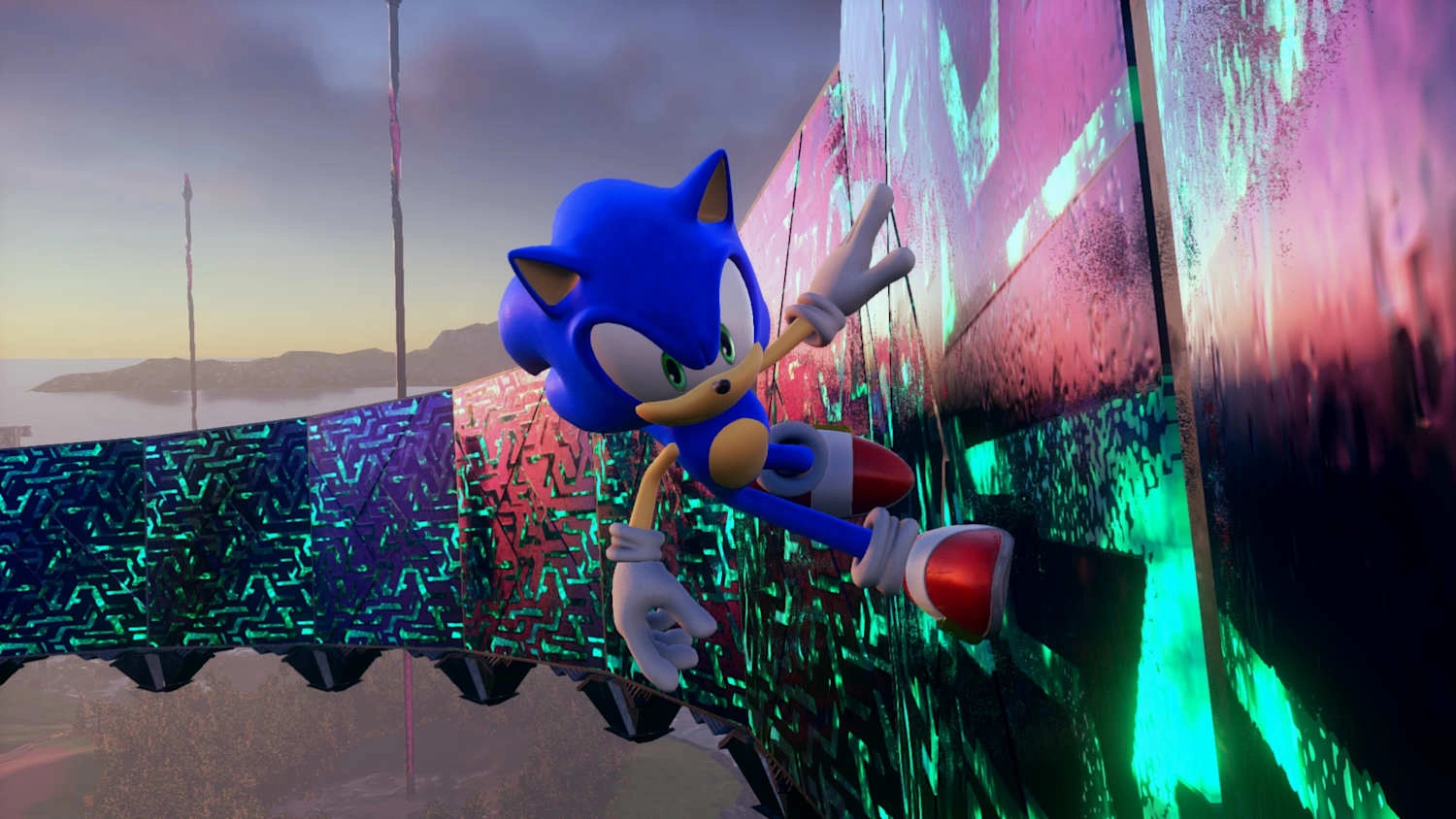
The cost is visible. Docked play can look blurry, with grainy textures across grass, stone, and distant terrain. Smaller plants and rings can still appear late. Yet important rails, platforms, and enemies remain visible from greater distances than they did on Switch 1. That distinction affects play directly. A disappearing bush is ugly. A disappearing rail alters route planning.
Reduced pop-in means the player can scan the world and make movement decisions before Sonic reaches the obstacle. Frontiers is built around seeing a possible route, committing to it, then letting Sonic’s speed carry that decision forward. Important geometry loading earlier makes the exploration system easier to read.
Graphics Priority provides clearer environmental detail and improves certain effects around lava, ice, and cutscenes, but the return to 30fps changes the feel of movement immediately. The visual improvements rarely compensate for losing the responsiveness of Performance Priority.
Several technical oddities remain. One measured initial world load took roughly 12.28 seconds on Switch 2 against 8.59 seconds on Switch 1. Cutscenes can show characters snapping between directions without transition animations, while Tails’ tails occasionally stop moving during Memory Token exchanges. Switching display modes can introduce glitches of its own. Cyberspace is often cleaner visually. Its tighter spaces let CRT filters, holographic backgrounds, and smaller stage boundaries hold together in ways the islands cannot consistently match.
A Familiar World With Familiar Problems
The Starfall Islands expose the conflict inside Frontiers’ design. Sonic moves extremely fast, but the game world must constantly stream rails, floating platforms, loops, enemies, and objects positioned across both horizontal and vertical space. Pressing boost effectively becomes a stress test for the environment.
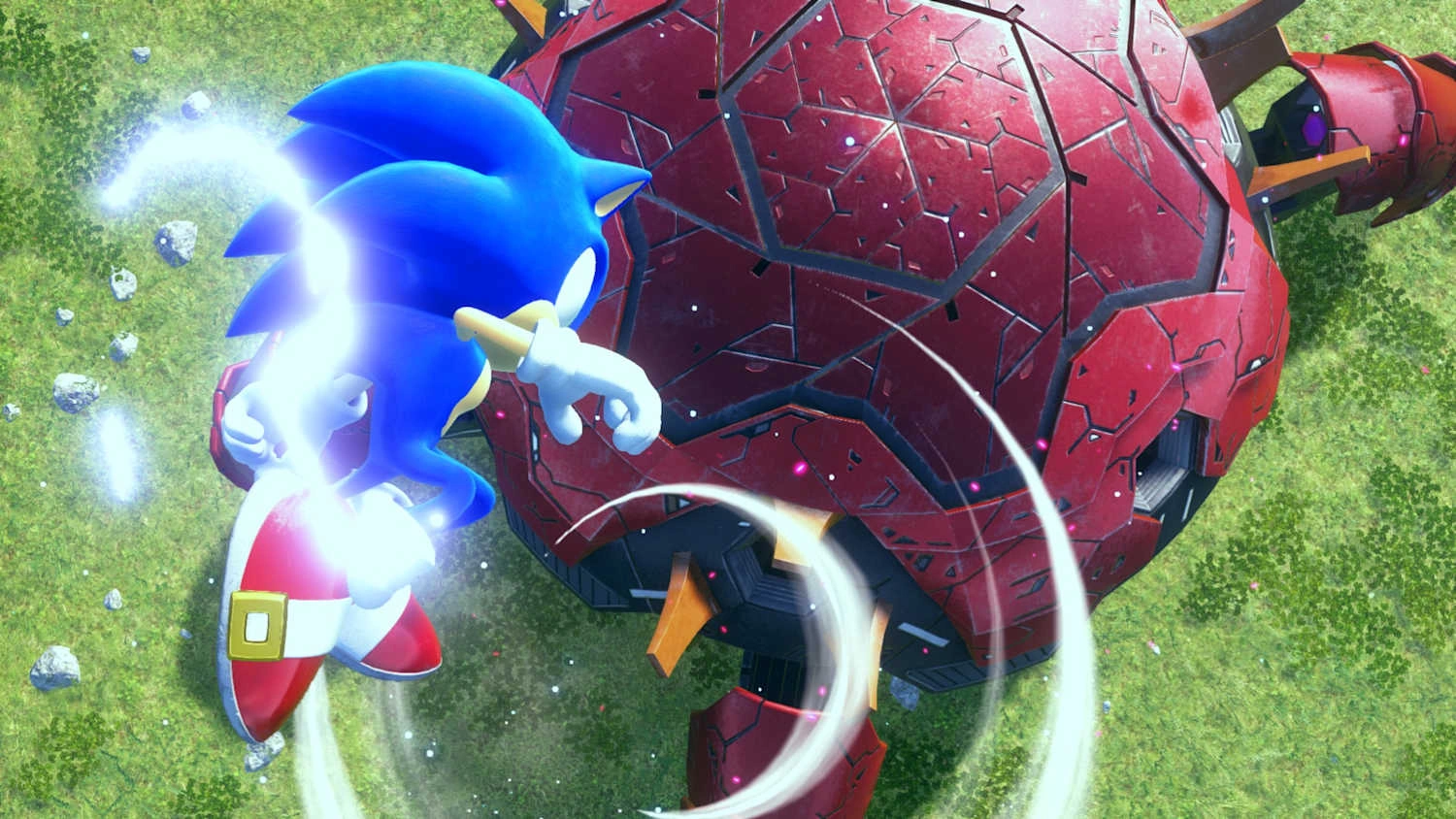
The islands themselves rarely justify that technical strain. Fields, muted ruins, and open countryside lack the strong visual identity of Emerald Coast or Studiopolis. Day-night lighting can create attractive distant views, yet much of the landscape serves as storage for collectibles and short platforming tasks.
This leaves the Switch 2 release with a clear audience. Someone buying Sonic Frontiers for the first time on Nintendo hardware gets the strongest Nintendo version. Performance Priority improves the movement loop, reduced pop-in makes exploration easier to read, and all major post-launch content is included from the start.
Existing owners are being asked a different question. The DLC was largely free already. There is no reasonable upgrade route from the Switch version. The game-key-card release does not even turn the package into a complete physical archive. Sega has improved the way Sonic Frontiers communicates its routes to the player. It has done far less work on the system that communicates value to the customer.
The Review
Sonic Frontiers - Definitive Edition
Sonic Frontiers - Definitive Edition improves the system that needed help most: moving through the Starfall Islands at speed. Performance Priority's steadier 60fps and reduced pop-in make rails, combat, and Titan encounters easier to read and better to control. The package itself is far harder to defend. Graphics Priority trades responsiveness for modest visual gains, cutscene bugs remain, and most bundled content was already free elsewhere. For newcomers on Switch 2, this is the sensible version. For existing owners, Sega is charging again for repairs and repackaging.
PROS
- Smooth 60fps performance
- Important pop-in is reduced
- Titan battles remain spectacular
- Strong handheld experience
CONS
- No Switch upgrade path
- Mostly recycled free content
- Blurry Performance Priority visuals
- New cutscene glitches
- Repetitive island progression