













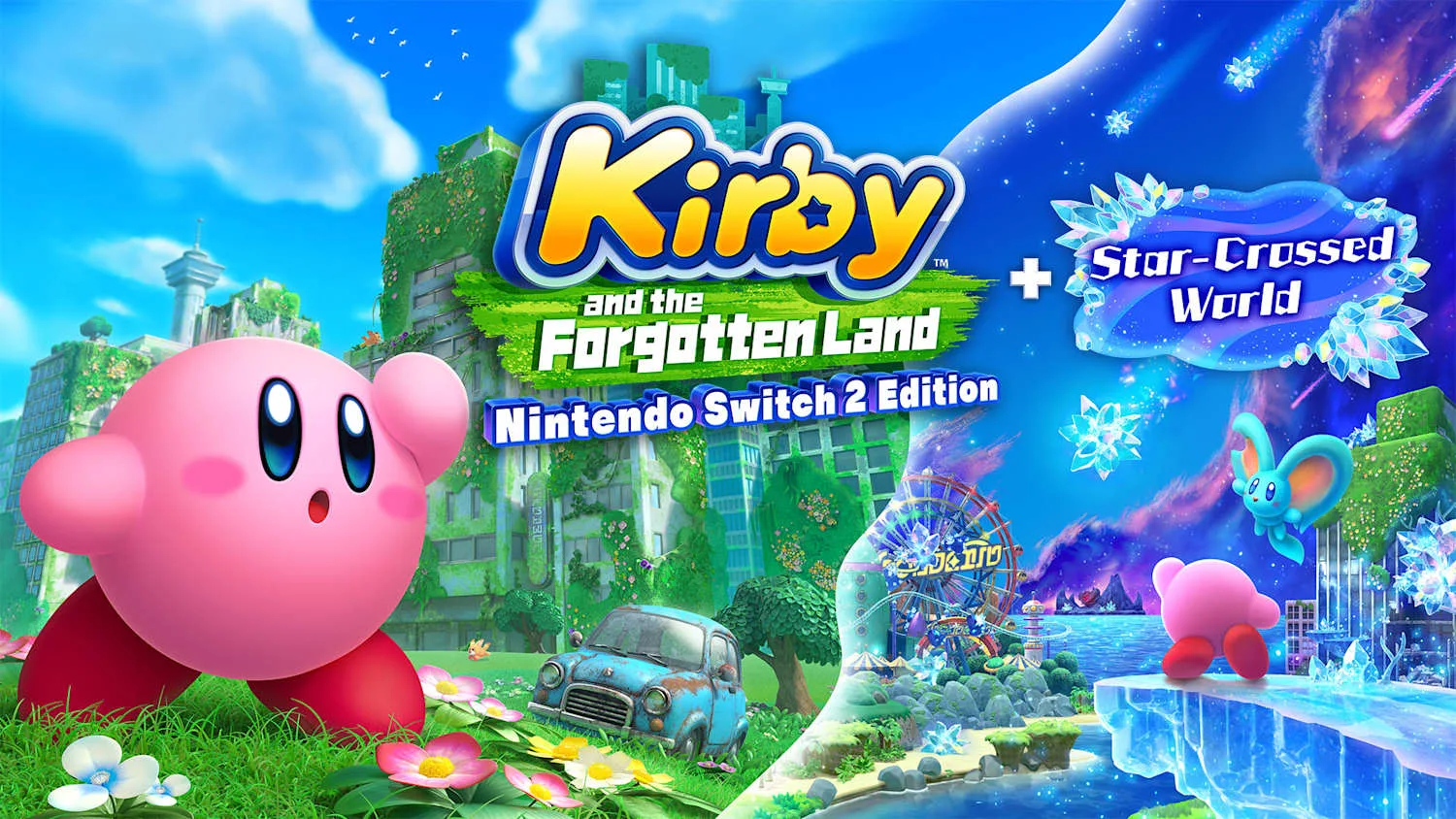

Kirby and the Forgotten Land established itself as the pink puffball’s most successful foray into three-dimensional platforming, crafting a world that felt both nostalgic and refreshingly modern. This Switch 2 Edition arrives with Star-Crossed World, a substantial expansion that weaves new content directly into the fabric of the original adventure. Rather than feeling like an afterthought, the DLC creates a parallel narrative that runs alongside Kirby’s initial journey, introducing crystalline transformations that fundamentally alter familiar environments.
The package presents itself as both a technical showcase for Nintendo’s new hardware and a creative extension of what made Forgotten Land compelling. For returning players, the $20 upgrade offers a chance to revisit a beloved world with fresh eyes and enhanced performance. Newcomers face a steeper $80 entry point, which raises questions about value and accessibility. The Star-Crossed World content doesn’t revolutionize the formula, instead choosing to refine and expand the existing framework with crystalline mechanics that transform both visual presentation and level design philosophy.
Performance Meets Polish
The technical improvements here serve the game’s emotional core rather than existing as mere showpieces. The jump from 30fps to 60fps creates a fluidity that makes Kirby’s movements feel more responsive and tactile. When you’re rolling down a crystalline slope as the new Sign transformation or climbing walls with the Gear ability, that extra smoothness translates into a more satisfying sense of momentum and control.
The visual enhancements work in service of the game’s whimsical atmosphere. The resolution bump to 4K in docked mode sharpens the environmental details that give each world its personality, from the rust and decay of abandoned malls to the sparkling crystal formations that define the new content. HDR support adds depth to the color palette, making the crystalline effects genuinely striking rather than merely decorative.
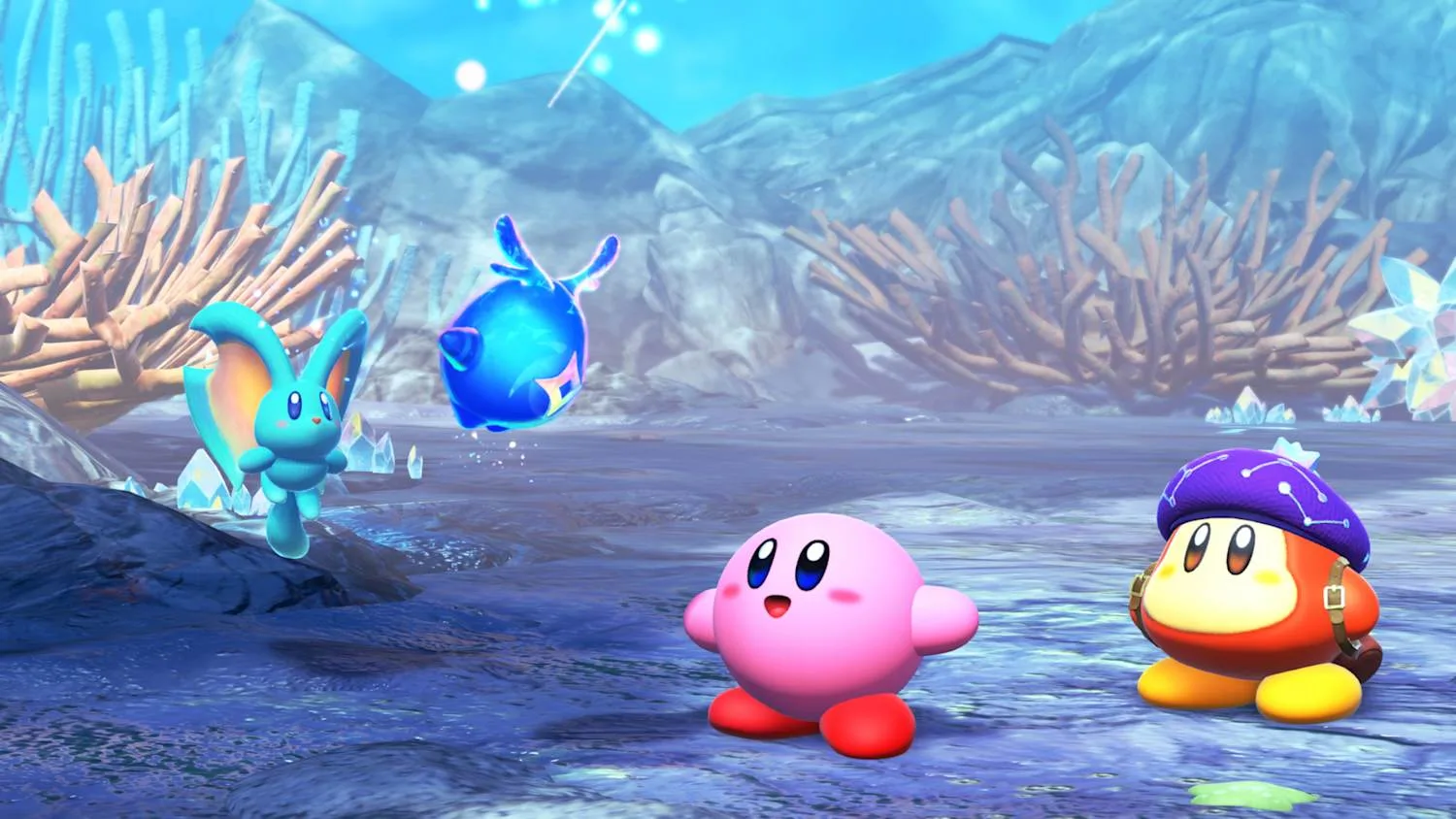
These improvements feel most meaningful in the Star-Crossed World levels, where the crystal effects create a visual language that communicates the altered nature of familiar spaces. The enhanced character models and environmental textures support the narrative concept that these worlds have been fundamentally changed by the meteor’s impact. The technical upgrades don’t just make the game look better; they reinforce the thematic elements that drive the expansion’s story.
A World Transformed by Starlight
Star-Crossed World succeeds by treating its premise seriously rather than as an excuse for superficial level variants. The meteor crash creates a narrative framework that justifies the crystalline transformations, introducing Starries as both collectibles and characters worth caring about. The story remains simple, but it provides enough context to make the environmental changes feel meaningful rather than arbitrary.
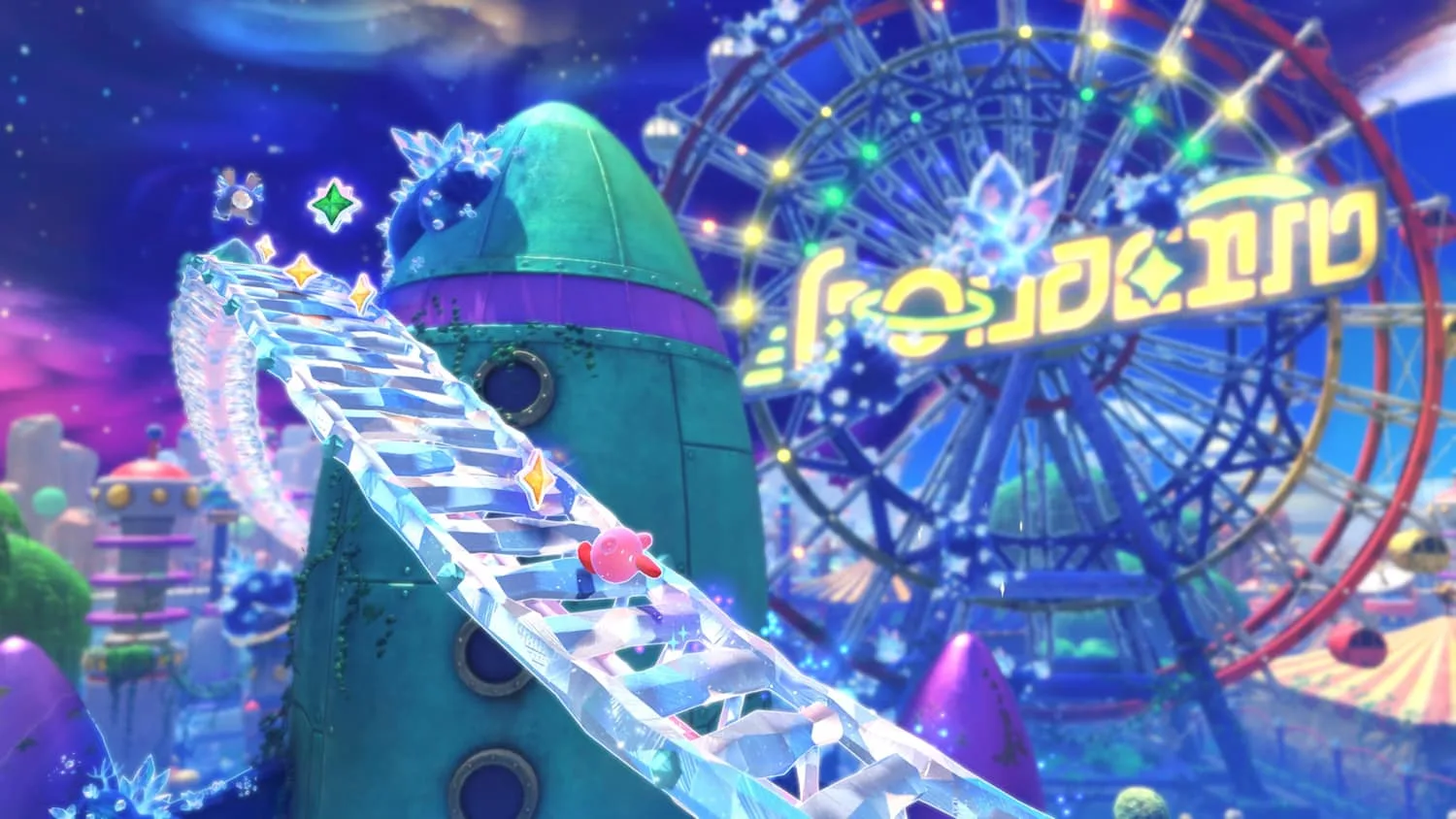
The 12 new levels distribute across the original six worlds with careful consideration for pacing and variety. Each crystalline stage feels like a meditation on its original counterpart, taking familiar visual elements and architectural concepts while creating entirely new spatial relationships. The mall level exemplifies this approach, lifting players above and beyond the original pathways to create vertical challenges that feel natural within the established environment.
Crystal-based environmental transformations serve as both mechanical and narrative devices. Touching crystal flowers reveals new pathways and platforms, creating moments where the level literally unfolds before your eyes. This mechanic reinforces the story’s themes about transformation and discovery while providing satisfying puzzle-solving moments that require spatial reasoning and timing.
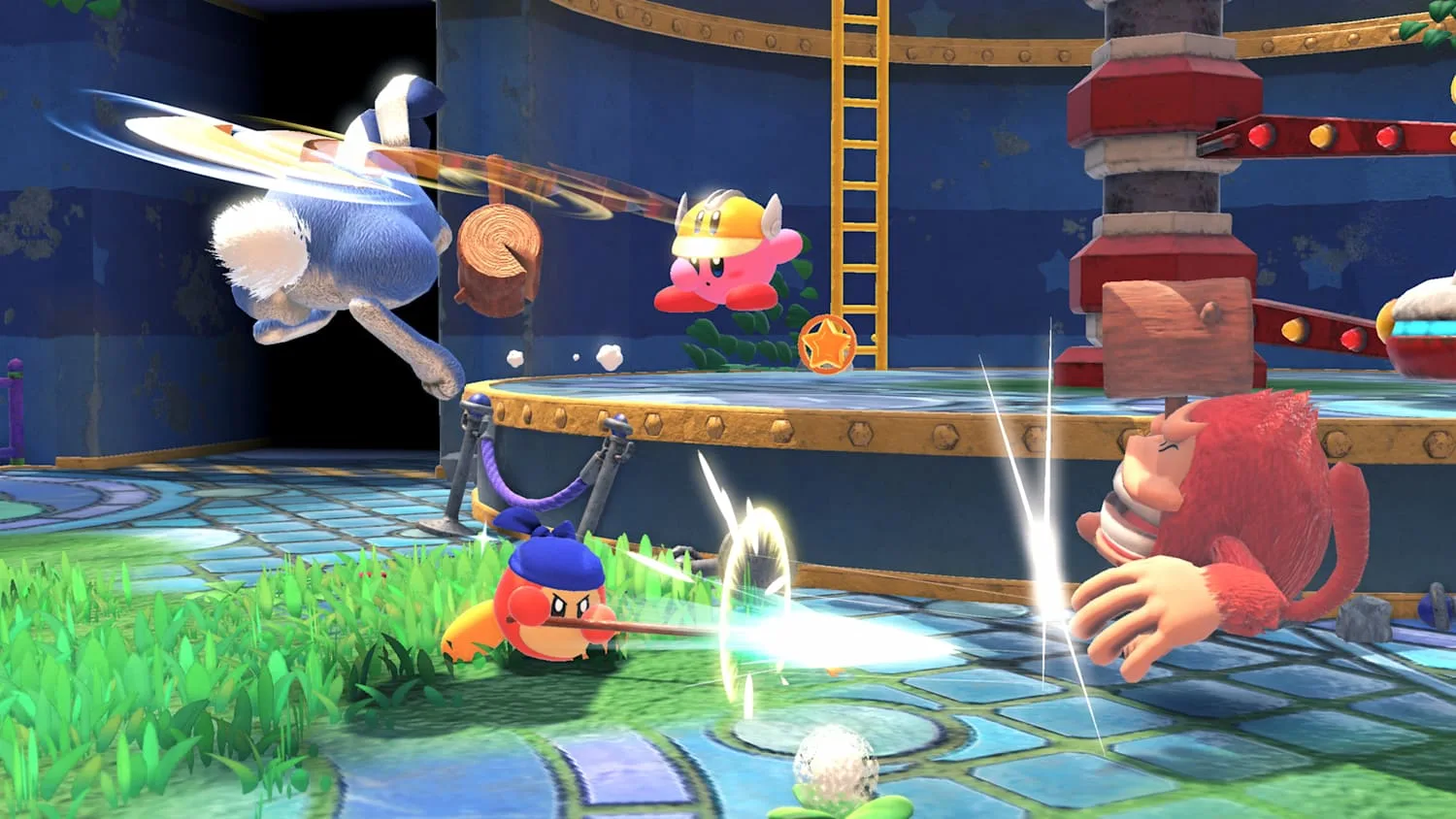
The difficulty curve shows more bite than the base game, acknowledging that players engaging with this content likely have experience with Kirby’s mechanics. Enemy encounters feel more demanding, with crystallized variants that move faster and hit harder than their original forms. The recurring crystal-armored mini-bosses create memorable combat scenarios that require pattern recognition and persistence, adding tension without abandoning Kirby’s accessible design philosophy.
Three Forms, Three Philosophies
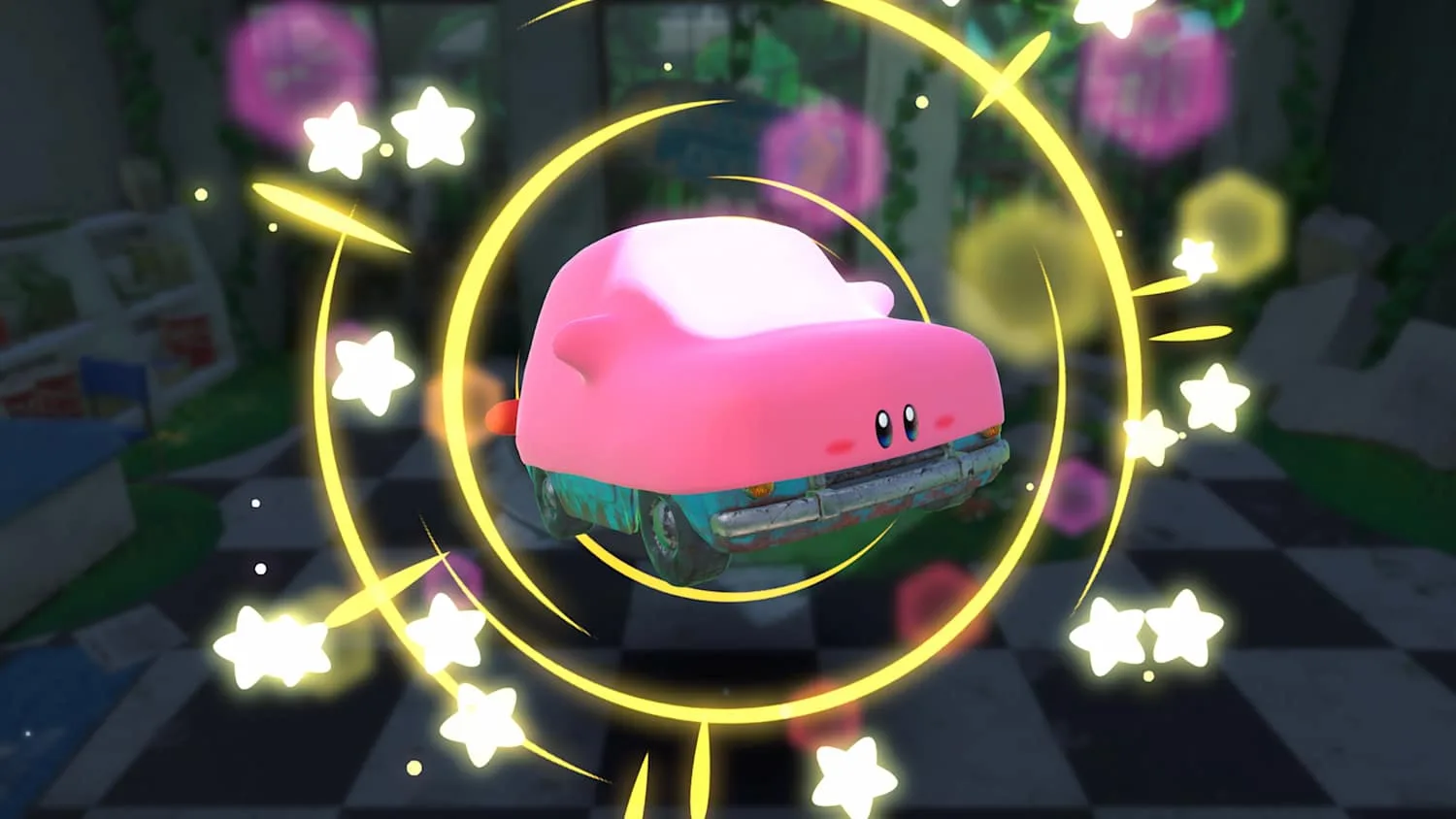
The new Mouthful Mode transformations each represent distinct approaches to level design and player agency. Gear Mode stands as the strongest addition, with wall-climbing mechanics that open up vertical exploration in ways that feel both intuitive and surprising. The tactile feedback through HD Rumble makes each surface contact feel weighty and deliberate, reinforcing the mechanical nature of the transformation while creating satisfying puzzle-solving moments.
Spring Mode serves the game’s emphasis on verticality and impact. The ability to launch high into the air and slam down with force creates combat encounters that feel genuinely different from Kirby’s standard approach. The transformation excels in moments that combine platforming precision with combat timing, requiring players to think spatially about enemy placement and environmental obstacles.
Sign Mode feels the most limited of the three, functioning primarily in specific downhill sequences that prioritize momentum over versatility. While these sections create exhilarating moments of speed and control, the transformation lacks the broader application that makes Gear and Spring modes feel essential to the level design vocabulary.
The integration of these new forms with existing mechanics shows careful consideration for how different abilities complement each other. Levels often provide multiple transformation options, allowing players to experiment with different approaches to the same challenges. However, the absence of new traditional copy abilities feels like a missed opportunity to expand Kirby’s core moveset alongside these environmental interactions.
Mechanical Refinement and Player Agency
The quality of life improvements address specific friction points from the original experience. Retaining power-ups when entering Mouthful Modes creates smoother gameplay flow, eliminating the frustration of losing carefully chosen abilities during transformation sequences. This change particularly benefits players who prefer strategic approaches to level completion and collectible hunting.
The Starries function as both currency and collectibles, creating dual incentives for thorough exploration. Unlike the base game’s Waddle Dees, which primarily served completion goals, Starries feed into a gacha system that provides ongoing rewards for dedicated players. The system works well for players who enjoy collection mechanics, though it may feel less compelling for those focused purely on platforming challenges.
The hint system for finding hidden collectibles strikes a good balance between assistance and discovery. Rather than providing direct solutions, the system offers contextual clues that guide players toward general areas without removing the satisfaction of actual discovery. This approach respects player agency while acknowledging that some secrets might prove frustratingly elusive without guidance.
The challenge balance accommodates players with fully upgraded abilities from the base game, though this sometimes creates situations where encounters feel too easy for returning players while potentially overwhelming newcomers. The system works best when levels provide multiple difficulty layers through optional objectives and hidden areas that require mastery of specific mechanics.
Investment and Returns
The pricing structure reveals Nintendo’s confidence in the content’s value while raising questions about accessibility. The $20 upgrade for existing owners feels reasonable given the scope of new content and technical improvements. This price point acknowledges that returning players already have investment in the base experience and want expansion rather than replacement.
The $80 full price for newcomers positions this as a premium first-party title, competing directly with new releases rather than enhanced ports. The value proposition depends heavily on how much weight players place on technical improvements versus raw content volume. The approximately four hours of new gameplay content, combined with enhanced performance across the entire base game, may justify the price for players prioritizing quality over quantity.
Compared to other Switch 2 upgrade packages, this offering provides more substantial new content while delivering less dramatic performance improvements than games that suffered from technical limitations on the original hardware. The trade-off reflects Forgotten Land’s already solid technical foundation, leaving less room for transformative improvements.
The content scope feels appropriate for expansion material rather than standalone experiences. The 12 new levels provide meaningful variety and challenge without overstaying their welcome, while the integration with existing content creates incentives to revisit the base game with fresh perspective.
A Worthy Crystalline Evolution
Star-Crossed World succeeds by understanding what made Forgotten Land special and extending those qualities rather than replacing them. The new level design maintains the creative playfulness that defined the original while introducing enough complexity to satisfy returning players seeking greater challenges. The crystalline visual theme provides coherent identity for the new content while enhancing rather than overshadowing the base game’s aesthetic.
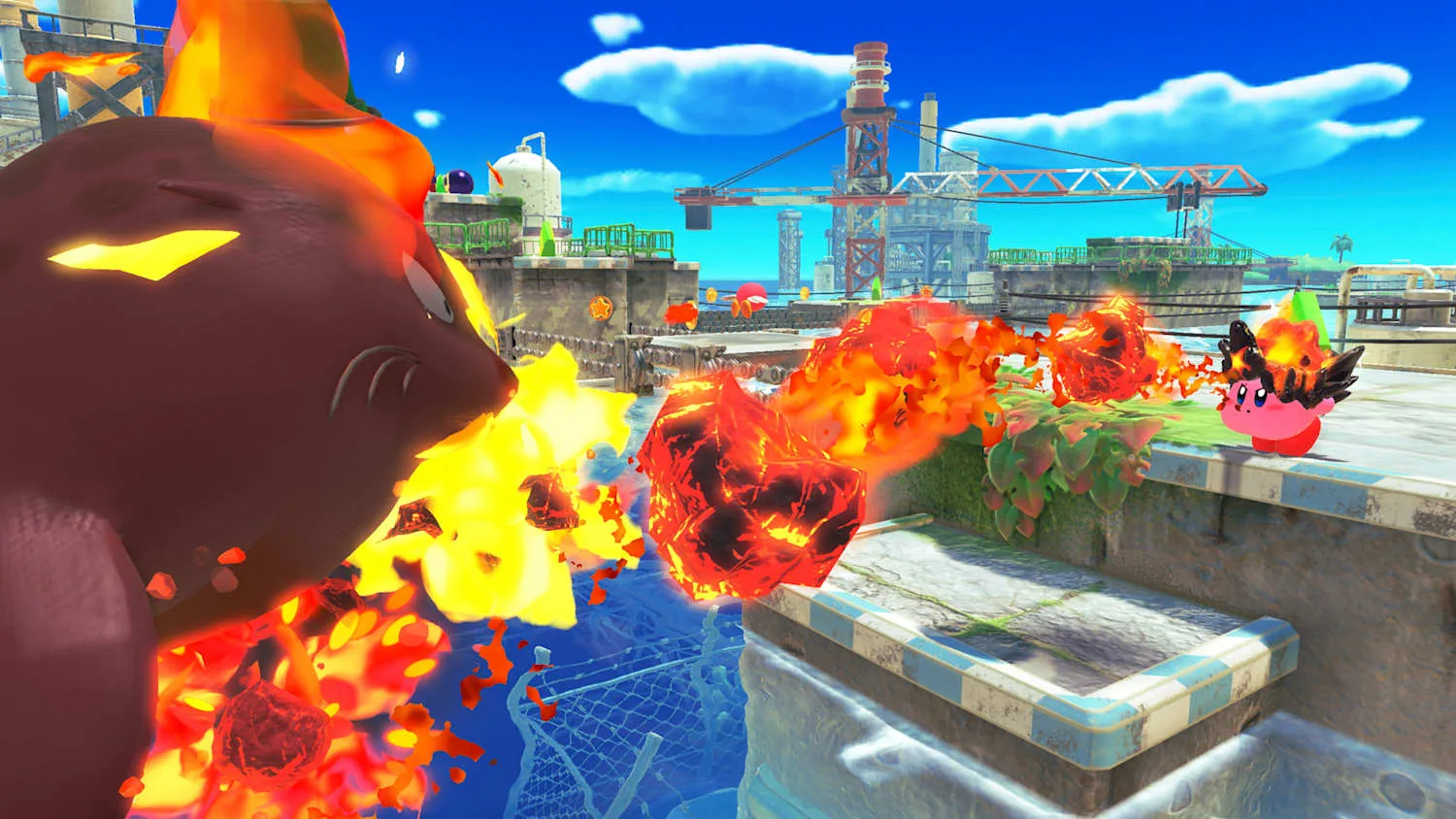
The technical improvements serve the game’s strengths, making movement feel more responsive and environments look more detailed without fundamentally altering the core experience. The enhanced performance benefits both new and returning content equally, creating a cohesive package that feels polished rather than fragmented.
For returning players, the upgrade provides compelling reasons to revisit a beloved world with new perspectives and challenges. The integration of new content with existing progression systems creates natural incentives to engage with both old and new material. The price point acknowledges existing investment while providing substantial new value.
Newcomers face a higher barrier to entry, though the complete package represents one of the strongest 3D platformers available on Switch 2. The technical enhancements and expanded content create an experience that feels definitive rather than supplementary, justifying the premium pricing for players prioritizing long-term value.
Star-Crossed World demonstrates how expansion content can enhance rather than merely extend an existing experience, creating new ways to appreciate familiar environments while introducing fresh mechanical concepts that feel natural within the established framework.
The Review
Kirby and the Forgotten Land - Nintendo Switch 2 Edition + Star-Crossed World
Star-Crossed World transforms a solid 3D platformer into a definitive experience through thoughtful expansion. The crystalline mechanics create meaningful environmental storytelling while the new Mouthful transformations add genuine mechanical depth. Technical improvements enhance the emotional resonance of Kirby's world without feeling gratuitous. For returning players, the $20 upgrade provides compelling value. Newcomers face steeper pricing, but receive one of Switch 2's most polished platformers.
PROS
- Crystalline transformations create genuine mechanical and narrative depth
- New Mouthful modes (especially Gear) offer satisfying spatial puzzles
- 60fps performance makes movement feel more responsive and tactile
- 12 new levels integrate seamlessly with existing world structure
- Quality of life improvements (power-up retention) eliminate friction points
CONS
- No new traditional copy abilities or upgrades for existing powers
- $80 full price creates high barrier for newcomers
- Sign Mode feels limited compared to other transformations
- Only 3-4 hours of new content for substantial asking price