


























A Catalan family cycles through a hypnotic, sun-dappled forest, their journey a flickering image of motion and light. This is our entry into Strange River, a film that immediately establishes a sense of hazy, beautiful memory.
The family—actress Monika, architect Albert, their quiet teenage son Dídac, and his two boisterous younger brothers—are on a summer holiday along the Danube River. What could be a straightforward coming-of-age story instead becomes a lyrical exploration of a formative time.
Director Jaume Claret Muxart uses 16mm film to give every frame a tangible texture, as if we are recalling a distant, cherished summer of our own. The trip is a temporary release from normal life, a space where the world slows down. At its center is Dídac, an observant and withdrawn teenager on the edge of a profound personal discovery.
A Phantom on the Water
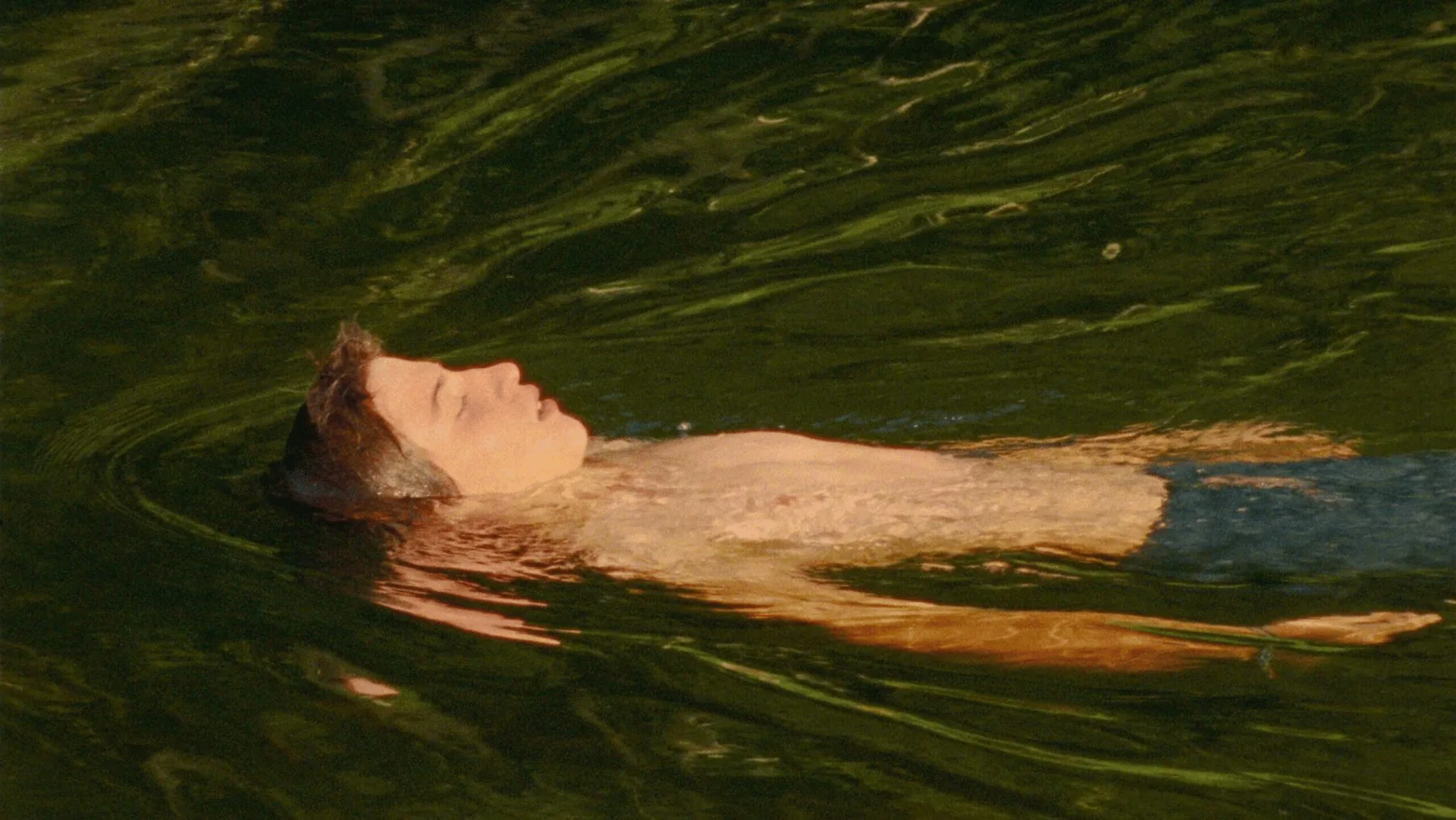
The film’s narrative truly begins with an encounter. A mysterious young man appears in the river, a silent, enigmatic figure who seems to exist just for Dídac. From that point, the story rejects a traditional path. This boy surfaces repeatedly, his presence blurring the line between the physical world and Dídac’s internal landscape.
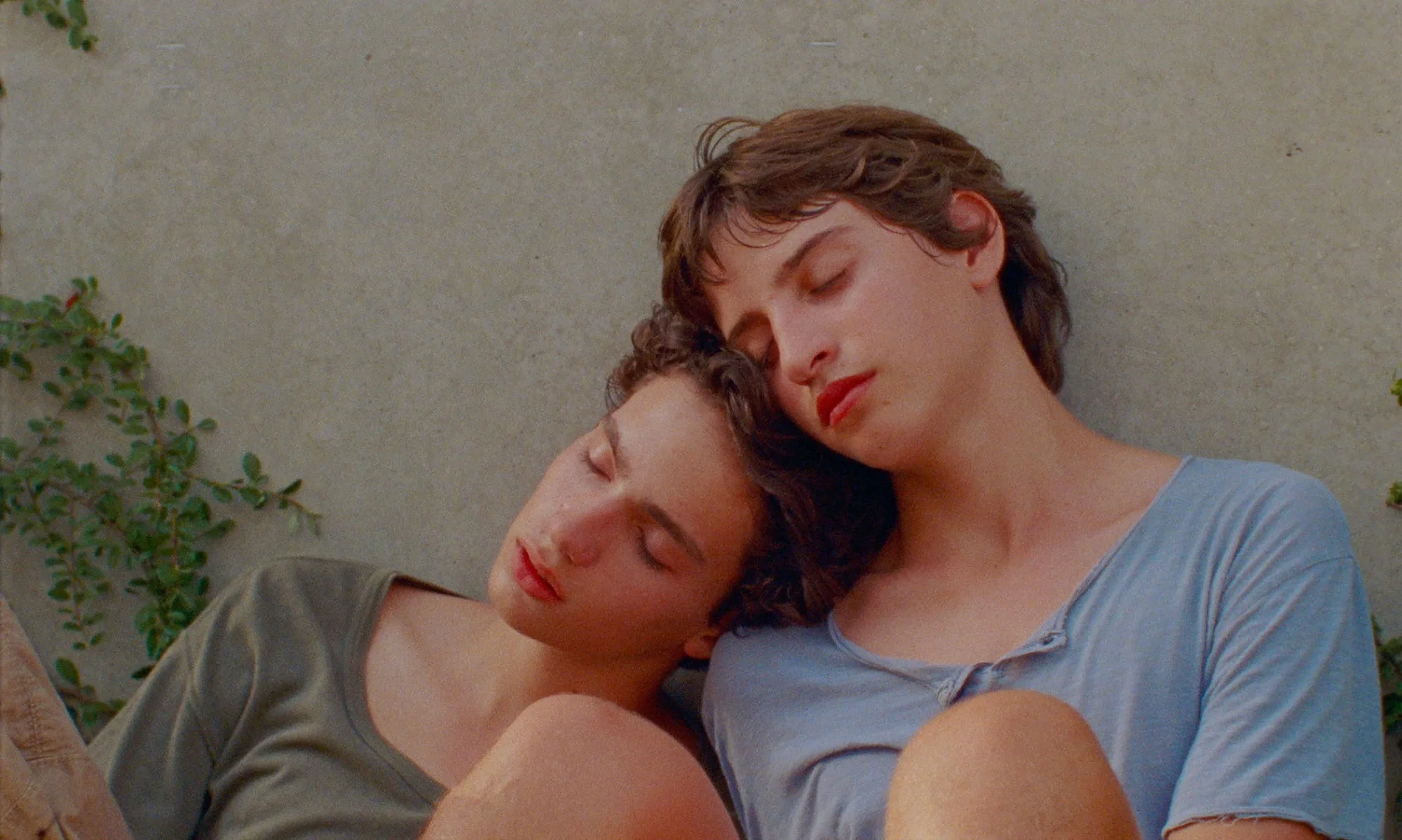
Is he a real person Dídac meets, or is he a projection of desire, a fantasy born from loneliness and awakening sexuality? The film offers no clear answers, choosing instead to drift through atmospheric moments. This structure is a confident departure from the typical coming-of-age movie, which often relies on clear milestones.
Strange River presents its progression through an intuitive, almost cryptic editing style where a day’s journey might be distilled into a minute of screen time. This unconventional approach mirrors Dídac’s own experience of navigating unfamiliar feelings. The story is told through a sequence of sensations rather than a chain of events, prioritizing mood over plot.
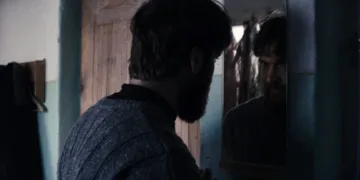
A disorienting scene in a nighttime cruising area exemplifies this, as Dídac wanders through a thicket of furtive glances and quiet exchanges. The sequence culminates in him seeing a woman who looks like his mother in a passionate embrace, a moment that is never explained or revisited. This highlights the film’s core theme: the unreliable nature of perception when filtered through the lens of burgeoning desire.
A Sensory Approach to Filmmaking
The film’s power comes from its masterful sensory construction. Pablo Paloma’s cinematography is central to this achievement. The choice of 16mm film lends a grainy, organic quality to the visuals, creating a texture that feels as physical as the summer heat itself. The grain makes the images feel alive and imperfect, like a memory being actively recalled.
Paloma’s camera work expertly contrasts the kinetic, handheld shots of the family cycling with long, static takes that allow us to sit with Dídac in his quiet contemplation. This visual rhythm matches his internal state, shifting between forward momentum and deep introspection.
The color palette is rich and specific, moving between the smoky blues and purples of twilight and the intense greens of a humid afternoon, while the camera lingers on the sensual details of water on skin and light filtering through leaves. The sound design is just as deliberate. Long stretches are defined by the absence of a score, filled instead with the ambient sounds of the river, crickets, and distant voices.
This creates an immersive quiet, a space for thought. When music does appear, its use is precise. A key scene of private introspection swells with Ravel’s ‘Daphnis and Chloé’, a choice so unapologetically romantic it reminds me of making mixtapes as a teen, trying to find the perfect song to articulate an overwhelming feeling. It’s a choice that understands how music can shape emotional memory.
The Last Summer Together
Beneath the dreamy visuals and personal discovery lies the anchor of the family. Their interactions are wonderfully authentic, a portrait of small tendernesses and familiar irritations that ground the film in a believable reality. The father’s earnest lectures on modernist architecture and the mother’s quiet rehearsal of lines from a German Romantic play are not just character quirks; they build a portrait of a family that values art and ideas, creating an environment where Dídac’s introspective journey feels natural.
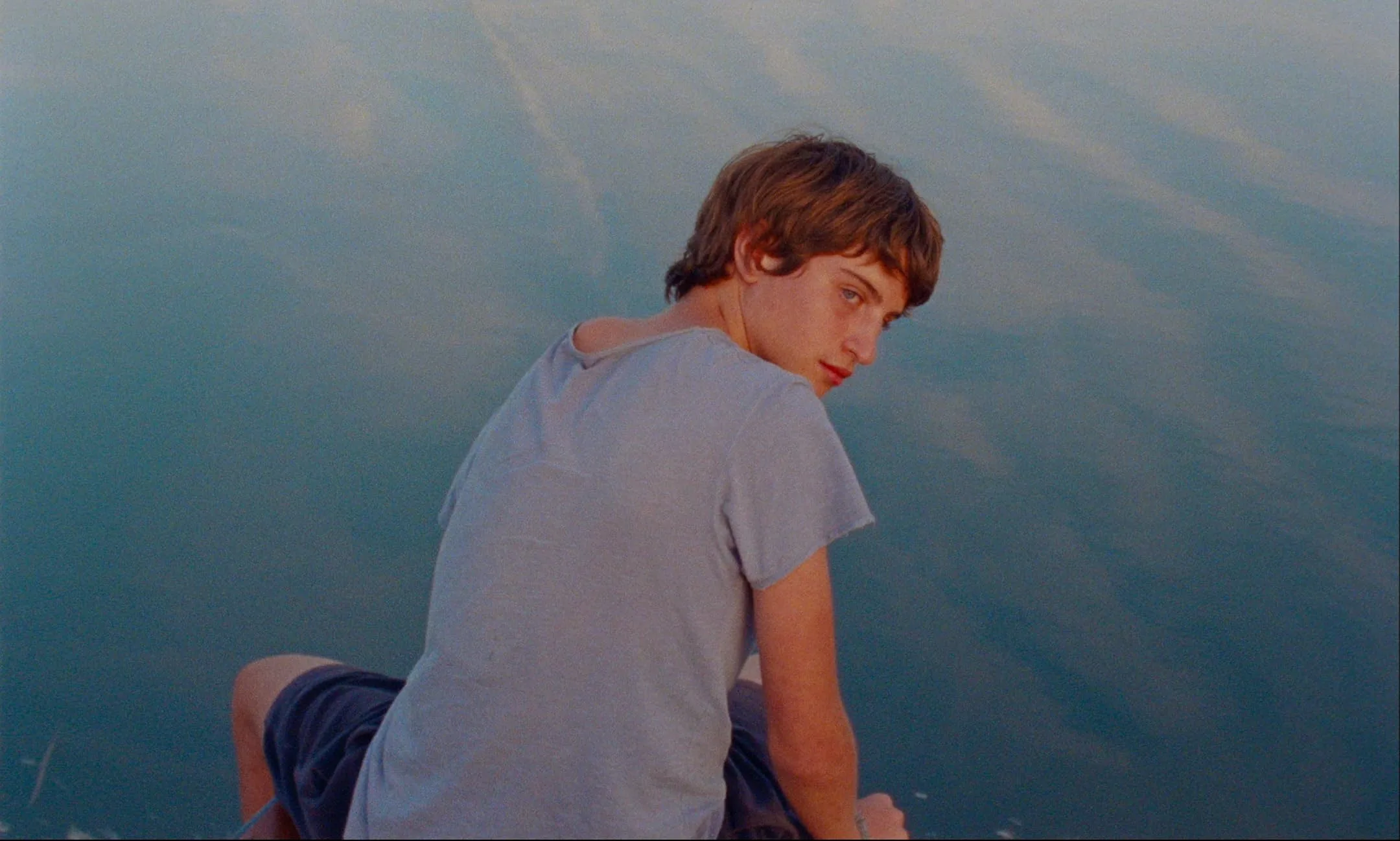
We sense that this trip is a significant one, possibly the last they will take as this specific unit before Dídac fully enters adulthood. Jan Monter gives a magnetic debut performance, communicating a world of confusion, curiosity, and yearning through his posture and gaze. His performance is one of quiet observation, perfectly capturing an adolescent learning to watch the world.
This approach aligns with a gentle shift in queer cinema, moving away from explicit coming-out narratives toward more internalized stories of self-realization. The film’s final act is almost entirely wordless, trusting gesture and expression to convey a deep, intuitive connection. Strange River excels at capturing these fleeting yet formative experiences, suggesting that identity is shaped not by grand declarations but by quiet moments of understanding along the unpredictable currents of youth.
Full Credits
Director: Jaume Claret Muxart
Writers: Jaume Claret Muxart, Meritxell Colell
Cast: Nausicaa Bonnín, Francesco Wenz, Jan Monter
Director of Photography (Cinematographer): Pablo Paloma
Composer: Nika Son
The Review
Strange River
Strange River is a beautifully crafted mood piece that forgoes traditional storytelling for a deeply sensory and intuitive exploration of adolescent awakening. With stunning 16mm cinematography and a magnetic lead performance, it captures the hazy, fleeting nature of a formative summer. While its deliberate ambiguity may frustrate some, those willing to drift along its gentle current will find a profound and unforgettable film about the quiet ways we come to understand ourselves.
PROS
- Stunning, textured 16mm cinematography that creates a timeless, dreamlike quality.
- A powerful and naturalistic lead performance from newcomer Jan Monter.
- Masterful use of sound design and music to build an immersive, sensory atmosphere.
- A sensitive and authentic portrayal of family dynamics and queer discovery.
CONS
- The intentionally slow pace and lack of a conventional plot may not engage all viewers.
- Its narrative ambiguity can at times feel sparse or underdeveloped.
- Relies heavily on mood, which might be perceived as a lack of narrative substance.