



























On a bus filled with women making the pilgrimage to Mecca, a pair of headphones offers the first sign of dissent. While the other passengers are lost in devotion, 18-year-old Sara is tuned into her own world. Her younger sister, 12-year-old Janna, watches her, a silent observer caught between two forces.
The third is their grandmother, Sitti, a woman whose stern piety seems as unyielding as the desert landscape outside. The year is 2001, and this sacred trip is meant to be a rite of passage. But during a stop, Sara disappears into the crowd, an act that feels less like an accident and more like an escape.
The bus leaves without them. Stranded with their luggage, Janna and Sitti are left with a new, frantic mission: find Sara before the girls’ fearsome father discovers she is gone. Their pilgrimage is abruptly canceled, replaced by a desperate search that will become its own kind of sacred passage across the breadth of Saudi Arabia.
The Earth as Witness
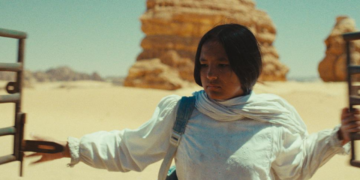
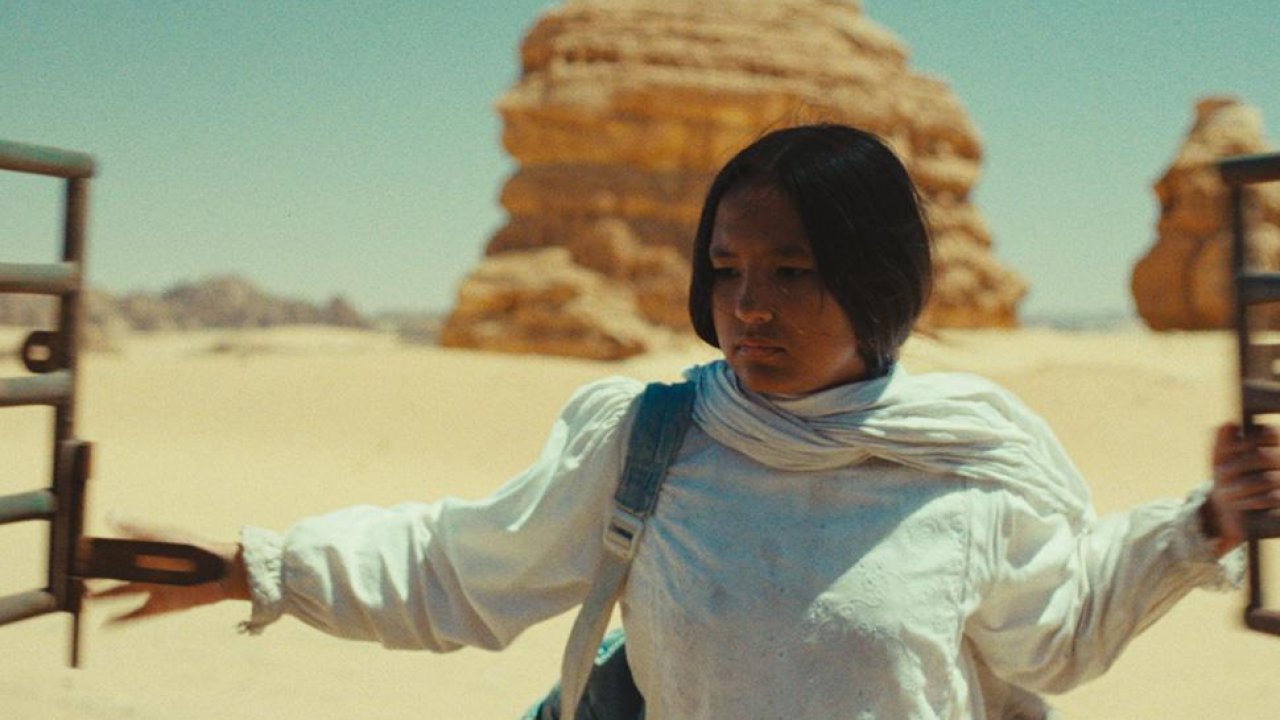
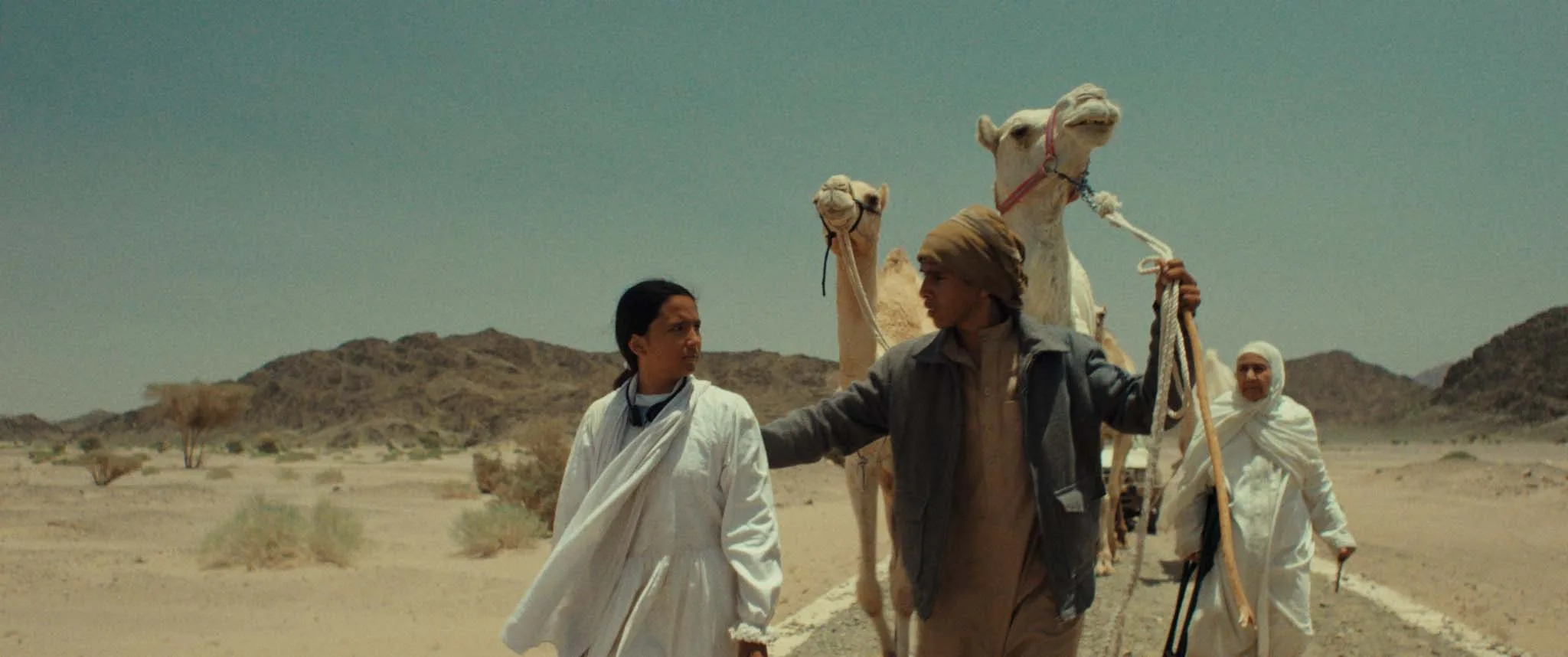
The film’s visual language is one of handsome, deliberate compositions, using the camera not merely to record but to interpret the emotional state of its characters. Wide shots frequently render Janna and Sitti as small figures against the spectacular, intimidating emptiness of the Saudi horizons, emphasizing their isolation.
These expansive views are thoughtfully contrasted with intimate, often handheld, close-ups that map the shifting terrain of their faces. The camera’s perspective often aligns with Janna’s, allowing us to see the world through her watchful, awakening eyes.
The landscape itself becomes a third protagonist in their odyssey. Their route is a progression through the country’s geographical diversity: the dramatic, rock-hewn valleys of AlUla appear like ancient monuments, indifferent to human struggle, while the desolate desert plains offer no shelter. This is not a passive backdrop; the severe beauty of the land accentuates their vulnerability.
The texture of the sun-baked earth, the sharp shadows cast by rock formations, and the vast, indifferent sky all contribute to a palpable sense of exposure. Yet this shared hardship in a challenging environment also creates the conditions for their connection, stripping away social pretense until only their fundamental reliance on one another remains. An early shot of Janna peeking through a chink in the bus curtain perfectly captures this spirit. It is a stolen glimpse of a forbidden world, a small frame through which a much larger life might be seen.
An Inheritance of Resilience
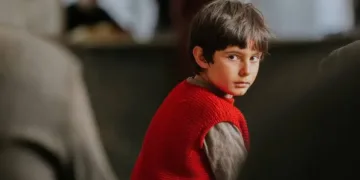
At the center of the story is the quietly shifting dynamic between grandmother and granddaughter, a relationship explored with patient observation. Lamar Faden’s performance as Janna is a study in forced maturation. She conveys a child’s natural curiosity transforming into a sharp, watchful intelligence. In her quiet expressions, one can see her processing the weight of her family’s secrets and her culture’s strictures. Her journey is not marked by grand speeches but by subtle shifts in posture and gaze, showing her moving from a passive child to an active participant in her own fate.
Opposite her, Khairiah Nathmy gives Sitti a formidable, transfixing presence. She is first presented as a rigid enforcer of tradition, her face a mask of disapproval rooted in a lifetime of conformity. The ordeal on the road reveals this exterior as a form of protection, a shield forged by fear.
As their search deepens, this facade cracks to reveal a fierce pragmatist with a deep well of resilience. She teaches Janna how to read the stars and build a fire, practical skills that are also metaphors for finding one’s way in the dark. These small acts of instruction are the foundation of their new bond. Their relationship, initially strained and defined by unspoken rules, slowly recalibrates into one of quiet, mutual respect.
Along the way they are aided by Ahmed, a charming driver whose precarious status as a non-citizen offers another perspective on the idea of belonging. His presence as a gentle, non-threatening male ally is significant, and his rootlessness provides a counterpoint to Sitti’s profound connection to her faith.
Echoes in the Silence
This is a portrait of three generations of women, each defined by her response to the society that shapes them. Sitti represents a generation that found its strength in adherence and endurance. Sara embodies a desperate, radical rebellion, a complete break from tradition. Janna stands at the crossroads, tasked with finding a new path that is neither total submission nor complete severance.
Setting the story in 2001 sharpens its examination of female autonomy, placing the characters in a time when restrictions were even more pronounced. The film observes how women find strength within a world built to contain them, showing the power of whispered secrets, shared glances, and stubborn persistence.
The commentary on the high price of freedom is potent. In one pointed sequence, Janna unties a hobbled camel, an act of youthful empathy. The animal, tasting liberty for a moment, runs into the road and is immediately struck by a car. The event is a blunt but effective statement on the dangers that await those who break their tethers without a clear path forward. The film’s ending offers no easy answers, refusing to resolve Sara’s fate with a tidy conclusion.
This inconclusiveness is a strength, a denial of simple narrative satisfaction in favor of a more honest reflection of life’s ambiguities. A neat resolution would have felt false. Instead, the open-ended finale places the focus squarely on Janna’s internal transformation. Her physical search may be over, but her true passage into selfhood has only just begun. The film leaves her, and the viewer, with a quiet sense of the difficult road ahead.
Full Credits
Director: Shahad Ameen
Writers: Shahad Ameen
Producers and Executive Producers: Mohamed Jabarah Al-daradji, Faisal Baltyuor, Abboud Ayyash, Sayed Abou Haidar, Mohamed Hefzy, Red Sea Film Festival Fund, Film Alula, Emad Eskander, Abdullah Naser Al-Qahtani, Abdullah Al-Eyaf, Ithra Film Fund, Ahmed Al-Mulla
Cast: Khairia Nazmi, Nawaf Al-Dhufairi, Lamar Feddan, Baraa Alam
Director of Photography (Cinematographer): Miguel Littin Menz
Editors: Hervé de Luze
The Review
Hijra
Hijra is a beautifully composed and deeply felt film that transforms a desperate search into a profound meditation on female resilience. Anchored by commanding performances from Khairiah Nathmy and Lamar Faden, it uses the vast Saudi landscape to explore the quiet, complex bonds between generations. While its pacing is deliberate and its conclusion purposefully ambiguous, the film's emotional honesty and visual poetry make it a significant and memorable piece of cinema.
PROS
- The film makes powerful use of the vast and varied Saudi Arabian landscape.
- Khairiah Nathmy (Sitti) and Lamar Faden (Janna) deliver nuanced and emotionally resonant portrayals.
- It offers a layered exploration of intergenerational relationships, female resilience, and tradition versus modernity.
- The story provides a focused and insightful look into the lives and struggles of its female characters.
CONS
- The meditative and slow pace may not appeal to all viewers.
- The refusal to provide a neat resolution might feel unsatisfying to some.
- Certain visual metaphors, like the scene with the camel, can feel overly direct.