























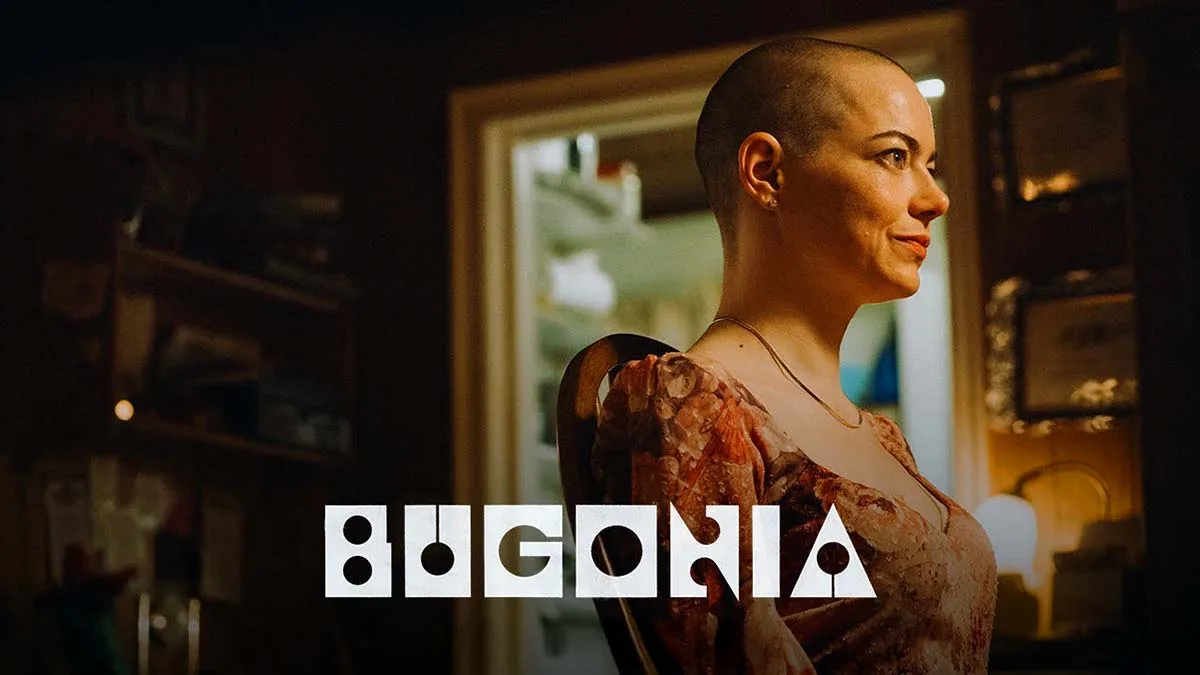

There are moments when a film arrives that feels less like a story and more like a cultural diagnosis, a perfectly timed reflection of a sickness we had not yet found the language to name. Bugonia is such a film. It taps directly into the ambient paranoia of an age where consensus reality has fractured into a million glittering, hostile shards.
The premise is a stark piece of pulp fiction: two cousins, the zealous beekeeper Teddy and his suggestible relative Don, abduct a high-powered pharmaceutical CEO named Michelle. The reason for this drastic action is Teddy’s unshakeable belief that she is an alien vanguard, sent to prepare Earth for planetary extermination.
What unfolds from this setup is a genre-fluid masterpiece of tension. It is at once a psychological thriller, a piece of biting social satire, and a stage for brutally dark physical comedy. Yorgos Lanthimos orchestrates the proceedings with a disquieting calm, steeping the narrative in an atmosphere of escalating dread that mirrors the protagonist’s own mental state.
The film is not interested in simply asking if Teddy is right or wrong. Instead, it poses a more terrifying question: in a world stripped of shared truths, what is the functional difference between righteous conviction and dangerous delusion? It explores the horrifying consequences that bloom from a single, fervently held belief.
The Ideological Battleground
Will Tracy’s screenplay operates as a near-perfect conduit for contemporary anxieties. The narrative is built upon the foundational fears of our time: the quiet apocalypse of environmental collapse, symbolized by the plight of the bees, and the loud tyranny of corporate malfeasance. The film’s most potent element, however, is its depiction of a new kind of ideological warfare, fought not on battlefields but in basements and on screens.
The dialogue itself is the primary conflict zone. Teddy’s impassioned speeches are a chaotic collage of anti-capitalist theory and dark-web eschatology; he speaks with the unnerving clarity of a man who has found one grand, unifying explanation for all the world’s ills. His language is raw, potent, and utterly divorced from temperate reason.
Pitted against his tirades is Michelle’s meticulously curated corporate dialect. She speaks in the empty, circular logic of press releases and DEI seminars, a language designed to project empathy while maintaining absolute control. Her words are a polished shield. The verbal sparring between them is a masterclass in modern communication breakdown, a small-scale echo of a society that has forgotten how to engage in good-faith argument. The film’s symbolism is rich, with the “colony collapse disorder” Teddy obsesses over serving as a potent metaphor for a society that has lost its organizing principle, its queen, its sense of shared purpose.
Yet the film’s intellectual rigor prevents it from becoming a simple fable. Teddy is not presented as a one-note zealot. His crusade is given a deeply personal, undeniably tragic origin: his mother lies catatonic in a hospital bed, a casualty of a reckless experimental drug trial conducted by Michelle’s company. This grounding detail is crucial. It transforms his cosmic paranoia into a grief-stricken, misdirected lunge for justice.
His extremism is a symptom of a legitimate wound. This complexity forces a constant re-evaluation from the audience. We are made to feel the pull of his grievance even as we are repulsed by his methods. Lanthimos denies us the comfort of a moral anchor, leaving us adrift in the murky space between a righteous monster and a polished one.
A Duel of Captor and Captive
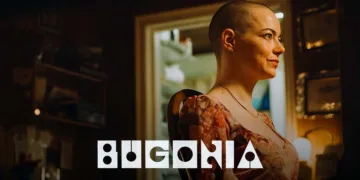
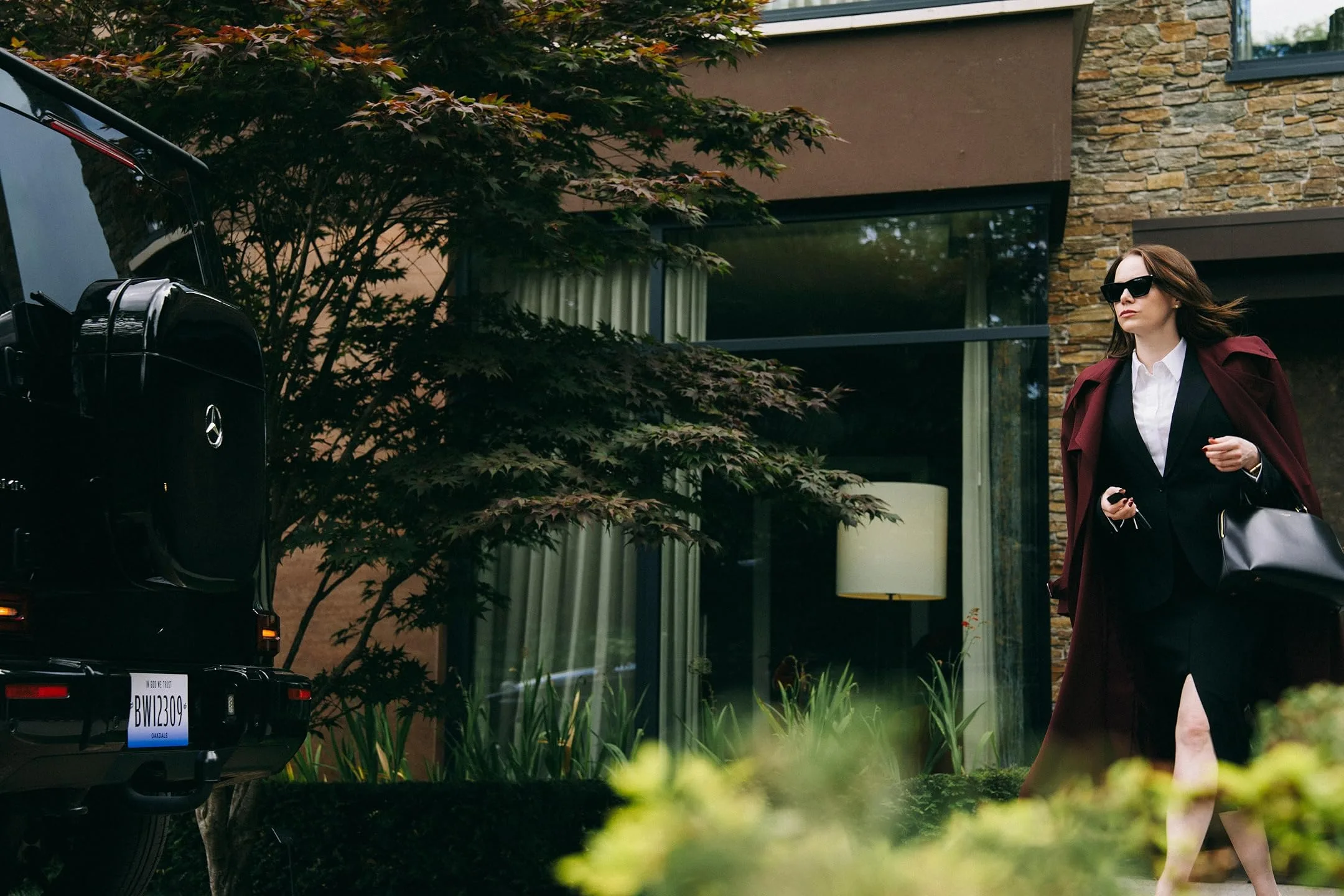
The film rests on two monumental central performances, a perfectly balanced duet of conflicting energies. Emma Stone’s Michelle is a brilliant creation, a chilling portrait of the modern corporate predator. She is never for a moment a passive victim. Instead, she is a commanding intellect temporarily inconvenienced, a strategist recalculating her approach from within a cage. Stone embodies the character with a severe, calculated poise, her every gesture and inflection a tool of subtle manipulation.
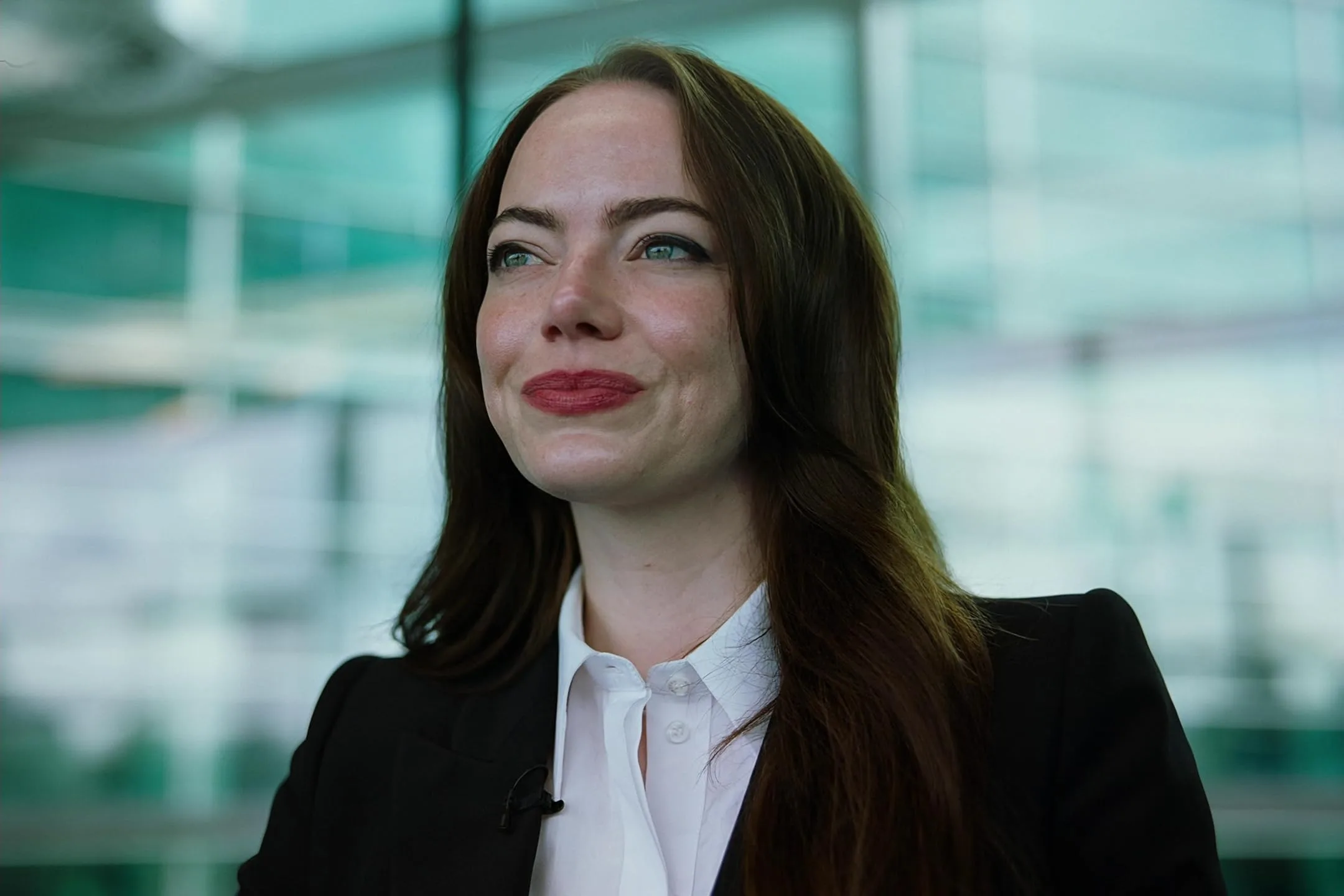
She portrays Michelle as a creature of pure will, a perfect product of a system that rewards ruthlessness with power. Her performance is a study in layers; even in moments of apparent vulnerability, we are left to wonder if we are seeing a crack in the facade or simply a more sophisticated form of attack. The forced shaving of her head becomes a pivotal moment, a violent stripping away of her corporate armor that only seems to sharpen the weapon of her mind.
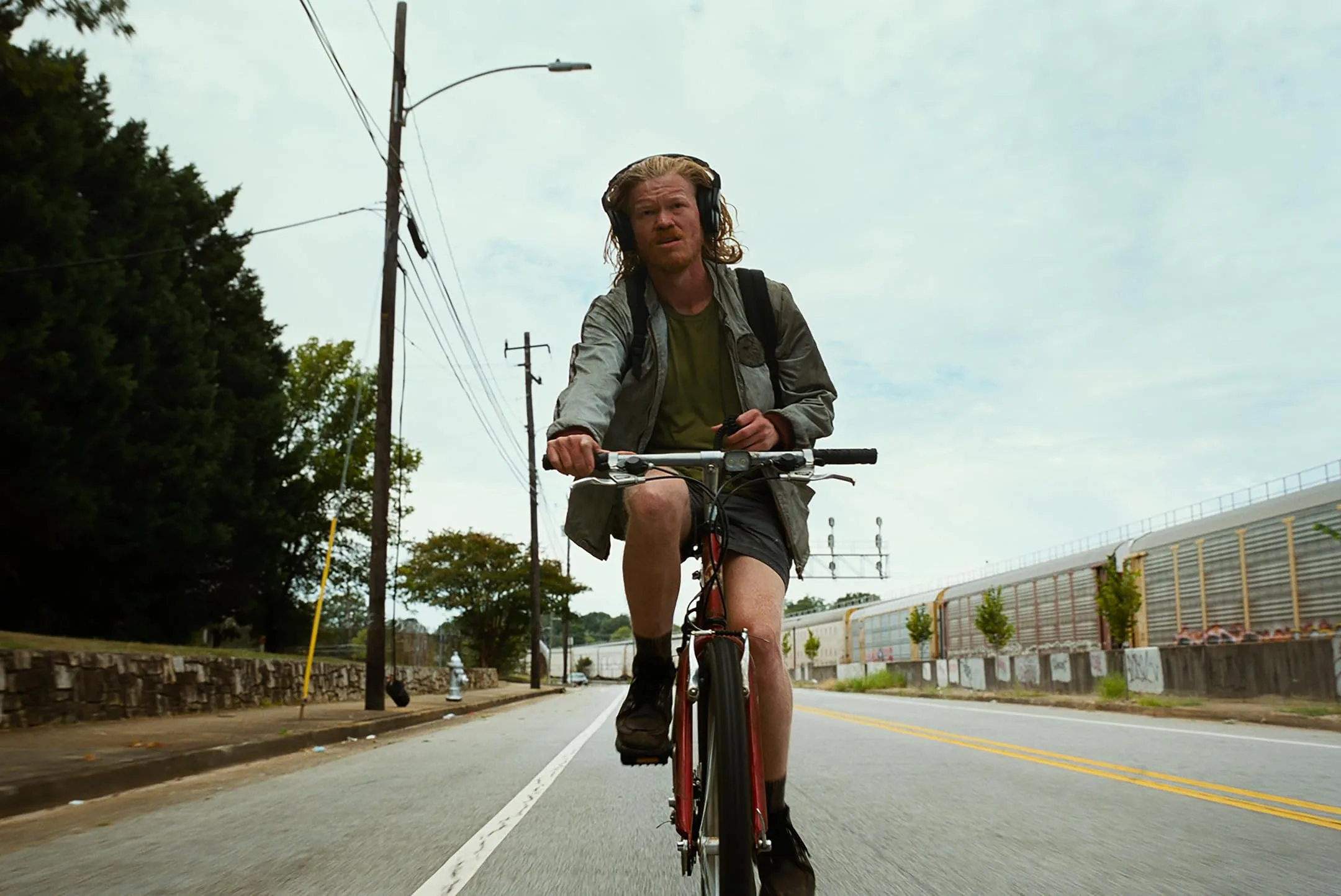
As Teddy, Jesse Plemons is nothing short of a revelation. His physical transformation is startling—gaunt, strung-out, a body worn down by the friction of a mind running too hot. He radiates a manic, prophetic intensity that is both terrifying and deeply sorrowful. Plemons achieves the near impossible task of making an outlandish belief system feel subjectively real and dangerously persuasive.
We see the world through his paranoid eyes, a place of hidden signals and vast conspiracies. Yet beneath the fanaticism, Plemons allows glimpses of the broken man within, a person so desperate for meaning that he has built a new reality to house his pain. He is a prophet of the algorithm, a martyr for a cause no one else recognizes.
The supporting characters provide essential texture, preventing the film from becoming an airless two-hander. Aidan Delbis is heartbreaking as Don, the follower whose naive loyalty slowly erodes under the weight of Teddy’s escalating violence.
He represents the persuadable soul, the audience surrogate caught between two terrifying absolutes. As the local cop, Casey, Stavros Halkias embodies a compromised and ineffective form of institutional authority. His shared, uncomfortable history with Teddy renders him unable to properly confront the situation, suggesting a world where old rules and old relationships are insufficient to handle new forms of madness.
Lanthimos’s Clinical Absurdism
Yorgos Lanthimos’s direction here is a masterwork of controlled chaos. His camera often assumes a detached, almost scientific posture, observing human cruelty and absurdity from an unnerving distance. This is most evident in the scenes of violence, which are often framed in long, static wide shots that turn brutal acts into a kind of grim, physical comedy. This Lanthimos signature (that ironic distance) forces a peculiar self-awareness upon the viewer.
It short-circuits our expected emotional responses, making us question why we might laugh at something so awful. While the film’s narrative is more linear and accessible than some of his earlier, more opaque works, it is unmistakably a product of his singular vision, a continued exploration of power, ritual, and the profound strangeness of human behavior.
The film’s aesthetic is a study in contrasts, meticulously crafted to reinforce the central ideological divide. Robbie Ryan’s pristine VistaVision cinematography captures both the cluttered, decaying world of Teddy’s farmhouse and the cold, sterile geometry of Michelle’s corporate life with unnerving clarity. Teddy’s home is a visual representation of his mind: a chaotic archive of research and paranoia, insulated from the outside world.
Michelle’s office, by contrast, is a non-place of glass and steel, designed to be impressive but devoid of humanity. This visual opposition is the landscape of the entire film. The sound design is equally crucial. Jerskin Fendrix’s score is a brilliant, anxiety-inducing creation that veers from swelling orchestral drama to jagged, dissonant horror cues, perfectly mirroring the film’s tonal shifts and the characters’ fracturing psychologies.
The Sting in the Tale
The film’s structure is one of relentless compression. For much of its runtime, it operates as a high-stakes chamber piece, a pressure cooker narrative where the tension is built almost entirely through dialogue and psychological gamesmanship. The impending lunar eclipse, a classic trope of science fiction, serves as an elegant ticking clock, pushing the contained drama toward an unavoidable and explosive breaking point.
The claustrophobia of the setting is palpable, forcing the audience to live inside this ideological deadlock alongside the characters. The deliberate pace of the middle act allows the philosophical and emotional stakes to escalate to an almost unbearable degree before the final act ignites.
What happens in that final act is a stunning subversion of expectation. The conclusion offers a definitive, shocking, and audacious answer to the film’s central question about Teddy’s sanity. It is a finale that will be debated for years, a rug-pull so perfectly executed that it retroactively reframes every scene that came before it. This is not a cheap twist but a profound thematic detonation.
The ending delivers a gut-punch of a statement on humanity’s awesome capacity for both delusion and destruction, and the terrifying notion that cosmic truth might just be hiding in the places we are most afraid to look. Bugonia is a challenging, darkly amusing, and essential piece of filmmaking. It is a stark reflection of a world on the brink, a society arguing about the nature of the fire while the house burns down around it.
Full Credits
Director: Yorgos Lanthimos
Writers: Will Tracy, Jang Joon-hwan
Producers and Executive Producers: Ed Guiney, Andrew Lowe, Yorgos Lanthimos, Emma Stone, Ari Aster, Lars Knudsen, Miky Lee, Jerry Kyoungboum Ko
Cast: Emma Stone, Jesse Plemons, Aidan Delbis, Stavros Halkias, Alicia Silverstone
Director of Photography (Cinematographer): Robbie Ryan
Editors: Yorgos Mavropsaridis
Composer: Jerskin Fendrix
The Review
Bugonia
Bugonia is a masterwork of modern paranoia. Yorgos Lanthimos directs a fiercely intelligent and unsettling chamber piece, anchored by towering performances from a chilling Emma Stone and a transformative Jesse Plemons. It's a darkly funny, philosophically dense, and visually stunning diagnosis of a society at war with itself, culminating in a genuinely shocking finale that will haunt you. A vital, uncompromising film for our fractured times.
PROS
- Phenomenal, career-defining performances from Jesse Plemons and Emma Stone.
- A brilliantly sharp and timely screenplay that captures contemporary anxieties.
- Masterful, confident, and stylistically distinct direction from Yorgos Lanthimos.
- Stunning cinematography and an unnerving, effective musical score.
- An audacious and thought-provoking finale that elevates the entire film.
CONS
- The clinical, detached tone may feel emotionally cold or alienating to some.
- Its intense psychological themes and graphic moments can be difficult to watch.
- The deliberate, talk-heavy pacing might test the patience of some viewers.
- The bleak worldview and misanthropic humor will not appeal to all tastes.