



























Sophie Birenbaum learns that her mother’s cancer has returned because her father accidentally phones her while she is waiting to audition for Waitress. The timing is cruel enough on its own. What gives the scene its real charge is the way the information follows Sophie onto the stage. She sings anyway, carrying fear she has barely had time to understand into a performance that unexpectedly wins her the lead.
That collision gives Don’t Say Good Luck its strongest idea. Sophie’s family is moving toward a loss that will reshape every part of her life, while school continues to demand rehearsals, friendships keep producing petty wounds, crushes remain embarrassing, and a musical still needs someone to hit the next cue. The film gets much of its emotional force from refusing to grant tragedy a clean schedule.
Elizabeth’s decline is most effective when it changes the scale of ordinary things. Plans involving the family’s beach house become less certain. A long book becomes harder for her to keep reading as her energy fades. These are small shifts, and Julia Hart lets them accumulate until normal domestic life starts carrying a second meaning. Elizabeth’s characterization works through that gradual reduction. She is still a mother, spouse, worker, and source of reassurance, yet each familiar role requires a little more effort as her condition worsens.
Sunny Sandler has the harder task because Sophie is still learning what she is allowed to want while her mother is dying. Her theatrical ambition can look indecent beside the family emergency. The film makes that discomfort explicit when her grandmother questions the time Sophie continues to give the production. Elizabeth wants her daughter to stay with it, which turns the school play into a test rather than an easy refuge. Sophie has to keep asking what continuing her own life means when someone she loves is running out of time.
The screenplay is sharpest when it refuses to rank those pressures by moral importance. Sophie’s attraction to Jack still matters because she is a teenager. Her conflict with Carolyn still hurts because grief does not magically cancel disappointment. A drunken party can be foolish at the same time that the house Sophie returns to is becoming frightening. These smaller dramas make the maddening fact concrete: life continues to generate fresh obligations while catastrophe is already occupying all available emotional space.
Theater gives that contradiction a physical routine. Rehearsals demand warm-ups, awkward rituals, timing, repetition, and attention to other people. Sophie’s younger brother questions the basic musical-theater logic of singing instead of simply speaking, a joke that quietly places the film’s method under scrutiny. Why sing when words exist? Don’t Say Good Luck spends much of its running time building an answer through Sophie, whose feelings repeatedly arrive before she has language precise enough to contain them.
Some of the surrounding writing has less patience. Carolyn’s sudden withdrawal from the production and distance from Sophie create a rupture that the later explanation cannot fully support. Her own relationship and uncertainty give the choice context, yet the friendship has been established with enough closeness that the abrupt disappearance feels like a screenplay moving a piece into position. Ted’s repeated accidental calls carry a similar problem. The first one is essential because it fuses the family crisis with Sophie’s audition. Repetition makes the device visible.
That visibility matters in a film whose best scenes depend on emotional causality feeling unforced. When the mechanism shows, the effect weakens. Supporting characters sometimes arrive with clear jobs to perform around Sophie, then recede once the pressure has been applied. The central mother-daughter relationship survives this because Hart and the two leads keep returning to behavior: Elizabeth’s shrinking energy, Sophie’s difficulty speaking cleanly about fear, and the way performance becomes easier than direct confession.
Sandler’s singing is especially useful because Sophie never needs to become a polished theatrical prodigy for the musical plot to work. The point is the transfer of feeling into form. Her audition is changed by information she has barely processed. Later rehearsals continue while the family’s future contracts. By the time she reaches “She Used to Be Mine,” the song carries every argument the film has staged around the production: the guilt of leaving home to rehearse, the need to preserve a self outside the illness, the fear of what is coming, and the strange persistence of teenage desire alongside anticipatory grief.
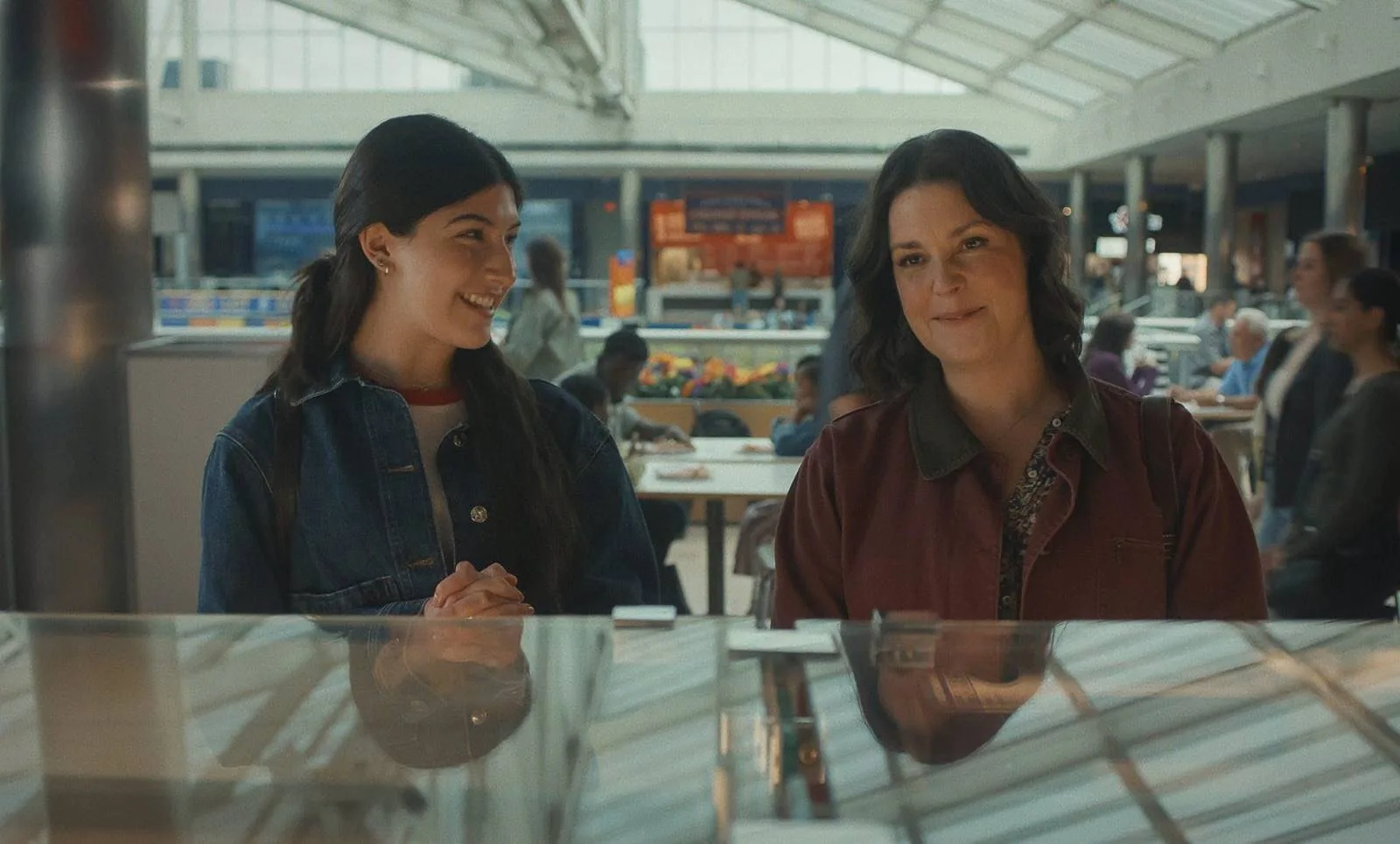
Hart also resists making Elizabeth’s death the dramatic centerpiece. The film has already found its central event elsewhere, in the period when everyone knows loss is approaching and still has to decide what to do on Tuesday, what to say at dinner, and who is expected at rehearsal. That choice keeps death from becoming a single emotional switch that explains everything around it.
“She Used to Be Mine” lands because singing has changed function by the time Sophie reaches it. Earlier, theater is ambition, escape, embarrassment, obligation, and occasionally a source of conflict. Here it becomes a container large enough for several incompatible states to exist at once. Sophie is still a daughter, still a teenager, still an actor with a cue to hit, and still someone whose ordinary future is being altered in real time. The song leaves those forces unresolved and gives them room to exist together.
Don’t Say Good Luck premiered globally on Netflix on August 14, 2026. You can watch the film exclusively streaming on Netflix. The plot follows theater lover Sophie Birenbaum, who lands the lead in her high school musical just as her life is upended by her mother’s returning cancer diagnosis.
Where to Watch Don’t Say Good Luck (2026) Online


Full Credits
Title: Don’t Say Good Luck
Distributor: Netflix
Release date: August 14, 2026
Rating: PG-13
Running time: 110 minutes
Director: Julia Hart
Writers: Laura Hankin, Julia Hart, Jordan Horowitz
Producers and Executive Producers: Adam Sandler, Jackie Sandler, Julia Hart, Jordan Horowitz, Brian Kavanaugh-Jones, Fred Berger
Cast: Sunny Sandler, Melanie Lynskey, Max Greenfield, Stephanie Beatriz, Bebe Neuwirth, Steve Buscemi, Jack Champion, Scarlett Estevez, Jon Lovitz
Director of Photography (Cinematographer): Bryce Fortner
Editors: Shayar Bhansali
Composer: Yuli
The Review
Don’t Say Good Luck
Don’t Say Good Luck finds its strongest emotional register in the collision between Sophie’s ordinary teenage life and the approaching loss of her mother. Julia Hart lets rehearsals, family routines, friendship fractures, and Elizabeth’s decline accumulate until “She Used to Be Mine” carries weight the film has patiently prepared. A few secondary arcs and repeated plotting devices expose the screenplay’s machinery, yet the central mother-daughter story keeps its emotional logic intact. Sunny Sandler and Melanie Lynskey anchor a drama that earns its sentiment through timing rather than sheer tragedy.
PROS
- Audition and cancer-news collision
- Gradual domestic decline
- Sandler-Lynskey emotional center
- Earned musical climax
CONS
- Carolyn’s underdeveloped rupture
- Repeated butt-dial device
- Functional supporting characters