





























June 1971 is a terrible month to be wearing a police uniform in Mexico City, especially when the public has good reason to distrust everyone wearing one. Women in Blue returns only a month after its first season ended, and that tiny gap matters.
María, Valentina, Gabina and Ángeles have earned a little respect after catching the Tlalpan Undresser, yet the institution around them has barely moved. María has a lieutenant’s rank. The men still decide which investigations her unit is allowed to touch. Progress, apparently, comes with paperwork.
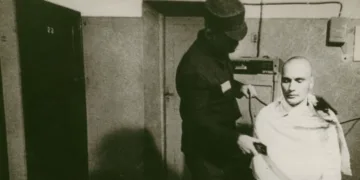
Season 2 places that contradiction against the aftermath of El Halconazo, the massacre of student protesters that hangs over the eight episodes. A murdered student initially suggests another serial-killer story. Then a second death appears. Connections to past demonstrations emerge.
What looked like an individual predator begins pointing toward police violence, political protection and people who would rather erase history than answer for it. That shift gives the season a stronger dramatic engine than Season 1. The mystery keeps changing shape without immediately revealing what game it is playing. The badge has become evidence.
One Murder, Several Systems Failing
Lucio Lima’s death establishes the season’s interests with depressing efficiency. He is beaten, mutilated and left missing two fingers after returning home from his job at a gay bar. Detectives quickly settle on Mauricio, his former lover, helped along by Mauricio’s record for violent behavior. Then Lozano visits the bar.
Rather than earning information, he harasses the manager and extorts money from him. The scene turns an ordinary investigative dead end into something sharper: witnesses do not distrust these officers because the screenplay needs an obstacle.
The police have trained them to. Valentina and Gabina get useful information from the same manager by treating him like a person, then pass their findings to Lozano while flattering him into thinking he solved the problem himself. It is ridiculous. It is also probably the safest strategy available.
Ángeles supplies the detail that breaks the easy theory. Mauricio may have motive, but taking Lucio’s fingers looks deliberate. She reads the missing digits as trophies, which suggests planning rather than an eruption of jealous violence. Once photographs connect the victims to student activism, the case widens further, eventually bringing murdered policemen, recorded confessions and old state crimes into the same orbit.
The late episodes become less disciplined, stacking dramatic revelations where earlier hours let suspicion accumulate. For most of the run, though, every answer leaves a worse question behind. Good police work is awkward when the police are part of the crime scene.
Rank Without Power
María’s promotion is one of Season 2’s best jokes, mainly because nobody involved finds it funny. She has authority until she tries to use it. Early on, she keeps Las Azules away from Lucio’s case, worried that one failure could erase everything they have earned. Then she discovers Octavio has been negotiating their investigative future with Gerardo during a poker game. The women are apparently allowed to catch murderers provided the cards cooperate.

María’s response is wonderfully specific. She enters Gerardo’s office herself, demands another chance and proposes the coin game that finally gets her team onto the investigation. Bárbara Mori plays the shift less as sudden rebellion than accumulated irritation finally acquiring rank. María has spent enough time asking permission. Her private life carries the same pressure. Alejandro wants reconciliation, while María refuses to treat returning to the marriage as the obvious destination simply because everyone else recognizes the route.
Valentina is moving in the opposite emotional direction. Her bravado has survived the previous case; her nervous system has not. After an argument with María, she suffers a panic attack in the restroom. Gabina takes her to a support group, where Valentina walks out when the leader frames suffering as something purposeful. It is one of the season’s better character beats because Valentina’s anger feels easier for her than admitting fear.
Gabina receives her own unpleasant education when her brothers casually laugh about their father’s violence. Ángeles, meanwhile, keeps noticing what louder people miss. Four women are finally becoming competent officers inside a workplace that remains remarkably committed to making competence inconvenient.
The Past Refuses to Stay Filed
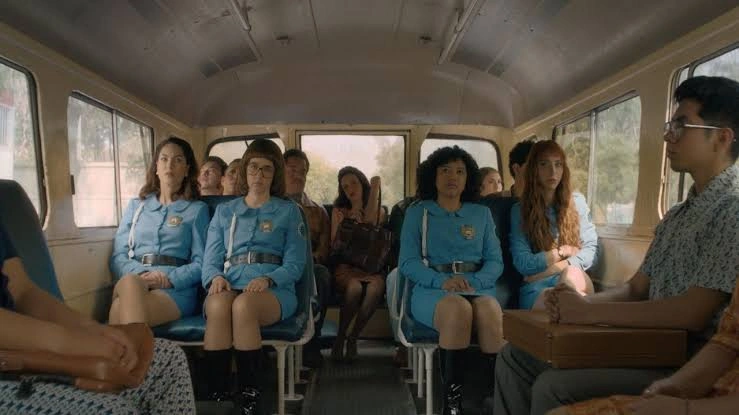
The 1970s setting does substantial dramatic work rather than sitting behind the actors like expensive wallpaper. Powder-blue uniforms, period hairstyles, architecture and music establish a recognizable social order, while dim bars and nighttime streets give the investigation a heavier atmosphere than the first season carried.
The political hierarchy completes the picture. Chief Escobedo owes his position to political connections and responds to public anger with the old institutional favorite: tighter control. Reports of police abuse bring pressure on the media rather than serious appetite for accountability. Romandia, still waiting for the detective position he was promised, discovers that even people inside the machine can spend a long time waiting for it to honor a bargain.
The season’s historical backdrop also keeps its villains from becoming conveniently singular. Remove one murderer and the structure that enabled violence remains standing. That makes the occasional melodramatic turn near the end especially frustrating, since the quieter material has already demonstrated how threatening bureaucracy can be without anyone twirling a moustache.
Season 2 is at its best whenever a murder clue points upward rather than outward. Detectives usually search for the person who broke the rules. Las Azules have the less comfortable assignment: figuring out who wrote them.
Women in Blue (Las Azules) returned for its second season on August 12, 2026, and is available for streaming on Apple TV+. Now promoted to lieutenant, María leads the Azules into a high-stakes investigation surrounding the murder of a student activist, which unearths painful connections to the student massacres of 1968 and 1971.
Where to Watch Women in Blue Season 2 Online


Full Credits
Title: Women in Blue (Las Azules)
Distributor: Apple TV+
Release date: August 12, 2026
Rating: TV-MA
Running time: 45–60 minutes per episode
Director: Fernando Rovzar, Catalina Aguilar Mastretta, Samuel Kishi
Writers: Fernando Rovzar, Pablo Aramendi
Producers and Executive Producers: Fernando Rovzar, Wendy Riss, Alejandro Lozano, Erica Sánchez Su, Billy Rovzar
Cast: Bárbara Mori, Ximena Sariñana, Natalia Téllez, Amorita Rasgado, Miguel Rodarte, Leonardo Sbaraglia, Christian Tappán, Horacio García Rojas, Bruno Bichir
The Review
Women in Blue Season 2
Season 2 gives Women in Blue a sharper badge and a dirtier precinct. The Lucio investigation keeps changing shape, while Ángeles spotting the trophy-taking pattern and María barging past the indignity of that poker-game bargain give the procedural real momentum. The political material carries greater weight this time, especially when police prejudice and institutional self-preservation actively obstruct the case. Late revelations crowd the final stretch, where restraint briefly misplaces its paperwork. Still, this is a stronger, surer season with four leads who finally get to police the police.
PROS
- Stronger political focus
- Four well-developed leads
- Ángeles' sharp investigative work
- Effective period atmosphere
- Layered central mystery
CONS
- Overloaded final episodes
- Occasional melodramatic turns
- Some investigative contrivances







