



















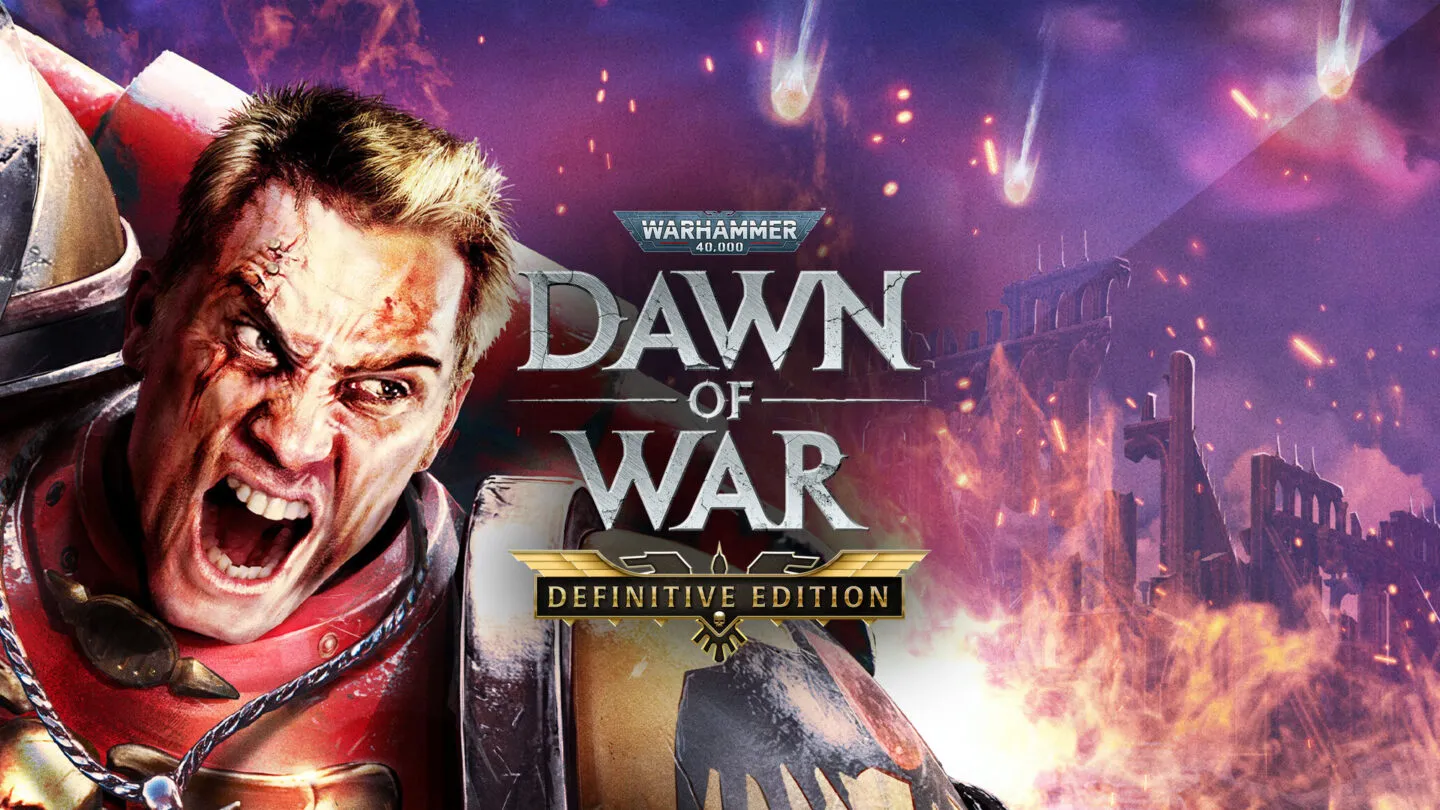

The Warhammer 40,000 universe has a long and storied history in video games, yet few titles command the respect of Relic Entertainment’s 2004 classic, Dawn of War. It was a real-time strategy game that successfully translated the brutal, large-scale conflicts of the tabletop experience to the screen.
The game distinguished itself by shifting the genre’s focus from passive resource gathering to aggressive territorial control, forcing constant, bloody conflict. Two decades later, Warhammer 40,000: Dawn of War – Definitive Edition arrives, bundling the original game with its three major expansions: Winter Assault, Dark Crusade, and Soulstorm.
It presents itself as the ideal way for new players and veterans to experience the complete saga with modern enhancements. The central question is whether this collection preserves the classic gameplay while providing meaningful updates, or if it is merely a convenient repackaging of a revered relic.
The Core of War: Foundational Gameplay
The foundational mechanics of Dawn of War are a masterclass in aggressive RTS design, and they are preserved perfectly in this edition. The game’s economy is driven entirely by conquest. Gone are the peon units and static resource nodes of its contemporaries; in their place is a system of Strategic Points, Critical Locations, and Relics.
Standard Strategic Points provide a steady stream of Requisition, the primary resource for infantry and basic structures. Critical Locations offer a much larger Requisition bonus, making them vital objectives that often become the epicenter of major battles. Relics are rare, heavily fortified locations that are required to unlock a faction’s most powerful units and abilities, gating late-game power behind high-risk map control.
This resource model forces players out of their bases and into constant engagement from the opening moments of a match. Defensive turtling is a path to starvation, as an opponent who controls the map will inevitably out-produce and overwhelm you.
Base building is streamlined to serve the relentless pace of combat. Players begin with a central Stronghold and expand their infrastructure to meet tactical needs. A Barracks produces core infantry, a Plasma Generator increases Power income for advanced units and research, and an Armory unlocks vital upgrades. The tech tree is clear and purposeful.
Building a Machine Cult, for instance, is the direct path to unlocking powerful vehicles like the Predator tank or the lumbering Dreadnought. This system makes every structural choice a meaningful one tied to your overarching strategy.
Combat is managed through a squad-based system that simplifies micromanagement without sacrificing tactical depth. Commanding a single squad icon is far more efficient than directing ten individual soldiers, allowing players to focus on battlefield positioning and ability usage. The on-the-fly reinforcement mechanic is a brilliant design choice.
Instead of pulling a damaged squad back to base, you can spend resources to have new soldiers fill the ranks directly at the front line, maintaining pressure on your opponent. Squads can be specialized for different roles by equipping them with heavy weaponry.
A Space Marine squad can take a Heavy Bolter for suppressing enemy infantry, a Plasma Gun for punching through heavy armor, or a Missile Launcher for destroying vehicles and buildings. This creates a rock-paper-scissors dynamic where tactical composition is key.
Adding another layer of strategy is the Morale system. Every squad has a green morale bar in addition to its health. Taking heavy fire, being attacked by flamethrowers, or witnessing a commander die will drain this bar. When it empties, the squad “breaks”—its accuracy and damage plummet, and it may fall back uncontrollably.
This system is a hard counter to the “zerg rush” tactic of amassing a huge army and attacking without thought. It rewards flanking, the use of suppressive fire, and psychological warfare. The game’s factions interact with these systems in distinct ways.
The versatile Space Marines are a great starting point, while the Astra Militarum fields weak but numerous infantry supported by the most powerful tanks in the game. The Eldar rely on speed and specialized units, while the Orks can trigger a “WAAAGH!” to bolster their already massive numbers, showcasing the variety built upon this strong mechanical core.
A Saga in Four Parts: Content and Campaigns
The Definitive Edition is an immense repository of content, collecting four complete games and the nine factions they introduced. Players can command the Space Marines, Orks, Eldar, Chaos Space Marines, Imperial Guard, Necrons, Tau Empire, Sisters of Battle, and the Dark Eldar. The journey begins with the base game’s narrative campaign, which remains a highlight of RTS storytelling.
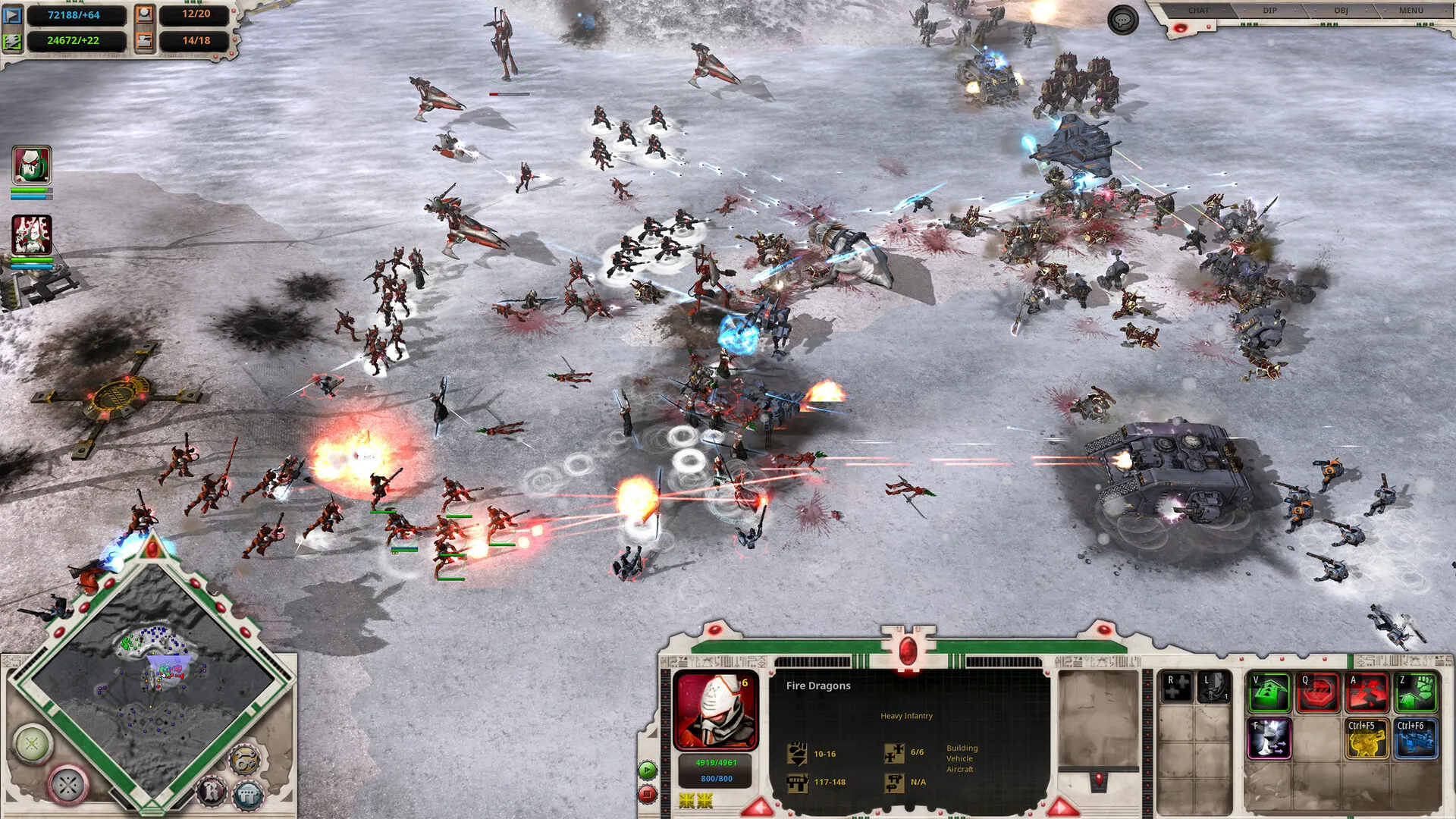
Its plot, centered on Captain Gabriel Angelos and the Blood Ravens chapter, is more than a simple framing device for missions. It explores themes of duty, heresy, and brotherhood, with a genuinely engaging dynamic between the stoic Gabriel and the conflicted Librarian Isador Akios.
The missions are varied, moving from large-scale assaults to tense infiltrations, and serve as an excellent introduction to the game’s mechanics. The Winter Assault expansion continues this narrative-focused approach, offering two distinct campaigns—one for the forces of Order and another for Disorder—while introducing the Imperial Guard as a playable faction.
With Dark Crusade and Soulstorm, the series pivoted to a non-linear, persistent campaign structure modeled after a board game. In these modes, you choose a faction and vie for total control of a planetary map. Each province you attack generates a unique skirmish map, and your army’s performance has lasting consequences. Victory allows you to annex the territory, which might grant a global bonus like faster unit production or starting with extra resources.
A key element of this mode is the Honor Guard. These are elite units you earn that persist between battles, forming a veteran strike force you can deploy in any mission. Likewise, your primary commander gains new wargear and abilities as you conquer foes, adding a light role-playing element to the grand strategy.
Losing a battle means you lose that territory, creating a tense back-and-forth struggle for supremacy. This format offers tremendous replayability, as each of the seven factions in Dark Crusade (and nine in Soulstorm) has a unique stronghold and story-based objective.
For players seeking pure competition, all factions and maps are available for offline skirmish against the AI or in online multiplayer. Here, however, a critical decision affects the entire package: all multiplayer and skirmish games operate exclusively under the Soulstorm rule set. This is a point of contention for series veterans, primarily because it introduces flying units.
These units, absent from the first three titles, significantly alter the strategic balance, granting high mobility and the ability to bypass ground-based defenses. Factions that lack effective anti-air options, like the Necrons, are at a distinct disadvantage in this meta, which can be frustrating for those who preferred the ground-focused tactics of the original game or Dark Crusade.
Grimdark Aesthetics: Art, Sound, and Atmosphere
Despite its age, Dawn of War powerfully establishes the grim, brutal atmosphere of the 41st Millennium. The visual style, with its slightly exaggerated proportions and bold colors, perfectly mimics the hand-painted tabletop miniatures of the era. Character models may lack the polygon counts of modern titles, but their designs are clean and instantly readable on a chaotic battlefield.
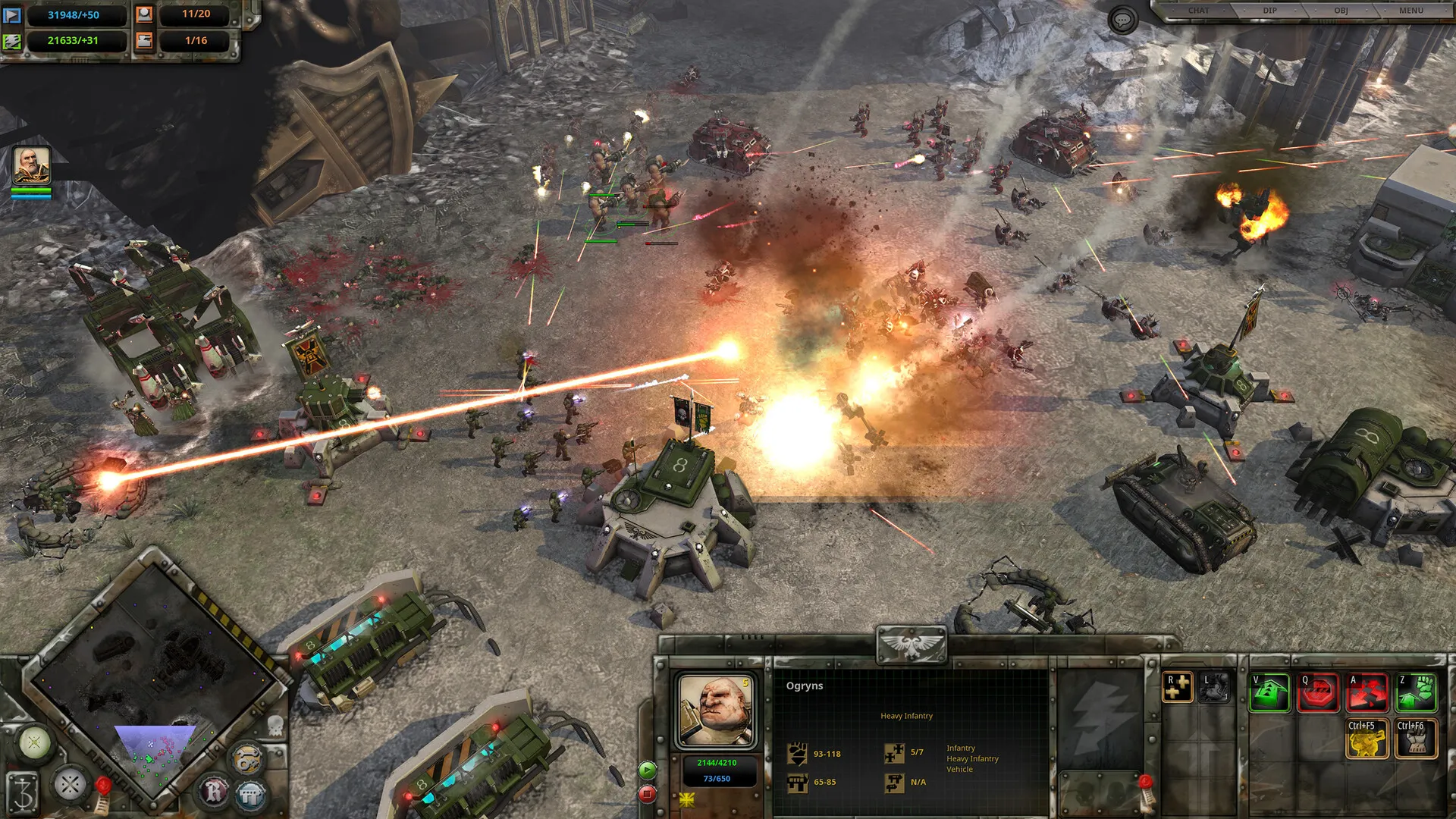
The true strength of the visuals lies in the animation. A charging squad of Orks lopes across the field with palpable aggression. A Dreadnought’s power fist crushes a tank with a satisfying crunch. The game is filled with brutal “sync kills,” special animations where units will perform cinematic takedowns on their enemies, driving home the savage nature of the setting. These flourishes make every battle feel weighty and significant.
The sound design is equally impressive and contributes immensely to the experience. The voice acting is superb across the board, establishing iconic interpretations of these factions that have influenced Warhammer media for years. The commanding presence of Gabriel Angelos, the battle-hungry cries of Ork Boyz, and the cold pronouncements of the Necron Lord are all delivered with conviction.
Weapon sounds are distinct and impactful; the percussive thud of a Heavy Bolter is a world away from the sharp crack of a Tau Pulse Rifle, providing valuable audio feedback during combat. The presentation is not without its flaws. Old audio bugs have been carried over, meaning it is still common for important mission dialogue to be drowned out by the simultaneous chatter of your units.
Immersion is deepened through features like the Army Painter. This robust customization tool allows players to change the primary, secondary, and trim colors of their chosen faction, as well as their banner insignia. For a hobby built on personalizing one’s army, this feature was a revelation in 2004 and remains a welcome inclusion.
It forges a personal connection between the player and their on-screen forces, making victories more triumphant and losses more personal. The combination of the distinct art style, powerful audio, and deep customization creates an experience that feels authentic to its source material.
Polishing Old Relics: The “Definitive” Upgrades
The quality of the remastering in this Definitive Edition is a study in contrasts, mixing essential modernizations with perplexing oversights. On the positive side, the technical foundation has been successfully updated for contemporary systems.
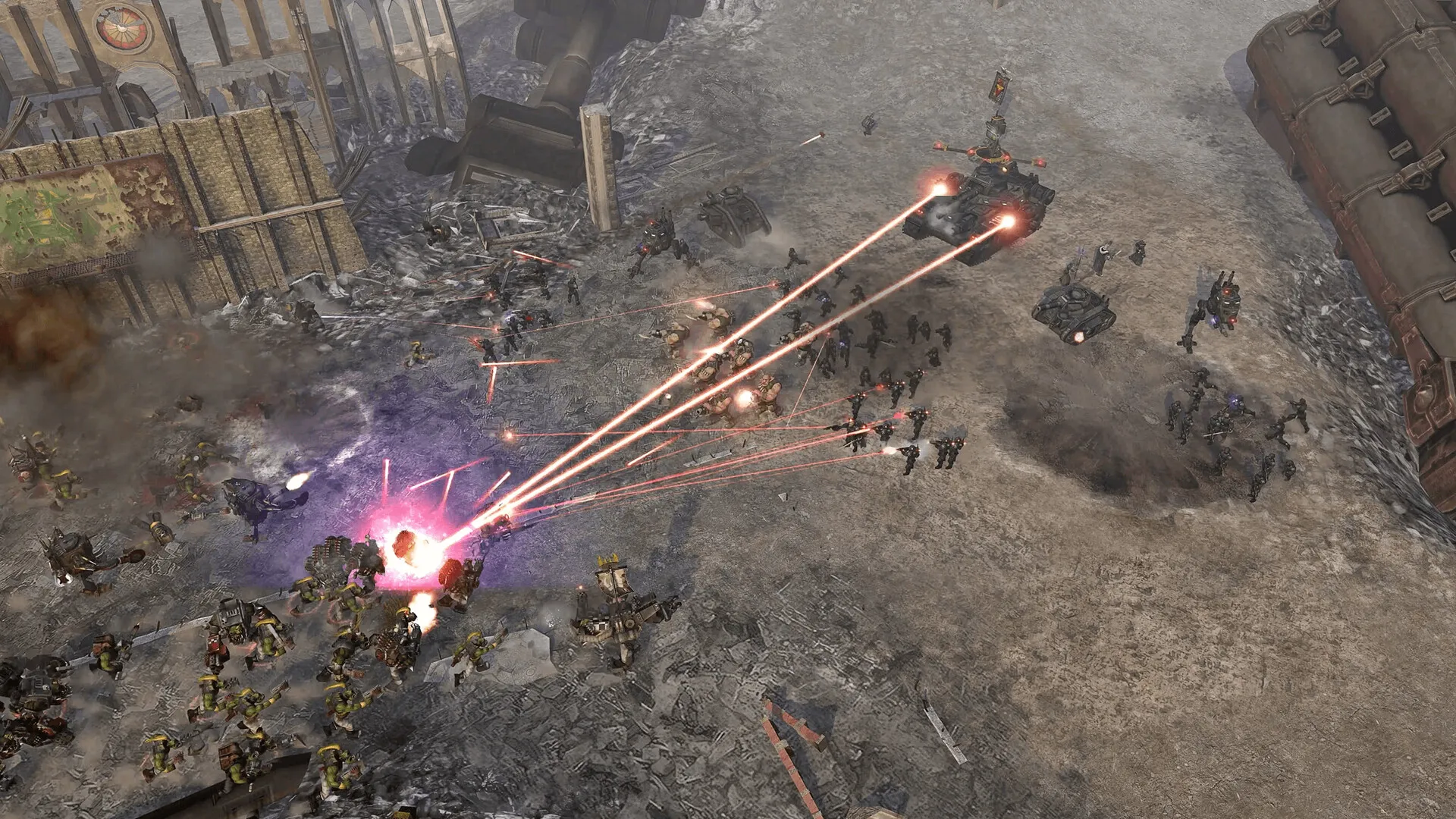
The game now runs on a 64-bit architecture, which improves stability and allows for larger-scale battles without the performance issues that plagued the original 32-bit engine. Native support for widescreen resolutions up to 4K is flawlessly implemented, and the user interface scales properly to avoid becoming illegibly tiny on high-resolution displays.
Visual enhancements are noticeable, with crisper textures on units and environments, improved real-time lighting that adds depth to the scenery, and more detailed shadow effects. A few quality-of-life adjustments are clear improvements. The camera can now be zoomed out significantly further than before, providing a much-needed tactical perspective on the battlefield.
The inclusion of an integrated Mod Manager is perhaps the single most important update for the community, ensuring that the decades of fan-made content—from new factions to total-conversion mods—remain accessible and compatible.
These welcome additions are undermined by a number of lazy and incomplete efforts. The most jarring failure is the treatment of the in-game cutscenes. Rather than being remastered or even pillarboxed to preserve their original aspect ratio, they have been crudely stretched from 4:3 to fill a 16:9 frame. The result is a distorted, low-resolution smear that looks unprofessional and pulls the player out of the experience.
The developers claimed to have improved unit pathfinding, a long-standing issue in the original game. In practice, there is no discernible improvement. Squads still take circuitous routes to their destinations, get caught on terrain, and bunch up in choke points, requiring constant micromanagement to correct their clumsy behavior.
The absence of basic modern features is also disappointing. The inability to remap keybindings is a baffling omission for a PC-centric RTS, forcing players to use awkward default layouts that hinder efficient play.
Old bugs, like the aforementioned audio-overlap issue, have been carried over without any attempt to fix them. The overall effort feels superficial, as if the goal was to achieve bare-minimum functionality on modern PCs rather than to create a truly polished and definitive version of a beloved classic.
Final Verdict and Recommendation
The timeless quality of Dawn of War’s core design is the primary reason this collection succeeds at all. The aggressive, fast-paced RTS gameplay, coupled with the immense amount of content across four full titles, remains a high point for the genre. Its systems are elegant, its factions are distinct, and its campaigns are entertaining. This is a package containing hundreds of hours of excellent strategy gaming.

The remastering work itself, however, is a deeply mixed bag. While it provides essential technical compatibility for modern hardware, it is also a lazy and incomplete effort, marred by glaring flaws and a clear lack of ambition. It does just enough to make the games run, but not enough to be called “definitive.”
For players who are new to the series or the Warhammer 40,000 universe, this edition is the most convenient and valuable entry point available. The sheer volume of content for the price is outstanding, and the technical updates ensure a smooth experience without the need for community patches or troubleshooting. It is a fantastic way to experience the entire classic saga from start to finish.
For veterans who already own the original games on Steam, the decision is more complicated. The graphical enhancements and quality-of-life tweaks are pleasant but not transformative. Many long-time players have already used mods to achieve widescreen support and other fixes.
The convenience of an all-in-one launcher and guaranteed mod compatibility must be weighed against the lackluster execution of the remaster and the fact that it is a paid update. It is a testament to Relic’s original vision that Dawn of War still shines so brightly, even when this new polish is applied so thinly.
The Review
Warhammer 40,000: Dawn of War - Definitive Edition
Warhammer 40,000: Dawn of War - Definitive Edition is an essential gateway to a classic RTS, offering hundreds of hours of brilliant, timeless gameplay. The sheer volume of content is undeniable. This value is diminished by a lazy and superficial remastering effort, plagued by distorted cutscenes and unaddressed flaws from the original releases. It is a testament to the original's strength that it remains highly recommended for newcomers, though this "definitive" version is far from perfect. Veterans with modded originals may find little reason to upgrade.
PROS
- Timeless, aggressive RTS mechanics that still feel fresh.
- An immense amount of content, bundling four games and nine unique factions.
- Excellent atmosphere, voice acting, and art direction authentic to the source material.
- High replayability offered by the non-linear meta-campaigns.
- Essential updates for modern hardware, including widescreen support and a mod manager.
CONS
- The remastering effort is superficial and low-effort.
- Original cutscenes are poorly stretched, resulting in distorted visuals.
- Unit pathfinding remains buggy and unimproved.
- Lacks basic modern features like key remapping.
- Multiplayer and skirmish modes are locked to the divisive Soulstorm balance.