




























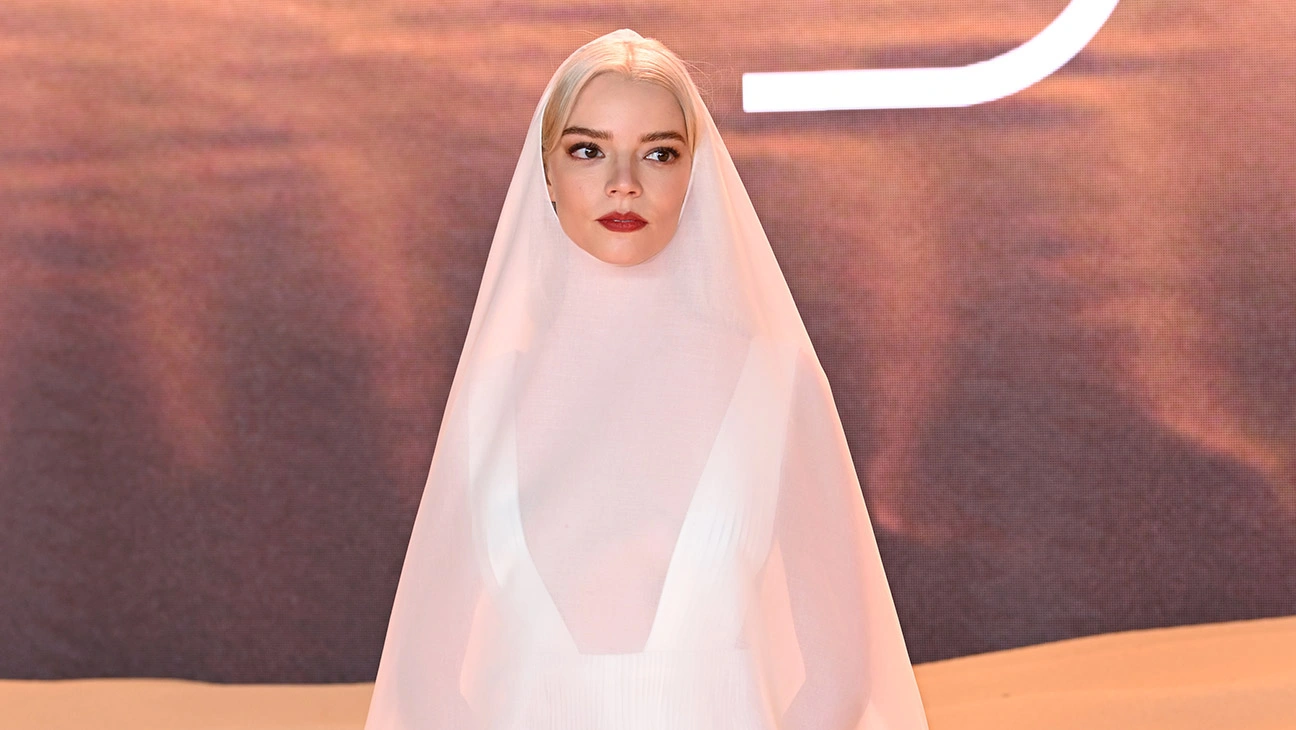

Anya Taylor-Joy has reignited a long-running conversation about gender and method acting after telling Complex that women rarely pursue the intense, immersive technique because their lives leave little room for it. The comments, made in an interview tied to her Apple TV film “Lucky” and the upcoming “Dune” installment, resurfaced widely online this week and drew renewed attention to a debate several prominent actresses have raised in recent years.
“If you’ll notice, women don’t method act because we have things to take care of, so we can’t completely lose our minds,” Taylor-Joy said, describing acting more broadly as a form of controlled psychosis that requires inhabiting another person’s thoughts and movements for extended stretches. She said she relies on the people around her to pull her back when she becomes too absorbed in a role, recalling that friends and family sometimes address her by a character’s name as a signal to step back into herself.
Taylor-Joy went further in explaining why she avoids staying in character between takes, telling the outlet that doing so full-time would be unfair to the large crews actors depend on. She said losing herself in a part risks making her difficult to work with, and that maintaining basic consideration for collaborators matters more to her than committing fully to an immersive process.
Her remarks echo comments Natalie Portman made in 2024, when she described full-time method acting as a luxury unavailable to most women. Kristen Stewart offered a related theory to The New York Times last year, suggesting that the vulnerability inherent in performance carries a stigma for men that pushes some toward exaggerated, all-consuming preparation to prove their seriousness.
The technique has produced some of film’s most discussed on-set stories, including Daniel Day-Lewis reportedly requiring crew members to feed him without breaking character during “My Left Foot,” and Jim Carrey staying in character as Andy Kaufman throughout production of “Man on the Moon.” Taylor-Joy’s comments have circulated widely on social media, sparking debate over whether behavior praised as dedication in male stars would draw harsher judgment if attempted by a woman.