













![Kingdom Hearts Collection [I-III] Review](https://gazettely.com/wp-content/uploads/2026/10/Kingdom-Hearts-Collection-I-III-1-360x180.webp "Kingdom Hearts Collection [I-III] Review: KHII Holds Steady as Newer Entries Fluctuate 35")




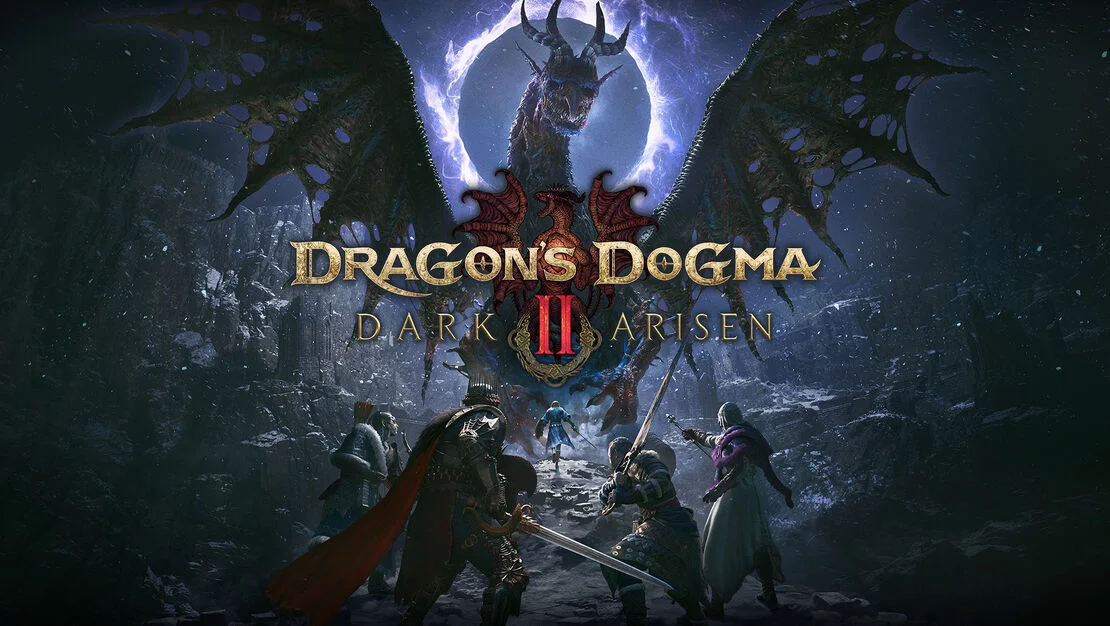

Norgan’s blizzards drain stamina even when you stand still. That changes the calculation before a fight begins: the reserve needed to climb, reposition, or escape is already being consumed by the weather. Thermal equipment and Heatstones become preparations for combat, while a sheltered camp offers the option of waiting for conditions to improve. With visibility reduced and the mini-map unavailable, pressing farther into the mountains means accepting uncertainty about the route home. The cold keeps interrupting the assumption that reaching an enemy is separate from being ready to fight it.
The reusable Eternal Ferrystone makes that pressure workable. Dragon’s Dogma 2: Dark Arisen retains dangerous travel while giving you a practical way to withdraw, appraise discoveries, and return through Portcrystals. Norgan has no oxcarts, so walking still matters, but replenishing supplies need not require retracing every hazardous approach. Fast travel supports the expedition by letting it happen in stages. A retreat can become a useful revision of the plan instead of a punishment measured in repeated footsteps.
Captain Brant’s report of another Arisen sends you toward this northern region, where an earlier catastrophe has left settlements and strongholds in ruins. The expansion requires Dragon’s Dogma 2, though its campaign is accessible before the original story ends.
Around level 40 is a sensible starting point, with an important qualification: a returning character’s level does not guarantee readiness. Borcans accompanied by Direwolves can overwhelm established parties, and inherited equipment soon gives way to Norgan’s stronger finds. The expansion creates a fresh progression problem inside an existing character.
That progression runs through unidentified spoils collected from enemies, chests, and exploration. Back at the southern settlement, appraisal reveals equipment with randomized properties, including effects that alter skills. Higher rarity tiers become available as the campaign develops, tying the appetite for better gear to movement into harsher territory. The random rolls suggest Diablo, but the distribution of spoils gives detours and unfamiliar caves a place in the equipment hunt. Returning to the settlement closes a productive loop: explore, survive, identify the reward, then reconsider what the next outing requires.
There are no new vocations, the game’s character classes. Instead, equipment effects, skills discovered through vocation-specific Obelisks, and unlocks bought with Offerings of Flames expand familiar roles. The distinction between a useful new option and a necessary increase in damage matters here.
Norgan’s resilient enemies sometimes make stronger equipment feel like an admission requirement; skill-changing properties offer the more interesting prospect of revising how a build functions. Random appraisal supports that experimentation, while leaving the pursuit of a particular combination dependent on luck. Progression can become another search for equipment after the player already understands the tactic they want to use.
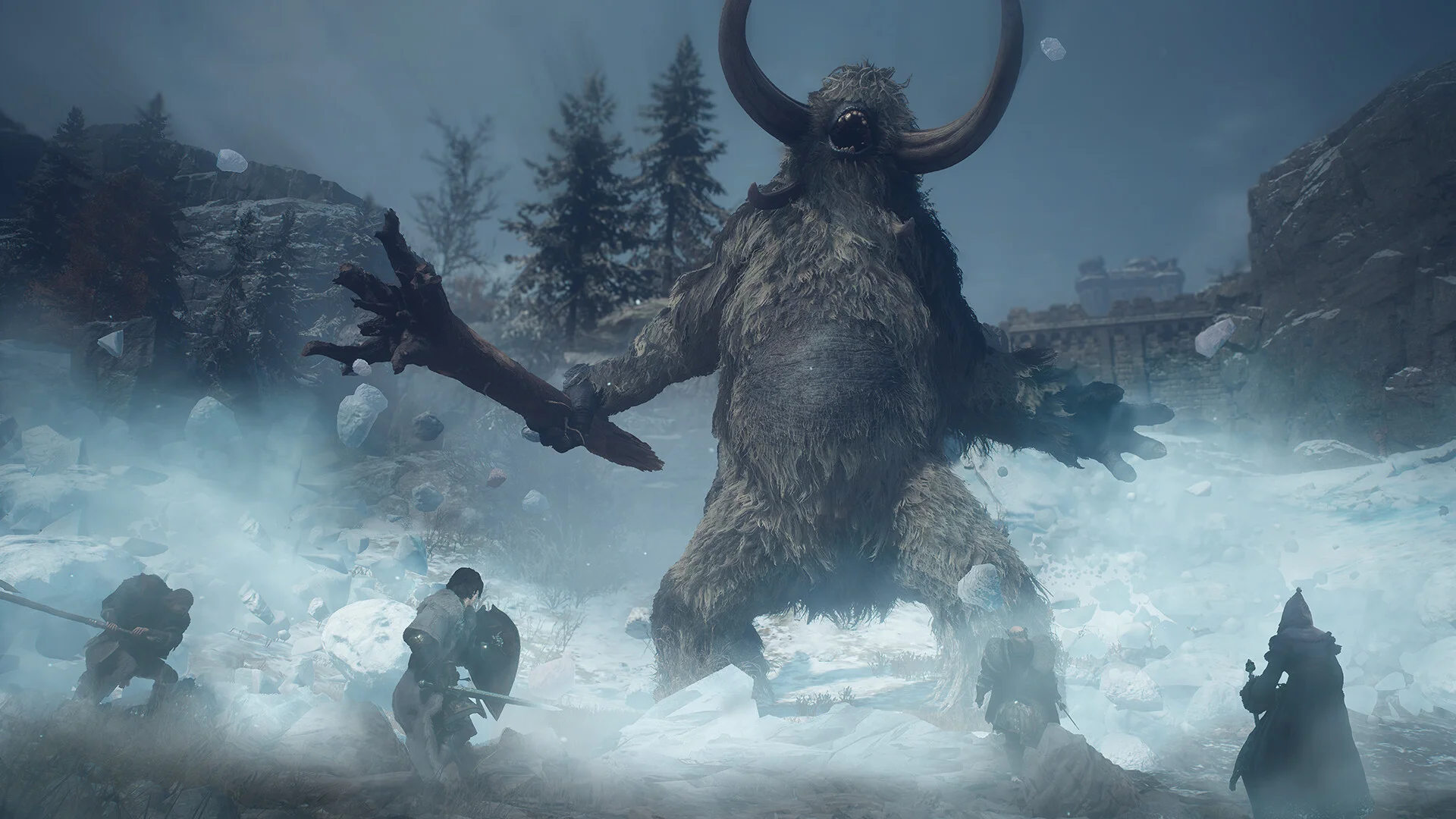
Party composition gives those changes room to work. Your customizable main Pawn and two hired companions let you fill support or damage roles when you switch vocation, so experimentation need not leave a glaring hole in the group. Fimbl, the ice dragon, tests that arrangement with destructive magic amid storms that obscure the fight. Equipment, support, and positioning meet inside the same encounter. Elsewhere, stunning an armored opponent, picking them up, and throwing them from a cliff offers a cheaper solution to their resilience. Height becomes a resource, with the same ledges threatening your own party.
The enemy roster does not always sustain that tactical variety. Frost-breath attacks recur often enough that different creatures can demand familiar responses, and Pawns sometimes remain exposed to freezing attacks with space available to escape.

That weakens the confidence on which party building depends. Selecting a companion for a role means trusting them to perform it under pressure; repeated avoidable incapacitation turns a considered setup into a rescue problem. Fimbl’s scale and weather conditions create a distinctive confrontation, but repeated freezing elsewhere makes parts of Norgan’s opposition less inventive than its terrain.
The campaign gives the repeated trips a stronger narrative shape. Eir’s pursuit of the Fallen Dragon connects the expedition to an identifiable personal objective, while the creature’s unnatural existence raises questions about Norgan’s destruction and the cycle governing the world.
Establishing camps farther north makes progress tangible between story developments. Polyeidus, the dwarven scholar accompanying the Queen Regent’s Commission, supplies historical investigation alongside Eir’s hunt. These recurring participants help the mystery accumulate instead of leaving each stretch of exploration attached to a separate piece of exposition.
The southern settlement benefits from being somewhere you need to revisit. Dorin and his family receive individual tasks, giving the practical return for appraisal a social dimension. The settlement’s direwolf extends that connection into exploration by locating buried treasure and assisting in fights. Familiarity grows through repeated contact and useful participation.
The story’s concern with a disrupted cosmic cycle also sits comfortably beside a combat system that permits unconventional solutions. Those operate at different scales, however: throwing an enemy into the brine demonstrates tactical agency, while Eir’s investigation follows an authored dramatic path. The stronger campaign earns its coherence without needing to imply that every improvisation rewrites it.
Some restrictions are less productive. Unlocking cosmetic transmog requires completing a troublesome quest involving ballistas, with a change to Archer providing a workaround. An appearance option ends up attached to a particular combat hurdle, an awkward fit for the freedom available elsewhere.
Technical compromises also vary by platform. PS5 fights are smoother, with occasional screen tearing still visible; Switch 2’s handheld image is soft, and frame generation can introduce instability around health bars. The latter is especially distracting in a game where judging a party’s condition informs the decision to keep fighting.
The twelve Lost Rites apply restrictions with a clearer purpose. Distributed across the original map, these dungeons can require a specific vocation, a party within the “Very Light” weight category, or entry with only your main Pawn. Those conditions change preparations and redistribute responsibility.
Sealed combat areas commit the party to clearing encounters, while abandoning an attempt means restarting. A Cyclops room stocked with explosive barrels preserves opportunities for improvisation inside that controlled structure. Multi-level golem encounters likewise let bridges and ledges influence how the battle unfolds.
Their appeal is uneven. Some sustain substantial dungeon exploration; others offer corridors connecting routine fights. First completions have clear value through rewards and Offerings of Flames used for skill unlocks. Repeat visits face a different calculation once higher-tier Norgan spoils outclass much of their equipment.
The option to run a dungeon again does not itself supply an incentive. Later, the post-campaign Vortex encounters assemble successive bosses and enemies into sustained combat tests. A build shaped around surviving one encounter now has to carry the party through the next without losing its ability to function.
The Review
Dragon's Dogma 2: Dark Arisen
Dark Arisen turns preparation into meaningful play. Cold, equipment, terrain, and party composition influence how an expedition unfolds, while recurring characters give the return to camp a stronger narrative purpose. Randomized gear expands familiar vocations, though repetitive freezing attacks and unreliable Pawn responses sometimes narrow the tactical possibilities. The Lost Rites offer useful restrictions but uneven replay incentives. This is a substantial expansion whose best encounters reward understanding how its systems interact.
PROS
- Weather makes equipment and travel decisions matter.
- Relic effects expand existing character builds.
- Terrain rewards inventive combat solutions.
- Recurring characters strengthen the expedition’s story.
CONS
- Repeated frost attacks reduce encounter variety.
- Pawns sometimes fail to evade freezing attacks.
- Lost Rites vary in quality and replay incentive.
- Cosmetic transmog requires an awkward combat quest.