




























Soccer Kid first appeared on the Amiga in 1993, when platformers were constantly looking for strange new ways to distinguish themselves. Three decades later, its central idea still inspires a particular kind of excitement. Here was a game that gave its young hero a football instead of a conventional weapon, then built an entire set of movements and attacks around what he could do with it.
Soccer Kid Collection preserves the MS-DOS and SNES versions of that experiment, offering a fascinating opportunity to revisit an overlooked piece of gaming history. Unfortunately, the enthusiasm that comes from discovering its inventive mechanics gradually gives way to frustration with how those mechanics actually behave.
The premise has all the wonderful absurdity of a 1990s platformer. Aliens steal the World Cup trophy, its pieces become scattered around the world, and a football-loving boy must recover them using his sporting talents. You travel between countries, confront peculiar enemies, and collect the missing fragments using a ball as your primary means of attack. The story is ridiculous enough to give the game an appealing identity, and the colorful environments and exaggerated animations embrace that silliness. Even choosing your football kit before setting off contributes to the playful atmosphere.
There is genuine charm here, particularly for anyone interested in the stranger corners of platforming history. I would happily encourage retro enthusiasts to explore what Soccer Kid attempted. Recommending it as an enjoyable platformer today is considerably harder. Its creative movement system demands a level of precision that the controls rarely deliver.
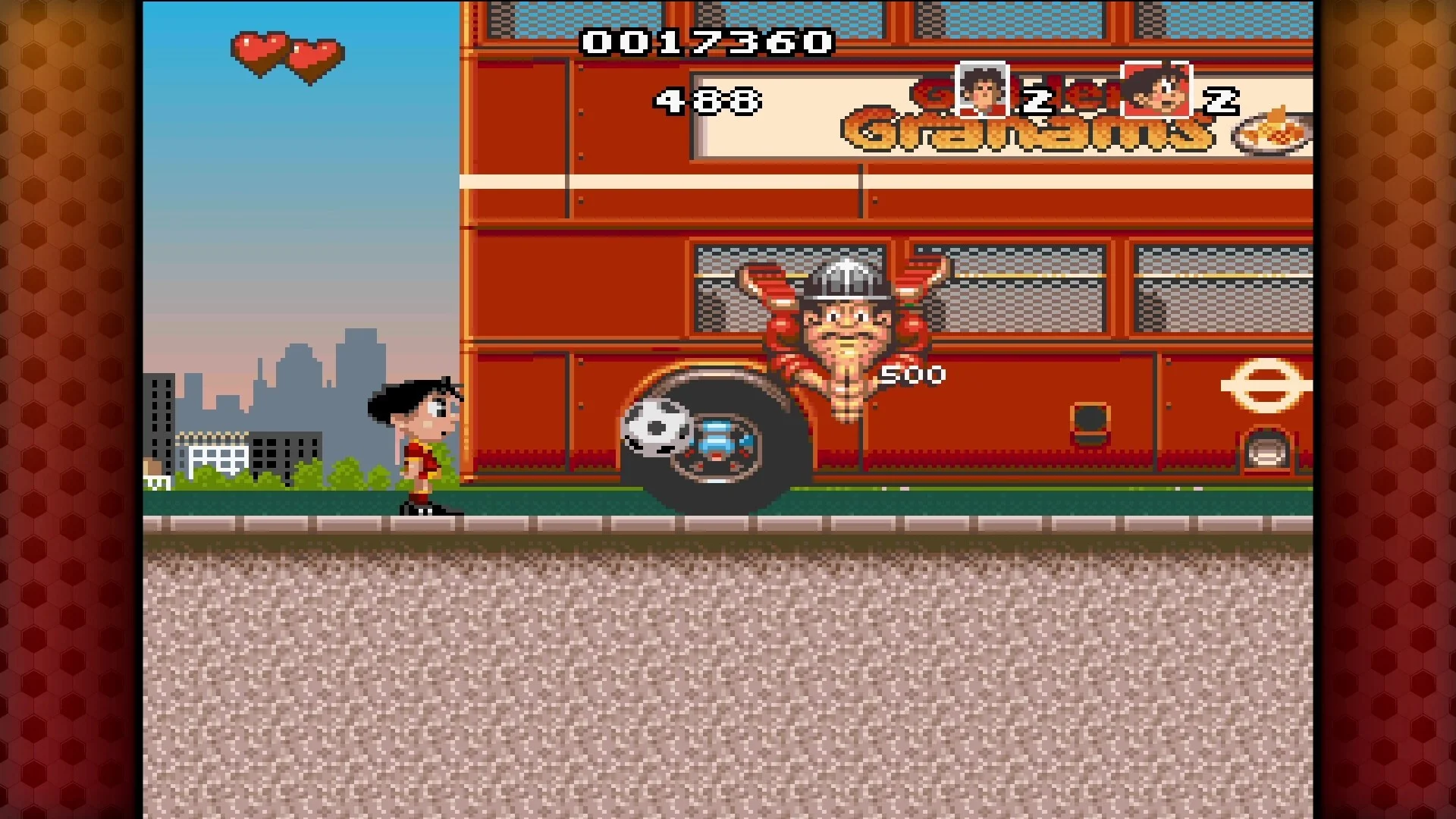
The disappointment becomes apparent during ordinary enemy encounters. Kicking your football sounds straightforward, but its trajectory frequently creates problems. Shots travel in an arc, making smaller enemies such as rats and dogs surprisingly difficult to hit. You can line up an attack, send the ball forward, and watch it pass harmlessly over a target that seemed perfectly positioned. Missing leaves you exposed, particularly when enemies approach quickly and the protagonist’s slippery momentum makes sudden adjustments uncomfortable. A system that initially makes you feel wonderfully resourceful soon has you worrying about every kick.
That anxiety grows because the football exists as a physical object within the levels. Kick it too far and it can bounce away, disappear beyond the visible screen, or tumble into a spike pit. Holding the kick button allows you to retrieve or respawn it, which prevents these situations from becoming permanent disasters. Still, repeatedly interrupting movement to recover your primary weapon damages the rhythm of play. Conventional action platformers typically give players predictable attacks so they can concentrate on positioning and timing. Soccer Kid asks you to manage the weapon itself, adding uncertainty to encounters that are already difficult to read.
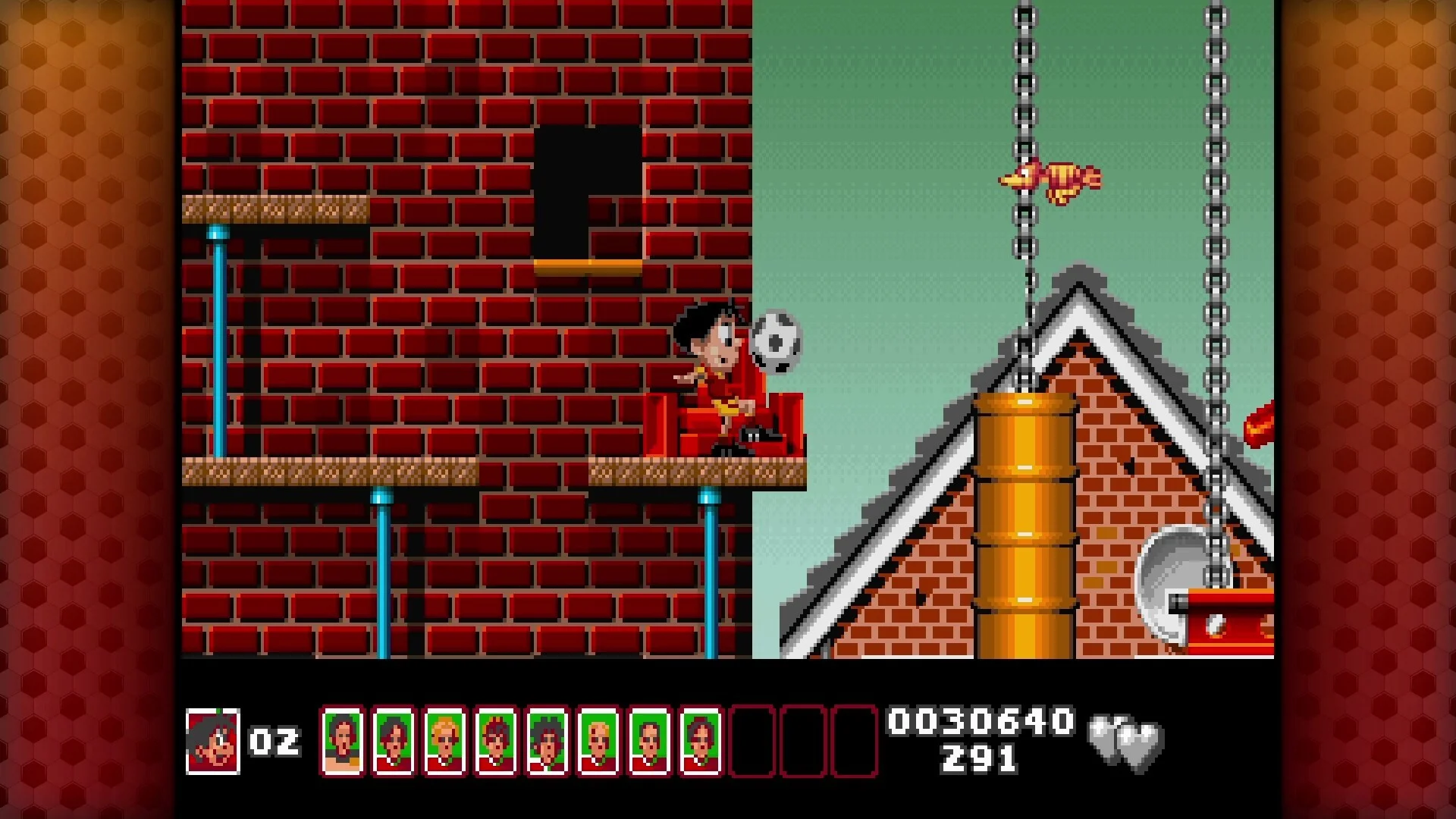
The more elaborate techniques briefly restore some of that initial excitement. You can juggle the ball, perform headers, execute slide tackles, stand on top of it, and use it to reach higher platforms. There is a lovely sense of possibility in discovering that an object used to knock out enemies can become a tool for vertical movement. Landing a well-timed trick shot or successfully jumping from the ball to an elevated ledge produces the sort of satisfaction that explains why this forgotten game deserves another look.
Yet learning these techniques is far easier than executing them consistently. Directional inputs, positioning, and precise timing govern advanced movements, and the controls struggle to make their results feel dependable. Using the D-pad can improve matters compared with the analog stick, but the underlying awkwardness remains. The included manuals explain the available moves, and helpful information cards appear throughout the stages. They provide guidance, although understanding a technique does little to prevent a mistimed attempt from sending the ball somewhere inconvenient.
The consequences of failure are particularly discouraging. Health is limited, with only a few hits separating success from death, and losing your available lives can bring progress to an abrupt halt. Checkpoints are spaced far enough apart that unexpected collisions or failed jumps frequently mean replaying substantial portions of a stage. After repeatedly returning to an area because a small enemy slipped beneath a kick or momentum carried the protagonist into danger, the appeal of mastering another complicated football trick begins to disappear.
This punishment damages one of the game’s better qualities: its level design. Stages contain vertical spaces, alternative routes, hidden items, and chests filled with useful rewards. Collecting football cards and other objects encourages players to investigate areas beyond the most obvious path. Unfortunately, the threat of losing progress discourages precisely the curiosity those spaces are designed to reward. Instead of looking for an inventive route to a hidden platform, you may find yourself choosing the safest path simply to avoid repeating another difficult section.
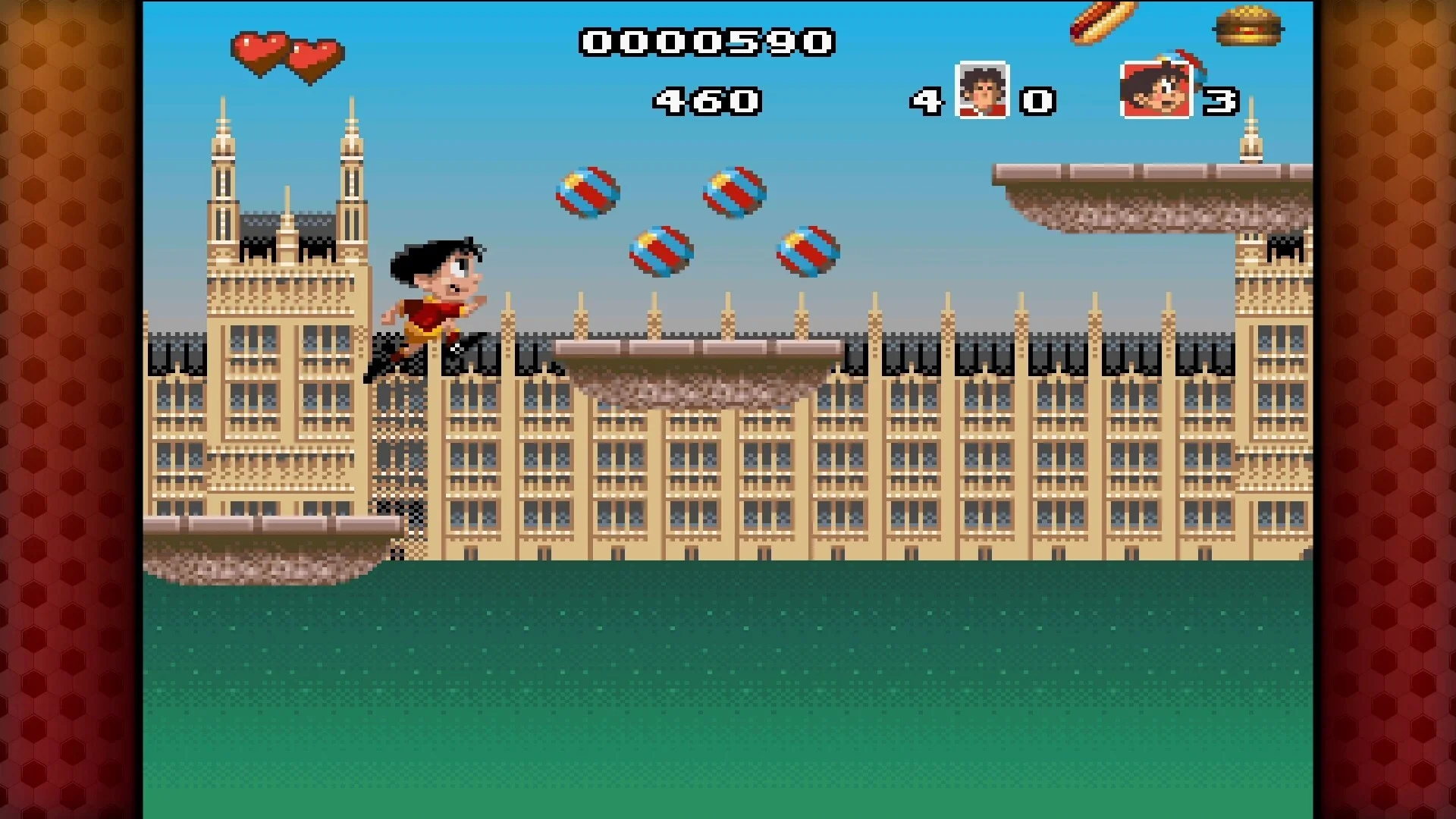
The collection becomes especially interesting when comparing its two playable versions. The MS-DOS release and the SNES adaptation, known in North America as The Adventures of Kid Kleets, present noticeably different interpretations of the same concept. Kid Kleets moves at a faster pace and features a distinct visual presentation, giving familiar ideas a different energy. Switching between them offers a glimpse of how significantly games could change between platforms during the 1990s. Greater speed does not solve the central problem, however. The SNES version can make the awkward momentum and demanding ball control even harder to manage.
Their presentation carries similar pleasures and frustrations. Bright environments and region-specific enemies help maintain the lighthearted atmosphere, and the character animations remain appealing whenever the protagonist performs an elaborate trick. However, some background elements are difficult to distinguish from solid platforms, creating uncertainty about where you can safely land. The period music complements the colorful action during shorter sessions, yet its limited loops become increasingly repetitive when difficult sections require multiple attempts.
This is where QUByte Interactive’s preservation work becomes particularly valuable. The collection includes save states, configurable controls, visual filters, screen scaling, decorative borders, and options for adjusting the presentation to modern displays. More importantly, cheats allow players to enable advantages such as infinite lives, unlimited time, or level skipping.
These features dramatically change the emotional experience. A punishing sequence that might otherwise cause someone to abandon the game becomes manageable when failure no longer threatens a lengthy stretch of progress. You can experiment with advanced moves and investigate hidden areas without constantly worrying about another game-over screen.
There are shortcomings to the package itself. The separate internal save interface feels awkward, and the collection’s scope is narrower than its name suggests. Only the DOS and SNES versions are playable, leaving out the original Amiga release that established Soccer Kid’s identity. That absence is particularly disappointing in a package dedicated to preserving the game’s history. Seeing how the original compares with its later adaptations would have given the collection a stronger historical purpose.
The archival material is equally welcome. Digitized manuals, artwork, historical production information, soundtracks, and promotional materials provide a fuller picture of the game’s identity. Even the surviving marketing material, including promotions associated with breakfast cereal, captures something wonderfully specific about the commercial culture surrounding games of that period. For an overlooked title with such an unusual mechanical identity, keeping these artifacts accessible is genuinely worthwhile.
With infinite lives switched on, an advanced trick that once carried the threat of another game-over screen becomes something you can practice freely. You can keep trying the jump from the ball to a high ledge and stop treating a missed landing as the loss of a long stretch of progress.
The Review
Soccer Kid Collection
Soccer Kid Collection preserves an inventive platformer whose football mechanics remain charming but frustratingly unreliable. There is genuine pleasure in discovering its elaborate tricks and exploring colorful levels, although slippery controls and harsh checkpoints quickly wear down that enthusiasm. QUByte's save states, cheats, and archival extras make this forgotten experiment easier to appreciate, even with the original Amiga version missing. Retro enthusiasts will find something worth exploring here, especially with infinite lives enabled. Newcomers seeking a satisfying platformer may struggle to enjoy the experience.
PROS
- Inventive football-based movement and attacks
- Colorful environments and expressive animations
- Helpful save states and cheat options
- Valuable historical artwork and archival extras
CONS
- Unreliable ball control and slippery movement
- Punishing checkpoints and limited lives
- Repetitive music and occasional visual confusion
- Original Amiga version is missing