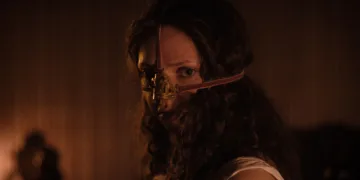




























Emilie Blichfeldt’s “The Ugly Stepsister” launches with a hammer striking bone, departing from traditional fairy tale openings. This Cinderella narrative shatters expectations, transforming the classic story into a visceral feminist allegory infused with body horror. The film exists in a surreal Swedlandia, blending 19th-century aesthetics with anachronistic elements—harpsichords mingle with electronic sounds, while questionable medical practitioners sell tapeworms as weight loss solutions.
Blichfeldt crafts a dissonant visual landscape where decaying mansions radiate rococo extravagance, and neon-lit schools train girls to contort themselves into living sculptures. The “ugly” stepsister emerges not as a villain, but as a victim trapped within a system that equates feminine identity with self-destruction.
The film peels away fairy tale romanticism, exposing the brutal mechanisms of patriarchal control. Its most chilling aspect emerges through a stark exploration of female value measured by suffering. The prince’s ball becomes a grotesque auction where young women are evaluated like commodities, echoing historical practices of objectification.
Blichfeldt presents a nuanced portrayal where even the stepmother appears ensnared by societal expectations. Her daughter’s transformation represents a desperate survival strategy within a world that commodifies female bodies. This reimagined fairy tale offers no triumphant endings—only survival, often at a devastating personal cost.
The Flesh Market of Fairy Tales: Subversion and Survival in a Patriarchal Labyrinth
Emilie Blichfeldt’s The Ugly Stepsister rewrites the Cinderella story as a fractured exploration of feminist resistance, where the “wicked” stepsister emerges as a complex character caught between victim and self-destruction. Elvira stands as a nuanced protagonist, her physical markers revealing societal pressures that equate physical appearance with moral value.
Blichfeldt deconstructs traditional fairy tale narratives by revealing characters beyond stereotypical roles. Agnes represents survival rather than sainthood, her relationship with a stable boy a quiet rebellion against systemic oppression. Women in this story navigate survival through fragmented choices shaped by economic constraints and gender-based limitations.
The prince’s ball becomes a stark metaphor for female commodification. Girls undergo brutal transformations, subjected to physical alterations that strip them of individual agency. Surgical procedures and beauty standards merge into grotesque rituals of control, with Elvira’s experiences exposing the violent mechanisms of social expectations.
Rebekka, the stepmother, represents complex survival strategies within a system designed to marginalize women. Her manipulations stem from deep-seated survival instincts, born from repeated experiences of vulnerability. Ane Dahl Torp’s performance captures the raw desperation of a woman confronting societal obsolescence.
Elvira’s physical and psychological changes reflect profound compromises with oppressive structures. Each transformation marks a painful negotiation with patriarchal expectations, revealing the intricate ways women internalize and resist systemic violence.
Splendor and Splatter: The Aestheticized Agony of Beauty
Emilie Blichfeldt’s The Ugly Stepsister uses body horror to explore the violent connection between beauty and suffering. The film’s most striking images—a hammer striking a nasal bridge, a needle attaching eyelashes to raw eyelids, a tapeworm squirming in a porcelain bowl—shock and resonate simultaneously.
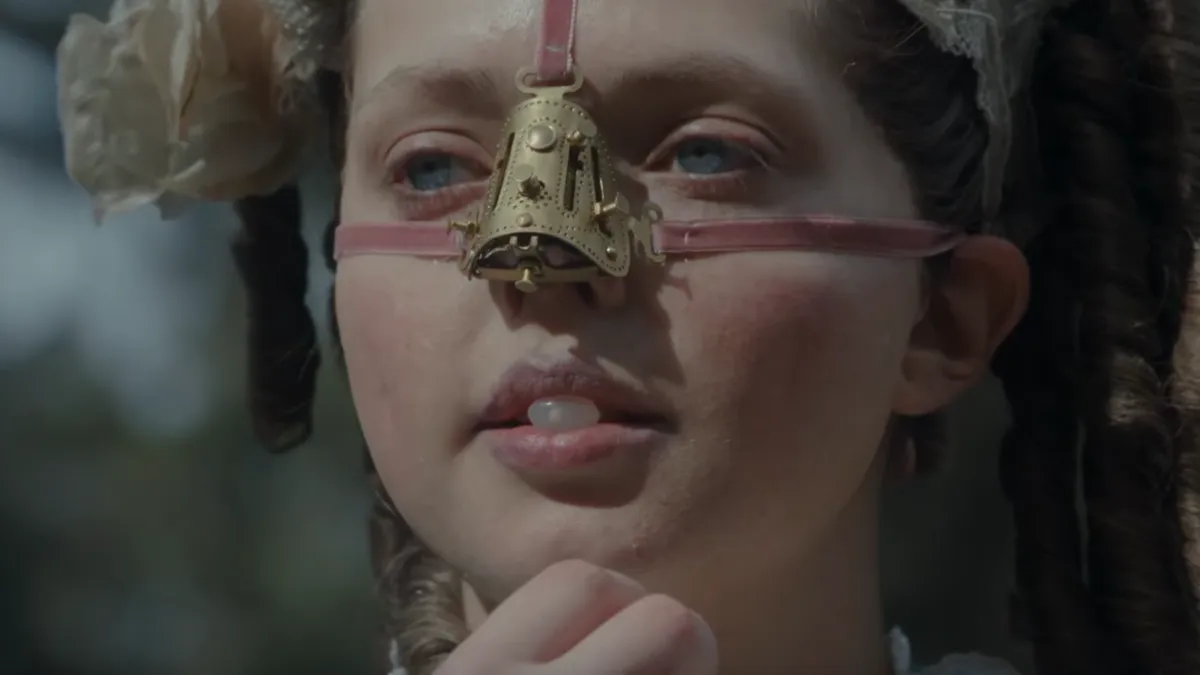
These procedures, connected to historical cosmetic practices (19th-century rhinoplasties used chisels), transform into metaphors for self-loathing within feminine pursuit. Elvira’s transformation resembles a twisted pilgrimage: each mutilation serves as a ritual, each scar a symbol of devotion to an unforgiving ideal. The camera captures the wet crunch of cartilage, the puckered flesh around sutures, compelling viewers to confront the scene.
The film’s visual language creates a sumptuous yet disturbing landscape. Cinematographer Marcel Zyskind frames Elvira in tight shots, her face encased in a brass nose brace, while the production design saturates the screen with opulence: pink silk gowns glimmering under candlelight, decaying manors dripping with moss-streaked elegance.
The dissonance feels intentional—a hyper-feminine world decaying from its core. Elvira’s final descent in her gown reveals delicate embroidery contrasting with her malnourished body, eyelashes unnaturally full, her smile fragile as spun sugar. Gothic and grotesque elements intertwine, beauty and decay locked in an inseparable dance.
Blichfeldt injects satirical elements that puncture the bleakness. A tapeworm’s projectile vomit becomes a dark comedic moment, while Prince Julian’s ridiculous poetry about female anatomy exposes masculine narcissism. Dr. Esthétique appears less as a villain and more like a carnival performer, his operating theater adorned with a “Beauty is Pain” banner. These elements mock the systems they depict, presenting patriarchal vanity as both absurd and deadly.
Masks of Misery: Performative Femininity in a Patriarchal Pantomime
Elvira’s transformation from starry-eyed dreamer to skeletal shell reveals a haunting descent into self-destruction. Lea Myren portrays her with visceral intensity: her initial soft innocence crumbles into a withered form, curls giving way to sparse strands, her luminous eyes dimmed by relentless inadequacy.
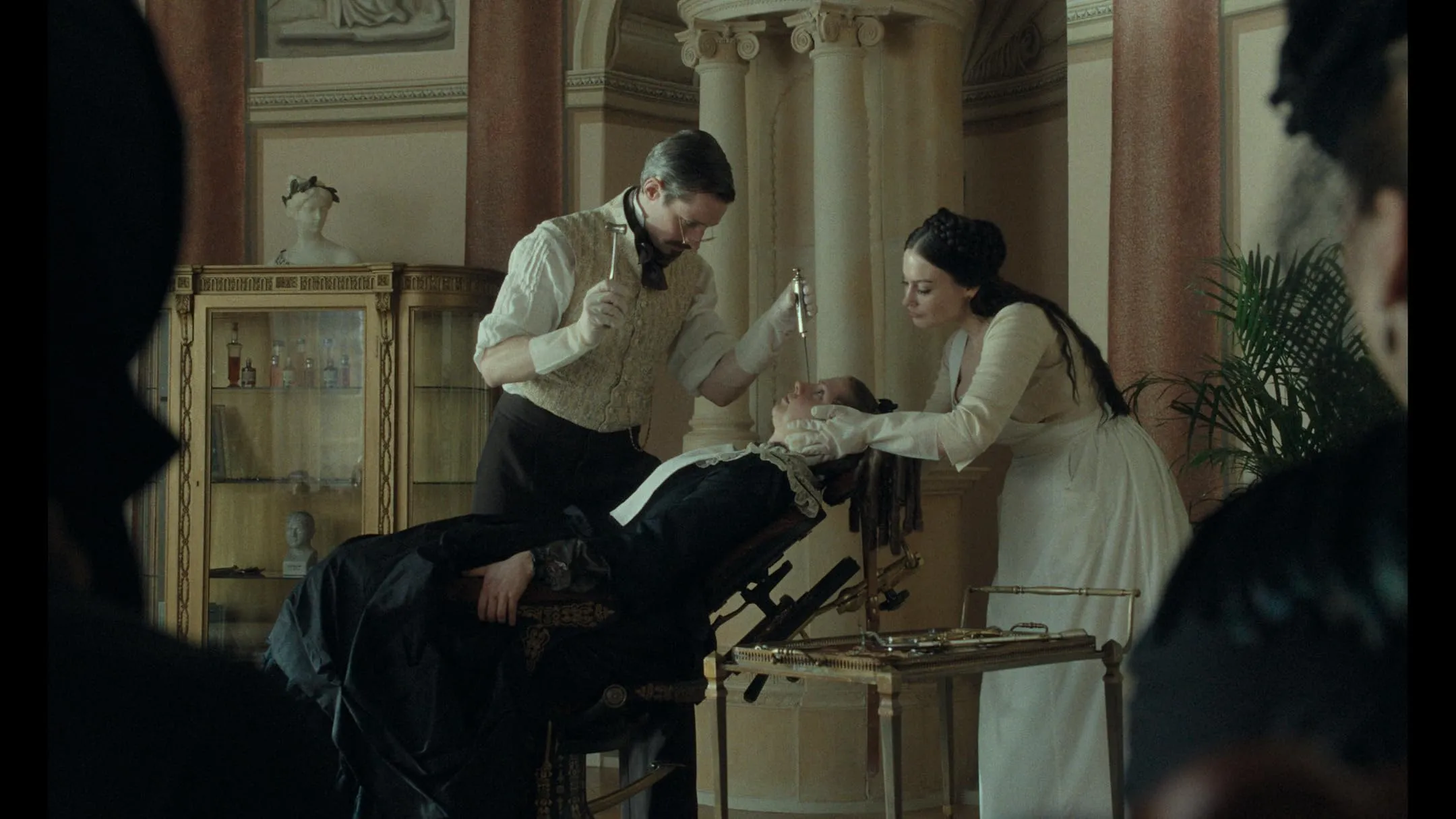
Despite her body’s betrayal—parasites consuming her interior, lashes sewn like macabre decoration—Elvira clings to her delusion. She recites Prince Julian’s vapid verses as gospel, her belief in his love a fragile refuge amid systemic disdain. Her tragedy emerges not from her inability to change but from her conviction that transformation was ever attainable.
Rebekka, orchestrating Elvira’s suffering, moves with cold calculation typical of a woman understanding a womb’s value in a patriarchal world. Ane Dahl Torp imbues her with granite-like intensity, her calculated cruelties—forcing Elvira through brutal surgeries, trading daughters like possessions—rooted in survival’s stark mathematics. Blichfeldt reveals subtle nuances: a trembling hand stroking Agnes’ hair, glances averted during Elvira’s parasitic expulsion. These glimpses don’t excuse Rebekka but expose her as another pawn, her perceived strength a fragile construct built by sacrificing her own lineage.
Agnes emerges as a rebellious spirit beneath lace and propriety. Her encounter with stable boy Isak represents defiance against royal pageantry, her resistance sharpened by understanding privilege’s gilded constraints. Thea Sofie Loch Næss performs with wild sophistication, her contemptuous glances toward Elvira tinged with the terror of fleeting beauty. When she moves uninhibitedly in the stables—raw and unapologetic—she claims a momentary victory in a conflict predetermined against her.
Prince Julian embodies hollow masculine performance. Isac Calmroth delivers his dialogue with pretentious melodrama, his “poetry” a transparent mask of self-absorption. His bride selection—a parade of women measured by physical metrics—reduces connection to cold exchange, his smirk revealing cultural mechanisms that mistake entitlement for allure.
Fractured Fables: The Cost of Ambition in Storytelling
Emilie Blichfeldt’s The Ugly Stepsister excels when exploring political undercurrents beneath its fairy-tale surface. The prince’s ball transforms into a mercenary auction for brides, subverting romantic tropes. Virgins line up like commodities, their worth calculated by physical metrics and reproductive potential. This portrayal strips away romantic illusions, revealing stark economic calculations.
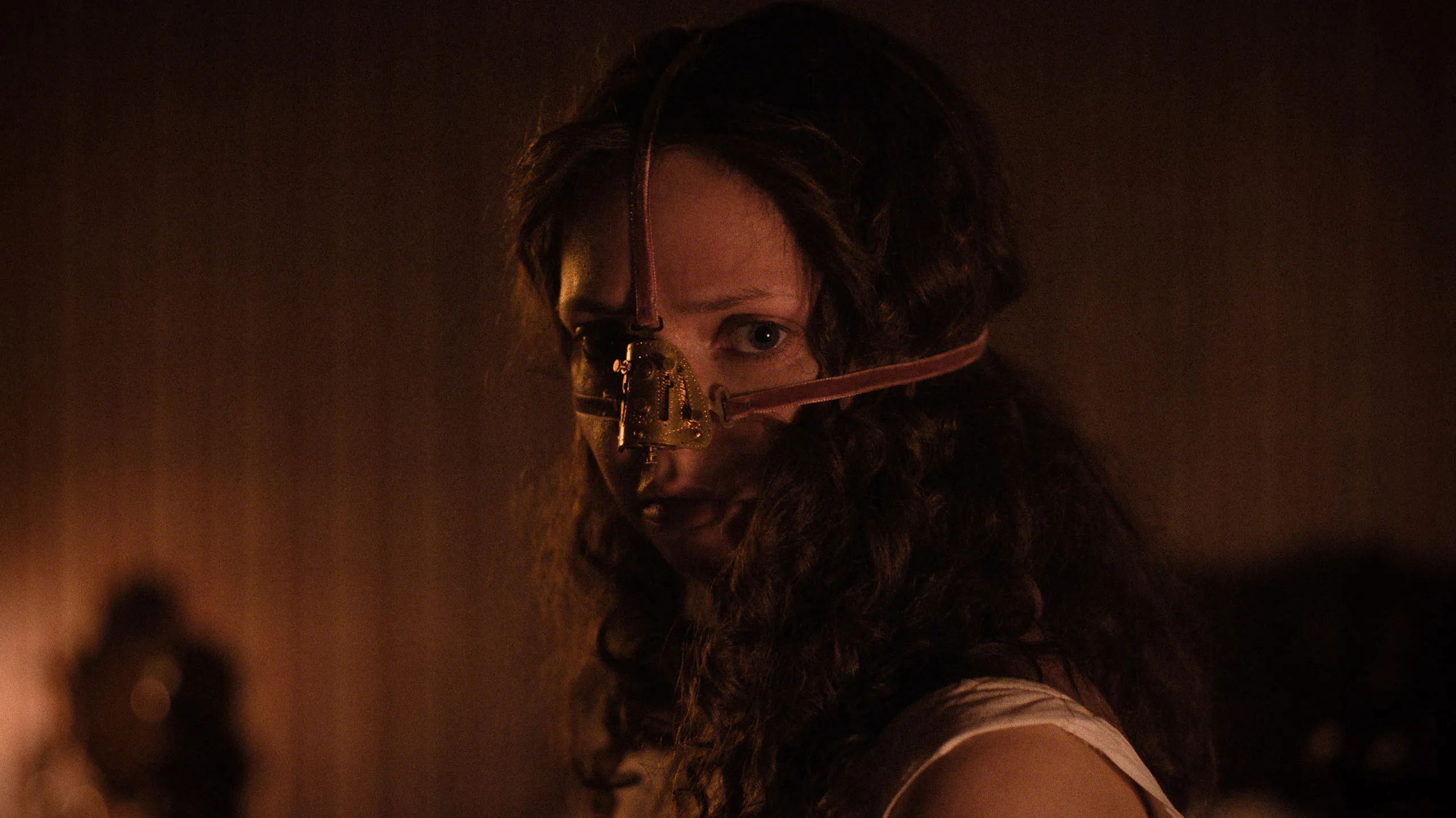
The climactic gala erupts with blood and vomit during Elvira’s tapeworm rebellion, creating a visceral critique. Her physical disintegration symbolizes the breakdown of oppressive social structures. The shocking spectacle merges bodily horror with sharp social commentary.
Despite its strengths, narrative gaps emerge. Alma, Elvira’s younger sister, appears as a potential rebel but remains underdeveloped. Her potential resistance dissipates, leaving an incomplete narrative thread. Agnes’ connection with maggots suggests mystical undertones of decay and transformation, yet this intriguing element remains unexplored. Rebekka’s unresolved trajectory after years of patriarchal negotiations feels unfinished.
The film wrestles with complex ideas, sometimes struggling to contain its own ambitious vision. Its raw energy produces moments of profound insight alongside unresolved narrative fragments.
Alchemy of Anguish: The Transformative Craft of Performance and Vision
Lea Myren creates a haunting portrayal of Elvira, blending physical comedy with raw emotional depth. Her performance captures a character’s transformation through precise movements and nuanced expressions. Myren embodies Elvira with awkward grace—her curtsies and poetry recitations gradually revealing a deeply wounded spirit. Her acting peels back layers of societal pain, exposing vulnerability through subtle physical cues.
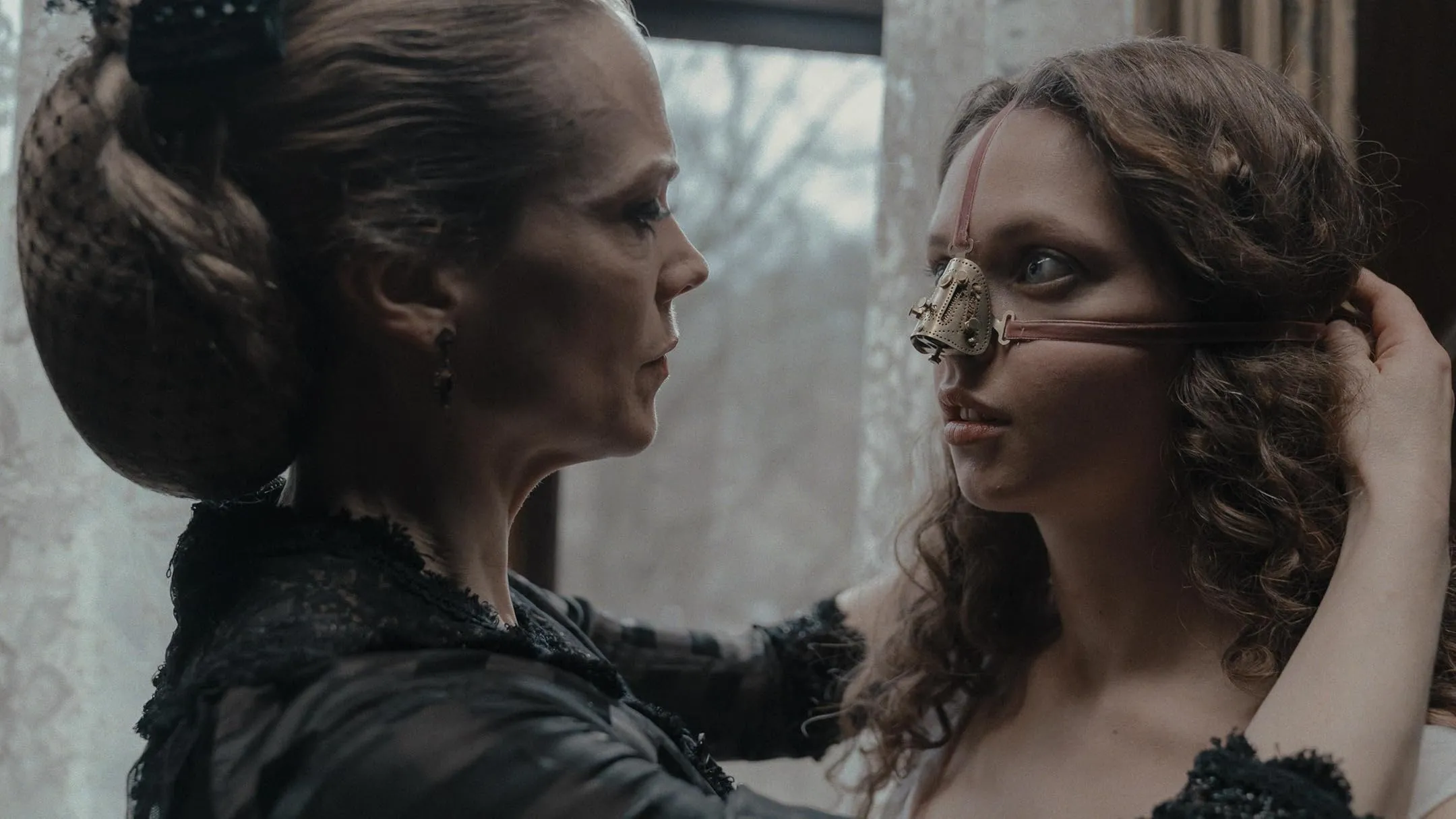
Ane Dahl Torp presents Rebekka as a complex figure navigating harsh societal expectations. Her performance communicates deep internal struggles through restrained gestures and controlled movements. Torp reveals glimpses of maternal complexity—moments of suppressed emotion breaking through a carefully constructed exterior. Her character emerges as a multifaceted woman trapped within strict social constraints.
Emilie Blichfeldt’s direction crafts a visceral visual narrative that blends cinematic influences. The film explores themes of transformation through striking visual metaphors, creating a dreamlike yet unsettling experience. Blichfeldt weaves together elements of psychological drama and visual spectacle, presenting a world where beauty and pain intersect with devastating clarity.
The film creates a powerful exploration of bodily autonomy, societal pressures, and personal transformation, challenging viewers to confront uncomfortable truths about identity and self-perception.
The Review
The Ugly Stepsister
Blichfeldt's film explores a visceral transformation of the classic Cinderella story, wielding graphic imagery and dark commentary on gender oppression. The director crafts a shocking visual landscape where fairy-tale tropes collide with stark physical metaphors. Lea Myren delivers a raw, haunting performance that grounds the surreal elements with emotional depth. The work challenges traditional narratives about female beauty and social expectations through a provocative lens. Despite occasional narrative inconsistencies, the film presents a challenging reinterpretation that disrupts familiar storytelling patterns.
PROS
- Bold feminist reimagining of classic fairy-tale tropes.
- Lea Myren’s transformative, physically committed lead performance.
- Visually sumptuous blend of Gothic grandeur and body horror.
CONS
- Underdeveloped subplots (Alma’s rebellion, Agnes’ mysticism).
- Occasional heavy-handed messaging.
- Uneven pacing in the second act.