




















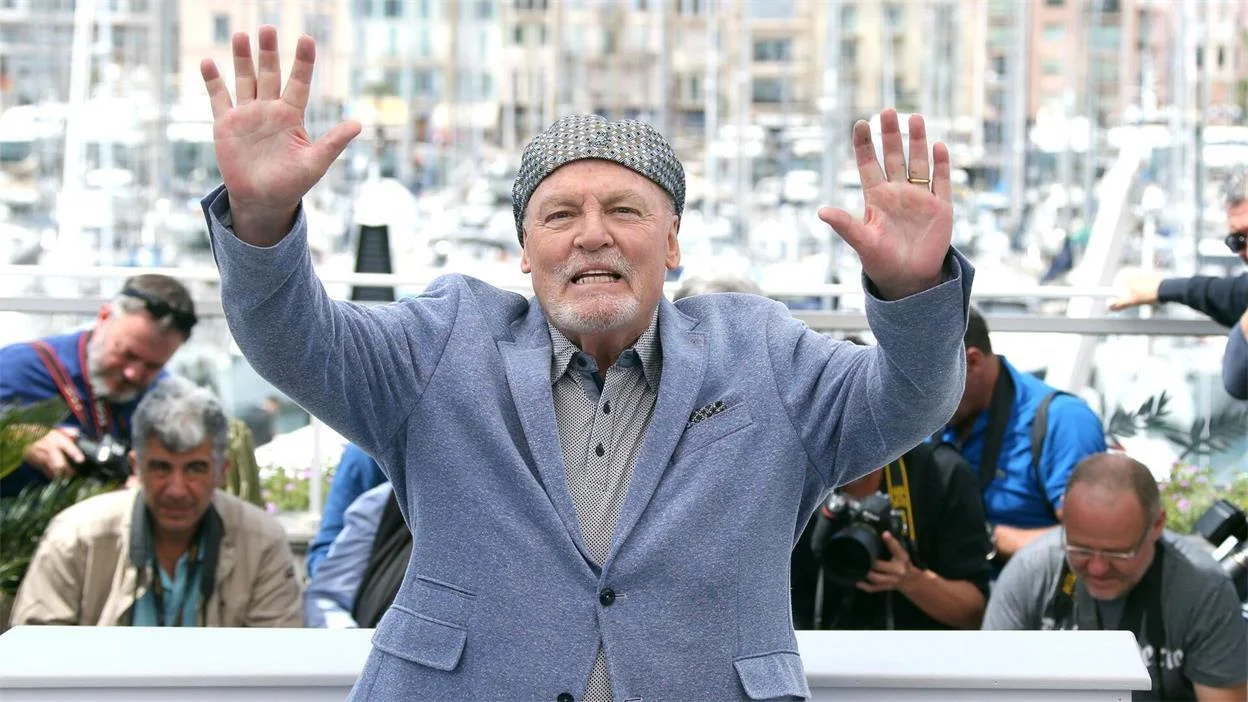

Stacy Keach, the stage and screen actor who made Mickey Spillane’s detective Mike Hammer a fixture of 1980s television, died Tuesday at 85. Keach died at his family home in Magdalenka, Poland. His wife, Małgosia Tomassi Keach, said he had fought a long and difficult battle with a serious heart condition and heart failure. “Stacy peacefully departed this world,” she said. She described him as a beloved husband and the heart of the family. He is survived by her, their son Shannon, their daughter Karolina and his brother, the actor James Keach.
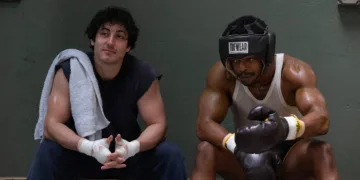
Born Walter Stacy Keach Jr., he followed his father, the veteran character actor Stacy Keach Sr., into the trade. His breakthrough came on Broadway in 1969, when he earned a Tony nomination for playing Buffalo Bill in “Indians.” Film work followed, including “Fat City,” in which he played the boxer Billy Tully, and “The Ninth Configuration,” in which he played a deranged colonel.
Television made him a household name. He starred as the fedora-wearing Hammer on CBS from 1984 to 1987, returned for a 1989 TV movie and led a revival, “Mike Hammer, Private Eye,” in 1997 and 1998. He softened the character’s brutality for network audiences, though the show kept its violence and the .45 pistol that Spillane insisted on.
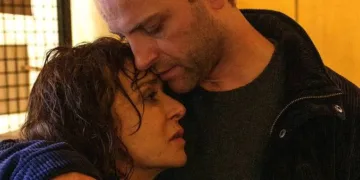
Keach spent six decades working across film, television and theater, amassing over 200 credits. He took on Hamlet, Richard III, Macbeth and King Lear, toured as Richard Nixon in “Frost/Nixon” and starred in “Sleuth” with Maxwell Caulfield. Later screen roles included the series “Titus,” Alexander Payne’s “Nebraska,” a New York archbishop on “Blue Bloods,” a part in “Prison Break” and, last year, George Clooney’s bitter father in “Jay Kelly.”
His career also carried a public low point. After a 1984 cocaine arrest in London, a court sentenced the then-44-year-old actor to nine months in Reading Prison, and he served six. Authorities picked a medium-security facility partly because a lighter one would have given reporters easy access. “It was the lowest moment of my life,” he wrote in his 2013 memoir. He later testified before a congressional panel about his dependency, which he said began in the mid-1970s.