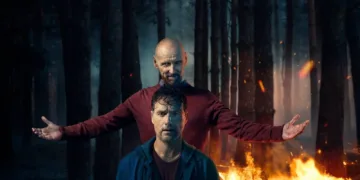









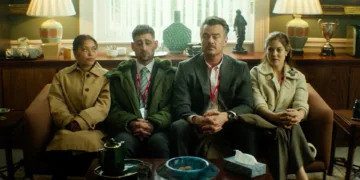




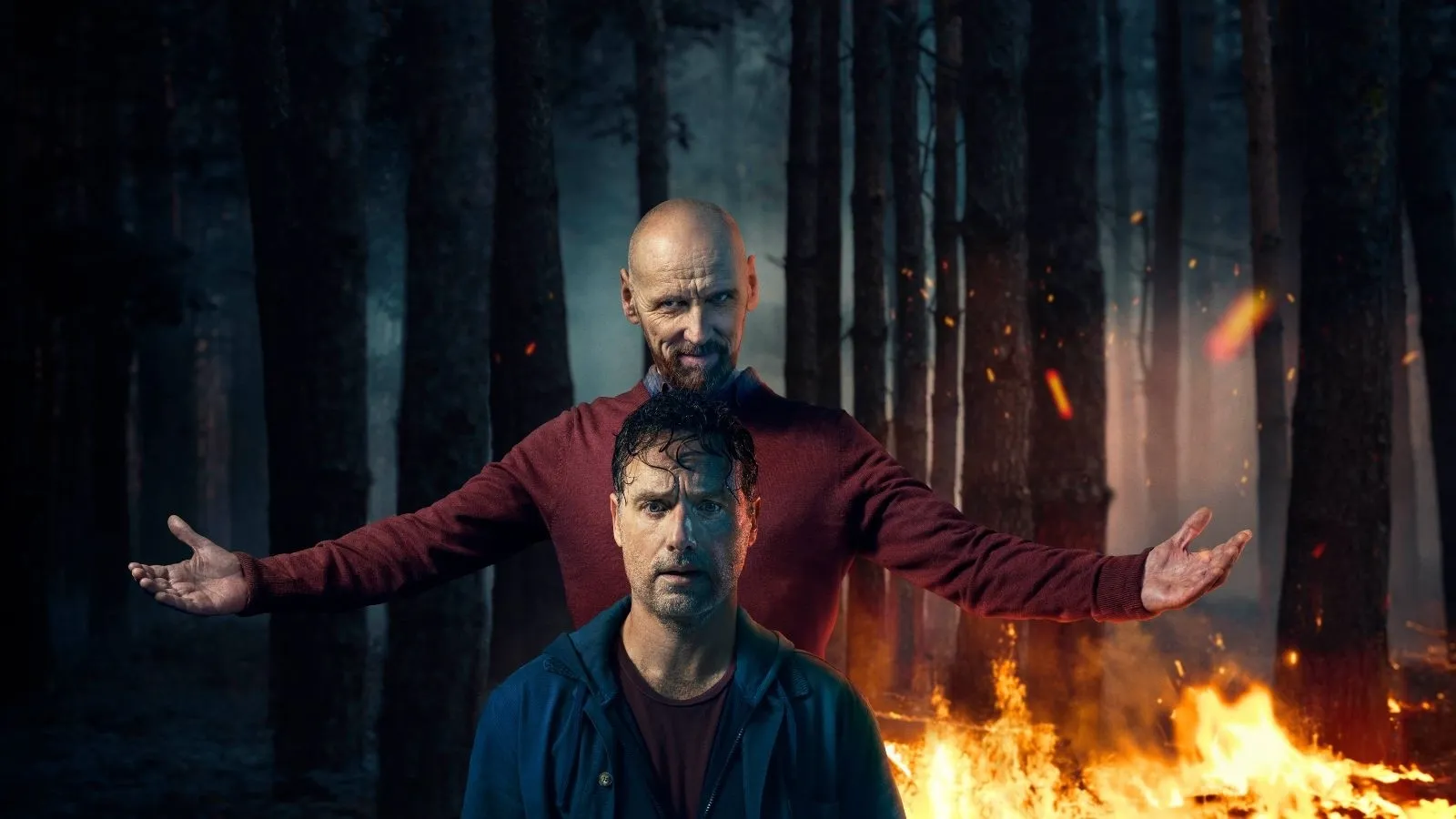

The promise of rural escape is a durable fiction in our hyper-urbanized culture. A family, bruised by the city, retreats to the countryside seeking solace in open spaces, only to find that human nature is not bound by geography. ITV’s Coldwater begins with this familiar premise, relocating the family of John (Andrew Lincoln) and Fiona (Indira Varma) from London to the austere beauty of the Scottish Highlands.
They are fleeing the psychic wound of a traumatic event, hoping the change of scenery will mend what has been broken. The initial promise of a new life, set against a picturesque yet profoundly isolating landscape, quickly sours.
Their peace is disturbed by the people next door, Tommy and Rebecca, a couple whose intense religiosity and morbid fascinations signal a deeper, more unsettling reality lurking beneath the village’s tranquil surface. The show quickly establishes itself as a psychological thriller that uses its remote setting to ask pointed questions about masculinity, faith, and the latent violence within modern life.
A Covenant of Violence
The series’ central conflict is ignited by a moment of profound inaction. Back in London, John witnesses a horrifying assault on a woman in a playground and freezes, his paralysis a public failure that shatters his self-worth. This is not merely a plot device; it is a foundational trauma that explains everything that follows.
The event manifests in classic PTSD symptoms: sleepless nights, agitated runs through darkened streets, and a short temper with his children that chips away at the family’s stability. His decision to move is less a choice and more a desperate flight from the ghost of his own cowardice. In the Highlands, however, his attempt to start anew is immediately tested by the local power dynamics.
A confrontation with a bully named Angus Gillespie is not a random encounter; it is an outsider stumbling into an established social order. John’s attempt to intervene, this time successful, escalates with shocking speed, culminating in a deadly encounter in the woods. John crosses a violent threshold, but he is not alone. His evangelical neighbor, Tommy, witnesses the act and offers his assistance, framing his intervention as a form of divine providence.
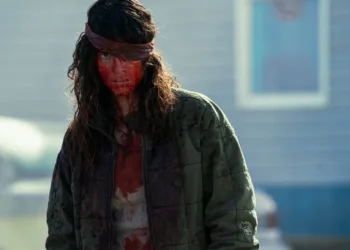
This creates a dark pact between the two men, an unholy alliance built on a shared secret. From this point, Tommy skillfully manipulates John’s guilt and fear, drawing him deeper into his unsettling world of prayer groups and veiled threats. The narrative structure, which opens with a flash-forward of a blood-soaked John running through the same woods, is a shrewd choice. It creates a powerful sense of dread and inevitability, turning the story from a “whodunit” into a “how-does-it-unravel,” trapping the viewer in the same doomed timeline as its protagonist.
Portraits of Fractured Men
The series is anchored by the performances of its two male leads, who represent opposing reactions to the same internal crisis. Andrew Lincoln’s John is a portrait of a man in quiet collapse. As a stay-at-home father in a culture that still quietly valorizes the archetype of the provider-protector, he is adrift, stewing in a potent mixture of shame, repressed anger, and profound inadequacy.
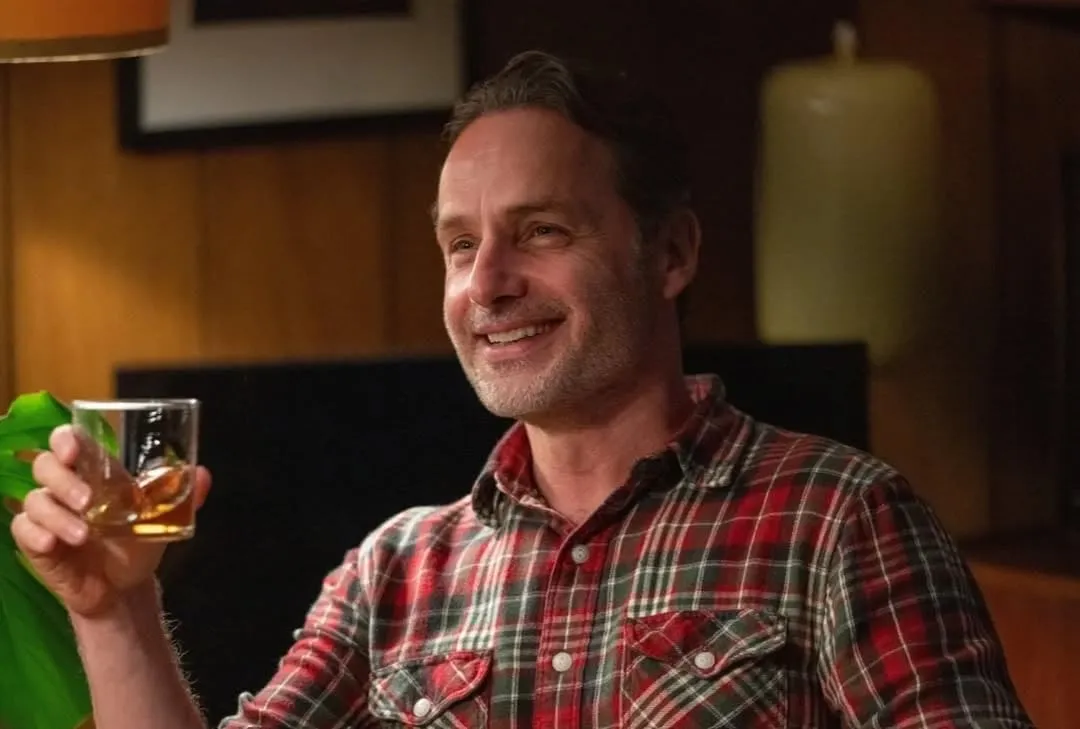
His impotence is presented as a direct physical manifestation of this psychological paralysis. Lincoln delivers an understated, internal performance that stands in sharp relief to his long-running work on The Walking Dead. He uses subtle facial tics, a defeated posture, and a haunted look in his eyes to capture a man imploding under the weight of societal expectation. His internal conflict is palpable as he is simultaneously repulsed and morbidly drawn to the absolute certainty of his neighbor.
Ewen Bremner’s Tommy is the explosion to John’s implosion. He is the show’s unnerving antagonist, a charismatic predator who has found a socially acceptable camouflage in religion. Bremner’s performance is a high-wire act of intense, manic energy. His obsession with serial killers is not a mere quirk; he studies them as a craftsman studies a master, seeking to perfect his own dark art.
Tommy is a product of social isolation and extremist thought, a man who externalizes his own emptiness into a terrifying, destructive force. The main difference between the men is how they channel their fractured identities: John internalizes his failure, becoming paralyzed, while Tommy weaponizes his beliefs to achieve dominance. Supporting them are Indira Varma as the intelligent, grounded Fiona, and Eve Myles as the eccentric vicar Rebecca.
Varma provides a much-needed center of gravity, portraying Fiona not as a passive victim but as an active participant trying to navigate an impossible situation. Myles, meanwhile, is a fascinating agent of chaos. Her Rebecca, a vicar who professes not to believe in God, is a walking contradiction. It remains wonderfully ambiguous whether she is a victim of her husband’s madness, a willing accomplice, or a disturbed individual in her own right. Her performance critiques the emptiness of institutional roles when they are divorced from genuine conviction.
Masculinity’s Tattered Fabric
Coldwater uses its thriller framework to conduct a searing examination of contemporary manhood. John’s failure in the playground is presented as a collapse of his primary duty to protect, a failing that haunts every subsequent decision. The show probes what happens when traditional masculine roles feel both obsolete and deeply ingrained.
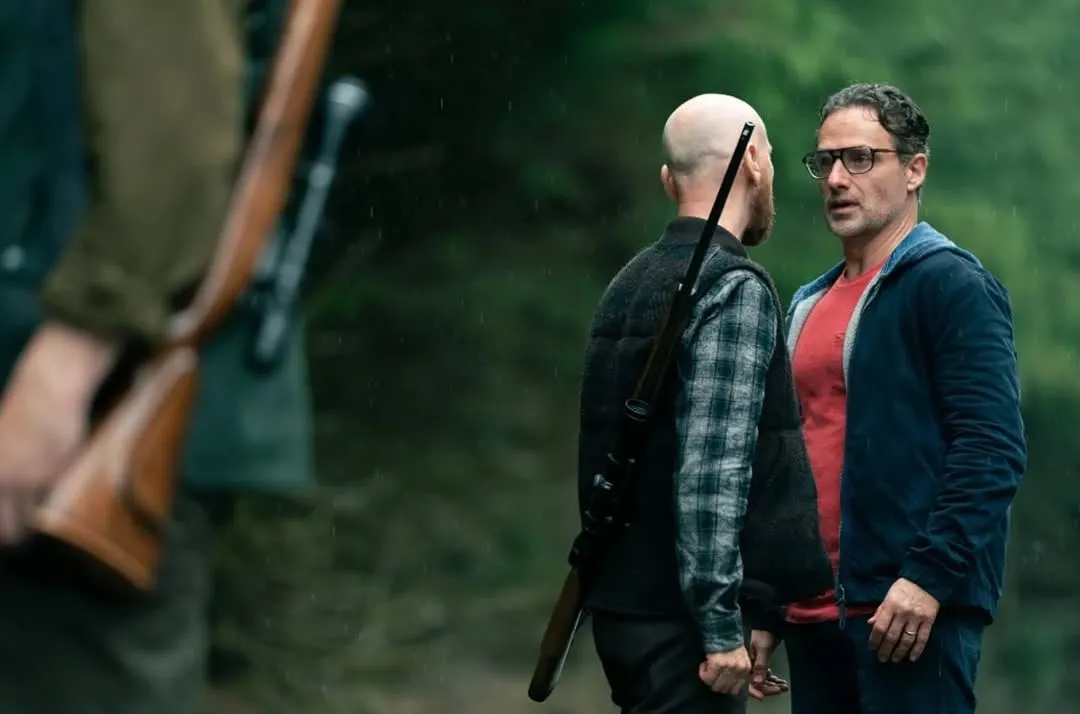
His crisis speaks to a broader cultural moment where stable male identities are harder to forge. Tommy’s all-male prayer group, “the boys,” offers a disturbing answer to this anxiety. It presents a twisted version of male camaraderie, a space where purpose is reclaimed through rigid belief and exclusion.
The group functions less as a spiritual gathering and more as a microcosm of radicalization, where disaffected men find community in an aggressive ideology that papers over their insecurities. It is a safe space for their fears that quickly becomes a breeding ground for something toxic. John’s path through this world forces a difficult question: is violence an essential part of manhood, or is it a corrosive force that preys on weakness?
The show’s treatment of religion is equally complex, avoiding simple mockery. It presents faith as a powerful force that can be both a lifeline and a weapon. For John, a reluctant prayer with Tommy has a genuinely powerful, grounding effect, suggesting spirituality as a potential anchor for a man unmoored. For Tommy, faith is a cudgel.
He weaponizes scripture and fellowship to exert power and justify his darkness. His brand of extremist Christianity uses the aesthetics of the religion while subverting its core tenets of grace and forgiveness. The writer’s intention to model John’s story on the biblical tale of Jonah adds another dimension. Jonah fled from a divine command to preach to a city he despised. John is fleeing from a moral imperative he failed in the playground, and Tommy forces him to confront this failure in the most destructive way possible, presenting himself as a divine instrument.
Laughter in the Dark
The series distinguishes itself through a daring blend of genres, a hallmark of ambitious modern television that refuses easy categorization. It is a psychological thriller at its core, but it is laced with elements of folk horror and a particularly scabrous dark comedy.
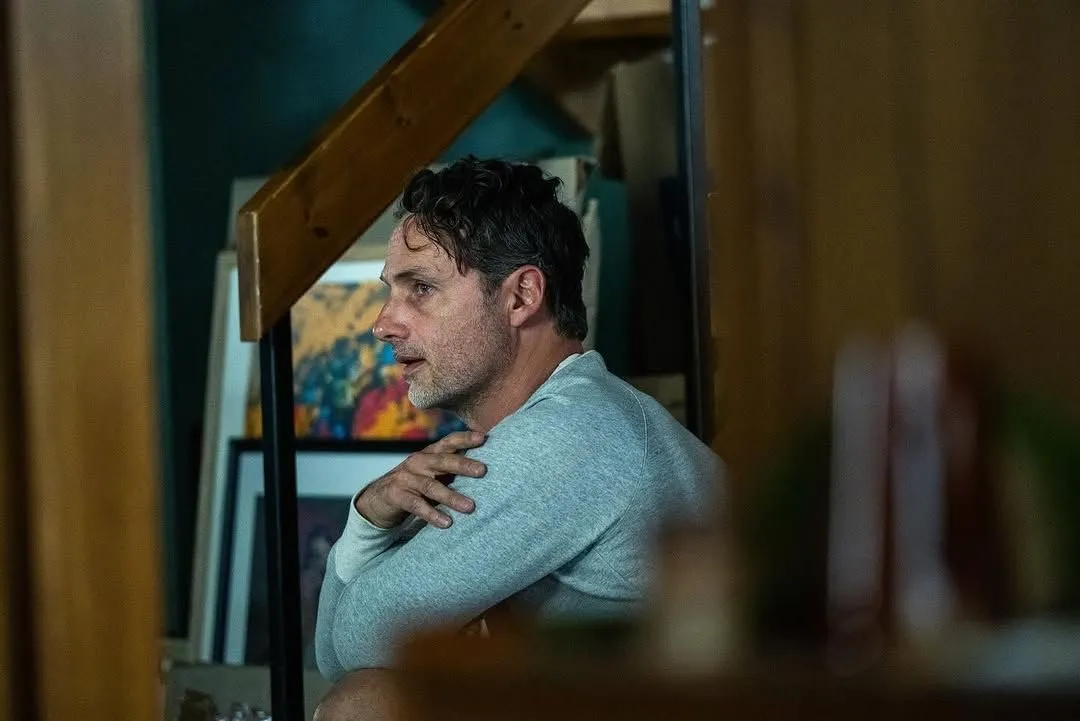
This tonal balancing act is what gives the show its unsettling power, connecting it to a tradition of stories like The Wicker Man, where an outsider is consumed by a closed community with its own dark rules. The humor is not a relief from the tension; it is an extension of it. It serves to highlight the absurdity of the situation and the characters’ detachment from normal moral codes.
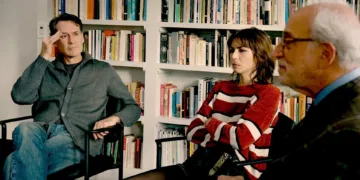
Specific scenes exemplify this, such as when Rebecca, the vicar, cheerfully exclaims, “Oh, I adore Satanic cults!” over dinner. The line is funny because it is so inappropriate, but it is also a terrifyingly frank look into her psyche. The grimly funny therapy sessions and awkward dinner parties underscore the cultural chasm between the urban newcomers and the rural zealots.
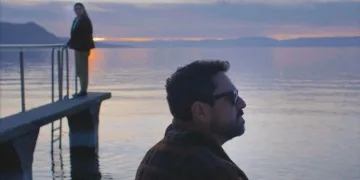
The atmosphere is thick with this sense of unease. The cinematography consistently contrasts the expansive, beautiful landscapes of the Highlands with the claustrophobic, tense interiors of the homes. This visual language reinforces the theme of a pristine external world masking a rotten internal reality.
A Bold, Unsteady Vision
The show’s primary strength lies in its excellent ensemble cast. The polar-opposite performances from Andrew Lincoln and Ewen Bremner create a compelling central dynamic that powers the narrative. The intelligent writing, showcased in sharp dialogue and well-structured scenes, successfully balances the believable drama of a marriage under strain with the high-stakes, almost theatrical, elements of its thriller plot.
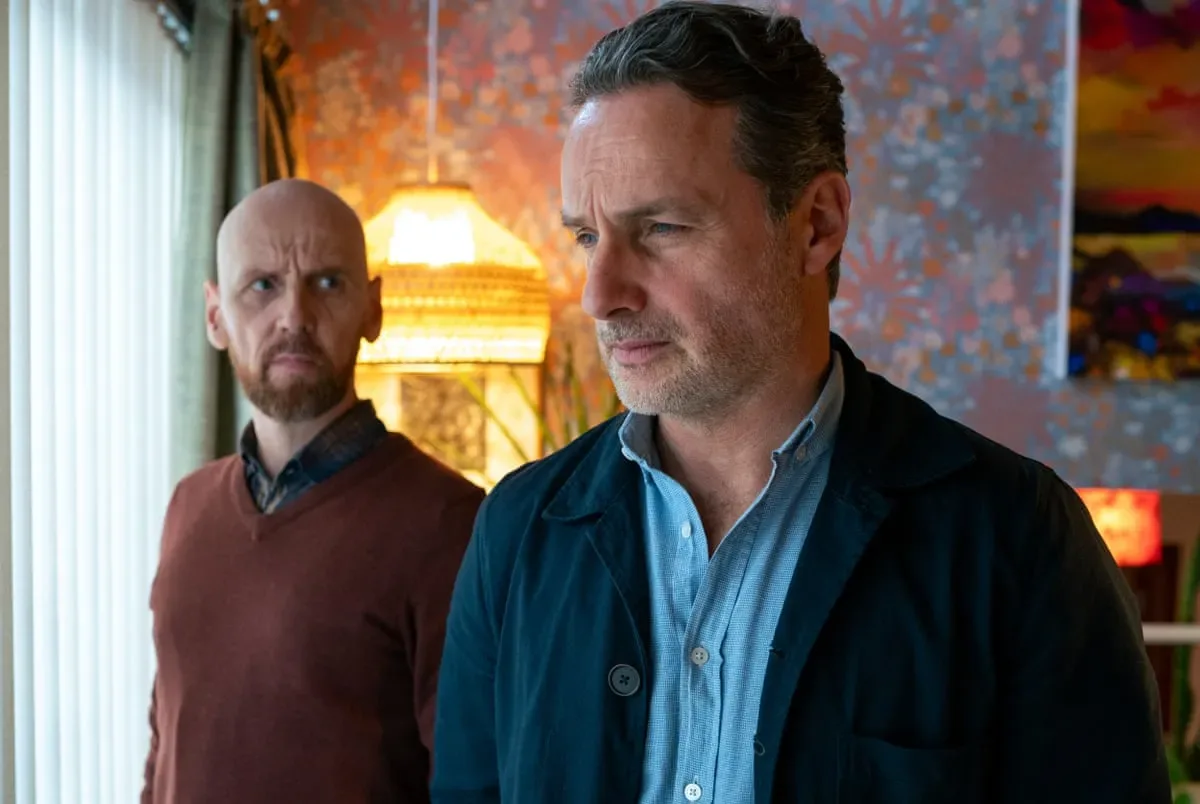
Its distinct tone, mixing genuine suspense with unsettling humor, is highly effective for most of its run. The show is less successful when its plot veers toward outright implausibility in the later episodes. This tendency feels symptomatic of a broader trend in streaming television, where the demand for constant escalation can sacrifice thematic coherence for shocking plot twists. Coldwater builds its world on a knife’s edge of belief, and the melodramatic finale pushes it over that edge.
The conclusion offers a shocking sequence of events but fails to meaningfully resolve the complex questions it raised about masculinity and faith. It provides a plot resolution but leaves John’s character arc feeling somewhat incomplete, choosing a loud bang over a resonant emotional finish. The bleakness of its vision will certainly not appeal to all viewers, but it marks the show as a challenging and memorable piece of television.
Coldwater is a six-part British thriller series. It premiered on ITV1 and ITVX in the UK on Sunday, September 14, 2025. You can watch the series on ITVX in the UK.
Full Credits
Director: Lee Haven Jones
Writer: David Ireland
Producers and Executive Producers: Producers: David Ireland, Brian Coffey, Andrew Lincoln; Executive Producers: Chris Fry, Alice Tyler, Lydia Hampson, Jane Featherstone
Cast: Andrew Lincoln, Eve Myles, Ewen Bremner, Indira Varma, Samuel Bottomley, Lois Chimimba, Lorn Macdonald, Greg Hemphill, Jonathan Watson, Sanjeev Kohli, Dylan Blore, Carla Langley
The Review
Coldwater
Coldwater is a bold and unsettling thriller, powered by sensational performances from Andrew Lincoln and Ewen Bremner. It fearlessly dissects the anxieties of modern masculinity and faith, wrapping its complex themes in a tense, genre-bending narrative. While its ambition is commendable, the series falters in its final act, sacrificing thematic coherence for a melodramatic plot that strains credulity. It’s a provocative and intelligent watch that doesn’t quite stick the landing, but the journey is intensely memorable.
PROS
- Andrew Lincoln and Ewen Bremner deliver powerful, contrasting portrayals of men in crisis.
- The series offers a sharp and complex exploration of modern masculinity, faith, and paranoia.
- It masterfully blends psychological tension with dark humor and elements of folk horror.
- The script is intelligent and unafraid to make viewers uncomfortable.
CONS
- The narrative becomes increasingly far-fetched in the later episodes.
- The melodramatic conclusion feels disconnected from the show's nuanced buildup.
- Its intense bleakness and disturbing content may not be suitable for all audiences.