



















The silence surrounding Margot Fogle is louder than any scientific discovery she could make. Before the disappearance that reshapes her life, the astrophysicist is already drifting away from the world around her, floating alone in a neglected garden pool, staring toward Mars, and searching for an answer that seems to exist somewhere beyond human reach. Lili Horvát’s My Notes On Mars takes the familiar language of science fiction and turns it inward, creating a film where distant planets become reflections of emotional distance.
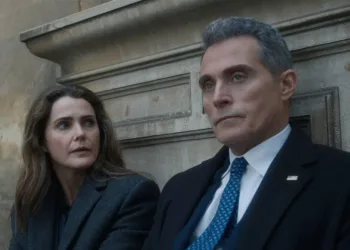
The film’s greatest mystery is not what happened to Margot after she vanished during a hike in the Hungarian mountains. It is the question of whether she was ever truly known by the people closest to her. When she returns two months later at her own memorial service, alive but transformed, the impossible event only exposes a truth that was already present. Her husband Sam (Rupert Friend) had been living beside someone he could never fully understand.
Horvát’s English-language debut exists in the space between psychological drama and speculative fiction. It looks toward the universe while remaining deeply concerned with the fragile structures people build around themselves. The stars are distant. The loneliness is immediate.
A Marriage Waiting to Disappear
Margot’s relocation to Hungary is presented as an attempt at recovery. After leaving her prestigious work at MIT following a breakdown connected to stress, she moves into Sam’s family home in the countryside, hoping to find a quieter existence. The plan sounds peaceful. The reality feels like confinement.
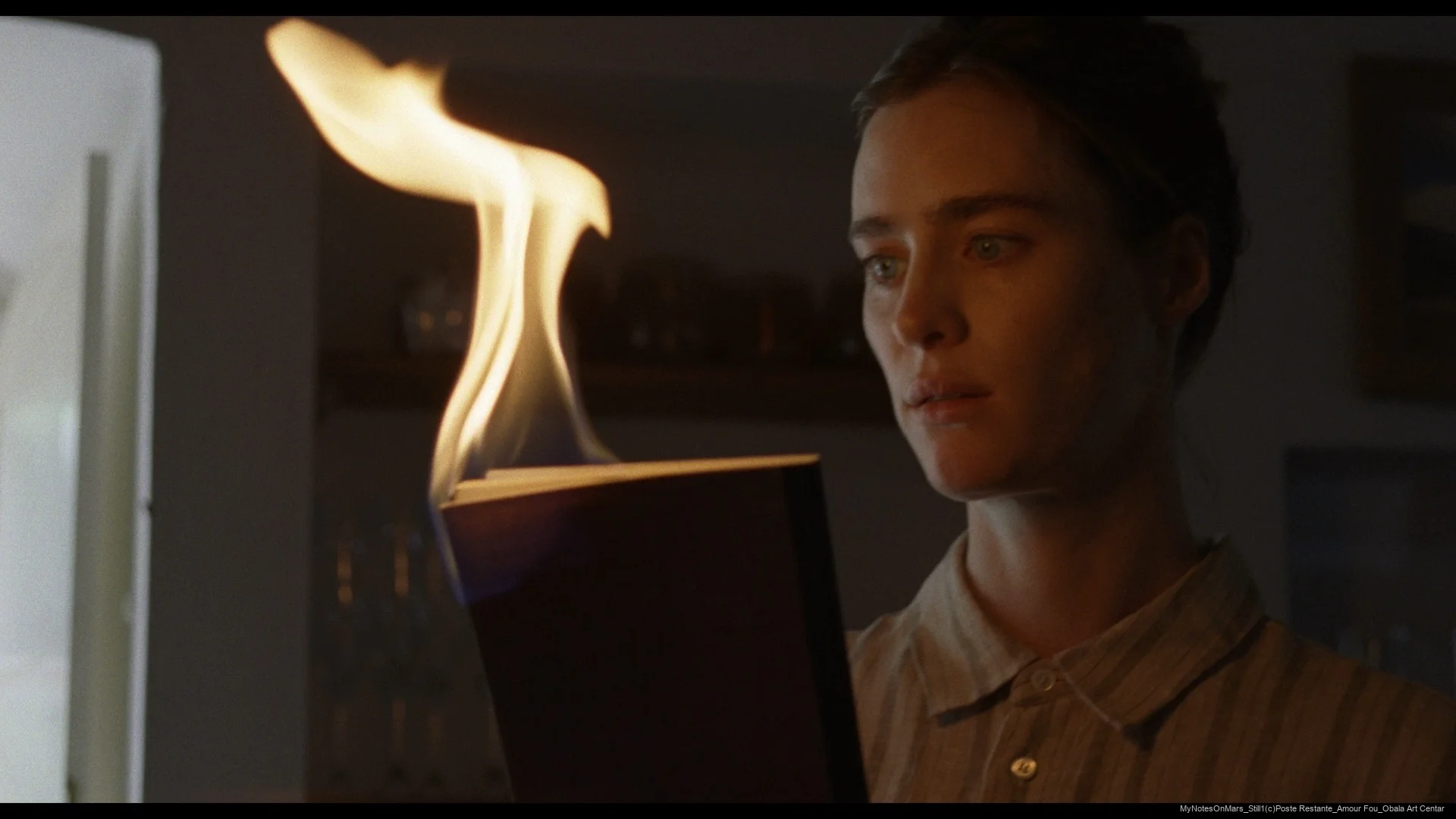
Sam wants a shared life built around simple pleasures. He buys a mare and imagines a future connected to rural traditions, while Margot remains emotionally elsewhere. Her attention returns to Mars, a subject she cannot abandon. During a visit to the Budapest observatory, she finds herself awake again in a way she has not been for months. The equations return. The excitement returns. So does the distance between her and Sam.
Their conflict is not built from dramatic betrayals. Horvát finds something more painful in smaller fractures: missed conversations, different dreams, and the exhaustion of trying to reach someone who is always looking somewhere else. Sam loves Margot, but his love is often shaped by his desire for a version of her that feels easier to live with.
The hiking trip becomes the physical expression of that tension. Margot reluctantly joins him, exhausted from her research and emotionally disconnected from the world around her. When she disappears, the film briefly seems ready to follow Sam’s grief. It appears to be moving toward a familiar story about a husband mourning a lost wife. Horvát refuses that path.
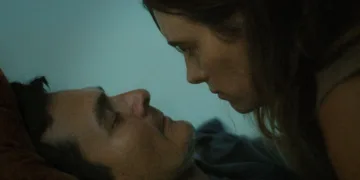
Margot returns during her own memorial service, turning absence into presence. The woman who comes home looks familiar, but everything about her feels altered. She does not remember her marriage. She does not remember her past achievements. She only knows that she must find her notebook and destroy her Mars research.
The return of Margot does not repair the relationship. It creates a stranger version of the same question. Who is the person standing in front of Sam now? More importantly, who was the person he lost before she ever disappeared?
The Universe Inside the Human Mind
Mars has always carried human fantasies about escape. It represents possibility, survival, and the hope that something unknown might offer a solution to the limitations of Earth. Horvát uses that fascination as a mirror for Margot’s own existence.
Her research is not simply professional ambition. It is the foundation of her identity. She has spent years searching for something hidden beneath the surface of the planet, trying to understand a place that may never reveal its secrets completely. The irony is that while she searches for alien life, she becomes increasingly unreachable to the people around her.
After her return, Margot behaves like someone encountering existence for the first time. She stands in the rain without concern. She responds to sounds, smells, and sensations with unusual curiosity. Her old self was defined by analysis and calculation. This new version reacts instinctively, almost like a person learning the rules of being alive.
The transformation creates one of the film’s most unsettling ideas. Knowledge can bring clarity, but it can also separate people from the world they inhabit. Margot’s search for answers has given her purpose while taking something away from her.
Her desire to destroy the notebook adds another layer to the mystery. The research that once represented her greatest achievement has become something she fears. The discovery she pursued so desperately may have become a burden too heavy to carry.
Sam struggles because he expects love to provide understanding. Horvát challenges that assumption. Sometimes intimacy exists alongside mystery. Sometimes two people can share years together while remaining fundamentally unknown to each other.
A World Between Dream and Reality
The atmosphere of My Notes On Mars carries the weight of an unanswered question. Horvát does not rush toward explanations. Instead, she allows uncertainty to settle over every scene.
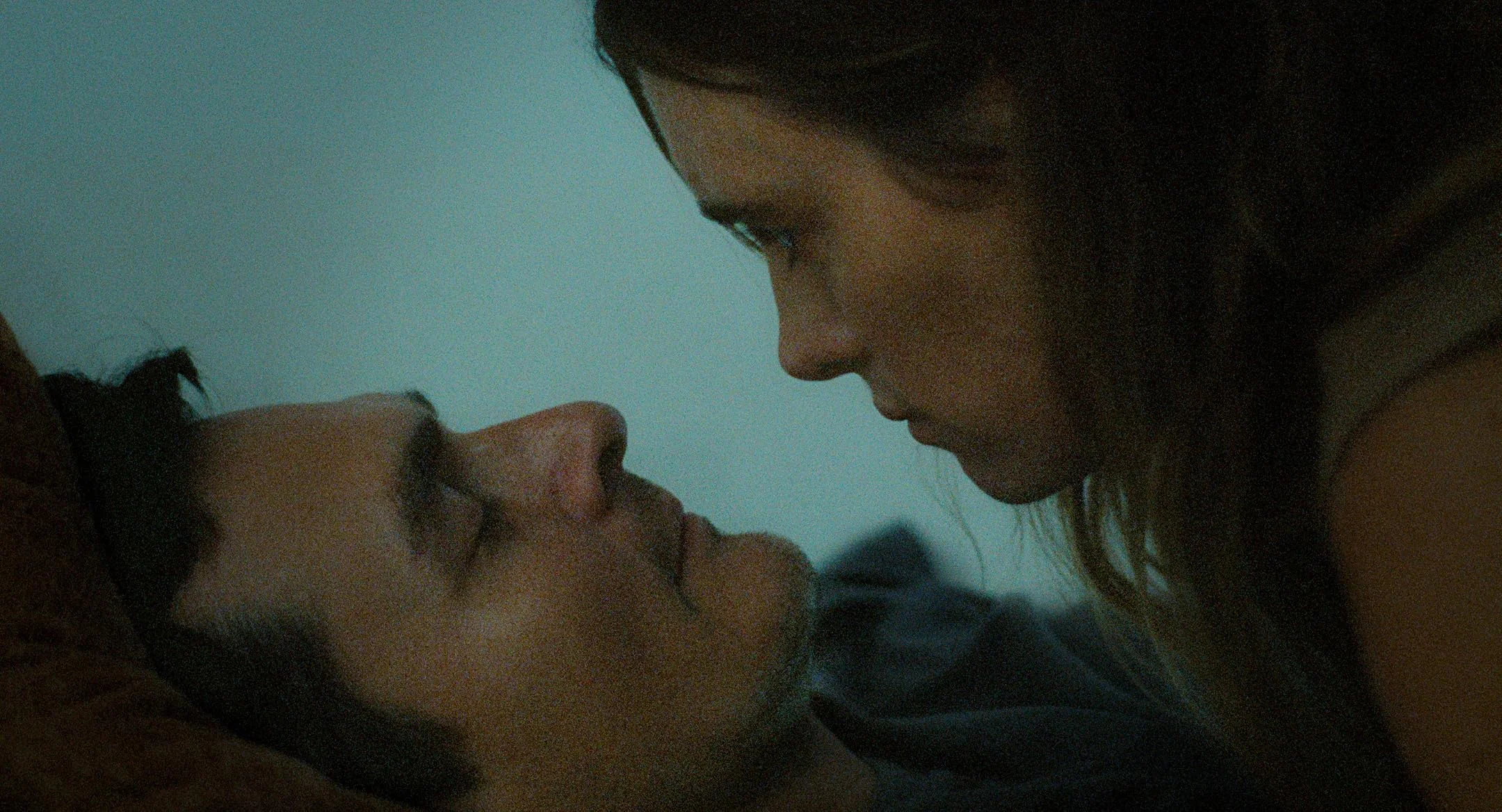
Róbert Maly’s cinematography creates a world that feels familiar and slightly displaced. The use of textured 35mm photography gives the countryside a physical presence while maintaining a sense of distance. Early scenes emphasize the separation between Margot and Sam. Their shared spaces feel divided, as if an invisible wall exists between them.
As the couple begins to reconnect, the images soften. The warmth does not erase the damage between them, but it changes the emotional landscape. The film understands that relationships are rarely rebuilt through one revelation. They are rebuilt through small moments of recognition.
The sound and music contribute to this strange balance between reality and dream. Gábor Keresztes’s score creates a feeling of vastness, reminding us that the story exists beneath an endless sky. The universe is always present, even when the film focuses on a quiet conversation between two people.
Horvát’s direction also finds humor inside the uncertainty. Margot’s new behavior can be unsettling, but it is never treated as a simple horror device. Her strange curiosity carries warmth. Sam’s confusion sometimes becomes absurd. The film understands the awkwardness of trying to rebuild a relationship with someone who technically came back from the dead.
The Faces of a Person We Thought We Knew
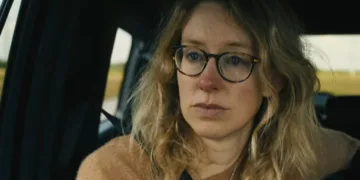
Mackenzie Davis carries the impossible challenge at the center of the film. She creates two versions of Margot who feel connected without becoming identical. The first Margot is controlled and exhausted. Davis presents a scientist trapped between intellectual hunger and emotional isolation. Her expressions often suggest someone thinking several steps beyond the conversation happening around her.
The returned Margot moves differently. She watches the world with open curiosity. Her silence feels less like withdrawal and more like discovery. Davis avoids turning her into a simple mystery figure. There is vulnerability beneath the strangeness.
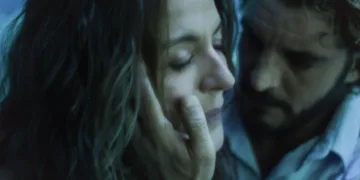
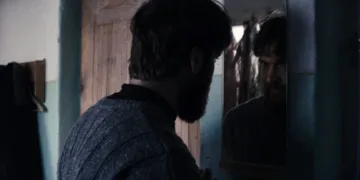
Rupert Friend provides the necessary contrast as Sam. His performance is built around restraint. Sam’s frustration rarely explodes, instead appearing through small reactions and moments of hesitation. He is not simply a victim of a strange event. He is someone forced to confront the possibility that he never truly understood the person he loved. Together, Davis and Friend create a portrait of a marriage caught between grief and renewal. They are two people trying to recognize each other after everything familiar has been removed.
My Notes On Mars does not look toward the stars because it believes humanity will find answers there. It looks upward because the unknown has always reflected something inside us. The planet in the distance matters because the people standing beneath it remain just as mysterious. The final revelation does not close every door. It leaves some rooms dark. That darkness feels appropriate. Some mysteries exist because they cannot be solved, only lived with.
My Notes on Mars had its world premiere at the 83rd Venice International Film Festival on September 2, 2026. The science-fiction romance follows a brilliant scientist who mysteriously reappears altered on the day of her own memorial service after vanishing during a hike.
Where to Watch My Notes on Mars (2026) Online
Full Credits
Title: My Notes on Mars
Distributor: Poste Restante, Paradise City, Amour Fou
Release date: September 2, 2026 (Venice International Film Festival)
Running time: 1 hour 51 minutes
Director: Lili Horvát
Writers: Lili Horvát
Producers and Executive Producers: Lili Horvát, Dóra Csernátony, Emilie Georges, Naima Abed, Alexander Dumreicher-Ivanceanu, Bady Minck, Mirsad Purivatra, Jovan Marjanovic, Evan Moore
Cast: Mackenzie Davis, Rupert Friend
Director of Photography (Cinematographer): Róbert Maly
Editors: Károly Szalai
Composer: Gábor Keresztes
The Review
My Notes On Mars
My Notes On Mars looks toward the stars to find the loneliness hiding inside ordinary human connection. Lili Horvát creates a quiet, unsettling portrait of love, identity, and the impossible weight of knowledge, carried by Mackenzie Davis’s haunting dual performance and Róbert Maly’s dreamlike images. Its mysteries may resist easy answers, yet the uncertainty becomes part of its emotional language. This is a strange, patient, deeply human work.
PROS
- Mackenzie Davis’s layered performance
- Atmospheric 35mm cinematography
- Existential themes and mystery
- Emotional marriage drama
CONS
- Deliberately slow pacing
- Some ambiguity may frustrate viewers
- Repetitive thematic exploration