




















Five days before Russia’s full-scale invasion of Ukraine, Helena Maksyom records herself listing the life she expects to have. She wants to learn French, play the piano, travel across an ocean, care for her mother, maybe become a mother herself. It is February 15, 2022. History already has other plans.
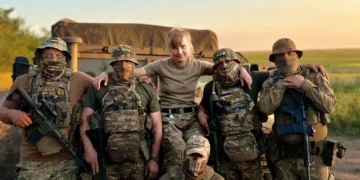
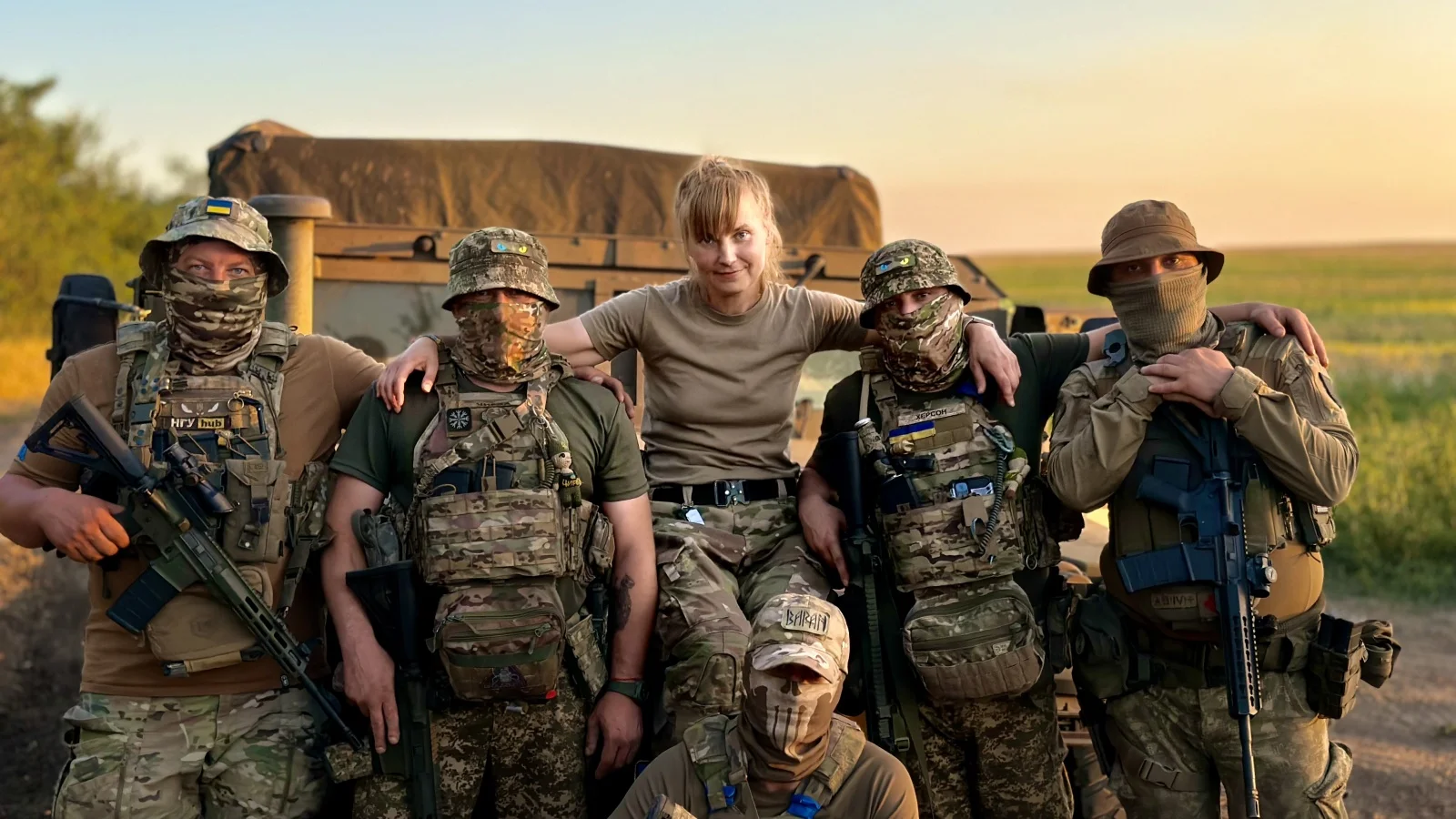
That opening gives Don’t Ask Me If I Killed its most painful idea before a weapon appears: war steals possible futures first. Maksyom, previously co-director of Everything Will Not Be Fine, initially assists with evacuations before joining Ukraine’s National Guard. She becomes the only woman in her unit, later serves as an officer and spends several years carrying two objects whose purposes seem incompatible, a rifle and a camera. The contradiction never goes away. It becomes the film.
Maksyom avoids constructing a military chronology of Russia’s invasion. Dates and locations rarely organize what we see. Her footage instead behaves like memory under extreme pressure: training drills, explosions, phone calls, wounded soldiers, stray dogs, funerals, promotions, jokes. Call it combat temporality, where a day can feel endless while entire years collapse into disconnected fragments.
The New Normal
War documentaries often struggle with repetition because war itself is repetitive. Maksyom makes repetition part of the evidence. Soldiers load machine-gun belts. Mortars are carried into position. Elderly residents feed abandoned dogs. Someone assembles an improvised birthday cake.
Maksyom receives military underwear so comically oversized that the absurdity briefly punctures the surrounding dread. Nobody stops being human because artillery is nearby. They simply become human under stranger conditions.
One soldier explains that explosions terrified him at first. Now he barely cares. The comment is chilling precisely because he delivers it without ceremony. Fear has undergone bureaucratization. It has become another task the body knows how to process.
Also Read





Maksyom says that sometimes a day feels like ten years. Her editing approximates that distortion. Episodes arrive with limited orientation, then disappear. The loose structure can frustrate. A clearer sense of progression might have given certain losses greater narrative force. Yet imposing a neat timeline could have produced its own dishonesty. Trauma rarely files itself chronologically. The camera keeps returning to ordinary labor because ordinary labor is where the abnormal becomes sustainable. That may be the film’s darkest observation.
What Violence Leaves Behind
The title carries an accusation, but it also contains exhaustion. Asking someone if they killed assumes the answer can be separated from everything surrounding the act. Maksyom refuses that separation. Her conversations with her ailing mother expose the private cost of enlistment. Their exchanges about Maksyom’s decision to serve sit beside scenes of soldiers calling spouses and children. One man receives only 90 minutes with his family and responds as if time itself has become contraband.
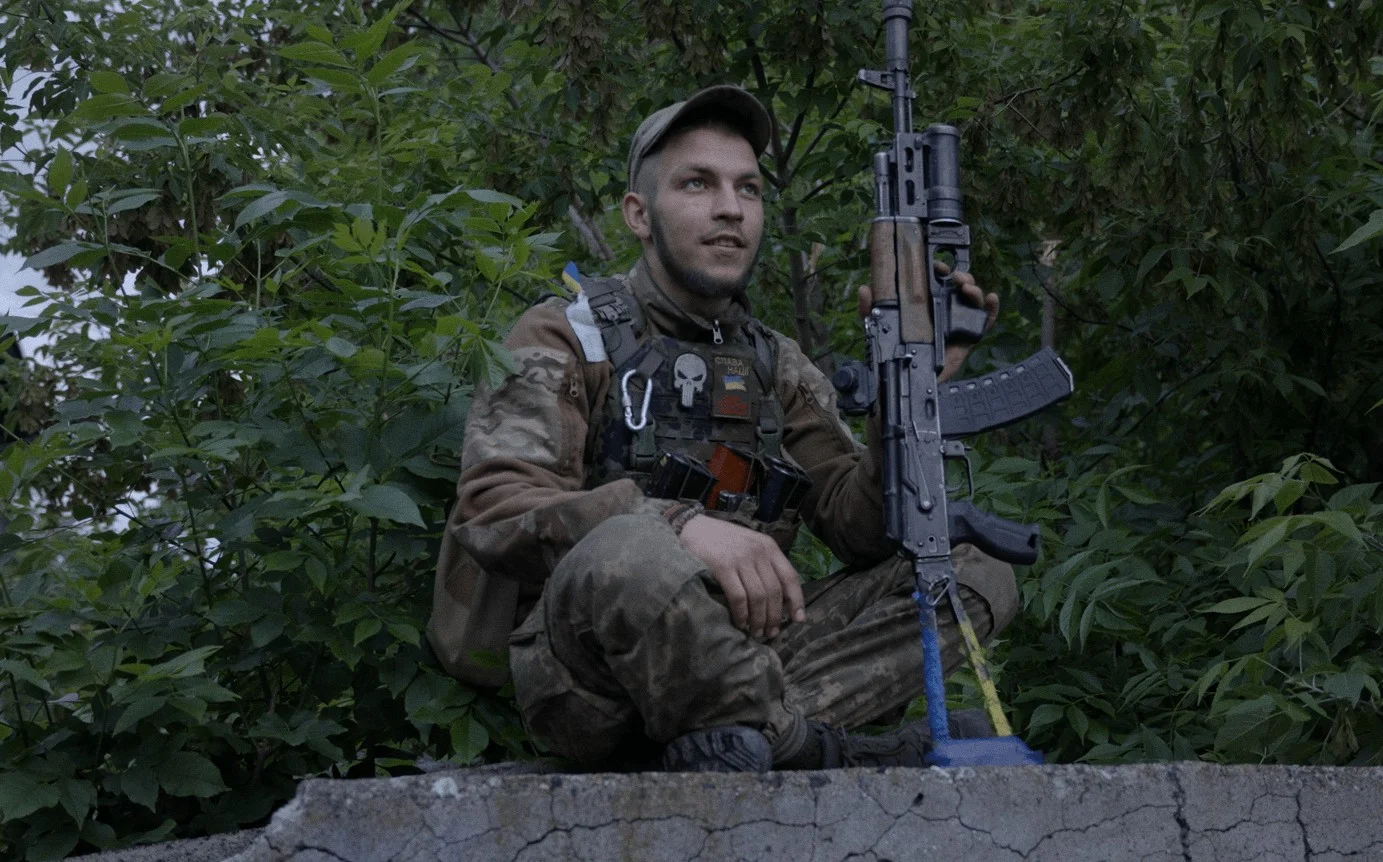
Then there is Ohla, an elderly woman who refuses evacuation. “Whatever happens, happens,” she says. Stoicism sounds heroic from a distance. Here it often resembles emotional triage. One of the film’s most disturbing exchanges comes when a Ukrainian soldier speaks to a Russian prisoner about his five-year-old child. The soldier imagines that child reaching adulthood and facing the same conflict. Violence has begun reproducing itself across generations before either man can leave the battlefield.
Other soldiers discuss the first person they killed. Their faces raise a question the film wisely refuses to solve: what happens to the person who survives becoming capable of killing? A society may call that transformation necessary. Necessity does not make it psychologically free.
Maksyom’s position as the only woman in her unit quietly complicates the usual masculine mythology of warfare. Young men joke, fight, call home, mourn and learn to suppress terror because suppression keeps them functional. The system requires emotional damage, then calls the resulting hardness strength. Efficient, in the bleakest possible sense.
The Camera Remembers
Maksyom shoots much of the documentary with handheld and helmet-mounted cameras, giving the footage the unstable physicality of lived experience. Combat sequences shift into black and white, introducing a small degree of distance from images that might otherwise become unbearable.
Sound does equally important work. Explosions eventually settle into the acoustic background, which is horrifying precisely because the soldiers have learned to live with them. Elsewhere, silence becomes heavier, especially when families receive medals belonging to those who died.
The camera also functions as a confessional. Soldiers speak freely because Maksyom is sharing the same danger. She is neither detached reporter nor visiting observer. When she turns the lens on herself, the filmmaker and subject briefly become indistinguishable.
That intimacy comes at the expense of structural clarity, yet the fragments accumulate with brutal force. People appear, laugh, work and disappear. Names migrate from living bodies into casualty lists.
The closing credits provide the film’s cruelest change of format. A long list records those killed or missing in action, followed by Maksyom’s dedication: “For my fallen brothers who kept me alive.”
By then, the camera has already done what memorials attempt to do after death. It has preserved the cake, the phone calls, the bad underwear, the boredom and the fear. History records who fought. Maksyom records who was there before history reduced them to names.
Don’t Ask Me If I Killed premiered at the DocuDays UA festival on June 8, 2026, with distribution handled by First Hand Films. Filmed over more than a thousand days, this raw documentary captures a civilian documentarian’s transition into a reserve officer following the full-scale Russian invasion of Ukraine.
Full Credits
Title: Don’t Ask Me If I Killed
Distributor: First Hand Films
Release date: June 8, 2026 (DocuDays UA)
Rating: Not Rated
Running time: 1 hour 44 minutes
Director: Helena Maksyom
Writers: Helena Maksyom
Producers and Executive Producers: Adrian Pirvu, Renko Douze, Yasmin C. Rams, Jeanne Dovhych, Hasse Van Nunen
Cast: Helena Maksyom
Director of Photography (Cinematographer): Helena Maksyom
Editors: Svitlana Zaloga, Helena Maksyom, Augustine Hujisser
Composer: Not publicly specified
The Review
Don’t Ask Me If I Killed
Don’t Ask Me If I Killed understands that war changes people long before it kills them. Helena Maksyom’s camera catches that corrosion in family calls, improvised cakes, oversized military underwear, black-and-white combat footage and soldiers learning to treat explosions as background noise. Its fractured chronology can make the experience feel scattered, yet that fragmentation suits a film built from memory under pressure. Call it combat temporality: hours stretch, years vanish, and grief becomes routine. The final roll call of the dead and missing makes routine impossible to dismiss.
PROS
- Intimate frontline perspective
- Powerful family conversations
- Unvarnished military detail
- Effective black-and-white combat footage
- Devastating memorial credits
CONS
- Fragmented chronology
- Limited temporal orientation
- Some episodes feel isolated