












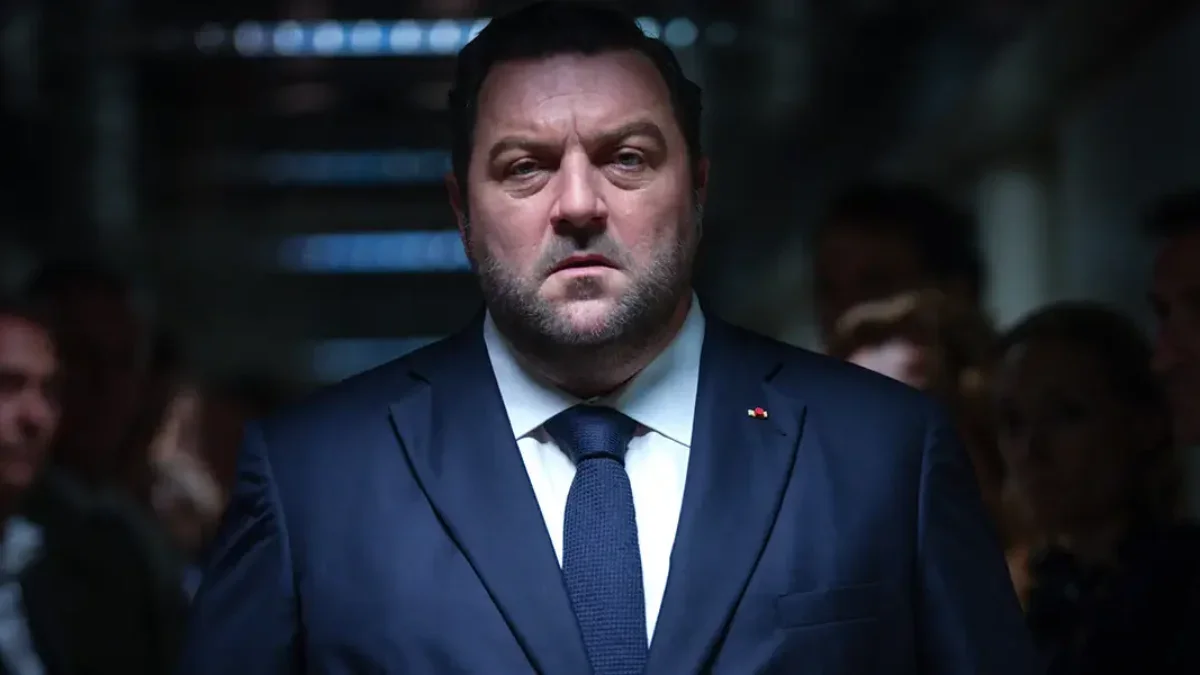

France’s nuclear doctrine leaves one person with the final word, and Jupiter builds its entire structure around that bottleneck. Alexandre Smia’s feature debut, co-written with Thomas Finkielkraut, takes the machinery of nuclear deterrence and strips away nearly everything except the individual expected to make it function.
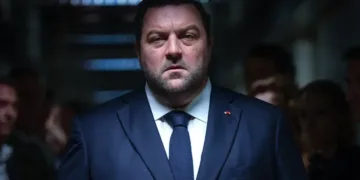
That individual is Paul Archambault, played by Denis Ménochet, who has barely assumed the French presidency when an assassination attempt against Russian president Chernov is blamed on Ukraine. The accusation immediately destabilizes an already fragile ceasefire. Chernov threatens retaliation, Ukraine asks France to stand firm, and Archambault is pulled toward PC Jupiter, the secure bunker beneath the Élysée Palace where France’s gravest military decisions are made.
Smia keeps the perspective remarkably narrow. There are no civilian families waiting for news, no soldiers preparing for deployment, no sprawling intelligence subplot designed to offer another angle on the crisis. Archambault walks through corridors, sits at tables, receives calls and listens as people explain which version of catastrophe might be preferable. It is a severe structural choice, and mostly a smart one.
Diplomacy at the Edge
The screenplay works best as a sequence of shrinking options. Chernov survives the attack. Russia blames Ukrainian president Kovalenko. Questions emerge about the evidence, including the possibility that the attack was manipulated or fabricated. None of those uncertainties slow events down.
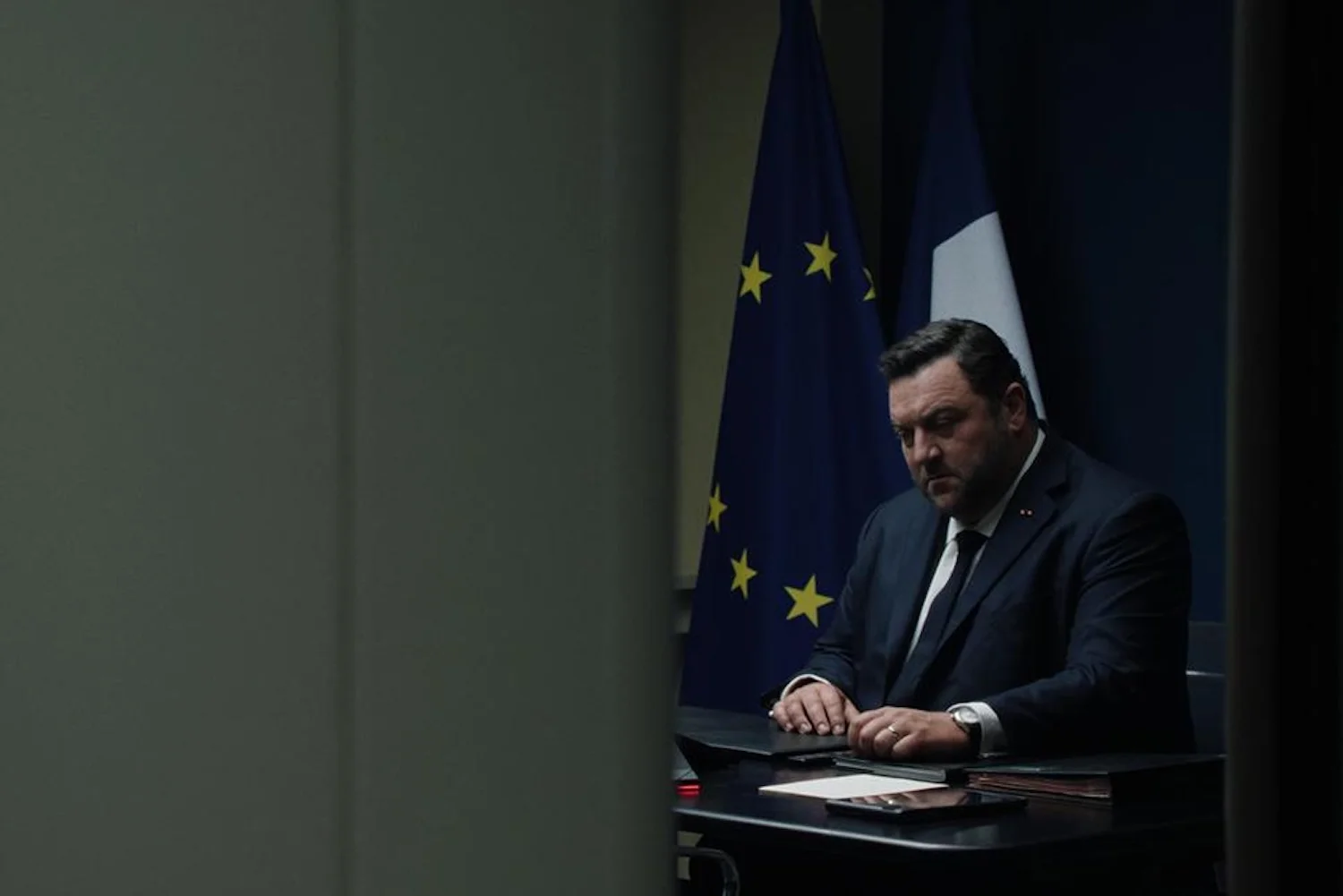
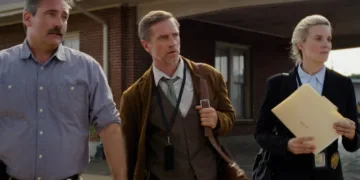
Archambault’s cabinet quickly divides. Reda Kateb’s Defence Minister argues for a firmer military response. Dominique Blanc’s Foreign Affairs Minister urges restraint. Céline Sallette’s Prime Minister and André Dussollier’s senior military figure add different calculations, while Ella Rumpf’s diplomatic adviser occupies another position in the increasingly crowded argument.
The writing gives these disagreements a useful dramatic function. Each adviser represents a course of action, yet none can carry the responsibility attached to it. They can recommend retaliation, negotiation or concession. Archambault still has to sign off.
A conference with NATO leaders expands the pressure without widening the film itself. The American president is reluctant to risk escalation for Ukraine, forcing France into a less comfortable position inside the alliance. Then Russia detonates a nuclear weapon above the Black Sea, and the screenplay removes another layer of abstraction from the debate.
Smia understands that diplomatic conversation can function as action when every sentence changes the available choices. Threats arrive wrapped in formal language. Concessions resemble weakness. Silence can be interpreted as hesitation. The film keeps converting procedure into suspense, which is useful because its cast spends an impressive amount of time sitting down.
The President Cracks
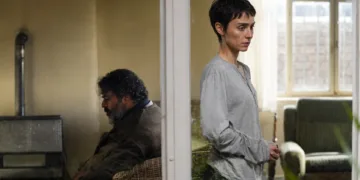
Ménochet carries most of this architecture on his face. Smia frequently pushes the camera close enough to catch small shifts in Archambault’s expression, trusting fatigue, hesitation and anger to communicate what the screenplay rarely states directly.
That restraint suits the character. Archambault enters office already carrying a personal bereavement and strained family circumstances, then inherits a crisis capable of killing millions before he has settled into the job. His attempts to contact his wife and daughter briefly puncture the professional enclosure around him.
The strongest moments arrive when his presidential discipline starts failing. He becomes physically exhausted. His composure slips during conversations. A tearful scene finally lets the pressure surface without converting it into a grand speech about leadership.
Some of the screenplay’s attempts to explain him are less successful. An earlier personal crisis is sketched quickly, then returned to through a dream sequence that asks the material to carry emotional significance it has not earned. The film has already found a cleaner method of characterisation. Put Ménochet in a chair, tell him millions of lives depend on his next sentence, and watch what happens.
The political characterization has a similar limitation. Archambault’s ideology remains surprisingly vague for a story so focused on French presidential authority. His advisers have positions, yet several of them remain positions before they become people.
The Bunker Closes In
Nicolas Loir’s cinematography turns that lack of space into part of the design. The Élysée, presidential aircraft and PC Jupiter are photographed through close framing, deep shadows and hard divisions of light. Rooms that should signify authority gradually resemble traps.
Smia rarely allows the camera to escape Archambault’s immediate environment. Even when the possible consequences expand toward continental destruction, the physical world contracts. Doors close. Secure rooms replace public spaces. Phones disappear before sensitive meetings. The closer everyone gets to nuclear war, the smaller the film becomes.
Olivier Marguerit’s score pushes in the opposite direction. Its heavy, sometimes bombastic cues insist on the magnitude of the crisis, and there are moments when the music applies pressure that the dialogue and performances had already created perfectly well. A nuclear standoff hardly needs someone underlining the danger.
The rapid pacing has a similar double effect. At roughly 87 minutes, Jupiter wastes little time moving from assassination attempt to diplomatic confrontation to nuclear demonstration. New information arrives before the previous development has fully settled. That creates urgency, yet it leaves little space for certain political or emotional consequences to develop.
The film’s refusal to show ordinary citizens sharpens that problem. Millions of lives remain theoretical figures inside briefing rooms. That is consistent with Archambault’s isolated perspective, but it also makes the threatened catastrophe strangely abstract.
Then Smia denies the audience a fully definitive resolution. After spending the entire film tightening cause and effect, Jupiter leaves its final consequences suspended. Structurally, the choice fits a story about deterrence, where certainty disappears long before the missiles do. Dramatically, it may leave some viewers feeling that the screenplay spent 87 minutes winding a mechanism it finally declines to release.
Jupiter premiered at the 83rd Venice International Film Festival on September 4, 2026, ahead of its theatrical release. The political thriller follows a high-stakes power struggle that forces an embattled protagonist to navigate treacherous political corridors.
Full Credits
Title: Jupiter
Distributor: SND
Release date: September 4, 2026 (Venice International Film Festival)
Running time: 1 hour 27 minutes
Director: Alexandre Smia
Writers: Thomas Finkielkraut, Alexandre Smia
Producers and Executive Producers: Nicolas Dumont, Hugo Sélignac
Cast: Denis Ménochet, André Dussollier, Clotilde Courau, Céline Sallette, Nathan Willcocks
Director of Photography (Cinematographer): Nicolas Loir
Editors: Pierre Deschamps
Composer: Olivier Marguerit
The Review
Jupiter
Jupiter is strongest when it treats nuclear escalation as a structural trap. Alexandre Smia keeps tightening the chain of decisions until Paul Archambault has plenty of advisers and nowhere to hide. Denis Ménochet gives that pressure a human shape, especially when presidential composure begins to crack. The film loses precision when hurried personal material and thinly defined political positions interrupt its otherwise clean design, while the unresolved ending may test patience after such disciplined buildup. Still, as an 87-minute pressure chamber, it knows exactly where to apply the screws.
PROS
- Denis Ménochet’s controlled performance
- Tightly managed escalation
- Effective bunker claustrophobia
- Strong cabinet conflict
- Lean 87-minute pacing
CONS
- Thin political characterization
- Underdeveloped personal backstory
- Score can overstate the tension
- Limited civilian perspective
- Ambiguous ending may frustrate