



























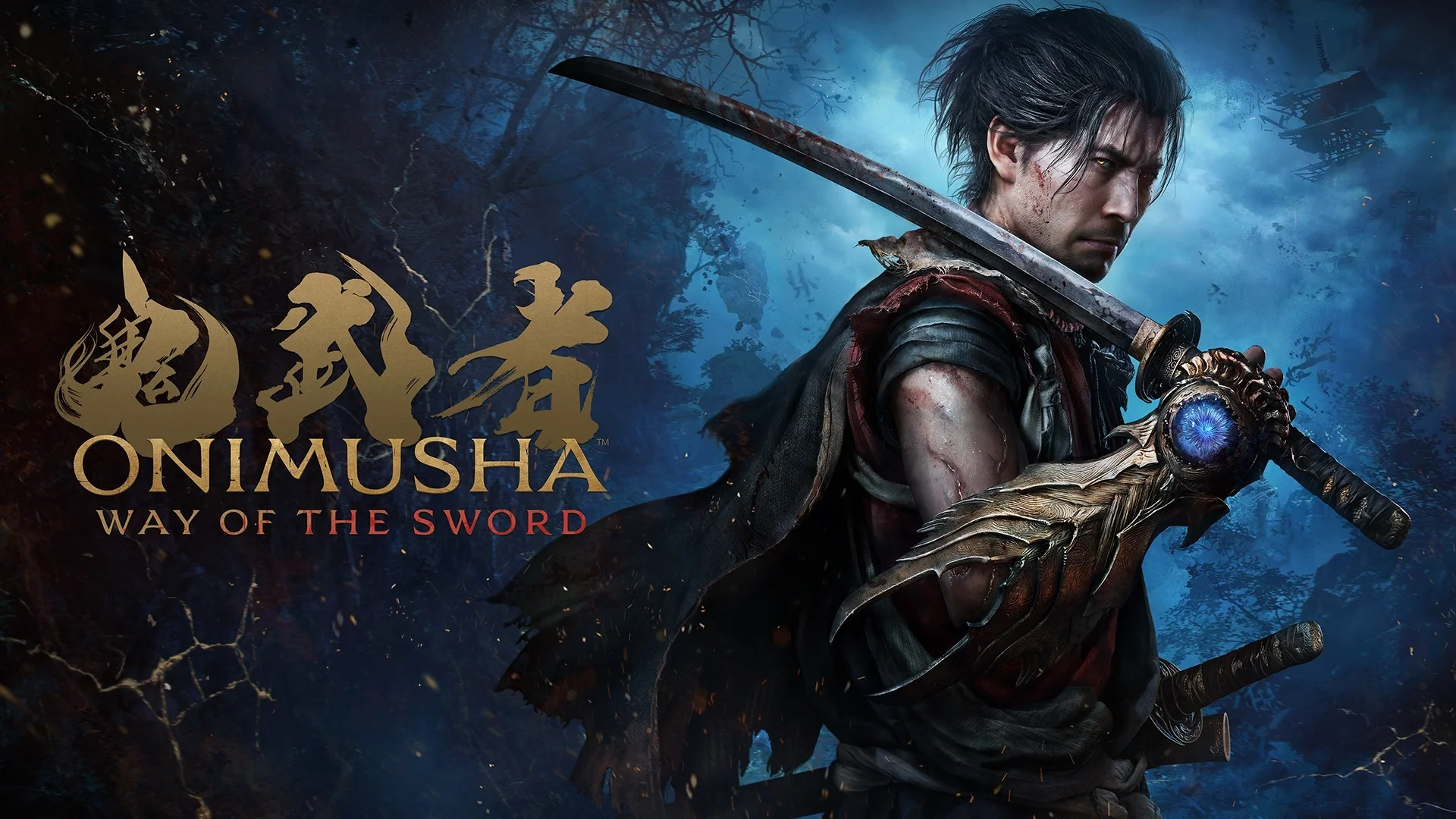

Miyamoto Musashi spends much of Onimusha: Way of the Sword resenting the thing keeping him alive. After Genma kill him and rival swordsman Sasaki Ganryu, Musashi is resurrected with an Oni Gauntlet attached to his arm, a supernatural weapon that absorbs souls and carries the spirit of Shizuka. For a man who defines himself through earned skill, borrowed power feels almost insulting.
That contradiction gives Capcom’s returning series a strong protagonist immediately. Musashi is arrogant enough to insult demons while cutting them apart, yet principled enough to distrust strength he did not earn. His likeness draws from Toshiro Mifune, and the character animation captures small mannerisms that sell the connection, from the loose walk to the habitual scratch at the back of his head.
The game is happy to puncture his legend, too. One sequence puts Musashi in a boat with Okuni, where he discovers that being one of history’s greatest swordsmen does not prepare him for an oar. Okuni mocks him without mercy. Later, their banter flips when she volunteers to pose as a village beauty for a plan. These exchanges matter because they give Musashi a life beyond killing Genma.
The Voice Inside the Gauntlet
Shizuka begins as an inconvenience Musashi calls “Gauntlet Lady.” Their relationship gradually becomes the emotional thread holding the supernatural spectacle together. She cannot fight the Genma herself, while Musashi cannot survive them without the strength flowing through her. The arrangement forces two stubborn people into dependence, and the writing allows affection to emerge through cooperation rather than sudden confession. When Shizuka encourages Musashi after an impressive fight, the praise lands because she has watched every mistake that came before it.
Takamura and Okuni create similar openings in Musashi’s armor. He listens when Takamura speaks from experience and treats Okuni like a younger fighter who deserves guidance rather than protection. Those details reshape his swagger into something warmer.
The facial work carries much of this. Musashi can move from irritation to embarrassment through a glance before dialogue catches up, while Shizuka’s reactions give the disembodied spirit a vivid presence. The Japanese performances strengthen that intimacy, especially Yoshimasa Hosoya’s rough confidence as Musashi and Aya Endō’s firm, alert Shizuka.
Ten Seconds With a Sword
Then somebody swings at you, and everything becomes timing. Musashi has light and heavy attacks, blocking, dodging, parries, deflects, and the Issen counter. Their value comes from how differently they answer pressure. Blocking drains stamina and eventually breaks. Dodging works against grabs and unarmed attacks. Parries create openings while charging the Blazing Gauge. Deflects trade immediate retaliation for severe stamina damage.
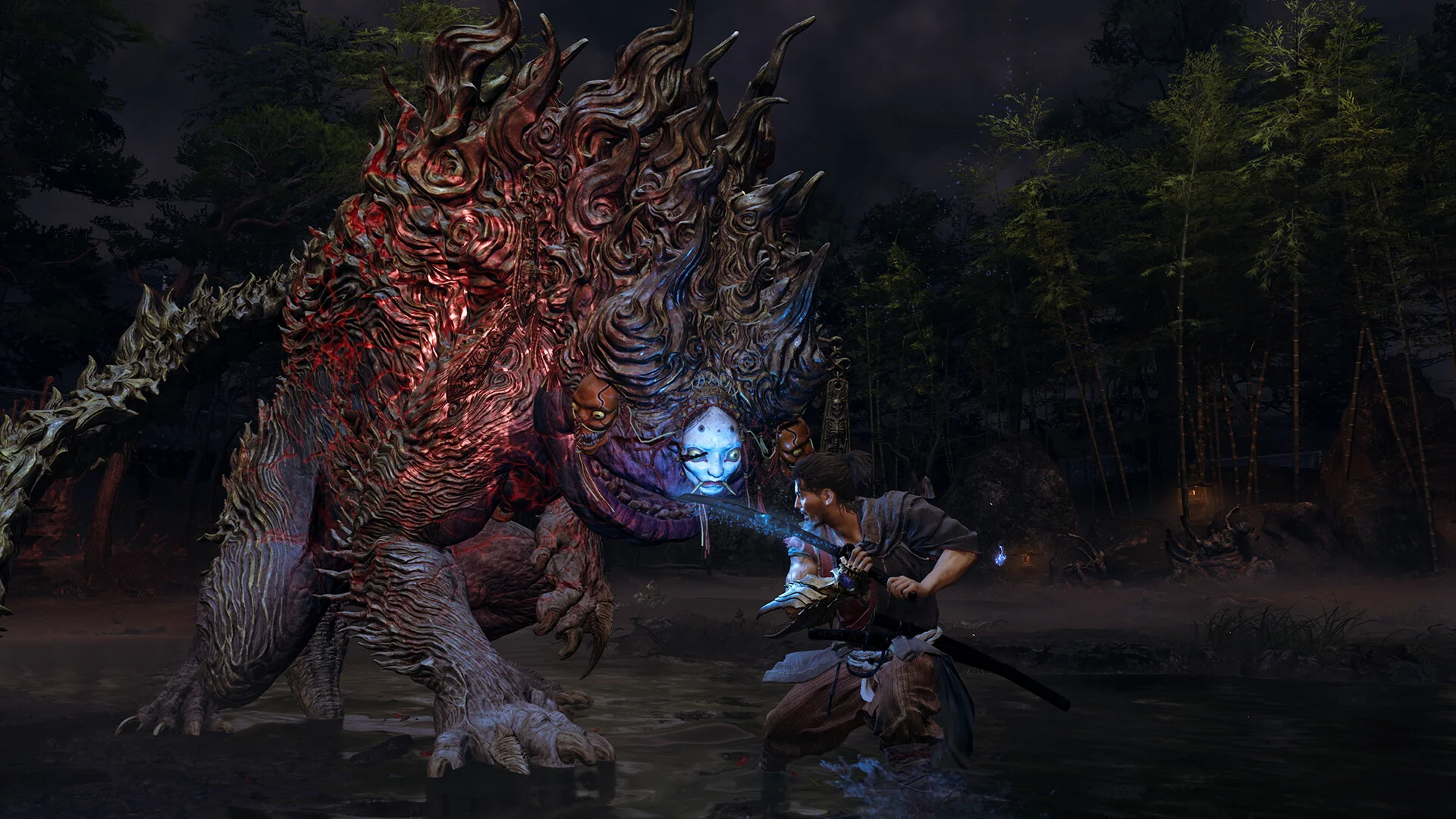
The Issen is where the system becomes electric. Attack at the instant an enemy commits and Musashi flashes past the strike before delivering a brutal counter. Miss the timing and you usually absorb the attack you tried to punish. Against dangerous telegraphed moves, that risk can turn a second into a tiny argument between confidence and survival.
Bosses force that vocabulary into conversation. Benkei, Ganryu, the Oni brothers, and Greater Nue cannot be solved by repeating one defensive response. Grabs demand movement. Armored enemies encourage deflection. Aggressive strings invite parries. Certain attacks offer terrifying Issen opportunities.
Depleting stamina creates a Break Issen. Against regular enemies, it becomes an execution. Against bosses, the game asks you to choose a target: red points inflict heavy damage, while purple points sacrifice some damage for extra souls.
That decision connects offense to survival. Yellow souls restore health, blue souls recharge Oni Armaments, and red souls feed progression. Bosses can absorb loose souls themselves, powering up early and gaining attacks before you are ready for them. A desperate scramble for healing can become a race against the creature trying to kill you.
Oni Armaments widen those decisions further. The Two Celestials can help produce healing souls, while Earth-Shakers smash stamina and strip defenses. None replaces swordsmanship. They create another resource to spend at exactly the right moment.
Basic attacking can feel comparatively thin, especially when passive enemies refuse to initiate and their stamina begins recovering. The combat clearly prefers reaction over relentless offense. Once opponents become aggressive, that limitation fades into the rhythm of reading, answering, and gambling on one precise counter.
Kyoto Between Battles
Kyoto gives those battles somewhere to breathe. Destroying Malice plants and closing Genma Rifts clears districts, reveals shortcuts, and opens routes toward materials and optional encounters. Musashi also leaves the city for forests, temples, mountains, the Imperial Palace, and a grotesque laboratory whose experiments recall the series’ old horror DNA.
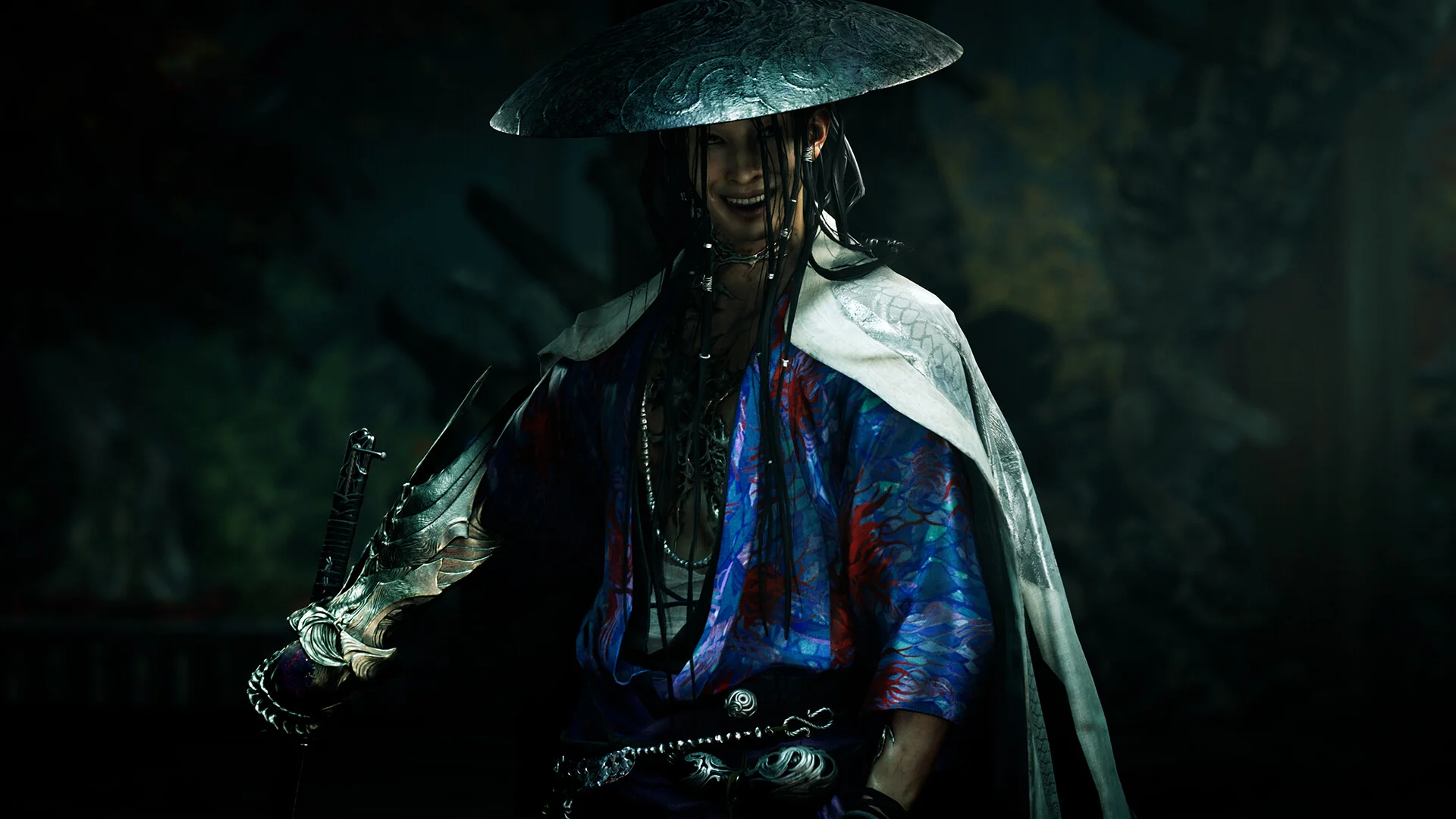
Exploration feeds directly back into fighting through sword upgrades, charms, gauntlet improvements, health increases, and new skills. Chained Issens and stronger reflex attacks meaningfully alter future encounters, while small percentage boosts to equipment feel comparatively routine.
Lady Murasaki provides the strongest optional stories. Her requests send Musashi after strange human problems, including a child searching for a revenge-consumed father and a man convinced the gods granted him immortality. She later records these incidents as stories, giving simple errands a sense of accumulated memory.
Other diversions are lighter: rescuing Lion Dogs unlocks pieces of Japanese folklore, drawings point toward hidden treasures, and Oni Portals reveal pieces of Shizuka’s past. Repeated fights against minibosses such as Byakue and Dohatsu-ten eventually become familiar, yet the combat gives recurrence an unusual benefit. Meeting the same enemy later lets you feel exactly how much faster your hands have become.
That sensation is Onimusha: Way of the Sword at its strongest. The game remembers that mastery can carry emotion all by itself. A perfect Issen after several failed attempts says something about Musashi, certainly. For those few seconds, it says something about the player holding the controller too.
The Review
Onimusha: Way of the Sword
Onimusha: Way of the Sword makes precision feel personal. An Issen landed at the edge of failure, a Break Issen spent on souls instead of damage, or a desperate parry against Ganryu turns mechanical mastery into genuine emotion. Musashi and Shizuka give that mastery a human pulse, while Kyoto rewards the curiosity that grows between battles. Repeated minibosses, routine side objectives, and occasionally passive enemies interrupt the rhythm, yet the swordplay keeps pulling you back toward that next perfect exchange.
PROS
- Exceptional parry and Issen combat
- Memorable, mechanically distinct bosses
- Musashi and Shizuka’s relationship
- Strong exploration and progression rewards
- Expressive character animation
CONS
- Repeated miniboss encounters
- Formulaic side objectives
- Limited basic offensive variety