


























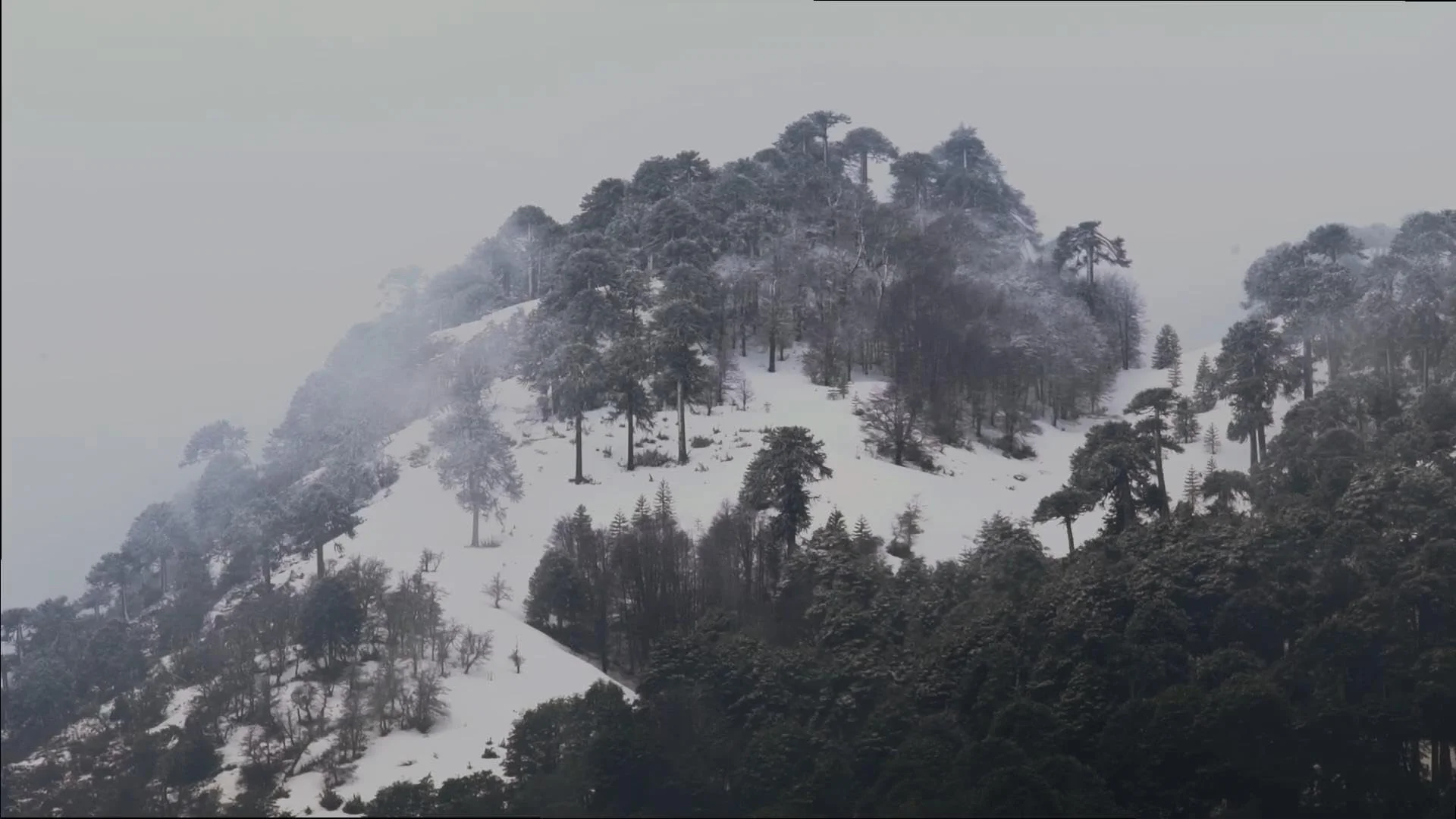
Animals move freely across the open ground while the voiceover recounts how Katrülaf was tied up every night for over six months. His family had been taken from him, his possessions confiscated. There is so much room in these images, so little in the life being described, that looking becomes uncomfortable. The mountains offer the eye somewhere to wander while the testimony keeps returning it to a captive body. Relentless Memory makes the spaciousness of the Patagonian landscape difficult to enjoy. Listening, one begins to feel the distance a person could see and still be forbidden to cross.
Margarita Canio Llanquinao crosses this terrain in the present, retracing Katrülaf’s deportation route through the pampas and the Andes, completing part of the passage on horseback. The movement carries an intimacy that the wide views alone cannot provide: another Mapuche person occupies the land from which people were forcibly removed.
Yet the difference between these two passages remains painful. Margarita can choose to follow the route. Katrülaf was compelled to travel it. Her movement brings his account into physical proximity with the places it describes, leaving the original experience unreachable. Each stretch of ground can be covered again; the conditions of that first crossing remain beyond recovery.
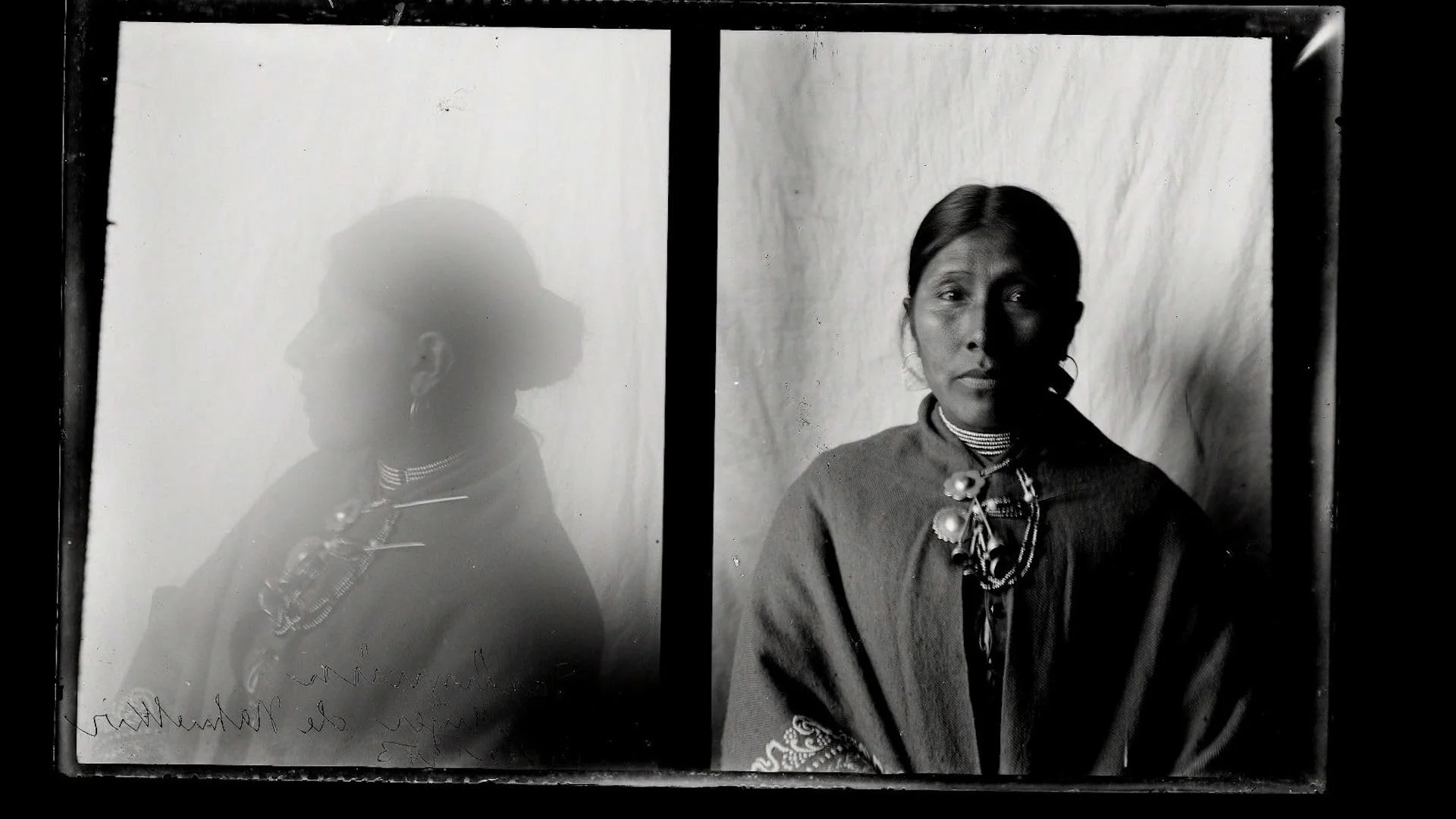
The route belongs to the nineteenth-century military campaigns through which Chile and Argentina seized Mapuche territory, killing, imprisoning, and displacing its inhabitants. Margarita, a Mapuche academic, located survivor testimony among the Berlin holdings of German ethnologist Robert Lehmann-Nitsche.
Manuscripts in Mapudungun, photographs, and wax-cylinder recordings had preserved experiences largely absent from accounts written by military officers, missionaries, and travelers. Katrülaf’s written testimony becomes a thread through the film. The details of confiscation and nightly restraint give dispossession its bodily scale. A military campaign can be described across territories and years. His account makes us consider the evening when the restraints were applied again.
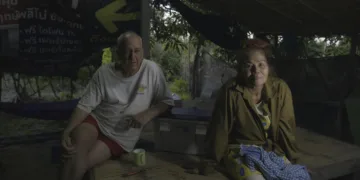
The discovery in Germany might have encouraged a familiar story in which forgotten people wait for an institution to return their history. The encounters along Margarita’s route resist that shape. Beside a fire, a man recalls what his grandparents remembered of the war.
His recollection has reached him through other lives, with all the fragility that such transmission entails. The archival record meets this continuing act of remembrance. Its survival on paper matters enormously, yet the people speaking to Margarita have already been carrying the past without it. Hearing them makes the word “discovery” feel incomplete: something newly accessible to researchers has long been present in families.
At a school in Valcheta, a teacher brings the incarceration and forced relocation of Indigenous people into the classroom. Remembrance acquires a different tense here. The man beside the fire reaches back through his grandparents; the teacher speaks toward those who will inherit the responsibility of remembering.
These scenes give the film a human activity to attend to beyond the recovery of documents. Someone must decide to speak, and someone must remain to listen. Late in the film, Margarita embraces an older woman. After the distances crossed and the accounts of separation, that contact has a quiet physical force. The research has brought two living people within reach of each other.
The film’s patience is valuable when it allows these encounters to develop, though its prolonged landscape passages and recurring somber accompaniment sometimes hold experience at the same emotional pitch. Grief begins to feel continuous even when the people and circumstances change.
The distinction matters because the school, the recollections beside the fire, and the embrace contain different movements of feeling: instruction, effortful recollection, recognition. The music and extended views occasionally settle over those differences. I felt the weight of the history throughout, but at times the film seemed reluctant to let an encounter discover a feeling that its atmosphere had not already prepared.
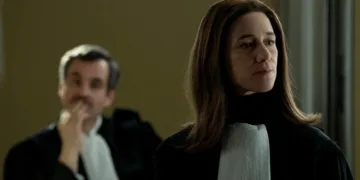
Inside the church in La Plata, the relationship between historical suffering and present speech becomes especially charged. Margarita listens to Hermelinda discuss the imprisonment and abuse of Indigenous people associated with the site, and the Church’s failure to undertake meaningful historical reparation.
A place that can still be entered holds an account of people who could not freely leave. The building’s continued existence gives the conversation a terrible nearness. Yet the editing repeatedly returns to Margarita as Hermelinda speaks. We are asked to watch the effect of the account on its listener, and the sustained encounter with the speaker keeps being interrupted.
Margarita’s presence has earned its importance. Her work connects the documents to the communities, and her listening makes possible much of what the film shares. That is why the church scene produces such an uneasy division of attention. I understand the wish to stay close to her, having followed her across these places, but the repeated return to her reaction makes the testimony feel a little farther away.
The research itself receives compressed treatment early on; the film invests its time in the person carrying it into the world. At the church, that investment briefly becomes restrictive. Hermelinda’s account needs space in which our response can form without repeatedly passing through Margarita’s.
Katrülaf’s survival carries another kind of distance from the person he had been. In La Plata, he was forced to take the name Juan Castro and recruited into the Argentine army, the institution that had dispossessed him. The bodily punishments described earlier are joined by an assault on how he could be known, addressed, and recorded.
It is difficult to imagine recovery as a completed action beside this imposed life. Margarita can make his testimony available, and the film can place his account before people who would otherwise never hear it. Within that account remains the man required to answer to Juan Castro and serve in the army that had taken him prisoner.
Relentless Memory became widely available on streaming platforms like OVIDtv and True Story in May 2026. Directed by Paula Rodríguez Sickert, the poignant documentary follows a woman named Margarita as she uses a family diary to unearth her ancestors’ silenced history and confront the deep historical injustices faced by the Mapuche people in Chile and Argentina.
Full Credits
Title: Relentless Memory
Distributor: OVIDtv, True Story
Release date: 2024 (Festival Premiere), May 22, 2026 (Streaming / UK Release)
Running time: 1 hour 33 minutes (93 minutes)
Director: Paula Rodríguez Sickert
Writers: Paula Rodríguez Sickert
Producers and Executive Producers: Paola Castillo, Gema Juárez Allen
Cast: Margarita
Director of Photography (Cinematographer): Cristián Soto
Editors: Titi Viera-Gallo
Composer: Ezequiel Menalled
The Review
Relentless Memory
Relentless Memory finds its deepest force where Katrülaf’s account unsettles the apparent freedom of the landscape, and where inherited recollections meet the recovered record. Its mournful atmosphere sometimes blurs the differences between encounters, while repeated attention to Margarita’s reactions interrupts another speaker’s presence. Yet the testimony retains its terrible particularity: a family lost, a body restrained, a name forcibly replaced.
PROS
- Landscape and testimony create a disturbing sense of captivity.
- Katrülaf’s account gives historical violence an individual scale.
- Community encounters preserve the continuity of living memory.
- Physical gestures give archival research emotional immediacy.
CONS
- Sustained mourning sometimes flattens emotional distinctions.
- Reaction shots interrupt Hermelinda’s church testimony.







