
























![Kingdom Hearts Collection [I-III] Review](https://gazettely.com/wp-content/uploads/2026/10/Kingdom-Hearts-Collection-I-III-1-360x180.webp "Kingdom Hearts Collection [I-III] Review: KHII Holds Steady as Newer Entries Fluctuate 37")



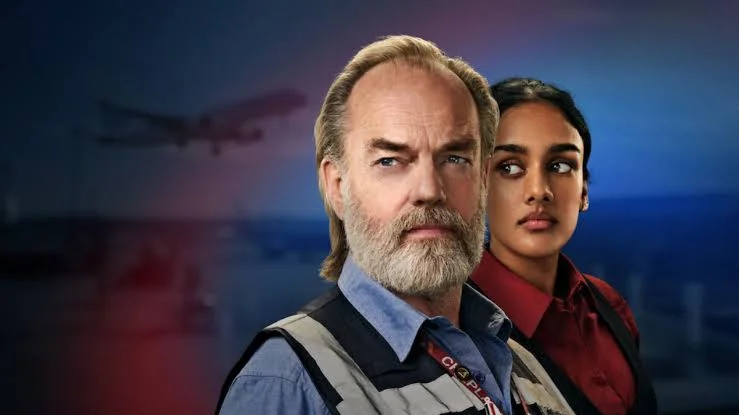

Tobias Wallace can return a child’s lost stuffed rabbit, negotiate around airport security, counsel a grieving passenger, hunt through checked luggage for an engagement ring and still find time to ignore his new boss. This is apparently pastoral care at Melbourne Airport. Hugo Weaving plays Tobias as a man whose job description stopped mattering years ago, largely because everyone has learned that calling him tends to get things fixed.
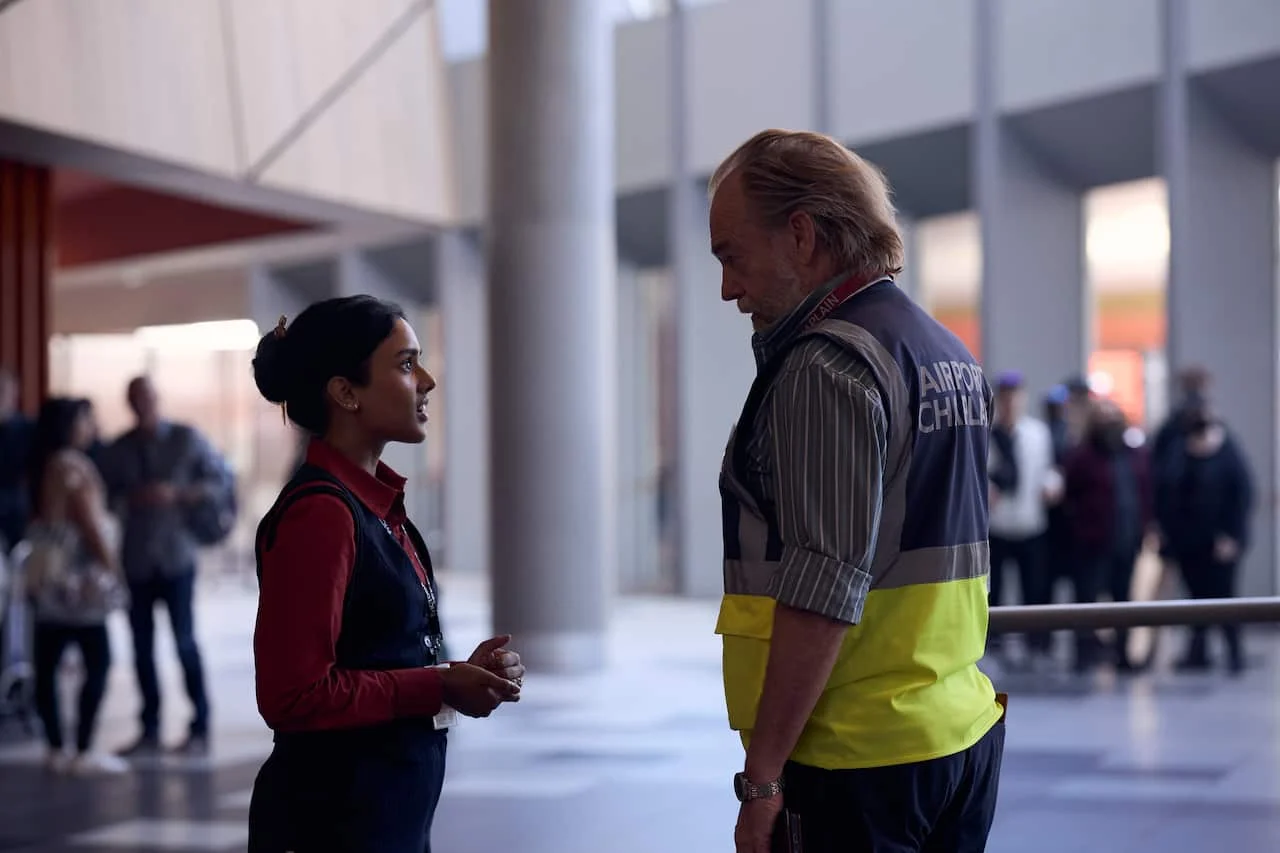
Created by Elise McCredie and Jude Troy, The Airport Chaplain gives Tobias eight half-hour episodes in which to wander into problems that technically belong to somebody else. Bonnie Moir and Tig Terera direct with enough momentum that the terminal rarely feels stationary. Phones ring. Security officers arrive. Bags disappear. Passengers panic. Tobias enters wearing his hi-vis vest and the expression of a man who has already decided which rule he will break. His actual remit is emotional, spiritual and practical support for passengers of any faith. The practical part has clearly staged a coup.
The setting makes that elastic job description useful. A flight arrives carrying a passenger who has died onboard. Someone barricades herself inside the prayer room. An unregistered support dog creates complications before contributing one of its own to the terminal floor. Tobias can move naturally between comedy and distress because airports produce both at roughly five-minute intervals. By the time management asks what, exactly, he does all day, the audience has a reasonable answer: everything management wishes he would stop doing.
Terms and Conditions
That objection arrives in human form as terminal manager Mira Ansari-Cole, played by Shabana Azeez. Her first meetings with Tobias are funny because neither character is behaving irrationally. Mira wants daily reports, accountability and some basic acknowledgment that security procedures exist. Tobias responds to one attempt at supervision by announcing a “spiritual emergency” and leaving.
Weaving makes Tobias easy to like without sanding away the irritating parts. Watch him breach security to return the stuffed rabbit, then worry that his intervention may have delayed a flight. His instinct is generous. His certainty that generosity authorises him to improvise is another matter.
Azeez is especially good when Mira discovers how difficult institutional authority becomes inside an institution powered by unofficial relationships. Tobias escapes one attempt to corral him partly because he has spent years talking AFL with her boss. The tiny shift across Mira’s face says everything required about discovering that workplace governance has just been defeated by Collingwood.
Her resistance to Tobias carries extra weight because she is being squeezed herself. She faces pressure from senior management, sexism from above and entrenched staff who regard another efficiency drive with understandable suspicion. When baggage boss Lex Pascoe unloads complaints about working conditions beneath the terminal, Mira is caught between people demanding resources and executives demanding savings. Tobias breaks rules because he trusts people. Mira enforces them because she knows who gets blamed when trust goes wrong. That is considerably better television than making one of them the villain.
Passengers in Transit
The episodic cases work best when the series resists turning every passenger into a puzzle requiring a spectacular solution. Alex, a businessman whose father dies during a flight from Shanghai, initially treats bereavement like another logistical inconvenience. Tobias researches Buddhist mourning practices, then stays with him on the concourse until Alex’s emotional control finally collapses. There is no clever fix available. Tobias simply remains there. For a character addicted to intervention, doing less becomes one of his most persuasive scenes.
Episode two gives him Abe, an Ethiopian businessman stopped with honey concealed inside shampoo bottles. The situation lets the series examine racial profiling through an encounter that keeps Abe funny, frustrated and recognisably individual. Ras-Samuel’s performance prevents the storyline from becoming a neatly packaged social lesson, particularly when Abe’s charm collides with officials who have already decided how suspicious he appears.
The third episode raises the pressure with Zoe and her young daughter attempting to escape a violent partner. Here Tobias’s alliance with airline service manager Cath Barnes, played by Claudia Karvan, finally shows why his network of favours matters. Their response depends on knowing which employee will bend, which door can open and how quickly formal systems can fail someone who needs to leave now.
Running underneath these cases is Asha Chawla, found occupying the prayer room without a passport or phone and refusing to speak. Her presence gives the series a continuing mystery, though the thread occasionally competes with episodes already juggling several crises. Airports contain thousands of stories. Television still has to choose which ones get boarding priority.
Behind the Gate
The terminal becomes increasingly convincing once the series moves beyond departures and security queues. Cinematographers Alex Cardy and Sky Davies follow staff into baggage areas, control rooms, management offices and sections passengers ordinarily never see. The camera rarely lingers because the workplace itself rarely does.
That movement supports a large recurring cast. Claudia Karvan’s Cath can joke with Tobias about evicting her mother, then become essential during Zoe’s escape. Thomas Weatherall’s Johnny, a probationary security worker, becomes Tobias’s unofficial apprentice, which sounds heartwarming until you remember that Tobias’s primary professional technique involves asking permission sometime next week.
Connie the cleaner sees everything. Sami watches the airport from the control room. Police officer Ziv has far less patience for Tobias’s grey areas. Lex represents workers who know the infrastructure from below and have no interest in receiving efficiency lectures from somebody newly arrived upstairs. Each character occupies a distinct part of the machine.
The short runtime keeps those moving pieces under control. Episodes can jump from a dead passenger to contraband to domestic violence without spending long enough on any single crisis to turn the airport into misery tourism. Moir and Terera keep the edits brisk, then allow scenes such as Alex’s breakdown or Mira’s confrontations with Tobias to breathe when speed would cheapen them.
Single-location ensemble dramas have always understood the advantage of a building with doors that never stop opening. Hospitals get emergencies. Police stations get cases. Melbourne Airport gets the entire planet carrying luggage. And somewhere near the gate, Tobias is probably violating procedure again.
The Airport Chaplain premiered on SBS Television and Netflix on August 26, 2026. The series follows Tobias Wallace, an unconventional airport fixer who manages daily terminal crises until a strict new boss challenges his authority.
Full Credits
Title: The Airport Chaplain
Distributor: SBS Television, Netflix
Release date: August 26, 2026
Rating: TV-MA
Running time: 45 minutes
Director: Bonnie Moir, Tig Terera
Writers: Elise McCredie, Jude Troy, Sarah Bassiuoni, Mithila Gupta, Vidya Rajan
Producers and Executive Producers: Jude Troy, Richard Finlayson, Wes Cooper
Cast: Hugo Weaving, Shabana Azeez, Claudia Karvan, Thomas Weatherall, Erroll Shand, Arka Das, Kavitha Anandasivam, Jackson Tozer
Director of Photography (Cinematographer): Stefan Duscio
The Review
The Airport Chaplain
The Airport Chaplain turns Melbourne Airport into a remarkably efficient television pressure cooker. Hugo Weaving makes Tobias Wallace charming enough to excuse his habit of treating security protocol like optional reading, while Shabana Azeez gives Mira enough authority and vulnerability to make their clashes genuinely two-sided. The half-hour format keeps passenger crises moving without squeezing out quieter beats, particularly Alex’s grief and Zoe’s escape from an abusive partner. Asha’s continuing mystery can make the episodic structure feel slightly scattered, yet the ensemble and workplace detail keep every gate busy.
PROS
- Weaving’s wonderfully lived-in performance
- Excellent Weaving-Azeez friction
- Smart half-hour pacing
- Rich airport ensemble
- Strong episodic crises
CONS
- Occasionally scattered structure
- Tobias can feel implausibly omnipresent
- Some cases land harder than others







