



























Elegance Bratton turns noir inside out by forcing its moral shadows into Mississippi daylight. The danger in By Any Means rarely hides in alleyways or rooms designed for secrecy. It sits in sunlit roads, modest homes, government offices, and faces already trained to understand that the law can witness terror without stopping it. Corruption occupies the visible surface of respectable order. That choice gives the film a strong visual argument, then its crime-thriller instincts begin testing how long the argument can survive the pleasure of violent retaliation.
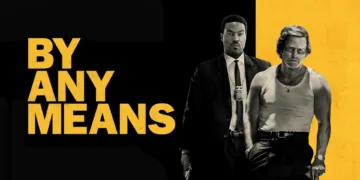
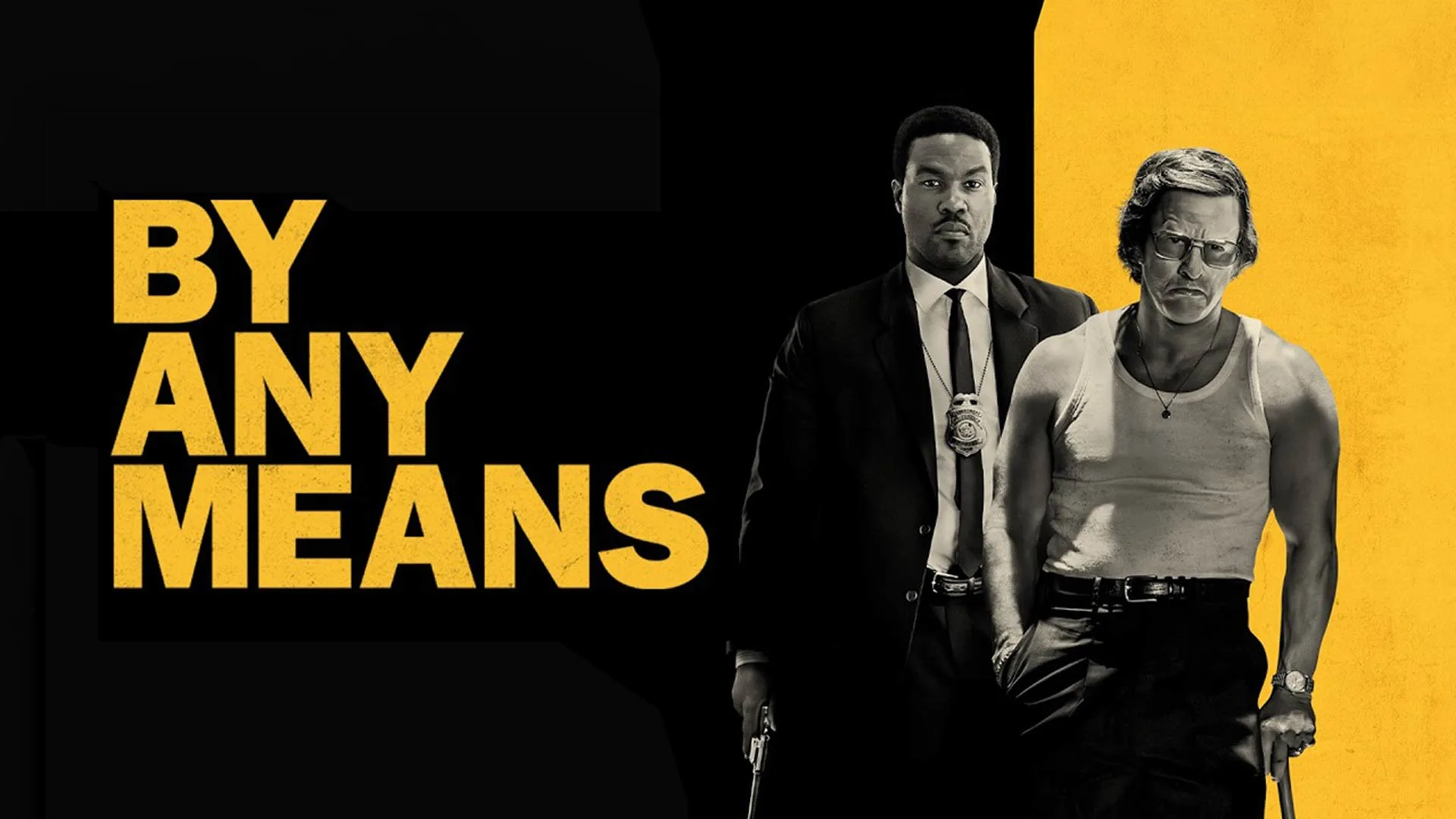
The story places FBI agent Wayne Strider, played by Yahya Abdul-Mateen II, beside Gregory Scarpa, Mark Wahlberg’s New York mob enforcer and FBI informant, during the investigation into the Ku Klux Klan murder of Vernon Dahmer. Wayne believes procedure still carries moral force. Scarpa believes force carries its own procedure. Their clash could have remained a dialogue-heavy opposition between law and vigilantism, yet Bratton keeps translating it into space, light, and bodies. Wayne is repeatedly positioned inside systems that limit him. Scarpa enters rooms as if every threshold already belongs to him.
That difference becomes clearest in the film’s interrogations. Scarpa’s baseball bat, threats, and blunt physical presence make information appear almost mechanically obtainable. Violence has cause, impact, response. The image becomes brutally legible. Wayne’s methods produce a different visual rhythm: waiting, watching, restrained anger, and the slower humiliation of representing an institution that will grant him authority on paper while racist officials and frightened witnesses make that authority fragile in practice. Abdul-Mateen gives those scenes their tension through posture and silence. His face often has to hold several reactions at once because Wayne cannot afford the simplicity Scarpa performs.
Wahlberg is built for the opposite effect. The suit, toothpick, swagger, crude jokes, and sudden brutality give Scarpa the hard outline of a pulp figure who seems to have stepped into a historical drama from another movie. Bratton uses that mismatch instead of hiding it. Scarpa’s presence can be funny, repellent, and exciting within the same stretch of action. This is where the film’s noir lineage becomes morally useful. Classic noir often makes competence seductive before revealing the rot beneath it. By Any Means gives Scarpa that seductive competence immediately, then asks its surrounding images to keep reminding us what kind of world has made his methods attractive.
Bratton’s Mississippi is frequently lush, saturated, and bright. That beauty matters because it refuses the easy equation of darkness with evil. A Klan leader can stand beneath slatted shadows from shutters, but racial terror does not require darkness to exist. Vernon Dahmer’s burning death is presented with a static severity that strips away the momentum of the crime plot. The film’s most disturbing violence lands when the camera stops helping the thriller move. Bodies cease to be clues or obstacles. Pain occupies the frame and stays there.
That discipline is inconsistent. Bratton occasionally undercuts his own visual intelligence by explaining an image after it has already made the point. A “whites only” sign receives emphasis the scene hardly needs. Elsewhere, the movie abruptly adopts a first-person-shooter perspective during violence, a choice so conspicuous that it pulls attention from the moral pressure toward the device itself. The form becomes loud exactly when the material needs precision. The score can create a similar problem, pushing emotional meaning after the image has already supplied it.
Those lapses matter because the film is constantly deciding how much excitement its violence can carry before excitement becomes endorsement. Scarpa’s interrogations move the case. His threats break stalemates. His gangster certainty gives scenes propulsion. Wayne’s ethical resistance is slower and harder to stage, so the film risks granting the cleaner cinematic grammar to the uglier method. A bat swing has an immediate answer. Conscience rarely does.
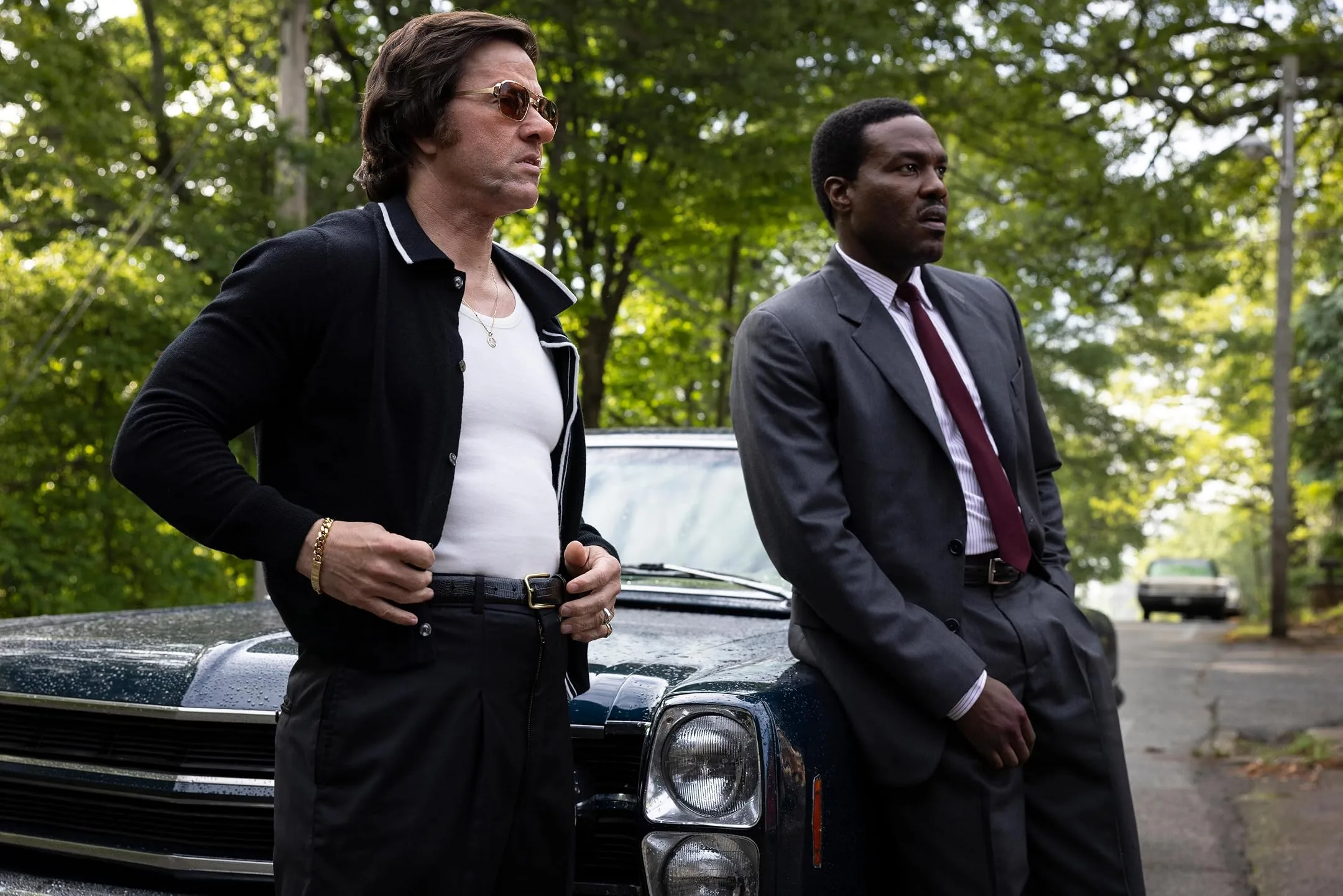
Abdul-Mateen keeps that imbalance from becoming fatal. Wayne’s gradual accommodation to Scarpa’s methods does not read as simple conversion because the performance never lets force become comfortable. His restraint changes texture rather than disappearing. Anger hardens, fatigue gathers, and the possibility of compromise begins to look less like liberation than corrosion. Bratton often frames the partnership as a collision between two men, yet Abdul-Mateen’s behavior makes the deeper conflict internal: Wayne must decide how much of himself can pass through a violent system before the system becomes part of him.
The film’s supporting characters receive less room to disturb that central duel. Nicole Beharie’s Allison, Dahmer’s family, local Black residents, and other community figures could have complicated the moral field by giving the story additional forms of resistance and survival. Their thinner treatment leaves Wayne and Scarpa carrying an argument that the surrounding world should have been allowed to pressure from several directions. The visual design gives Mississippi density. The dramatic design sometimes reduces that density to two men and a method.
By Any Means finds its strongest footing when Bratton withdraws the promise that violence will provide cleansing. The late movement refuses the smooth release that Scarpa’s effectiveness has trained the crime story to expect. The result is uneasy because the film has spent so much time making force readable, kinetic, and productive while lawful restraint appears blocked or compromised. Bratton can deny Scarpa a clean moral victory. He cannot erase the fact that the movie has repeatedly given violence the sharpest image in the room.
By Any Means is a historical crime thriller directed by Elegance Bratton, based on the 2018 Black List script CI-34 by Sascha Penn and Theodore Witcher. It opened in theaters nationwide on September 4, 2026, distributed by Paramount Pictures. The story follows a young Black FBI agent (Yahya Abdul-Mateen II) sent into 1960s Mississippi to investigate a wave of killings targeting civil rights leaders, who is forced into an uneasy alliance with mafia hitman Greg Scarpa (Mark Wahlberg) as the line between justice and vengeance blurs.
Where to Watch By Any Means (2026) Online

Full Credits
- Title: By Any Means
- Distributor: Paramount Pictures
- Release date: September 4, 2026 (United States theatrical, wide release)
- Rating: R (for pervasive language and violence/bloody images)
- Running time: 1 hour 47 minutes (107 minutes)
- Director: Elegance Bratton
- Writers: Sascha Penn, Theodore Witcher
- Producers and Executive Producers: Producers: Alex Lebovici, Chester Algernal Gordon, Elegance Bratton, Basil Iwanyk, Erica Lee, Mark Wahlberg, Stephen Levinson. Executive Producers: Adam Kolbrenner, Brando Eaton, Brent Guttman
- Cast: Mark Wahlberg, Yahya Abdul-Mateen II, Nicole Beharie, Josh Lucas, David Strathairn, Giancarlo Esposito, Ethan Embry, LisaGay Hamilton, LaChanze
- Director of Photography: Ante Cheng
- Editors: Kristan Sprague
- Composer: Terence Blanchard
The Review
By Any Means
By Any Means is strongest when Elegance Bratton makes violence visible without making it clean. Sunlit noir, static brutality, and Yahya Abdul-Mateen II's controlled performance give the film a moral tension its crime-thriller machinery sometimes weakens. Mark Wahlberg's Scarpa is vivid and effective, which is also the central problem: the uglier method often receives the clearest momentum. Bratton resists easy catharsis, yet the film cannot fully escape the visual and dramatic power it grants force.
PROS
- Sunlit noir imagery
- Abdul-Mateen's restrained performance
- Severe staging of racial terror
- Productive moral unease
CONS
- Scarpa gets cleaner dramatic momentum
- Supporting characters lack depth
- Some images are overexplained
- Shooter-style passage breaks precision