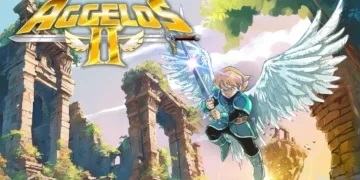




















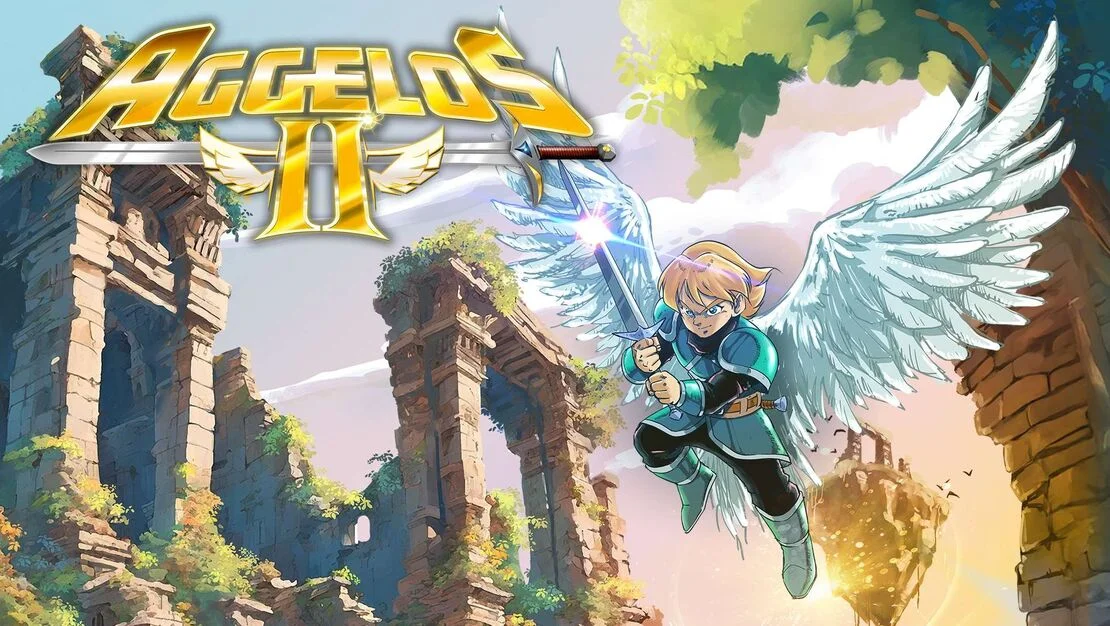

Losing your wings is a pretty effective way to make a Metroidvania feel personal. Aggelos 2 strips its hero of angelic power almost immediately, after a dark energy attack sends the chosen defender of Lumen crashing out of the sky. Sword, ranged magic, wings, and other familiar tools are gone. The recovery starts almost at once.
That rhythm suits the game. Aggelos 2 clearly carries the DNA of Wonder Boy and Monster World, while expanding on the compact design of the first Aggelos. Lumen is under siege by the Army of Darkness, and the protagonist belongs to the highest order of angels sent to stop it. The plot mostly stays out of the way, letting the pleasure come from becoming capable again.
The first few recoveries are deliberately practical. A sword restores close-range combat. A bracelet provides a light projectile. Wings return limited flight. A grappling hook suddenly turns vertical walls into routes. Each ability changes the map slightly, because every inaccessible ledge or suspicious gap starts looking like a future destination.
Learning to Move Again
The best hours in Aggelos 2 come from watching movement expand one tool at a time. Flight activates with a second jump and lasts until an energy meter empties. It lets you cross wide gaps and reposition around enemies, while the grappling hook allows you to cling to surfaces and climb into spaces that looked impossible earlier. Spells such as the upward-firing Geyser ability create further opportunities for reaching enemies or solving small environmental problems.
The restrictions are sometimes hard to ignore. Flight is largely horizontal, with no satisfying ability to steer freely upward or downward. Its speed is fixed too. Giving players the choice to burn stamina faster for extra speed could have made those short flights feel expressive rather than functional.
Exploration keeps paying out through permanent upgrades. Heart containers increase health, orb containers expand currency capacity, and shops sell improvements to armor, swords, ranged attacks, magic, and healing. The economy starts with a tiny wallet that holds only 100 orbs, then gradually expands through upgrades until larger purchases become realistic.
Mystical eggs are less rewarding. There are 100 scattered across the world, yet turning them in can produce currency at moments when your wallet is already full. Hunting down a difficult collectible and receiving money you cannot carry is the sort of reward that makes curiosity feel slightly foolish.
Light Meets Darkness
Aggelos 2 finds its strongest identity once its angel is forced to become something else. A leader of the Army of Darkness eventually attempts to corrupt the protagonist, creating a Demon form without fully erasing the Angel form. From that point forward, a button press switches between the two. Angel can use magic vials to heal. Demon converts those same vials into a temporary speed boost. Angel absorbs light-colored projectiles with sword strikes, while Demon handles dark ones.
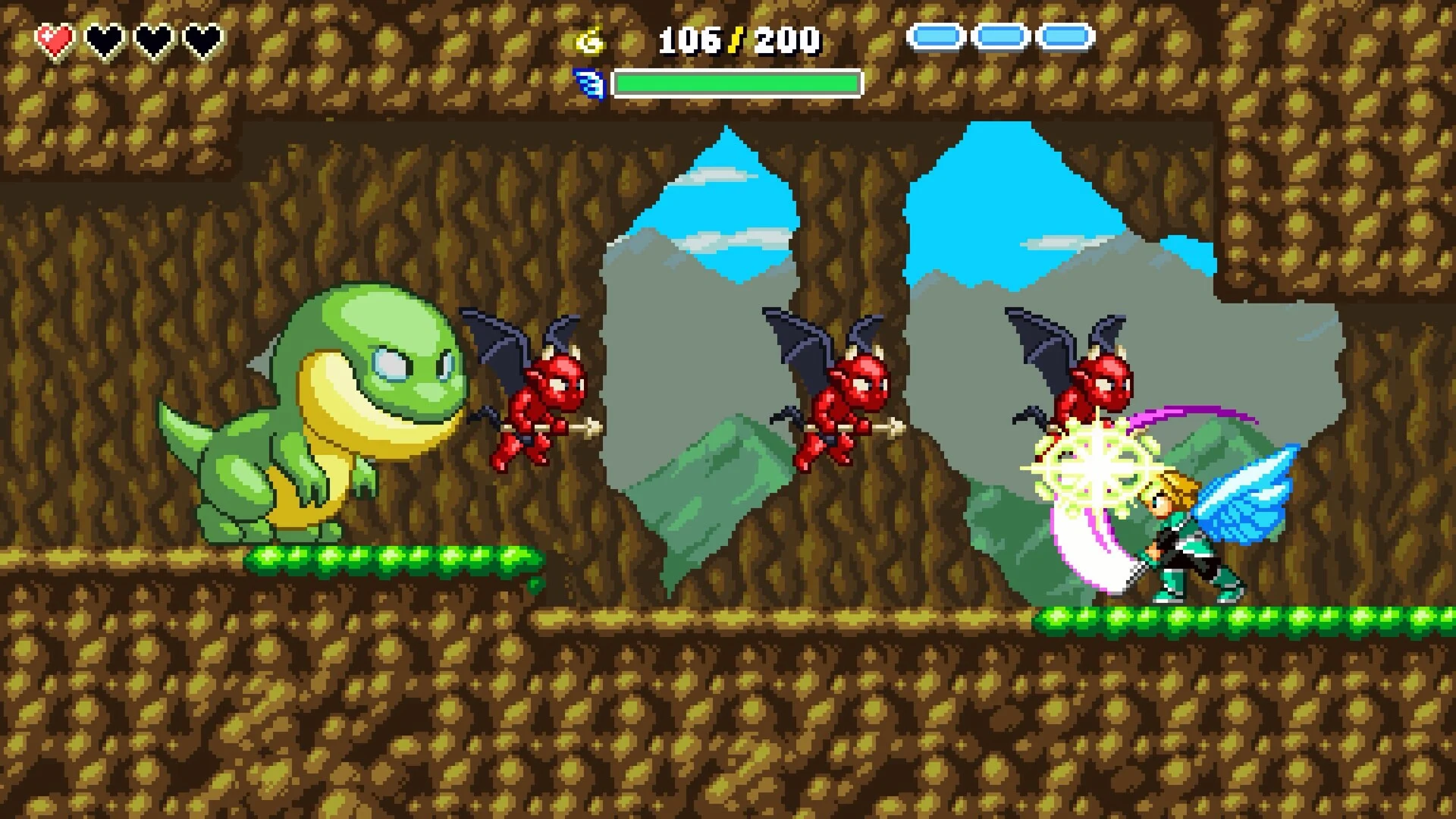
That color interaction gives combat its nicest sense of rhythm. A room filled with different projectile types can force a quick transformation before the next attack reaches you. The mechanic asks you to look at what is coming rather than endlessly slash through it.
The two forms still feel too similar in motion. Demon is presented as the stronger, more aggressive counterpart, yet walking and jumping barely change. Even the temporary speed spell rarely creates the dramatic shift the transformation suggests. Different attack arcs help, and Angel’s longer ranged shot often feels safer, but switching forms rarely changes how you physically inhabit a room.
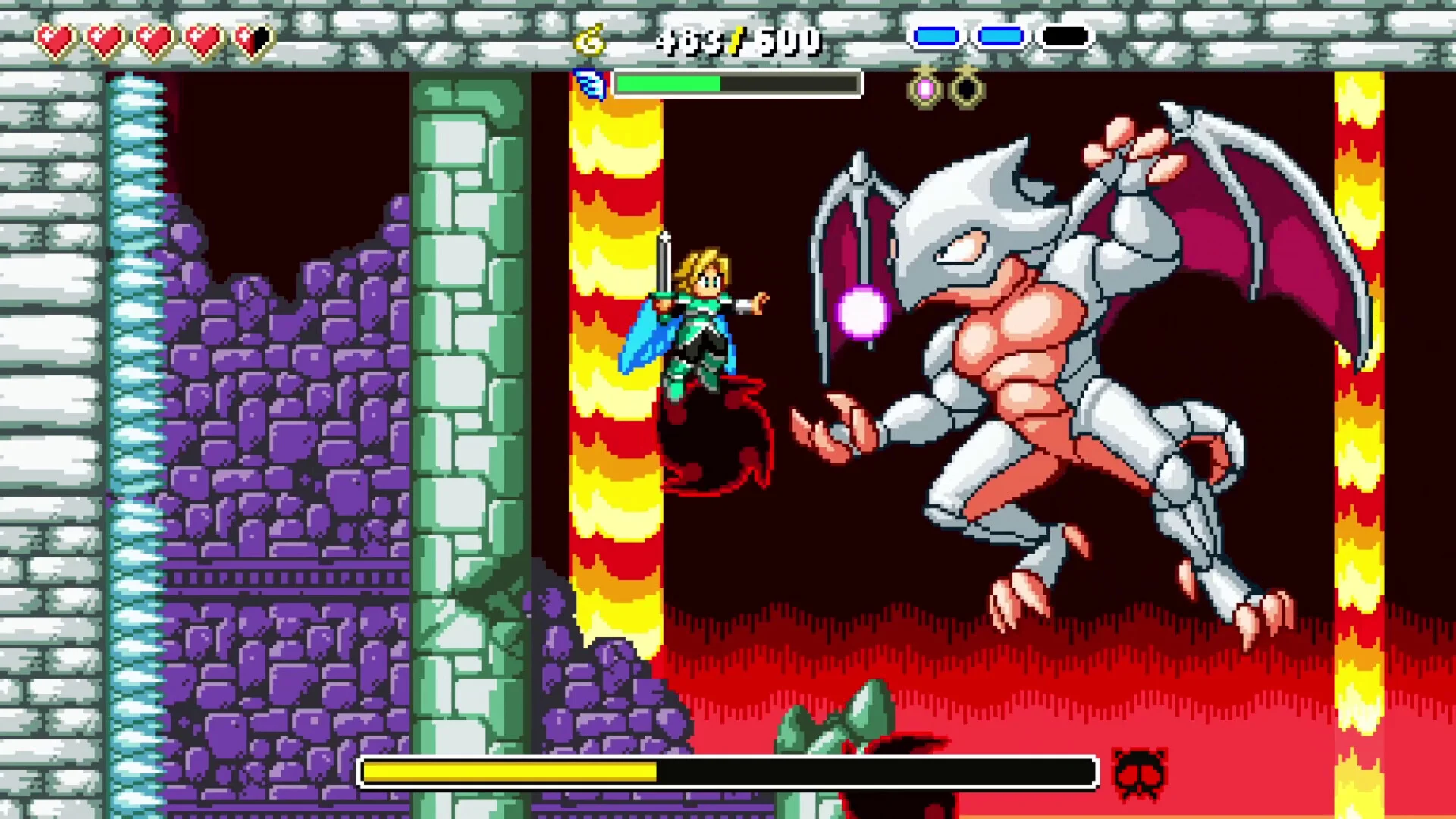
The transformation works better in exploration. Purple rifts connect light and dark versions of Lumen, placing altered enemies, hazards, and routes over corresponding sections of the same broad geography. A locked passage in one realm may be accessible from the other, so entering a rift can turn a wall into a puzzle rather than a refusal.
Boss fights benefit from that flexibility, though several can be softened by firing ranged attacks from safety, dodging when necessary, then returning to Angel form for healing. The more stressful encounters are often ordinary dark-world rooms packed with airborne enemies, stationary shooters, and environmental hazards competing for your attention.
Lost Between Two Worlds
The expanded world creates Aggelos 2’s biggest problem: finding your way through it can become harder than surviving it. The first Aggelos was small enough to live without a proper map. Its sequel needs one badly, yet the supplied map lacks several conveniences expected from a game this large. Areas are not clearly labeled or separated by biome. There is no zoom. Custom markers blend into the background and cannot explain why you placed them.
Fast travel makes matters worse early on because warping is initially limited to particular save points. Being able to warp between every save point later helps considerably, but those opening hours contain unnecessary treks through already-cleared screens.
Objective markers can point toward the next destination without explaining that an overlooked ability is required to reach it. The parallel worlds compound the problem, since remembering which realm contains a useful opening becomes another piece of information the map does little to preserve.
The route toward the good ending exposes the same weakness. Several dark shards and optional tasks must be completed, and the final important objective is not clearly tracked. At that stage, exploration stops feeling like discovery and begins feeling like checking rooms off an invisible list.
There are smaller technical irritations too, including enemies becoming trapped in walls or ceilings, occasional collision problems, and a reported room displaying corrupted graphics. They rarely damage the adventure for long.
What keeps the larger Lumen enjoyable is the feeling waiting behind the next upgrade. A grappling hook makes yesterday’s wall climbable. A portal transforms an apparent dead end. Another heart container makes a crowded enemy screen survivable. Aggelos 2 sometimes makes finding those moments harder than necessary, but once movement, combat, and its two worlds click together, it remembers why getting lost in a Metroidvania can feel so good.
The Review
Aggelos 2
Aggelos 2 feels best when a newly recovered ability turns an old dead end into somewhere worth visiting again. Angel and Demon forms give combat and exploration a welcome rhythm, while the parallel versions of Lumen make familiar ground feel slightly unstable. The frustration comes from simply finding the next path, with an underpowered map and limited early fast travel making curiosity harder to sustain than it should be. Still, strong pixel art, steady upgrades, and satisfying movement give this retro Metroidvania plenty of charm.
PROS
- Rewarding ability progression
- Strong Angel and Demon switching
- Clever dual-world exploration
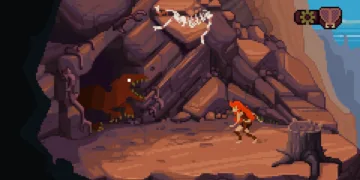
- Appealing retro pixel art
- Useful character upgrades
CONS
- Weak map functionality
- Restrictive flight controls
- Tedious early backtracking
- Uneven collectible rewards
- Occasional technical glitches