























Mr Mungai has spent years gathering evidence that his family’s land was taken. He still has to stand outside Kenya’s National Land Commission and ask for the right to call it home. His persistence gives Andrew H. Brown and Bea Wangondu’s documentary its most painful measure of time: an injustice can pass from one generation to the next while the person seeking redress grows older in front of it. Mungai is a pastor, and his refusal to surrender the claim has the endurance of faith. The film lets us feel how much that endurance costs.
His son Njenga describes a crueler reason families remain on the tea plantations. They want to stay close to the land of their ancestors, even when staying means working under the conditions that followed their dispossession. The thought unsettles any simple idea of home as refuge. Here, proximity can deepen the injury. Mungai’s case gives Kikuyu Land a line to follow, while Njenga’s account makes clear why a legal ruling could never contain the whole of what has been lost.
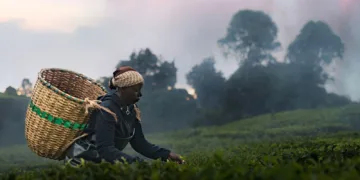
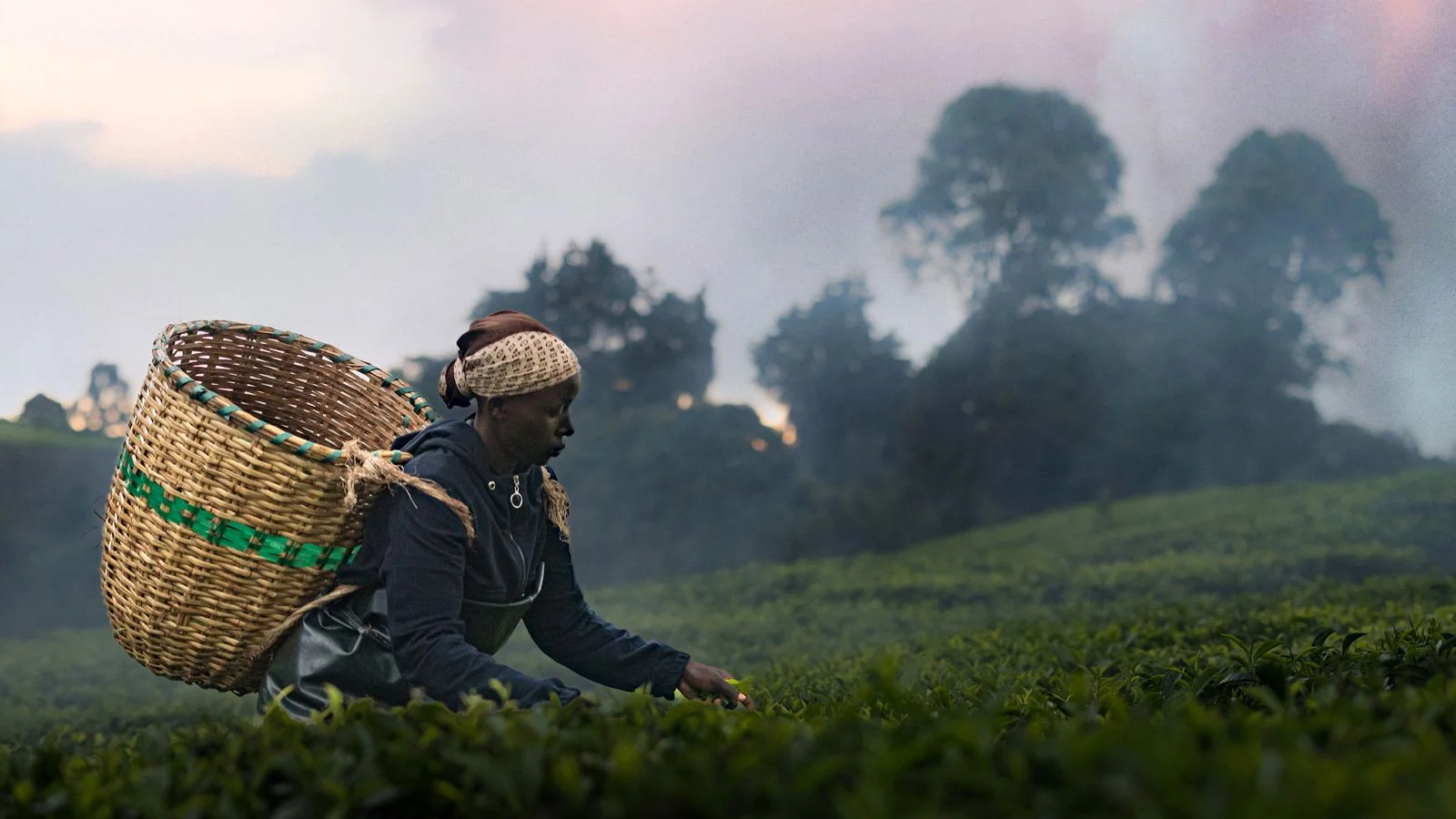
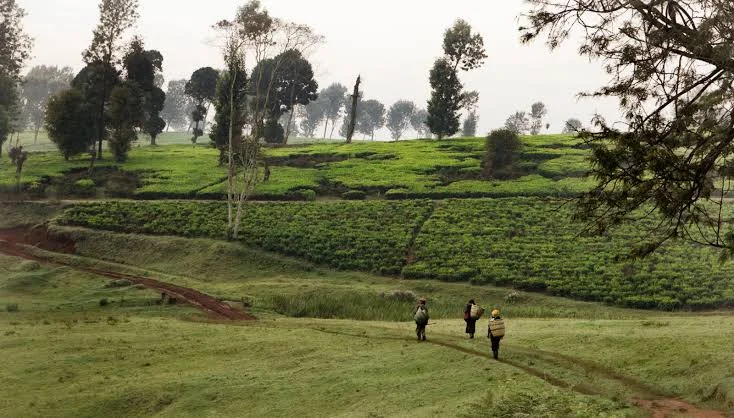
Brown and Wangondu place archival footage of colonial governor Evelyn Baring beside views of the Kenyan highlands, green with tea. The images are beautiful, but the historical voice changes how long one can rest in them. Land that appears abundant was divided according to someone else’s plans; the people who cultivated it were made to labour on it under new owners.
The documentary returns to that distance between the landscape seen from afar and the lives conducted within it. Its beauty does not disappear as the investigation advances. That persistence is part of what makes the film so difficult to sit with.
Wangondu, an investigative journalist as well as a co-director, listens to workers whose accounts bring the history into the present. Women describe sexual abuse by field managers, some speaking anonymously. Families describe quotas severe enough to draw children away from school. A boy is ashamed to tell classmates that he lives on a plantation and sometimes lacks food.
These accounts resist the comfort of treating dispossession as a completed historical event. They also demand care from the film: each worker has a life beyond the suffering she has agreed to recount. When young Stephen speaks about his ambitions and about his mother’s work, the future briefly becomes imaginable on his own terms.
Fear shapes what Wangondu can discover and how she can show it. Plantation gates close to her crew’s questions about ownership; requests for comment to Unilever go unanswered. News reports of abductions and killings of people who challenge powerful interests widen the atmosphere of threat. The distance between an individual worker and a company name can feel immense.
Brown and Wangondu make that distance palpable through the effort required simply to find someone willing to answer. The investigation has moments of forward motion, yet every refusal leaves the people who spoke on camera more exposed than those who declined.
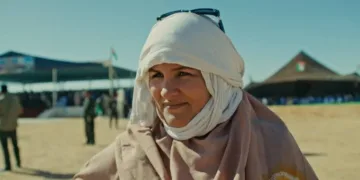
Then Wangondu finds a history she cannot pursue from a position of innocence. Her grandfather, remembered with affection and respect within her family, took land from neighbours. Relatives resist her wish to speak about it. The discovery changes the weight of her presence in the film.
She can investigate colonial theft in public records and corporate ownership, while the same history waits for her at home in the form of a loved person’s actions. Her sadness cannot return land to anyone. Including it does, however, ask her to bear the discomfort she has asked others to disclose.
At times, Kikuyu Land moves too quickly among its claims. Mungai’s long legal fight, the women’s testimony, political intimidation and Wangondu’s family history each carry enough force to hold our attention; a new thread can arrive before the previous speaker has had room to remain with us.
This is a limitation of the film’s breadth, especially when the testimony concerns sexual violence. Yet the threads also explain one another. The workers’ fear gives a different weight to the closed gates, and Wangondu’s grandfather prevents the account of land theft from ending neatly at the boundary between coloniser and colonised.
Mungai’s effort to recover his family’s land meets a setback. The film also includes young people protesting and closes on him playing guitar in the afternoon light. I cannot take those images as reassurance that patience will be rewarded. His claim remains, as do the conditions Wangondu’s witnesses describe. For a while, though, the camera stays with a man whose life has not been reduced to the decision made about his land.
Kikuyu Land premiered globally following festival runs at Sundance and Sheffield DocFest, with a UK theatrical release on October 2, 2026. The investigative documentary follows a Nairobi journalist probing a high-stakes land dispute against a powerful multinational corporation in Kenya’s tea highlands.
Full Credits
Title: Kikuyu Land
Distributor: Trifilm Studios, The Bea Company
Release date: January 25, 2026 (Kenya) / October 2, 2026 (United Kingdom)
Running time: 1 hour 36 minutes (96 minutes)
Director: Andrew H. Brown, Bea Wangondu
Producers and Executive Producers: Moses Bwayo, Andrew H. Brown, Bea Wangondu, Michael Morrisroe, Joseph Njenga, Amanda Brown
Cast: Bea Wangondu, Mungai Nganga, Njenga Joseph
Director of Photography (Cinematographer): Andrew H. Brown
Editors: Andrew H. Brown
Composer: Nyokabi Kariũki, Keir Vine
The Review
Kikuyu Land
Kikuyu Land makes dispossession painfully present through Mr Mungai’s claim, plantation workers’ testimony, and Bea Wangondu’s discovery about her grandfather. Its beautiful highlands offer no shelter from what the investigation finds there. The film sometimes moves on before a witness has had enough room to speak, yet its account of belonging, fear, and inherited responsibility remains deeply affecting.
PROS
- Mungai’s long struggle gives the film its emotional weight
- Workers’ testimony brings the history into the present
- Wangondu examines her own family’s role
- Landscape imagery gains force through the investigation
CONS
- Some witnesses receive too little time
- Frequent shifts strain the film’s focus