



























Iggy Pop, the New York Dolls and the Ramones are present in Mark Sloper’s account of punk’s beginnings. Their music and attitudes reached Britain before a shop on London’s King’s Road became the film’s main address. That movement across the Atlantic matters: it keeps the story from treating British punk as an invention that appeared fully formed in 1976. It also makes the film’s narrowing focus noticeable. Once Malcolm McLaren and Vivienne Westwood’s SEX takes over the narrative, other places and influences remain in view chiefly as routes into London.
The shop gives Sloper something unusually concrete to work with. Westwood’s designs put rips, zips and deliberately offensive images into circulation; young people unable to pay SEX’s prices borrowed the ideas and made their own clothes.
Glen Matlock, who worked there before joining the Sex Pistols, remembers it as an exit from the straight world. The account is persuasive because it shows a look passing from designer to customer to improvised imitation. Westwood receives substantial credit, but the homemade versions complicate any tidy story in which a boutique creates a movement and everyone else follows.
Sloper also places that activity against a Britain of industrial unrest and shrinking prospects. Rat Scabies recalls having very little; Caroline Coon sees a generation losing faith in what came before. Their memories give the clothes and music a local urgency that their American influences alone cannot explain. Yet the film is less interested in testing the King’s Road account than in gathering people who can bring it alive. Its title promises fifty years, while most of its attention stays with the brief period in which this London scene formed and became famous.
That concentration has considerable pleasures. Matlock, Scabies, Terry Chimes, Gaye Advert and other participants recall clubs where new records were scarce and seeing a band live could be the first chance to hear its sound. The recollection of the sweltering summer around early Sex Pistols gigs gives the familiar talk of punk’s pressure and heat a physical basis.
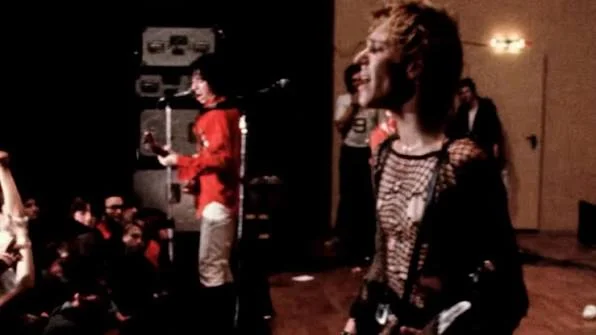
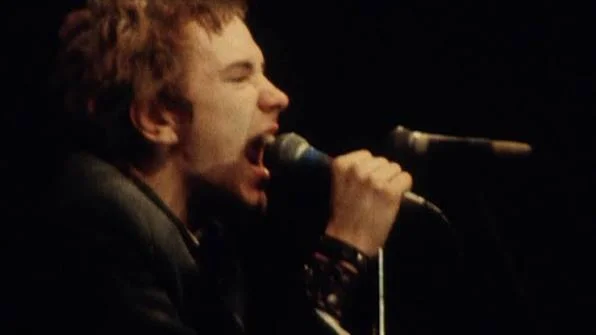
Archival footage of the Clash and X-Ray Spex supplies something the present-day interviews cannot: bodies and music occupying the frame before anyone has had fifty years to settle on an explanation. The film is at its best when a memory and an image leave room for each other.
The number of witnesses creates a problem of its own. Sloper moves quickly among short interview contributions, often placing several voices behind a point before any one account can grow difficult or surprising. Names appear briefly, then the film asks viewers to recognize people whose appearances have changed dramatically since the archive footage was shot. Hugh Cornwell’s cooler assessment of punk’s achievements is welcome partly because it interrupts the prevailing affection. A longer encounter with that skepticism might have made the shared memories less comfortable.
The distribution of attention is revealing, too. Westwood is treated as a central maker of punk’s visual identity, while Advert and Viv Albertine have less time to describe their own participation. That imbalance matters most when the film suggests how freely people could remake themselves within the scene.
Advert’s account of forming a band and the footage of X-Ray Spex offer ways to examine that freedom from another position, but Sloper seldom stays with them long enough. The result is a history in which a woman helps define the look, while women musicians have less opportunity to shape the account of what that look made possible.
Sloper finds a strong narrative break in the Sex Pistols’ appearance on Bill Grundy’s television programme. Before it, the film’s clubs and shops hold a scene whose participants can still recognize one another. After the swearing reaches a mass audience and the tabloids seize on it, recollections turn to newcomers, violence and “weekend punks.” The shift is fascinating for an account of cultural travel.
Television carries punk farther than a club or a shop could, while circulating a far narrower idea of how a punk should dress and behave. Some witnesses sound amused by the absurdity; others seem to regret how quickly an improvised identity became a set of instructions.
That break leaves an important line of influence unfinished. A few minutes gesture toward punk’s later legacy, but Sloper gives little space to its politics or to scenes outside London. The film has shown American influences remade in British shops and clubs, then a British style carried through television. It stops just as another set of people could take possession of those images. For a newcomer, the Grundy interview can come to look like punk’s last chapter rather than one point in a continuing exchange.
50 Years of Punk arrived in UK cinemas on September 18, 2026. The documentary explores the chaotic explosion and lasting cultural footprint of the punk movement through rare archival footage and firsthand accounts from the genre’s defining icons.
Full Credits
Title: 50 Years of Punk
Distributor: Screenbound Pictures
Release date: September 18, 2026 (United Kingdom)
Running time: 1 hour 17 minutes (77 minutes)
Director: Mark Sloper
Producers and Executive Producers: Mark Sloper
Cast: Dave Vanian, Gaye Advert, Hugh Cornwell, Rat Scabies, Richard Jobson, Glen Matlock, Jah Wobble, Terry Chimes
The Review
50 Years of Punk
Sloper’s firsthand witnesses and archival footage make early British punk feel immediate, especially as American influences take shape in London’s shops and clubs. The Grundy interview gives the film a sharp account of how a small scene became a public image. Its narrow timeframe, hurried interviews and limited attention to women musicians leave much of punk’s later life outside that account.
PROS
- Vivid firsthand memories and performance footage
- Concrete account of punk’s improvised style
- Strong account of the shift from clubs to television
CONS
- Narrower history than the title promises
- Witnesses get too little time
- Women musicians receive limited attention