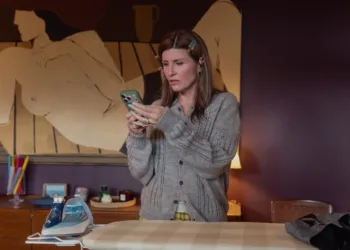




























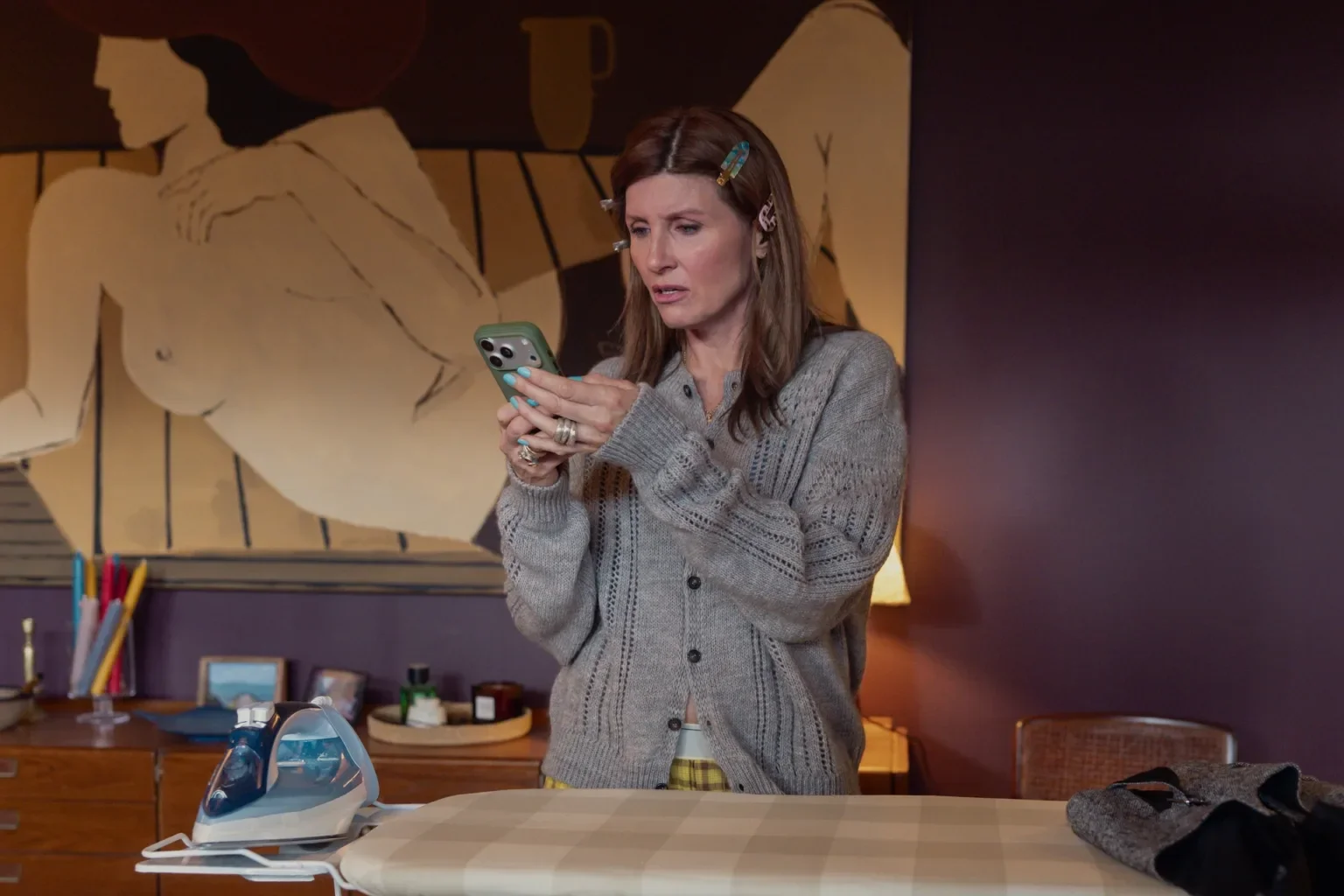

Television has spent decades treating youth as a scarce cultural resource, generously allocated to characters in their twenties and gradually withdrawn once women acquire mortgages, children, seniority, or visible evidence that time has passed. Sharon Horgan’s Youth takes that allocation problem literally.
Alex is entering her fifties, watching videos about how quickly the decade will disappear, and receiving a steady stream of reminders that she should be making the remaining years count. Her response is to lie on the sofa scrolling through clips of birds with ridiculous haircuts until her phone falls on her face.
The joke establishes the show’s argument with unusual efficiency. Alex is supposedly arriving at the age of wisdom while behaving like someone avoiding homework. She is professionally established but insecure at work, divorced but uncertain about dating, relieved that her 18-year-old son Ruari is leaving for university and devastated when he actually goes. When he returns home only days later, refusing to explain why he has dropped out, the future Alex had begun constructing for herself closes back in.
Horgan has built much of her television career around adults discovering that maturity is largely an administrative fiction, but Youth places that idea inside a culture especially unforgiving toward women who refuse to become settled on schedule. Alex believes she has perhaps ten years left as a sexual person. Men her age routinely date younger women.
A blind date with Michael, a patient 67-year-old, lands as an insult before he has done anything insulting at all. Alex treats him badly, which matters. The series allows the social double standard to remain visible without pretending its heroine becomes virtuous simply because she suffers under it.
That refusal is central to the show’s representation of middle age. Alex can be vain, selfish, sexually reckless, inattentive, insecure, and occasionally cruel. Television has grown somewhat better at putting older women on screen, though it still often demands exemplary behavior in exchange for the privilege. Horgan declines the bargain. Alex gets the moral latitude traditionally afforded to younger protagonists whose mistakes are understood as part of becoming themselves.
Her body receives similar freedom. After dislocating her jaw during a work meeting, Alex learns that she has arthritis and immediately processes the diagnosis through sex. Later, after believing she has finished menstruating, she begins bleeding heavily again and sends an online menopause forum a question reduced to three possibilities: normal, worry, cancer. A frantic sexual encounter turns the returning period into physical comedy. Patrick removing an estrogen patch becomes part of intimate conversation rather than a medical announcement disguised as character development.
These details matter because television still has a peculiar habit of treating menopause as either a public-service topic or an invisible event. Youth lets it participate in ordinary life. Bleeding can interrupt sex. Hormones can sit inside flirtation. Arthritis can coexist with desire. None of this requires the series to stop and congratulate itself for representation. The body simply remains present, inconvenient and funny.
Horgan’s authorship is difficult to separate from that specificity. She created the series, wrote it, and plays Alex, giving the show an unusual degree of control over whose discomfort becomes worthy of screen time. The industry has historically been enthusiastic about female coming-of-age stories until the coming-of-age woman has wrinkles. Youth treats development as something that continues well past the point when casting departments tend to stop describing women as “young.”
Ruari gives that argument a useful generational mirror. He returns from university withdrawn, angry, glued to earbuds, gaming videos, and masculinity content that offers contradictory instructions about what a young man should become. Confidence is required, vulnerability is suspect, sexual assurance must somehow arrive fully formed, and weakness is something to conceal before anyone notices it.
Alex faces a different version of the same machinery. Her cultural instructions say that desirability has an expiration date, professional experience should have produced confidence by now, and motherhood ought to have reached the stage where sacrifice finally delivers freedom. Neither character can make reality conform to the timetable.
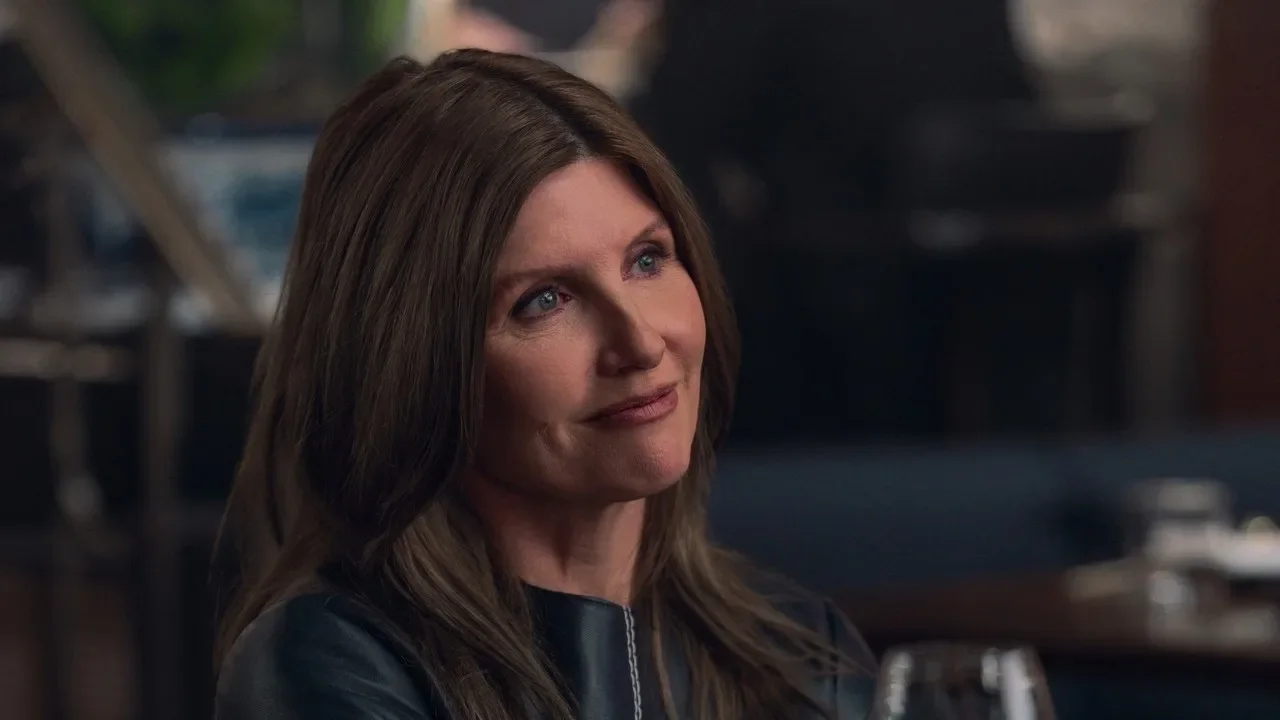
Aran Murphy keeps Ruari from becoming a schematic example of anxious young masculinity. His silences carry embarrassment alongside resentment, and the hostility directed at Alex never entirely obscures how lost he is. Yet the writing gives him less room than his mother. Across the seven episodes available for review, his movement toward greater self-understanding arrives quickly beside the patient accumulation of Alex’s mistakes. The parallel survives, though the imbalance reveals where the series’ real imaginative investment lies.
Alex’s workplace provides another institution eager to calculate her value. She is an experienced literary agent whose boss Sam is also her closest friend, a combination that turns ordinary professional disagreement into something personal almost immediately. Their foulmouthed affection is convincing, as is the discomfort underneath it. Sam can question Alex’s judgment at work, expose private information outside it, then return to behaving like the person Alex trusts most.
Sharlene Whyte and Horgan sell those changes better than the writing always does. Sam sometimes shifts temperature because the episode needs pressure applied to Alex, and her volatile marriage receives far less precision than the friendship. Yet the professional conflict sharpens the show’s larger concern with value. Alex is pressured to pursue a commercially successful author she finds revolting while wanting agency support for a writer with little obvious market promise. Publishing becomes another place where worth must be converted into something measurable before an institution agrees it exists.
The satire surrounding that world is broad and frequently very funny. Douglas Hodge’s self-published romantasy author turns literary success into a minor horror show, while Freddie Fox plays a rival agent whose professional persona suggests an industry seminar called Hostility as Networking. The comedy keeps the series from transforming Alex’s problems into respectable midlife misery.
That distinction becomes especially important with Patrick. Rupert Friend plays Alex’s habitually single former lover with enough ease that their attraction never feels like a thesis about older sexuality. They tease, miscommunicate, fall into familiar physical rhythms, and discuss an estrogen patch in bed. Their intimacy works because the show allows it to be ordinary. Alex’s age changes the pressures surrounding the relationship without turning the relationship itself into a cultural milestone.
There are thinner areas. Alex’s declining parents establish the pressure of caring upward and downward at once, yet they remain less developed than that role deserves. Ruari’s storyline occasionally rushes where Alex’s lingers. Sam’s marriage functions more readily as contrast than as a relationship with comparable interiority.
Still, the half-hour structure protects Youth from the prestige-television instinct to make every socially meaningful subject feel like an assignment. Menopause, caregiving, masculinity, professional obsolescence, sex after 50, and the fear of becoming irrelevant all arrive through jokes, humiliations, arguments, bad dates, and people making choices they should be experienced enough to avoid.
The title gradually stops sounding ironic. Ruari is trying to become an adult while Alex discovers that adulthood never finished becoming her. Television usually separates those stories by generation, granting transformation to the young and reflection to everyone else. Youth lets a woman in her fifties remain unfinished, still capable of choosing badly, changing direction, wanting sex, wanting recognition, and discovering that experience has not settled the question of who she might become.
Youth premieres on Max on September 20, 2026. The comedy-drama series follows a 50-year-old divorcee navigating romance and dating while simultaneously caring for her ailing parents and her adult son.
Where to Watch Youth Online
Full Credits
Title: Youth
Distributor: Max, HBO Max
Release date: September 20, 2026
Rating: TV-MA
Running time: 30 minutes per episode
Director: Dawn Shadforth
Writers: Sharon Horgan
Producers and Executive Producers: Sharon Horgan, Faye Dorn
Cast: Sharon Horgan, Rupert Friend, Harriet Walter, Freddie Fox, Anne Reid, Robbie Gee, Sharlene Whyte, Nadia Parkes, Andrea Vasiliou, Steve Windolf
The Review
Youth
Youth gives middle age the narrative freedom television routinely reserves for younger characters. Sharon Horgan makes Alex selfish, frightened, funny, sexually alive, and still capable of becoming someone different, while the series connects her anxieties to the pressures facing her son without pretending either generation has adulthood figured out. Some supporting relationships receive thinner treatment, and Ruari’s development moves too quickly beside Alex’s richer arc. Even so, the show turns menopause, caregiving, desire, and professional insecurity into sharp comedy rather than respectable misery.
PROS
- Sharp portrayal of female aging and desire
- Sharon Horgan’s fearless comic performance
- Strong Alex-Ruari generational parallel
- Frank, funny treatment of menopause
- Rupert Friend brings warmth to Patrick
CONS
- Ruari’s arc develops too quickly
- Alex’s parents remain underexplored
- Sam’s characterization can feel inconsistent