




























Kumandra is too large for the story that has to save it. Five lands carry separate histories, climates, customs, and grievances, yet the plot gives Raya a broken gem to collect and little time to spare. The map promises a saga. The film moves like a relay race.
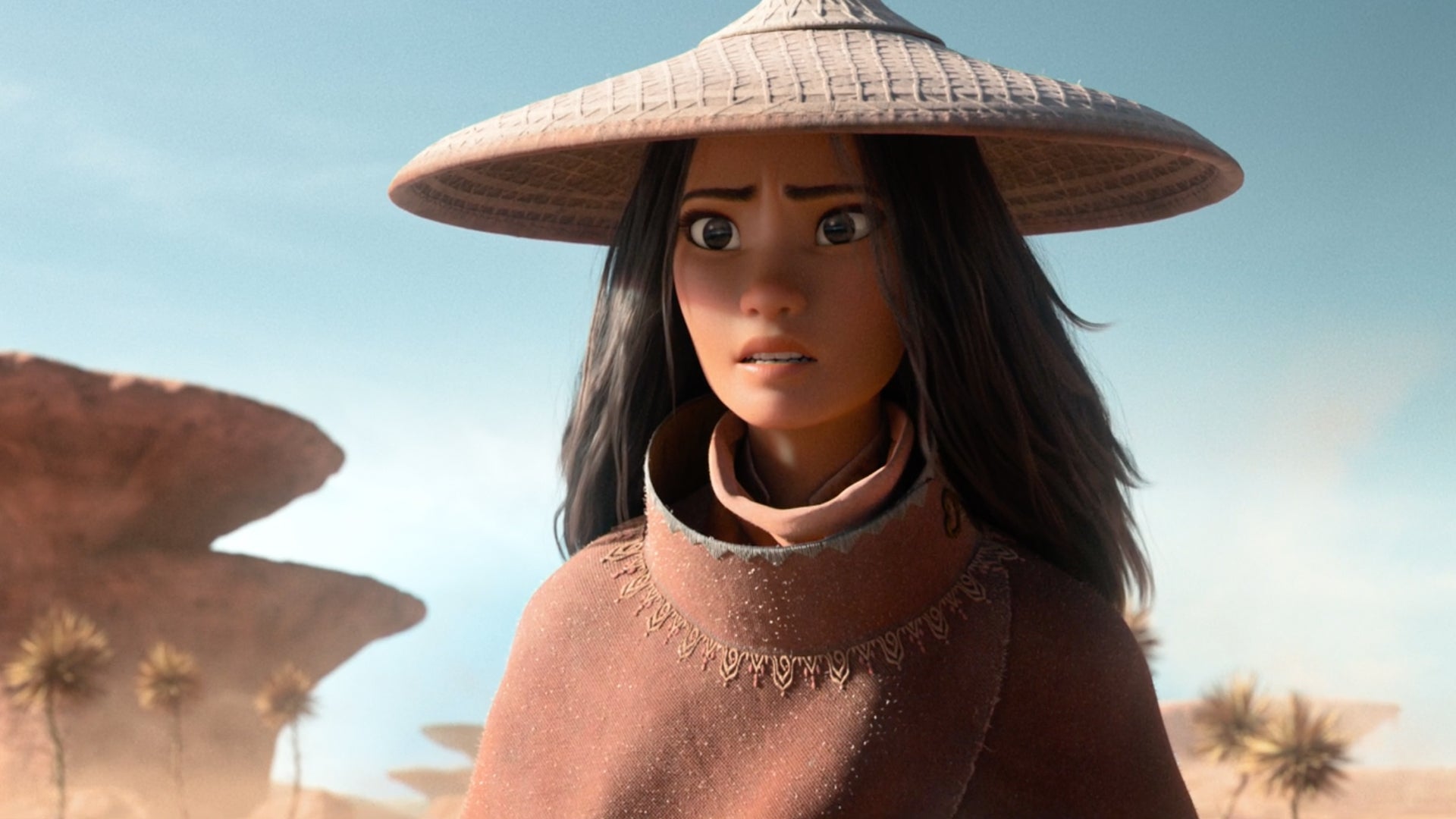
That tension is established through Raya and Namaari, two girls raised as possible heirs to rival lands. Raya’s father, Chief Benja, believes Kumandra can be reunited through trust. His daughter tests that belief by welcoming Namaari into Heart’s guarded sanctuary, then watches the gesture collapse into betrayal. The Dragon Gem shatters, the Druun return, and the people they touch become stone. Raya grows into a skilled warrior whose real armor is suspicion.
This gives the film a stronger foundation than its familiar quest structure suggests. Raya is searching for Sisu, the last dragon, and for the gem pieces held by the lands that profited from Heart’s destruction. Each stop adds another companion: Boun, a young boat captain; Little Noi and her Ongis; Tong, the formidable survivor from Spine. They form a lively group, and Tuk Tuk remains an absurdly lovable mode of transport. The trouble is how quickly each new place becomes a solved problem.
Tail offers danger, Talon provides comic pursuit, Spine supplies muscle, and Fang holds the political conflict. These locations look distinct, yet the screenplay rarely stays long enough for their differences to shape the people living there. Deep distrust has divided Kumandra for centuries, while Raya can recruit a former opponent in the time it takes to escape the next set piece. The lands function as stages in a gem hunt when they should be forces acting upon the story.
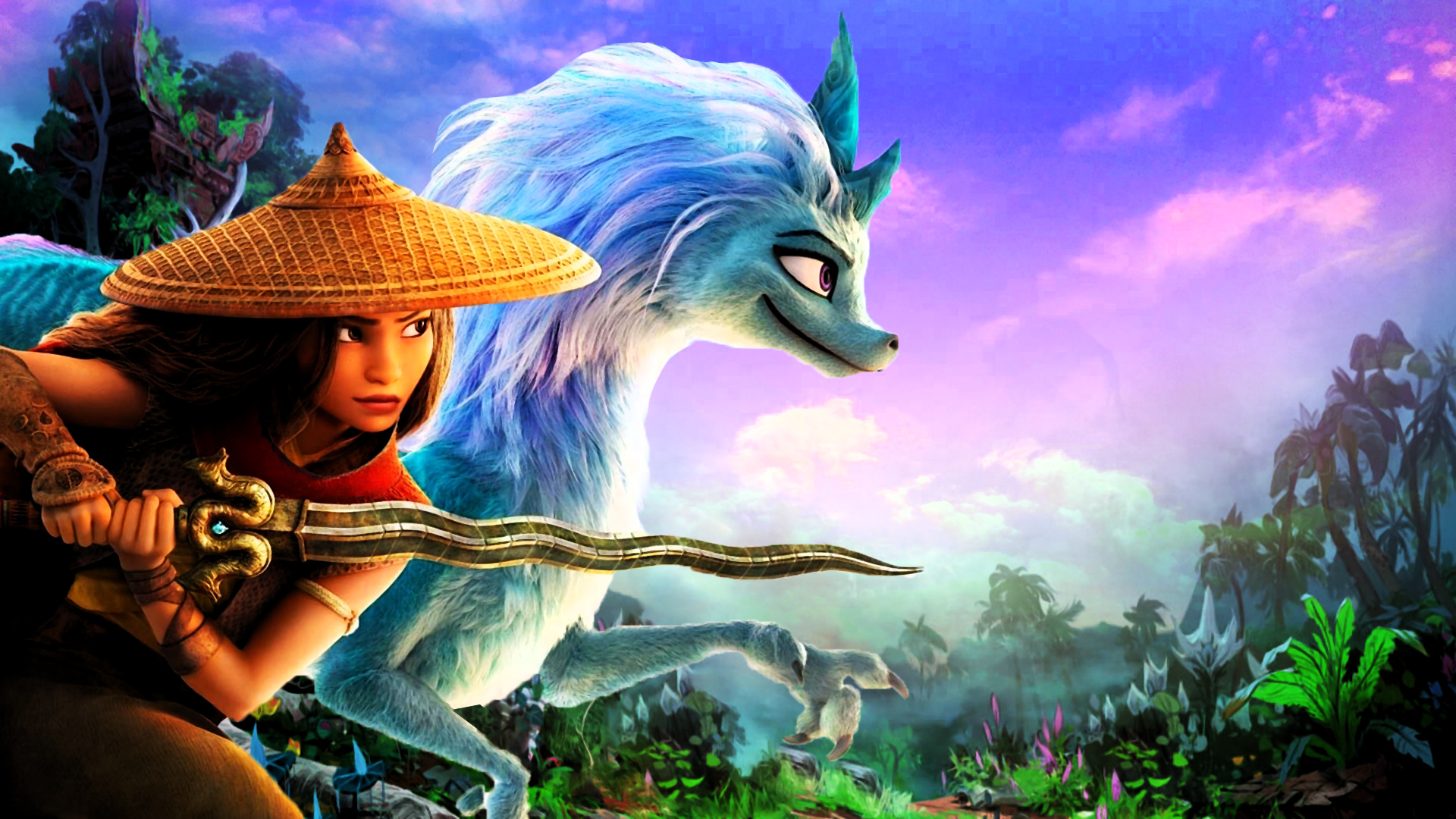
Sisu is designed to challenge that suspicion. Raya reads every offer as a trap; Sisu treats trust as an action that creates its own possibility. Awkwafina gives the dragon an eager, loose comic energy, keeping the film from becoming solemn under the weight of ruined kingdoms and petrified families. The humor sometimes arrives exactly when the danger needs room to settle, yet Sisu’s openness gives Raya’s guarded behavior something clear to resist.
The sharpest scenes belong to Raya and Namaari because their conflict makes Kumandra’s division personal. Their fights favor close-range strikes, blocks, and weapon exchanges with a satisfying sense of contact. Raya’s flexible blade extends her reach without turning her into a weightless superhero, while Namaari’s aggression carries the certainty of someone who has spent years converting guilt into duty. Their encounters are physical arguments. Raya sees betrayal as proof that trust is foolish. Namaari sees power as the only reliable protection against another collapse.
That rivalry reveals what the faster regional episodes cannot. Reunification is difficult because each side has built an identity around its fear of the others. The film understands this through character, then simplifies it through plot. Once the full group gathers, centuries of political fracture begin to resemble a communication problem that one sincere conversation might fix. Disney’s faith in emotional clarity is admirable. It is also doing unpaid diplomatic work.
The visual design keeps the compressed structure pleasurable. Desert ruins, crowded waterways, snowy settlements, and Fang’s guarded modernity give each land an immediate silhouette. Kumandra draws from a range of Southeast Asian cultures rather than copying one nation, and its clothing, architecture, food, martial movement, and water imagery create a world with a coherent cultural direction. The risk is that visual distinction can resemble depth when the story has given a place only a few minutes to exist.
Raya herself carries the film through that compression. She is stylish, capable, wounded, and permitted to be wrong. Her conflict is never reduced to proving that a princess can fight. Women lead, scheme, protect, fail, and command without the story treating their authority as an exception. Raya’s strength matters because it has a cost: self-reliance has kept her alive and left her unable to build anything beyond survival.
The final act asks her to surrender control at the point where control appears most necessary. It is a clean completion of her personal arc, and the choice has emotional force because the film has tied trust to the loss of her father from the opening. The larger reconciliation arrives with less resistance. A gesture can complete Raya’s transformation. Kumandra, still carrying five lands of fear, needed a little longer.
Where to Watch Raya and the Last Dragon






The Review
Raya and the Last Dragon
Raya and the Last Dragon pairs a strong heroine, clear action, and rich visual design with a world its rapid quest cannot fully support. Raya and Namaari give the trust theme personal weight, while Sisu brings warmth and comic momentum. The film reaches its emotional destination, yet Kumandra’s political fracture is repaired far faster than it is explored. The result is an entertaining fantasy whose best ideas keep asking for a larger story.
PROS
- Raya and Namaari’s rivalry
- Grounded, readable action
- Distinct visual design
- Strong central heroine
CONS
- Compressed world-building
- Rapid challenge-solution rhythm
- Underdeveloped regional cultures
- Rushed political reconciliation