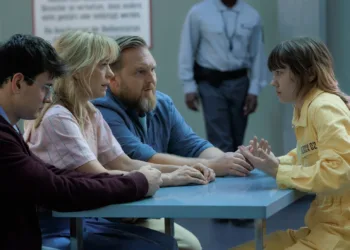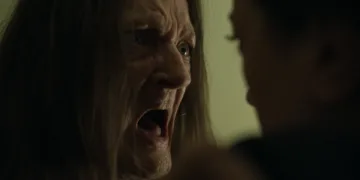









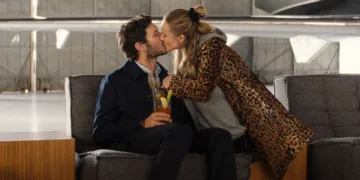





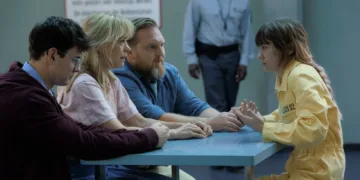








The Home arrives at a moment when horror has begun to wrestle earnestly with themes of memory and mortality, trading out jump‑scare excess for quiet, creeping unease. From its opening sequence—an off‑screen plea interrupted by a sudden fall—the film signals that this is less about overt shocks and more about what lingers in the mind’s dark corners.
Originally produced in Swedish, The Home is directed and co‑written by Mattias J. Skoglund, who adapts a novel by Mats Strandberg. Skoglund’s screenplay places us in the immediate aftermath of Monika’s stroke and worsening dementia, as her son Joel returns home to move her into Ekskuggan, an assisted‑living facility whose institutional calm conceals something deeply unsettling.
Monika’s confusion—she repeatedly insists she must return to her late husband—soon proves to be more than a symptom of her illness. Joel, portrayed with weary resolve by Philip Oros, uncovers strange occurrences that suggest a malevolent force tied to the past. Through measured pacing and sparse dialogue, the film steadily builds atmosphere, trusting silence and suggestion over visual excess.
Plot Mechanics and Beats
The film opens with a single long take of Monika’s kitchen—an empty frame save for a running sink—and her desperate off‑screen plea. This choice immediately unsettles: we’re forced to project what we cannot see, questioning whether we’re witnessing a medical crisis or something darker. When Joel arrives at his childhood home, he carries more than luggage; his expressions and furtive glances at family photographs quietly sketch a history of emotional distance and past trauma.
Monika’s transfer to Ekskuggan marks a tonal shift. The pristine hallways and pastel walls of the care facility introduce institutional calm, only to be pierced by a sudden clang or a misplaced slipper. That first night in her room—when Monika’s bed sheets rise as if by invisible hands—anchors the film’s central conflict: routines that should comfort instead amplify fear.
What follows is a steady accumulation of small terrors. A broken arm initially attributed to clumsiness. Other residents whispering about shadows that dart just beyond sight. Blinking corridor lights that pulse like a panicked heartbeat. Joel’s first encounter with his father’s specter, delivered in a hush, carries more weight than any shouted curse. Each incident layers on uncertainty: is Monika’s dementia the cause, or is something else tightening its grip?
When Nina takes the solo night shift and invites Joel to investigate, the film pivots from tension builder to active pursuit. This shift feels earned, the narrative puzzle pieces clicking into place. Joel’s resolve, up until now hesitant and guilt‑ridden, solidifies as he steps into the facility’s dimly lit corridors, flashlight in hand.
The showdown unfolds in an abandoned wing, where slamming doors and sudden apparitions escalate into physical violence. Here, Skoglund orchestrates a tightly choreographed sequence: what began as whispered fears erupts into confrontations that blur memory and reality.
In the final moments, the entity recedes but never truly disappears. A broken wristwatch, left on a windowsill, ticks on its own. The unanswered questions—about Monika’s fate and Joel’s future—linger, ensuring the unease outlasts the credits.
The Home balances its slow‑build atmosphere with well‑timed jolts. Long stretches of silence heighten anticipation, making every sudden movement sting more sharply. It’s a textbook example of tension economy: restraint here amplifies impact there.
Under the Surface: Themes and Symbolism
Skoglund positions Ekskuggan as a threshold between worlds. The care facility’s corridors become a liminal zone where life and death converge, and memory dissolves. Monika’s confusion—her assertion that she must return to a husband long dead—registers on two levels: as the clinical blur of dementia and as a doorway for something else to slip through.
At the film’s emotional core lies familial trauma. Bengt’s past violence casts a long shadow, an intergenerational curse that latches onto both mother and son. Joel numbs himself with alcohol, a gesture that feels less cliché and more like a character reclaiming control in a world he suspects is slipping away. When the specter hurls personal insults—aimed at Joel’s sexuality and self‑worth—those moments cut deeper than any generic demonic taunt.
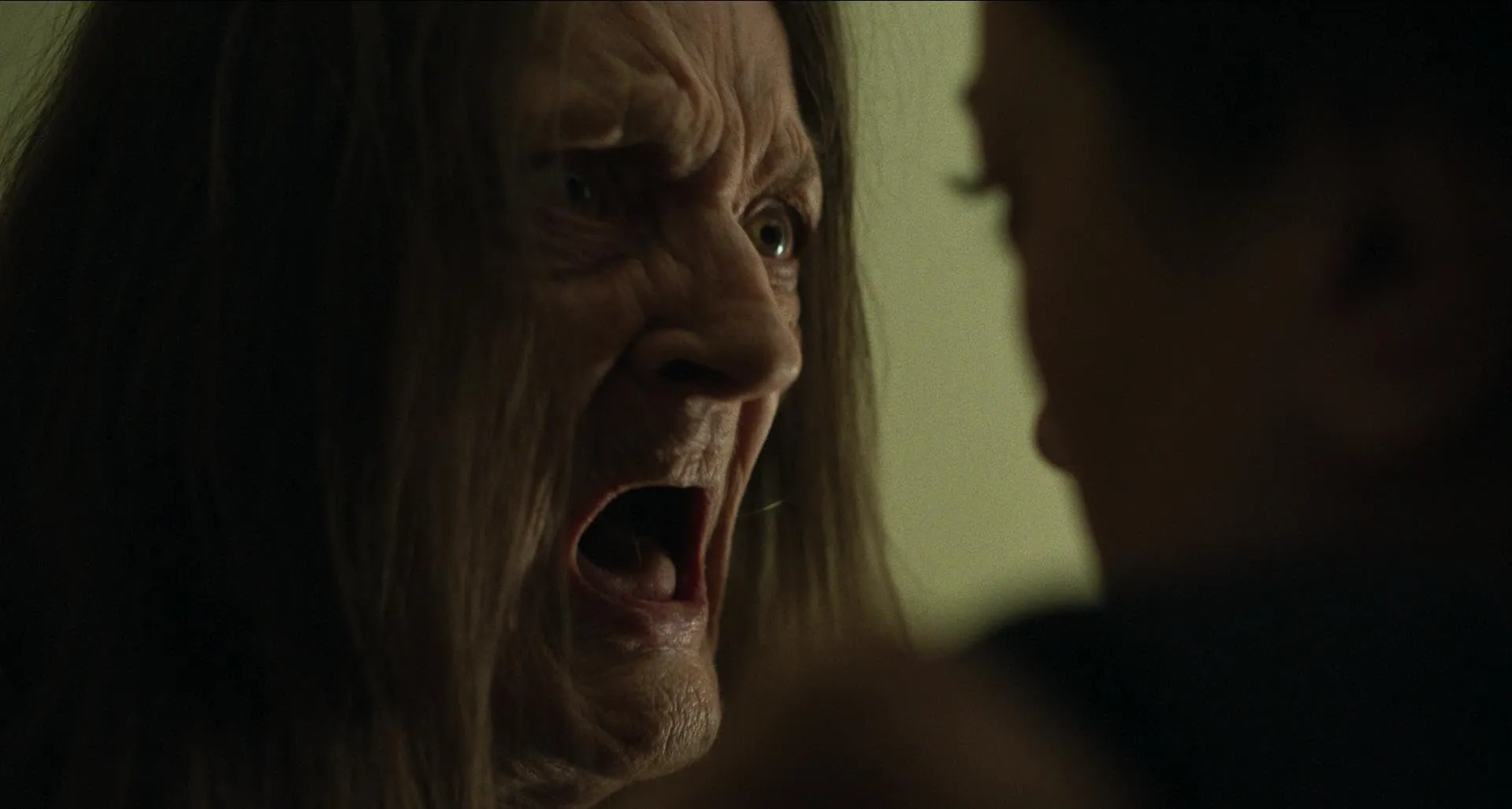
Memory and identity intertwine when Monika shifts from the nurturing parent we once knew into a vessel of cruelty. Her eyes, once soft, harden with each possession. Joel’s own sense of self hinges on his role as caregiver and on a lifelong struggle to step out of his brother’s shadow. Their mutual transformations speak to how trauma reshapes who we are.
The film subverts the notion of home as sanctuary. The kitchen, where Monika first collapses, and the familiar bedroom become battlegrounds. Everyday objects—a falling picture frame, a flickering lamp—turn hostile, reminding us that safety can fracture without warning.
Hints of the beyond appear without fanfare. There’s no cross pressed to the screen, only whispered references to an “other side.” That restraint fuels a quiet dread: if we cannot anchor ourselves in faith or reason, then what awaits us after life’s final breath?
Character & Performance Dynamics
The Home hinges on its central duo—Monika and Joel—but it’s the tension between them that drives every scene. Lidén navigates two extremes with unsettling finesse. In calmer moments, she inhabits dementia’s fog: hesitant gestures, distant eyes, a voice that trails off mid‑sentence. Then, with a subtle tilt of the head or a sudden, ragged breath, she transforms into something predatory. These body‑twist moments—so spare yet so revealing—offer far more psychological punch than any overt effect.
Oros charts Joel’s arc from reluctant caretaker to fierce defender without overplaying either beat. Early on, Joel’s grip on reality seems as unsteady as his trembling hands around a bottle of rum. Those silent pauses—when he steadies himself against a doorway after witnessing something impossible—speak volumes about his guilt and obligation. By the film’s midpoint, his posture shifts: shoulders square, jaw set. It’s a quiet, earned evolution that feels rooted in his painful past.
As Joel’s childhood ally, Nina serves as emotional ballast and reluctant co‑investigator. Erdogan captures her concern with small gestures—a hand on Joel’s arm, a steady gaze—that ground the film’s more fantastical turns. Yet her arc feels slightly underexplored; moments hint at deeper loyalty or hidden motives that never fully materialize. There’s chemistry here, but the script gives it only so many beats.
Rather than relying on gruesome visuals, the film deploys Bengt’s influence through a disembodied voice and fleeting reflections in darkened glass. That specter uses language as weapon: personal jabs at Joel’s identity land harder than any growl. It’s a smart choice—psychological terror often outmatches gore in lingering effect.
A handful of cameo appearances—like an orderly who abandons her shift mid‑day—serve as collective barometers of dread. Their wide‑eyed reactions and hushed conversations echo through the hallways, amplifying Joel’s isolation and reminding us that this haunting isn’t confined to a single room.
Visual and Aural Architecture
Malin LQ’s camera work transforms Ekskuggan into a character in its own right. Wide, static frames linger on empty corridors, using negative space to suggest unseen movements. Early scenes bathed in soft institutional pastels gradually shift; walls take on a muted, almost sickly tone, reflecting Monika’s fraying mind. The composition leans on symmetry—doors centered in frame, hallways stretching into darkness—only to be upended by a sudden tilt or off‑kilter angle when the supernatural intrudes.
Vera Theander’s production design grounds the film in tactile reality. Plaques by the nurses’ station, personal trinkets on bedside tables and the faint scratch of a nameplate on a room door lend authenticity. Yet these familiar objects twist subtly: a mobile swings when no breeze stirs, a framed photograph tilts ever so slightly. These tiny shifts ratchet up unease more effectively than overt set pieces.
Tóti Guðnason’s soundscape weaves between hush and hum. Ambient drones pulse beneath scenes of stillness, while the echo of rolling wheelchairs and distant pipe creaks anchor us in the facility’s labyrinth. Jump scares arrive not on a drum roll but as abrupt silences snapped by a crashing tray or a door slamming shut, each abrupt cue cutting through the void.
Makeup and practical effects favor suggestion over spectacle. Monika’s contorted posture, the snap of her gaze, the way a limb moves without prompt—these choices register as more disturbing than a spray of blood. Low‑tech tricks—shadows cast at odd angles, flickering reflections—feel immediate, almost improvised.
Space itself becomes a weapon. Chases down narrow hallways compress time, while open communal areas feel strangely exposed, as if every turn might reveal a hidden watcher. The contrast between wide lounges and tight patient rooms mirrors Joel’s passage from observer to participant in this creeping nightmare.
Directorial Vision and Narrative Rhythm
Mattias J. Skoglund adopts an eerily quiet approach, privileging suggestion over spectacle. He allows silences to stretch, framing characters in stillness until a small sound—creaking floorboards, a distant cough—snaps the audience alert. This restraint gives weight to each performance and design choice, trusting the viewer to fill in the shadows.
The screenplay, co‑written with Mats Strandberg, demonstrates a gift for brevity. A line as simple as “Bengt was waiting for me” carries multiple layers—Monika’s fractured mind, the specter’s persistence, Joel’s buried guilt. Rather than leaning on flashbacks, key details emerge through overheard phone calls and incidental dialogue, keeping the narrative in the present while allowing the audience to piece together the past.
Skoglund balances family drama and supernatural horror with uneven precision. Emotional stakes—Monika’s loss of self, Joel’s quest for redemption—anchor the film’s quieter moments. When the haunting peaks, the impact is magnified by that groundwork. Yet the slow-build can feel languid for viewers craving a steadier stream of scares.
Structurally, The Home follows a classic arc: a composed normalcy in Act I, gradual unravelling in Act II, and concentrated terror in Act III. Violent incidents punctuate long stretches of dread, ensuring each jolting moment lands with maximum force. The result is a film that measures its footsteps—and, thankfully, waits until you notice the floorboards shift beneath you.
Parting Shadows
The Home deftly weaves its intimate family drama into moments of genuine dread, proving that the most unsettling hauntings often stem from broken bonds rather than special effects. Monika’s fractured mind and Joel’s mounting guilt carry more weight than any sudden scream, leaving viewers rattled long after the credits roll. Anyone drawn to measured, character‑driven horror—where each whisper and sideways glance matters—will find its slow, deliberate rhythm rewarding.
A single image endures: a lone wheelchair spinning in an empty hallway, its whispering wheels asking if anyone’s truly alone when the past refuses to stay buried.
The Review
The Home
The Home delivers a poignant family drama married with creeping supernatural dread, anchored by persuasive lead performances and a steady hand at the helm. Its measured pace rewards patience, even if it demands it, and its final image will linger well after the screen fades to black.
PROS
- Evocative slow‑burn tension that rewards patience
- Compelling lead performances from Anki Lidén and Philip Oros
- Rich thematic layers around memory, trauma, and aging
- Effective use of space and practical effects to unsettle
- Sound design that heightens every whisper and creak
CONS
- Deliberate pacing may test viewers seeking constant thrills
- Supporting roles (e.g., Nina) feel underexplored
- Occasional narrative ambiguity leaves questions hanging
- Jump scares are few and far between