




















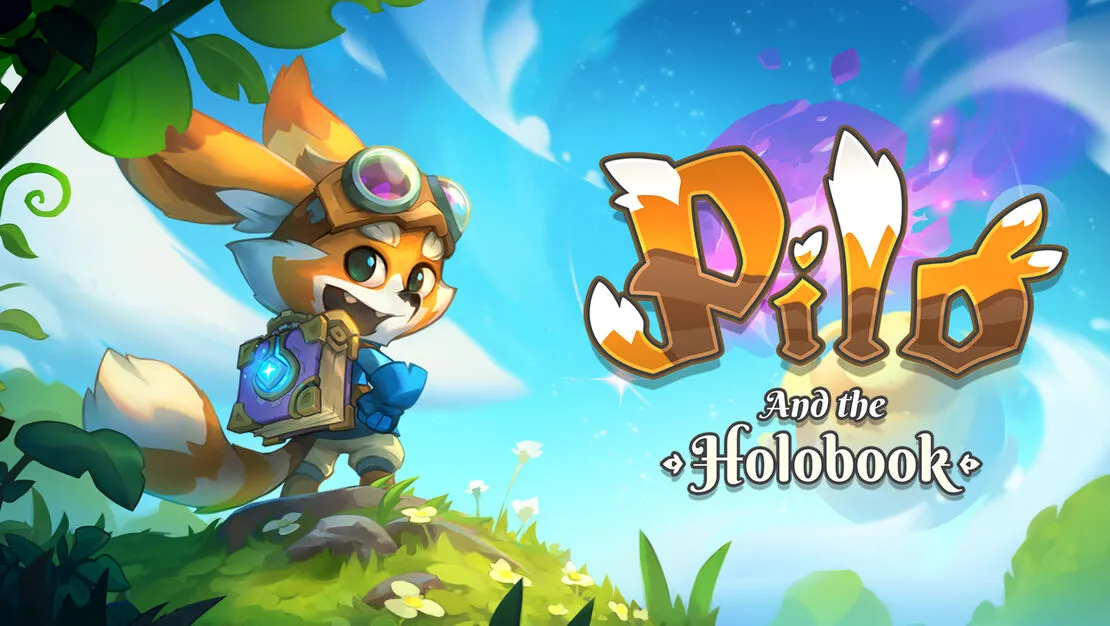

Pilo and the Holobook greets players with a hand‑painted universe that unfolds entirely from Pilo’s perspective. As a young fennec fox, Pilo receives a Holobook, an enchanted journal‑camera hybrid that transforms scanned flora, fauna, and alien artifacts into collectible stickers. This mechanic echoes the addictive loop of titles like Nintendo’s Pokémon Snap, yet Pilo’s emphasis on open‑ended placement and creative scene‑building sets it apart.
Rather than challenging with combat or time‑limited sequences, the game invites exploration across five distinct biomes—from mist‑shrouded wetlands and windswept deserts to the back of a colossal space whale. Each environment feels lovingly crafted, blending depth and vibrant color in a style reminiscent of GiantSquid’s Journey.
Subtle narrative threads link your sticker‑collection to a mysterious tar blight, so even a short, three‑to‑four‑hour playtime carries emotional weight. Its modest length and gentle pacing make it accessible for families, yet its visual craftsmanship ensures players linger to appreciate every painted detail.
Story and Characters
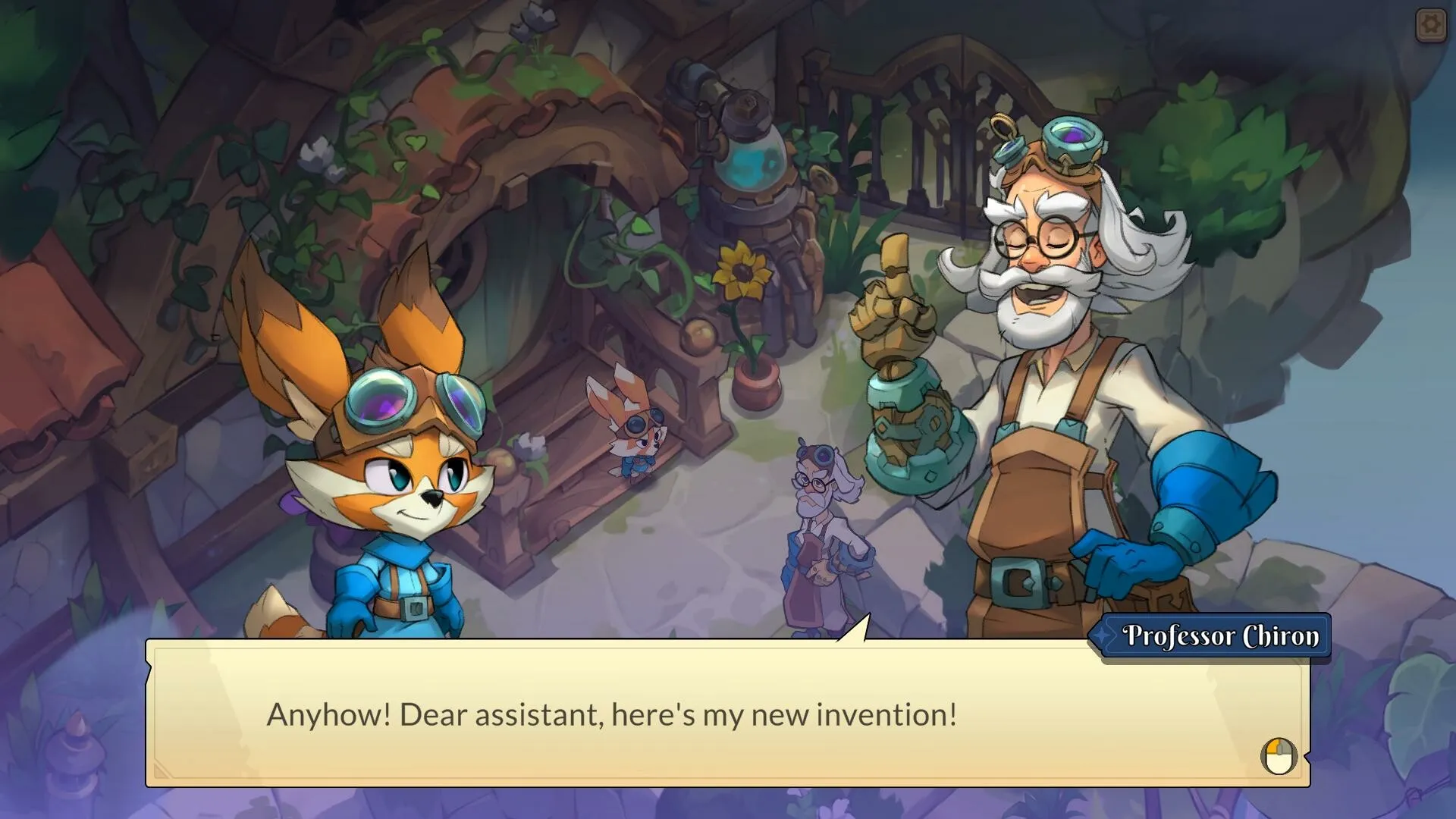
Early scenes place Pilo in a cozy lab‑like space, learning under the Professor’s watchful eye. Their floating home station feels lived‑in, with shelves of half‑assembled gadgets and blinking consoles. When the Academy issues Pilo the Holobook—a camera‑journal hybrid that scans and catalogs everything he sees—the plot shifts from domestic routine to interplanetary fieldwork, a structure reminiscent of Pokémon Snap’s simple setup before venturing into diverse habitats.
Pilo himself radiates curiosity. Without spoken lines, he conveys excitement through quick head tilts, paw gestures and animated ear flicks, punctuated by cheerful chirps. This expressive wordlessness recalls titles like Kirby’s Epic Yarn, where character motives are communicated through movement rather than dialogue. Pilo’s playful empathy shines when he helps NPCs overcome small obstacles, reinforcing his role as both explorer and friend.
The Professor serves as mentor and occasional guide, offering radio prompts that sometimes reappear in unexpected locations—an odd quirk that can momentarily pull players out of immersion. On each planet, brief encounters with alien critters or silent villagers add texture, though these figures rarely develop beyond friendly scan targets.
At its core, the narrative celebrates observation and preservation. You track down patches of corrosive tar and use the Holobook to restore tainted ground—an environmental arc that echoes the themes of Ori and the Blind Forest. This sense of duty can clash with free‑form exploration, creating a subtle tension between personal discovery and the goal of healing each world.
Story pacing relies on short cutscenes and in‑game prompts rather than full voice tracks. While sparing voice clips lend charm, their absence can lessen emotional impact during key moments, leaving some players wishing for richer character exchanges.
Gameplay Mechanics, Puzzles, and Progression
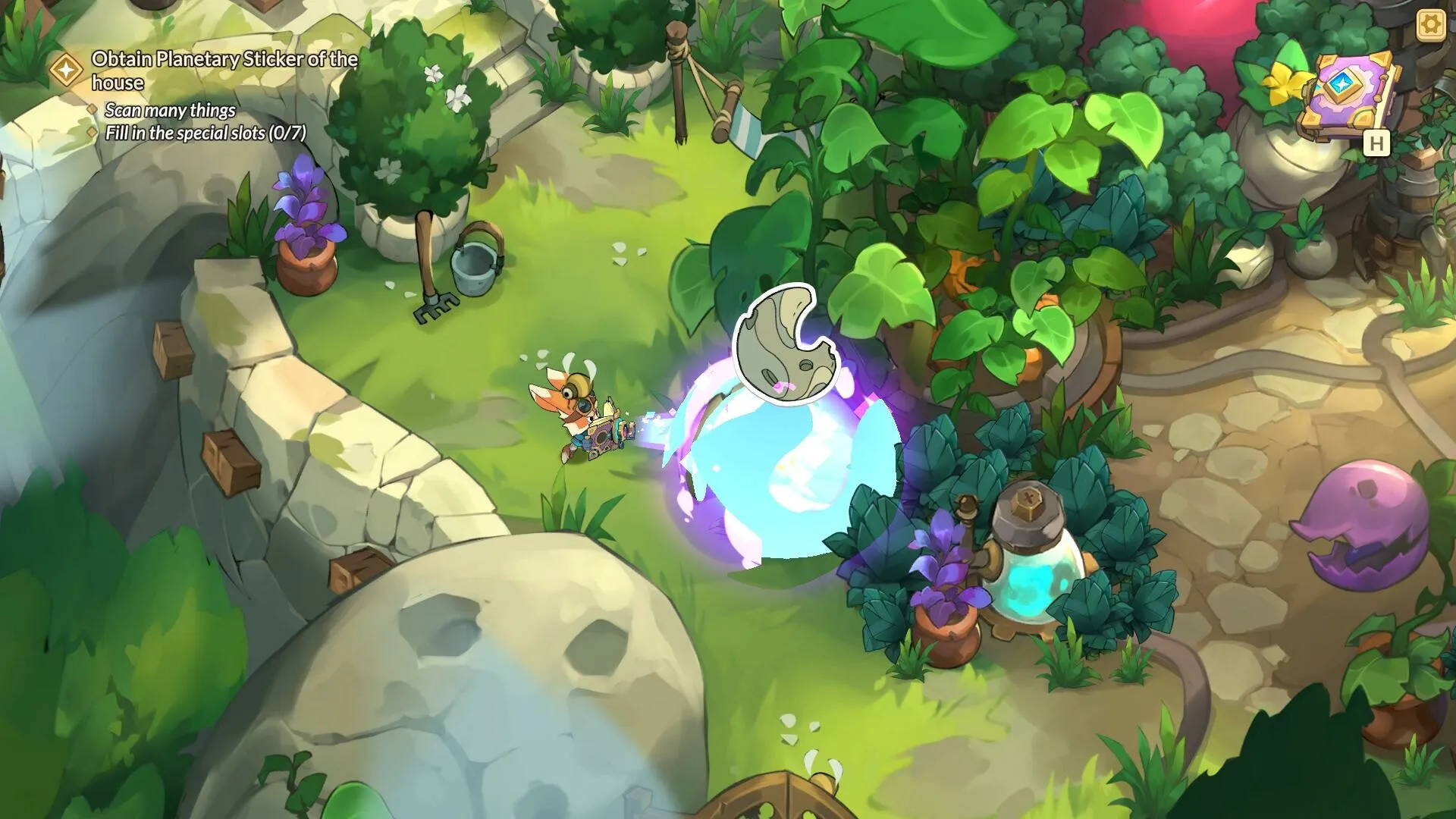
At its heart, Pilo and the Holobook revolves around a simple yet satisfying scanning loop. Pointing the Holobook’s reticle at an object triggers a soft glow, followed by instant feedback: a green checkmark or “new” tag, accompanied by a satisfying chime. This UI clarity mirrors the feedback systems in Pokémon Snap, ensuring players always know which targets remain. The targeting is precise—you rarely struggle to position the reticle—while snapshot animations and journal pop‑ins reinforce the sense of discovery each time a sticker is generated.
Sticker placement takes that satisfaction a step further. Most stickers can be freely arranged across blank pages, letting you build miniature dioramas or cluster similar items together. In one world, a puzzle even demands overlapping stickers in a specific order, turning a page into a functional interactive layer. This layered mechanic, though only used sparingly, highlights how creative placement can become a true gameplay element rather than mere decoration.
Beyond the core loop, environmental puzzles introduce variety. On the desert planet, you must activate a buried disc by scanning surrounding markers in sequence—an unmarked challenge that can leave some players wandering if they miss the visual cues. In swamp levels, hidden switches require you to scan clusters of foliage to reveal submerged pathways. The most striking interactive challenge involves the tar‑corruption mechanic: scanning slick patches not only clears obstacles but gradually restores vibrant flora, tying your actions directly to world‑building.
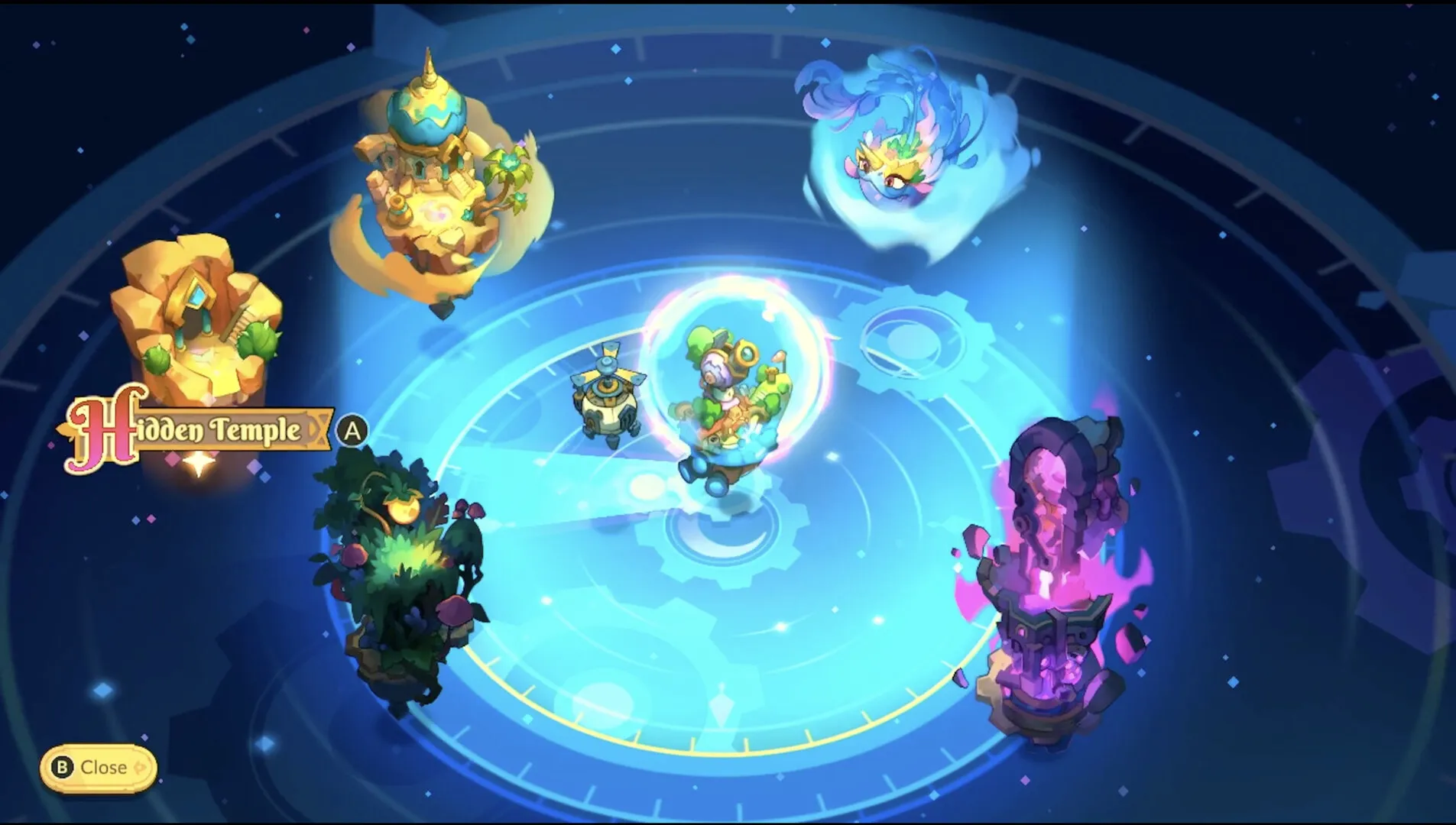
Progression feels organic. After clearing a biome, you return to the Professor’s ship hub and select your next destination. This shuttle flow, while occasionally breaking immersion with forced returns, ensures each world unlocks in measured order. Along the way, Holobook upgrades expand your scan range and journal capacity, offering tangible rewards for completionists.
Pacing hovers around three hours for the main narrative, stretching to four or five for thorough explorers. Optional backtracks let you chase elusive stickers, though frequent ship departures can interrupt momentum. Overall, the blend of core scanning, creative placement, and environmental puzzles forms a cohesive progression that keeps the experience brisk without ever feeling shallow.
Exploration and World Design
Pilo and the Holobook offers a handful of thematically distinct biomes, each with its own character. The swamp level feels enveloping, its mist‑laden pools hiding low tunnels and moss‑draped branches where stickers await discovery. It reminds me of the bayou regions in Guacamelee!, where every croaking frog and vine‑clad ruin demands a closer look.
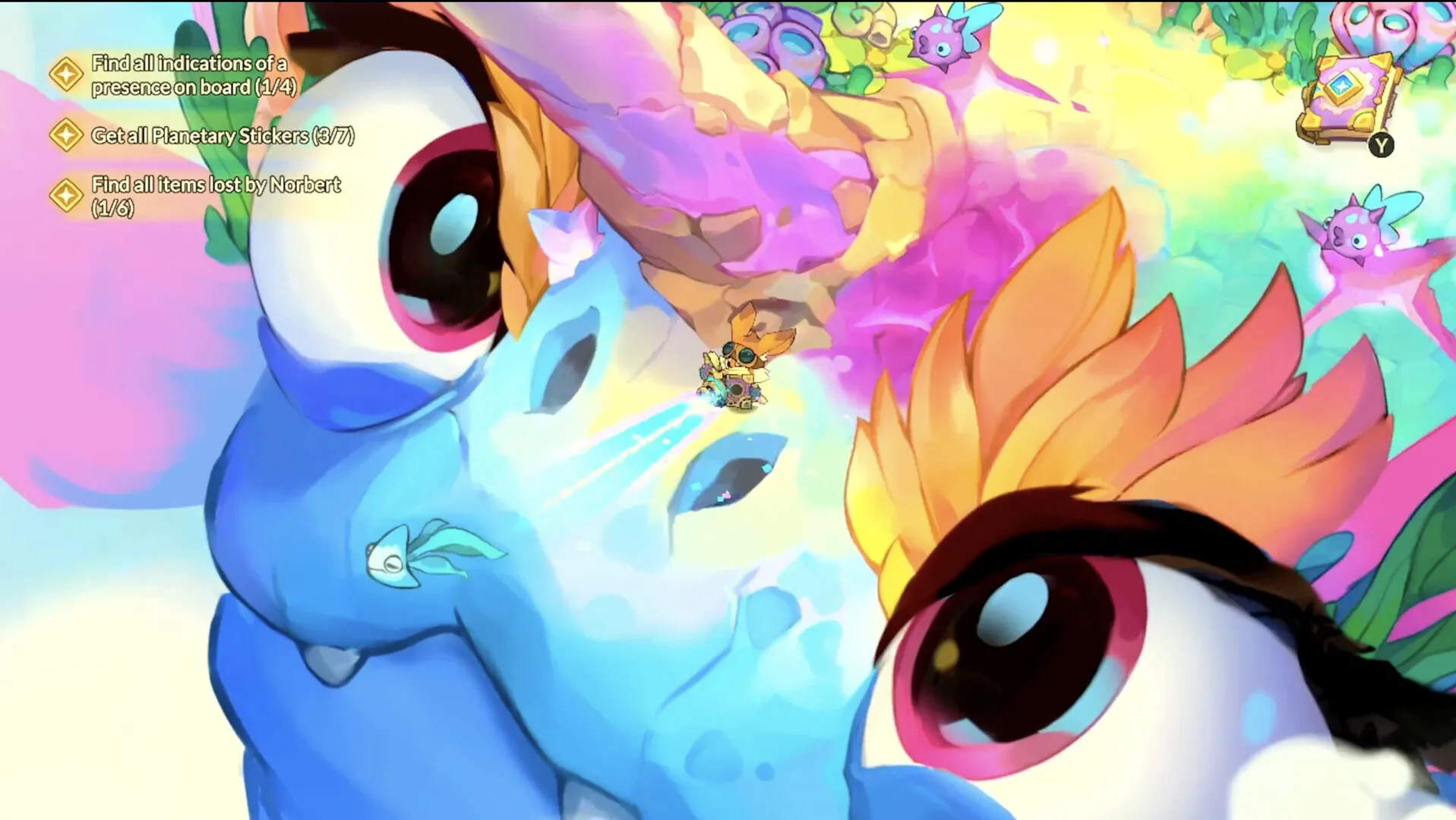
In contrast, the desert introduces shifting sandstorms that can strand Pilo in empty dunes, forcing careful timing before racing back to safety. The space whale stands out with rolling cloud banks and slender under‑bridge corridors, recalling the uncanny geometry of Journey’s sand ships. Two bonus locales—a sky‑high cluster of cloud islands and a glittering crystal cavern—round out the roster, each contributing new visual flourishes and scan targets.
Maps are broken into compact zones, ideal for younger players or those seeking bite‑sized exploration sessions. After a first sweep, sticker checklists evolve, prompting return visits to uncover newly unlocked items. This design evokes Captain Toad: Treasure Tracker’s loop, where isolated mini‑levels encourage thorough investigation without risk of getting lost in sprawling terrain.
Visual storytelling is woven through every environment. Tar‑covered patches appear as dark, oozing blotches against the rainbow palette, signaling areas in need of Holobook intervention. Nearby, battered signposts and a lone NPC silhouette hint at a world struggling under corruption. Subtle lighting shifts—warm sunlight breaking through cloud layers or the green glow of bioluminescent fungi—reinforce each zone’s mood without lengthy exposition.
Interaction density varies: some pages overflow with sticker options while NPC encounters remain fleeting. Hidden alcoves and secret perches yield extra scans, rewarding players who probe crannies with their Holobook. Getting from one world to another hinges on a simple aiming and launch sequence from the ship hub. Though necessary returns can interrupt momentum, the brief flight animations and clear destination markers keep transitions feeling smooth rather than burdensome.
Visuals, Sound, and Technical Performance
Pilo and the Holobook’s art direction feels like a series of storybook illustrations brought to life. Each biome uses hand‑painted textures to create depth—swamp foliage is layered with mossy gradients, while desert sands shift through ochre and rust tones. The back of the space whale dazzles with pastel clouds and subtle shadow play, recalling the painterly magic of games like Gris. Character designs are equally charming: Pilo’s expressive ear twitches and wide eyes convey more emotion than words, and the silhouettes of strange NPCs add personality without overcrowding scenes.
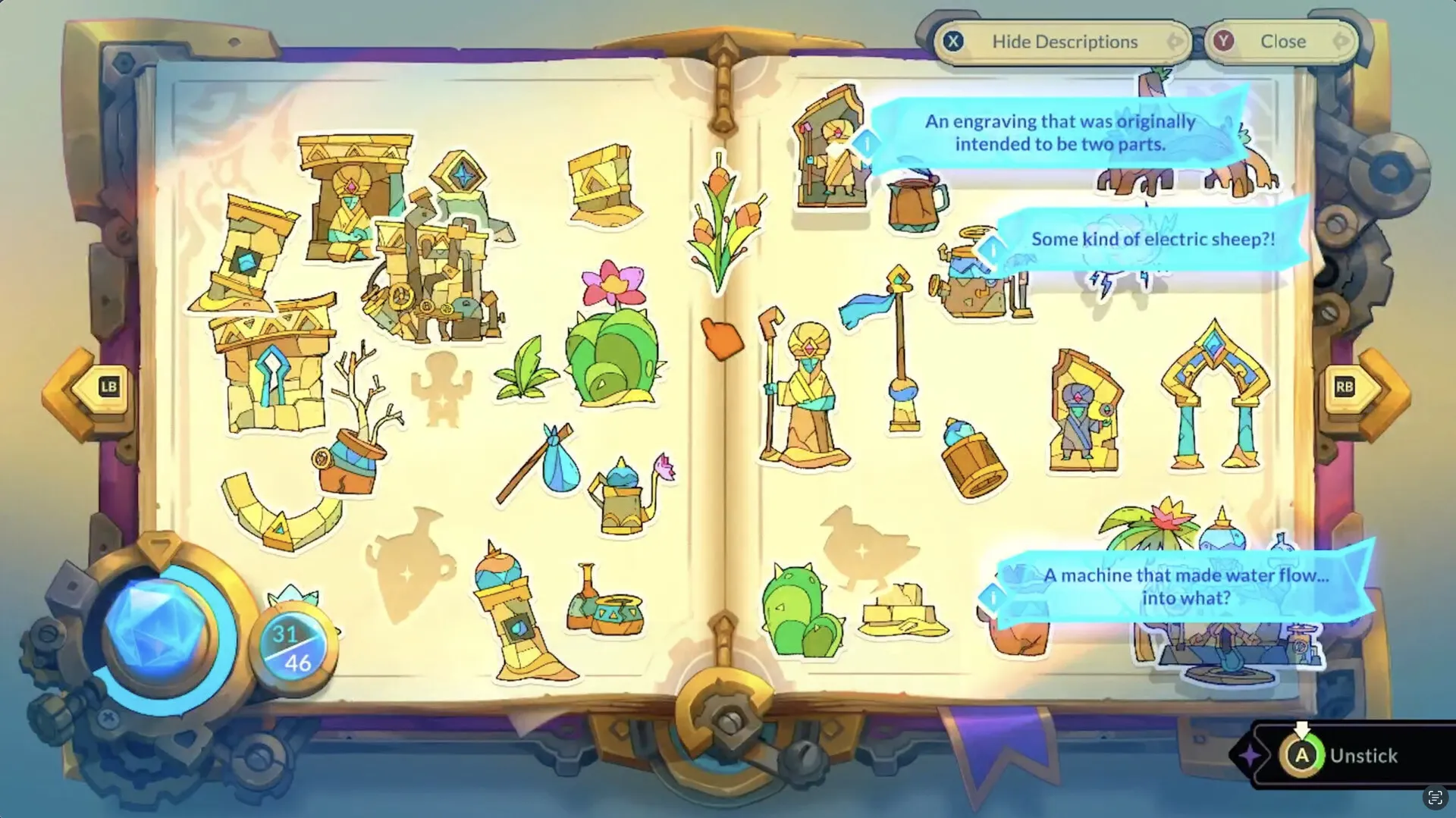
Animation and effects enhance every scan and scene transition. When you target an object, a soft glow surrounds it, followed by a satisfying sticker pop‑in that feels weighty and tangible. Environmental effects—from swirling dust storms in the desert to droplets of tar oozing across riverbanks—shift dynamically as you explore. These touches bring to mind the environmental interactivity in titles such as Abzû, where water currents guide your gaze, though here it’s sticker‑driven rather than swim‑driven.
The soundtrack underscores each world without ever demanding attention. Gentle piano lines and ambient synth pads match the mood of each biome—twilit melodies in the swamp, airy flutes among cloud islands. Layered ambient sounds—creaking bridges, distant creature chirps, footsteps over stone—immerse you fully. However, some interaction sound effects, like sticker placements and menu clicks, veer into high‑pitched territory and can grate over long sessions, suggesting a need for quieter FX presets or softer tonal ranges.
Voice and dialogue lean heavily on text and occasional chirps; characters never deliver full voice lines. While this minimalism keeps focus on exploration, key moments lack emotional weight without full VO. Localization is generally solid, but I encountered a few odd German translations—menu items like “Credits” mislabelled as “Red.Deer Games and Mudita Games Present”—which briefly confused me before I realized they were translation quirks.
On the technical side, performance remains steady across Switch, Xbox, and PC, with consistent frame rates even during particle‑heavy scenes. I did fall through a map void once, though it proved unreproducible, and Quick Resume on Xbox can glitch the main menu until a full restart. Thankfully, auto‑saves trigger each time you enter or leave a zone, rescuing me from a sandstorm mishap and mitigating any lost progress.
Accessibility, Audience, and Replayability
Pilo and the Holobook fits squarely into a family‑friendly slot, making it ideal for kids around nine to twelve years old. Its gentle pace and absence of combat lower the barrier to entry for non‑gamers, much like Yoshi’s Crafted World. At the same time, adult players looking for a compact, low‑stress experience will appreciate the short session lengths and creative freedom.
The game’s puzzles are straightforward but occasionally obscure—on the desert map, for example, activating a hidden disc without prompts can leave newcomers puzzled. Unlike titles such as Captain Toad: Treasure Tracker, there’s no built‑in hint system to bridge those gaps; players may need to consult a guide or community forum to stay on track.
Controls and UI cater to clear, immediate feedback. The Holobook reticle remains visible against every backdrop, and separate sliders for music, effects, and dialogue allow fine‑tuning, similar to the audio options in Ori and the Blind Forest. These features help ensure that both visual and hearing preferences are accommodated.
Replay value centers on the sticker sandbox and achievement hunts. After the main story, players can rearrange stickers into new compositions, echoing the creativity of games like Super Mario Maker. A handful of time‑sensitive scans and one‑off NPC stickers elevate tension for completionists, while the prospect of new biomes or DLC expansions suggests that Pilo’s universe could grow even further.
Final Thoughts and Recommendation
Pilo and the Holobook stands out for its enchanting hand‑painted visuals, inviting exploration, and intuitively designed sticker puzzles that reward curiosity. Its gentle pace and creative freedom make it an excellent pick for family game nights or quick solo sessions.
A few moments of confusion—like unmarked puzzle steps in the desert—and the lack of full voice acting can pull you out of the experience, and occasional technical hiccups like Quick Resume quirks are worth noting. Even so, this three‑to‑four‑hour adventure offers a heartfelt, low‑stress journey that curious players of any age will find hard to resist.
The Review
Pilo and the Holobook
This micro-adventure delivers enchanting hand-painted art, intuitive scanning gameplay, and a warm environmental narrative, even if occasional puzzles lack guidance and full voice acting. Technical hiccups are rare.
PROS
- Beautiful hand‑painted environments
- Intuitive Holobook scanning and sticker placement
- Gentle puzzles that reward exploration
- Accessible 3–4 hour playtime
- Family‑friendly tone
CONS
- No full voice acting
- Occasional unhinted puzzle roadblocks
- Forced returns to the ship hub
- High‑pitched sticker/menu sound effects
- Minor technical glitches (Quick Resume, rare map fall)