


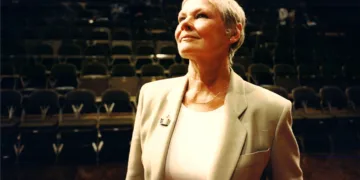




























Sunlight slants through vine-draped pergolas, bathing a Provencal villa in an almost complacent glow—a welcome that conceals deepening unease. In Delicious, Nele Mueller‑Stöfen’s directorial debut, a wealthy German family—John, an academic restless for respect; Esther, a corporate strategist craving reassurance; Philipp and Alba, children caught between admiration and neglect—arrives for a summer retreat behind iron gates and manicured lawns. Their polished routine fractures on a moonlit road when they discover Teodora, a limping stranger, and invite her into their sanctuary.
Positioned within the “eat‑the‑rich” thriller tradition, the film unfolds as a slow burn of manners and mistrust, each courtesy bearing the weight of potential betrayal. Languid pacing and pregnant silences chart the shifting power between host and guest, while hints of social critique flicker beneath every sunset shot. Mueller‑Stöfen frames opulence with an almost clinical detachment—wide vistas of lavender fields echo the family’s emotional distance, and the villa’s sparkling surfaces hide the rot of unspoken resentments.
Performances sharpen this tension: Fahri Yardım and Valerie Pachner embody domestic unease with taut precision; Carla Díaz brings Teodora’s inscrutable motives into stark relief; Caspar Hoffmann and Naila Schuberth trace youthful fascination and fear in their wide‑eyed scenes. With each drawn‑out moment, Delicious measures how privilege can blind its beneficiaries—and invites us to ask who truly holds the appetite for control.
Architecture of Deception
Morning light spills across the vineyard’s rows, framing a family whose smiles feel rehearsed. John, Esther, Philipp, and Alba slip into the villa’s cool marble halls, each carrying unspoken tensions beneath their accountant’s returns and CEO checklists. A leisurely dinner in town sours when John’s precious sedan collides with a limping stranger on a dark country lane. Fear eclipses duty: the injured woman is ushered indoors, her wounds bandaged by courtesy rather than urgency, and the choice to shield rather than report sets the story’s gears in motion.
Politeness becomes strategy as Teodora shifts from accidental guest to indispensable housekeeper. She arranges the laundry with practiced care, then leans in to listen, her quiet questions unlocking Esther’s hunger for affirmation and John’s craving for admiration. Philipp offers shy confidences that spark in her dark eyes, while Alba, starved for empathy, reveals childhood anxieties.
Idle afternoons stretch into whispered consultations and clandestine phone calls. Marital fissures widen beneath shared cocktails, as spouses tilt toward temptation without ever voicing betrayal. The outsider’s gentle suggestions begin dictating the family’s itinerary, transforming their sanctuary into a stage for her unspoken ambitions.
A sudden confrontation lays bare Teodora’s carefully contrived alliances. A misplaced photograph, a sister’s accusation, a mother’s trembling confession—the home’s porcelain veneer shatters. Motives emerge in jagged fragments: vengeance, ideology, personal reckoning—each revelation crashing like hail on the tiled courtyard.
John and Esther, unmoored, scramble to reclaim authority, but every locked door and barred gate echoes with her calculated triumph. The final images present two stark outcomes: the family uniting in shared culpability, or privilege collapsing beneath the weight of revealed secrets. The villa, once a haven, stands as a monument to undone security.
Feasts of Excess
Mueller‑Stöfen stages opulence as spectacle, then weaponizes it. The family’s vineyard‑framed sanctuary masks a brittle hierarchy, one that Teodora’s entrance swiftly shatters. Consumption slides from taste to threat: every shared repast becomes a silent auction of power, and each furtive glance a wager on who will be devoured first. By equating economic hunger with literal predation, the film wields its critique with a blunt insistence that cuts through polite dinner‑table discourse.

The villa functions as a gilded cage, its pristine gardens concealing the disconnection within. Expansive shots of lavender fields underscore how beauty can mirror emotional drought. In this serene isolation, every echo in the marble hall magnifies unvoiced regrets, and the family’s privilege feels as confining as any prison cell. Here, the still pools and shuttered windows become metaphors for withheld trust and the cost of comfort.
Teodora’s arsenal is intimacy: a well‑placed compliment, a casual embrace, whispers that plant doubt like seeds in fertile ground. Each carefully stage‑managed gift serves as silent currency, binding the family’s gratitude to her subtle manipulations. John and Esther, eager for validation, surrender authority with flattered smiles, while the children’s yearning transforms into an unguarded allegiance. In this dance of influence, trust becomes a weapon sharper than any blade.
Carbon bikes appear briefly—sleek artifacts of overconsumption—reminding us that even leisure can be a status symbol. The refrigerators, stocked and neglected, harbor a silent rot; their decaying contents mirror the family’s suppressed anxieties. Dining scenes pulse with dual meanings: delicate porcelain plates cradle both nourishing fare and ominous offerings, while wine glasses brim with privilege that feels as intoxicating as it is dangerous. Light and shadow on fruit‑laden tables underscore contrasts between abundance and decay, a visual motif that haunts each frame.
Faces Behind the Façade
Yardım embodies a man caught between duty and desire, his measured restraint fracturing with each guilty glance. Early scenes find him offering polite laughter over lavish meals, yet the tremor in his jaw betrays an inner tension. After the accident, Yardım’s posture tightens—shoulders hunched, eyes darting—as if every corridor in the villa presses in on him. Moments of silent regret play across his features, revealing a man who measures worth in accolades but finds none to salve his conscience.
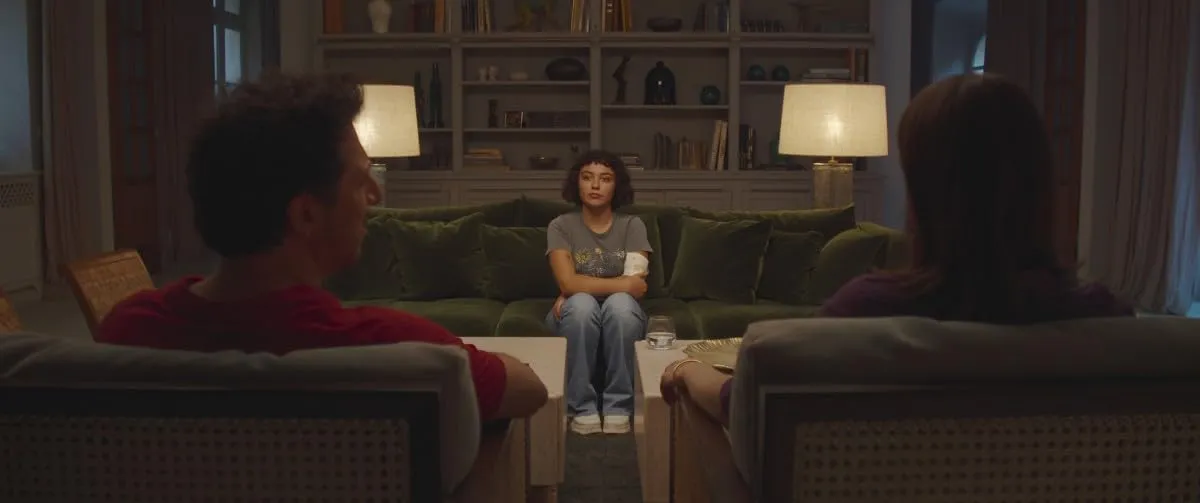
Pachner crafts Esther as a force of precision, her every gesture calibrated for success. In boardroom‑like exchanges around the family table, the arch of her eyebrow speaks volumes about unspoken expectations. When she deflects concern over Teodora’s fate, Pachner’s fragility peeks through an armor of competence. Her scenes with Yardım crackle with unacknowledged longing, the chemistry between them oscillating between partnership and unarticulated desire, a tension mirrored in Esther’s willingness to blur truth for convenience.
Hoffmann’s Philipp hovers at the edge of adolescence, alternately emboldened and bewildered by Teodora’s attention. Hoffmann conveys the raw ache of a teenage crush with tight‑lipped smiles and nervous energy, every stolen glance amplified in silent close‑ups. Schuberth’s Alba channels a quieter yearning—a child’s hope for genuine connection—her wide eyes tracking Teodora’s every move. Their arcs reflect the household’s fracture: as the parents retreat into self‑interest, the children cling to the enigmatic interloper as a source of truth.
Díaz’s performance is a study in controlled menace. Her soft voice and unassuming gait belie a predator’s patience—each word a calculated lure. In scenes where light plays across her face, the shift from demure guest to power broker feels seamless. Vocal inflections drop into near-whispers, drawing confidences from family members eager to fill her silence with their secrets. Physical stillness becomes her greatest weapon, making every step she takes through the villa feel like territory claimed.
Peripheral figures—Lucien’s knowing smirk, the resort staff’s furtive glances—add texture to the class conflict. These cameo presences punctuate the family’s bubble, reminding us that beyond the villa’s gates, resentment simmers and alliances shift in quiet rebellion.
Blueprint of Unease
Mueller‑Stöfen paints each frame with deliberation: long takes let tension resonate like a held breath, while sudden cuts shatter that lingering calm. The director’s eye for symmetry in family tableaux underscores emotional distance, yet the film occasionally stalls in quiet interludes that cry out for sharper propulsion. Moments of stillness and murmur generate dread, though a few languid stretches dilute urgency. The rhythm tightens around Teodora’s growing influence, but sometimes slackens just as drama demands a sharpened spine.

Frank Griebe’s lens bathes Provence in golden haze—lavender fields drifting into the horizon through widescreen frames that feel sumptuous and alienating. Interiors gleam: marble floors, polished glass, each ornate chandelier casting fractured light across pristine furniture. Opulent fixtures suggest curated perfection, while shadowed hallways and shuttered windows whisper of secrets behind closed doors. As Teodora’s presence expands, the palette shifts from honeyed warmth to cooler blues, turning the villa’s elegance into a gallery of gilded captivity.
Slicing between family rituals and fragmented glimpses of Teodora’s past, the edit knits together time with kinetic flair. Transitions can jolt—shifting from sunlit veranda to midnight confessions—yet this restless splice often sharpens suspense. A few sequences feel unevenly paced, but when cuts snap in rhythm with emotional crescendos, the story pulls spectators into its undercurrent of mistrust.
Ambient layers swirl: distant cicadas, murmurs of water in the fountain, protesters drumming at the villa’s gates. These natural chords merge with a minimalist score—soft drones punctuated by staccato strings—that insinuate unease beneath polite conversation. Silence holds weight: a vacuum that amplifies every whispered secret. When a lone piano motif intrudes, it doesn’t soothe; it warns that even the most polished façade can fracture in an instant.
Final Thoughts
Delicious marries sumptuous visual design with a meditation on entitlement, yet its probing angles often lose focus. The deliberate tempo builds absorbing tension, even as plot strands fray in uneven turns. Carla Díaz’s poised menace and Valerie Pachner’s poised vulnerability anchor key moments, while Fahri Yardım’s taut regret deepens the emotional stakes. Müller‑Stöfen shows a keen eye for atmosphere, crafting scenes that linger, but her narrative conviction wavers when thematic ambition eclipses character logic.

Slow‑burn thriller devotees will find satisfaction in the film’s calculated stillness and pointed social commentary, while viewers seeking tight plotting or subtle nuance may grow restless. Best experienced in a single session, ideally late at night when hushed shadows amplify its quietly unsettling pulse.
Delicious merits a cautious viewing for those drawn to predator‑prey dynamics within gilded cages, offering arresting tableau and a standout turn by Carla Díaz. Yet its pull slackens when narrative logic drifts, leaving thematic ambitions undernourished. Better suited to sparking after‑film debate than delivering sustained suspense, it invites viewers to ponder privilege’s hidden fractures even as its pacing tests patience.
Full Credits
Director: Nele Mueller-Stöfen
Writer: Nele Mueller-Stöfen
Producers: Janine Jackowski, Jonas Dornbach, Maren Ade
Cast: Valerie Pachner (Esther), Fahri Yardım (John), Carla Díaz (Teodora), Naila Schuberth (Alba), Caspar Hoffmann (Philipp), Julien de Saint Jean (Lucien), Sina Martens (Cora), Johann von Bülow (Aki), Nina Zem (Estelle), Miveck Packa (Prince), Tom Rey (Bojan), Mélodie Casta (Amber), Joep Paddenburg (Erik)
Director of Photography (Cinematographer): Frank Griebe
Editor: Andreas Wodraschke
Composers: Volker Bertelmann, Ben Winkler
The Review
Delicious
Delicious seduces with sumptuous visuals and a pointed critique of privilege, anchored by Carla Díaz’s chilling presence, yet its deliberate pacing and uneven plotting dilute its impact. Striking moments of tension snap against meandering scenes, leaving its social commentary only half‑realized.
PROS
- Lush cinematography captures Provence’s beauty and isolation
- Carla Díaz’s performance radiates controlled menace
- Sharp social critique woven into a thriller framework
- Atmospheric sound design heightens unease
- Strong production design contrasts elegance with decay
CONS
- Pacing lags in quieter stretches
- Plot holes undercut narrative cohesion
- Secondary characters lack depth
- Metaphors occasionally feel heavy‑handed
- Tonal shifts can jar the mood