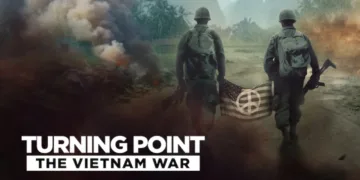






















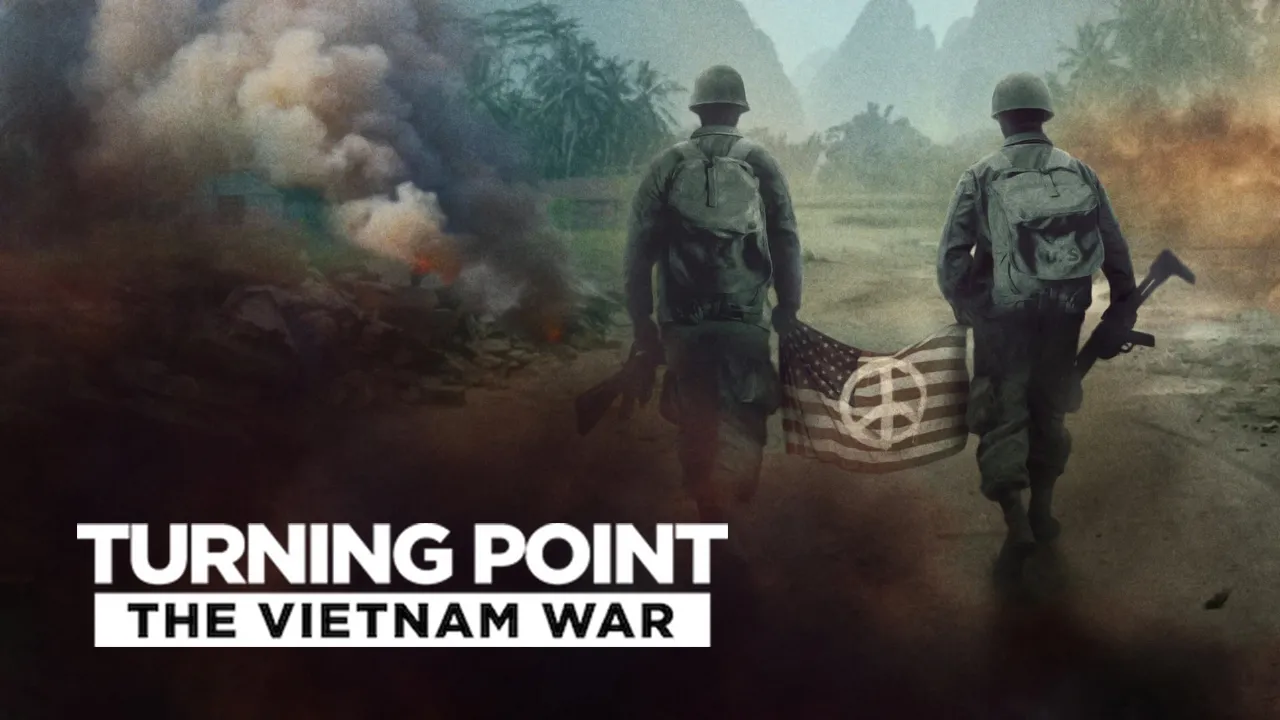

Brian Knappenberger’s Turning Point: The Vietnam War, now streaming on Netflix, opens not with a sweeping battlefield panorama or a politician’s podium but with a quiet, trembling voice—that of Scott Camil, a Marine turned antiwar activist, remembering a marching song about killing Viet Cong. It’s an intimate beginning for a five-part docuseries that refuses to cushion any of its historical weight.
This installment in Knappenberger’s Turning Point franchise sidesteps the museum-glass detachment often found in war documentaries and instead builds its structure from first-person accounts, archival tapes, and political autopsies that reach from the early Kennedy years to the last helicopter out of Saigon in 1975.
What sets this series apart is how it doesn’t rely on military timelines or combat-heavy montages as narrative anchors. Instead, it allows memory—painful, fragmented, contradictory—to shape the story. American veterans, Vietnamese civilians, former Viet Cong, and White House insiders all share space here, their recollections driving a story that’s less about strategy than about consequences.
From old CBS news reports to long-classified presidential recordings, Knappenberger pulls from a deep archive, but the material is selected with restraint. Each choice feels specific, not decorative. The result is a documentary that treats the Vietnam War not as a closed chapter, but as a living wound—and a mirror. The tone is candid, even blunt, with a kind of emotional immediacy that’s rare in history-based storytelling.
Memory as Architecture: How Turning Point: The Vietnam War Tells the Story
Brian Knappenberger’s approach to structure in Turning Point: The Vietnam War lands somewhere between classical documentary rigor and something more human—almost poetic. He doesn’t break chronology to make a stylistic point; instead, he respects the timeline but lets memory and emotion determine the pacing. Each episode moves forward from the early 1960s into the mid-1970s, charting the rise and collapse of American involvement, but it’s the way voices recur and moments echo across time that gives the series its real shape.
At the center of this framework is Scott Camil. In fiction, you’d call him a character with a full arc: young Marine, disillusioned veteran, antiwar activist. His presence grounds the series—not because he’s more important than anyone else, but because his shift in perspective mirrors the moral unraveling that runs throughout the series. His voice, at times halting, brings the viewer back to what’s personal. That balance is key. Knappenberger avoids turning any figure into a symbol. Journalists like Dan Rather and Peter Arnett speak with precision, yes, but they also feel present—less like historical narrators and more like people still trying to process what they witnessed.
There’s something almost Cassavetes-like in the way this docuseries favors raw expression over polished thesis. The storytelling isn’t mechanical. Themes surface naturally—public betrayal, the gap between official rhetoric and lived reality, the high cost of American exceptionalism—but Knappenberger doesn’t hammer them. He trusts the audience to connect the dots, and the result is richer for it.
The emotional rhythm shifts deliberately. Some scenes are weighted with silence, forcing a pause that feels physical. One sequence involving the My Lai massacre is especially difficult—edited with restraint, but devastating all the same. Watching it reminded me of how Shoah handles testimony: the truth is in the quiet, in what’s not said. And yet, the series doesn’t wallow. It knows when to step back, when to let an image or a face linger. That patience, rare in contemporary streaming docs, gives it a gravity that feels earned.
Power, Illusion, and the Politics of Escalation
Watching Turning Point: The Vietnam War, I kept thinking about how rarely historical documentaries manage to feel this direct. There’s no air of removed analysis here. Instead, the series drops you inside a machine of power—watching it grind forward while the men pulling the levers question whether it should be running at all. Knappenberger’s handling of political leadership across the Kennedy, Johnson, and Nixon administrations isn’t framed as a checklist of policy decisions, but as a slow accumulation of fear, misjudgment, and misdirection.
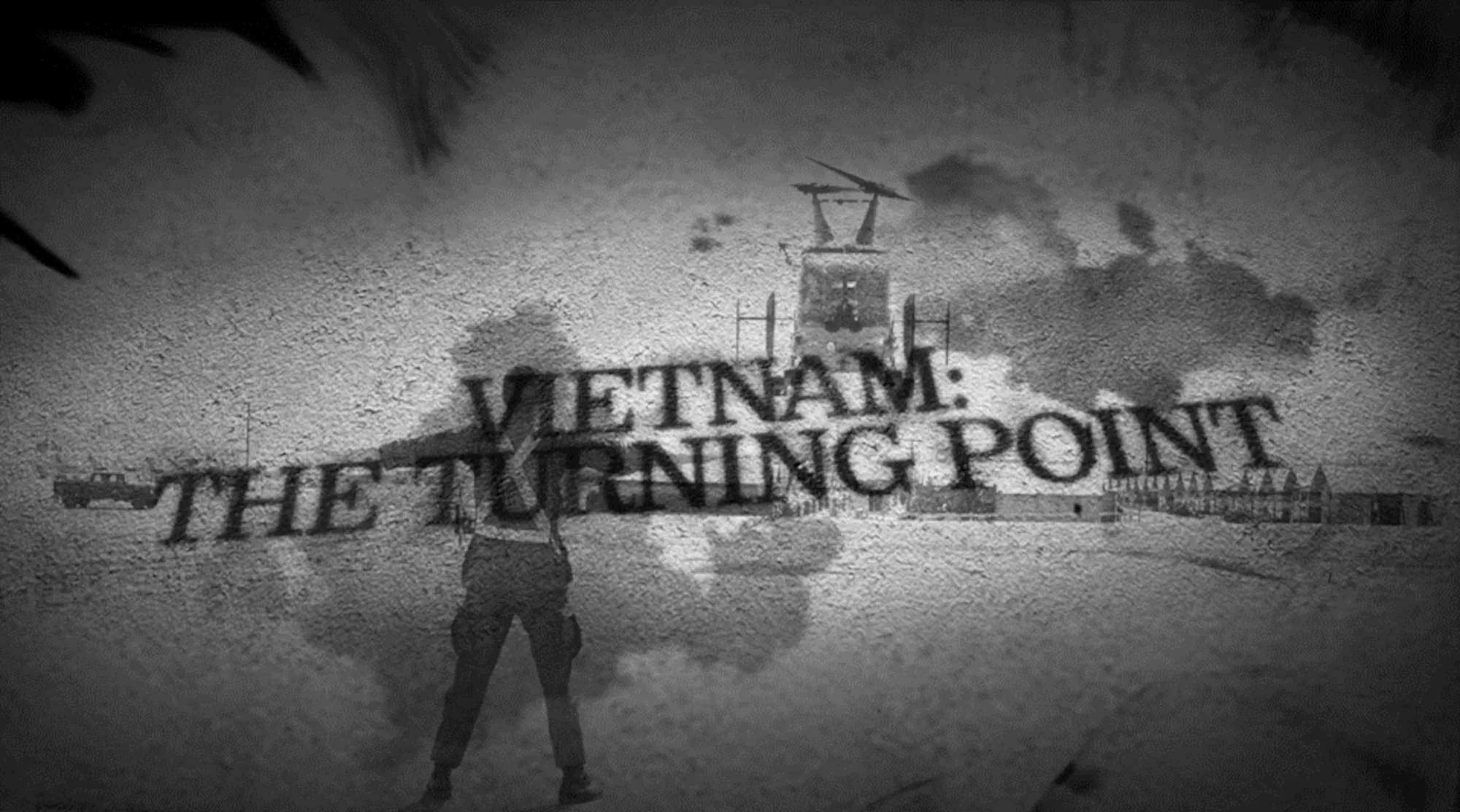
The early episodes highlight how John F. Kennedy, still recovering from the Bay of Pigs debacle, leaned heavily on defense advisors like Robert McNamara. Their belief in the domino theory—if South Vietnam falls, the rest of Southeast Asia would follow—gave the administration just enough of a strategic rationale to start sending “advisors.” But the series makes clear that this wasn’t passive aid; these early personnel were already engaged in combat, even as the public was told otherwise.
Lyndon Johnson, often portrayed as reluctantly inheriting a crisis, comes across here as far more active in deepening it, while still doubting it privately. One of the most striking elements in the series is its use of secret presidential recordings. Hearing Johnson voice his personal uncertainty—knowing full well the war might be unwinnable—while continuing to escalate involvement hits hard. It’s not framed with hindsight. The words come straight from the source, stripped of rationalization.
By the time Nixon enters the story, the machinery is too large to stop. His decision to expand the war into Laos and Cambodia—without informing the American public—feels like an extension of the same fear-driven logic. There’s a moment where the tape rolls on a conversation about maintaining appearances, not for strategy, but for political survival. It reminded me of the kind of moral detachment you see in The Fog of War, but here it’s folded into the narrative instead of analyzed from a distance.
The Gulf of Tonkin incident, often treated as a turning point in textbooks, is presented not as a flashpoint but a slow reveal. Intelligence manipulation isn’t dramatized—it’s methodically unpacked. Knappenberger allows the facts to speak, and what emerges is a portrait of systemic distortion: congressional votes cast on the basis of misinformation, a public kept in the dark, and a war increasingly justified by illusion.
It’s hard not to draw comparisons with more recent military decisions, but the power of the series is that it doesn’t have to. The story of Vietnam, as told here, is about how institutional momentum can bury doubt, and how fear—of losing face, of losing control, of communism—was the real fuel behind decades of destruction.
Voices That Refuse to Be Edited Out
What makes Turning Point: The Vietnam War so resonant isn’t just the breadth of information—it’s the way the series gives space to voices that are often left out or smoothed over in American retellings. This isn’t just a recounting of military strategy or presidential missteps. It’s a film built from memory and contradiction, and that makes it feel far more alive than most historical documentaries.
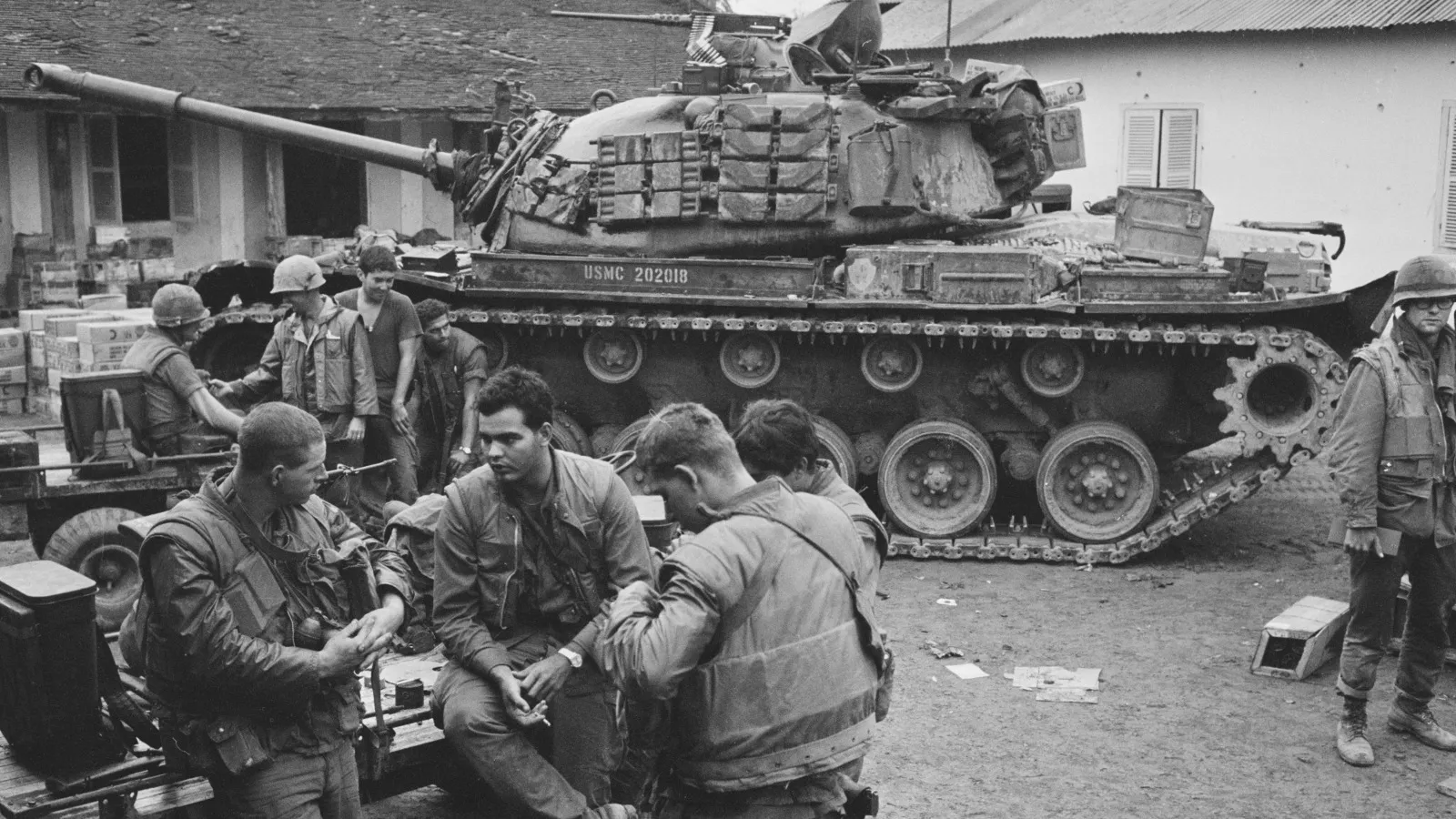
Scott Camil, whose story threads through the series, begins as a Marine who genuinely believed in the cause. You watch that conviction erode across his interviews, not through a single dramatic moment, but in a slow, visible shift as he reflects on what he was trained to believe versus what he actually saw. His honesty isn’t polished for effect—his voice shakes, and sometimes he pauses like the memories still surprise him. That kind of rawness reminds me of what I’ve always admired in cinéma vérité: no narration, just the camera listening.
Beyond Camil, the inclusion of Black, brown, and Asian veterans reframes the American narrative into something closer to the truth—messy, conflicted, and uneven. One veteran speaks about how he returned home to a country that barely acknowledged his existence, let alone his service. These aren’t sidebars; they’re central to understanding the full emotional architecture of the war.
What truly elevates the series is how it balances that with Vietnamese perspectives, which are often treated as historical footnotes. Here, they’re not only present—they’re active storytellers. Former Viet Cong fighters speak with clear conviction, while figures like Tôn Nữ Thị Ninh, who translated during the Paris Peace Accords, offer insight into what diplomacy looked like from the other side of the negotiating table. One sequence featuring survivors of U.S. firebombings is especially hard to sit through. It doesn’t feel framed for emotional manipulation—it feels necessary.
Journalists like Dan Rather and Peter Arnett bring another layer, grounding the series in a media landscape that was just beginning to question itself. The archival footage from CBS News isn’t background—it shapes how viewers understand the gap between what was happening and what was shown on TV. There’s a rhythm to the editing here that reminded me of Errol Morris’ The Fog of War, but more restrained, more interested in absorbing the contradictions than resolving them.
When Viet Thanh Nguyen appears, it’s not to summarize history—it’s to point out how memory is shaped by who gets to speak. The series listens carefully. And it doesn’t interrupt.
Scars You Can’t Archive
Some of the most difficult moments in Turning Point: The Vietnam War are not the ones you expect. There are no swelling scores or heavy-handed montages. Instead, Knappenberger relies on quiet detail—burned-out homes, archival shots of Vietnamese children walking barefoot through debris, interviews where people hesitate mid-sentence because the memory is too sharp. The devastation is shown plainly, and that restraint makes it harder to shake off.
The third episode, which covers the My Lai massacre, was the point where I had to pause. Not because it was more violent than other depictions I’ve seen, but because of how it let the survivors speak without interruption. The editing holds their faces for a few seconds longer than you expect. You feel the weight of what’s being remembered. It’s one of those rare sequences in nonfiction filmmaking that bypasses the screen entirely and just stays with you. I’ve only had that reaction a handful of times—once while watching Shoah, and again during the final scenes of Come and See.
American soldiers, too, aren’t portrayed through a lens of myth. The series spends real time on what happened to them after the fighting: PTSD, guilt, confusion. One vet stares off-camera as he tries to explain how basic training rewired his thinking. Another describes a breakdown after returning home. These aren’t polished interviews—they’re lived-in, painful, and honest.
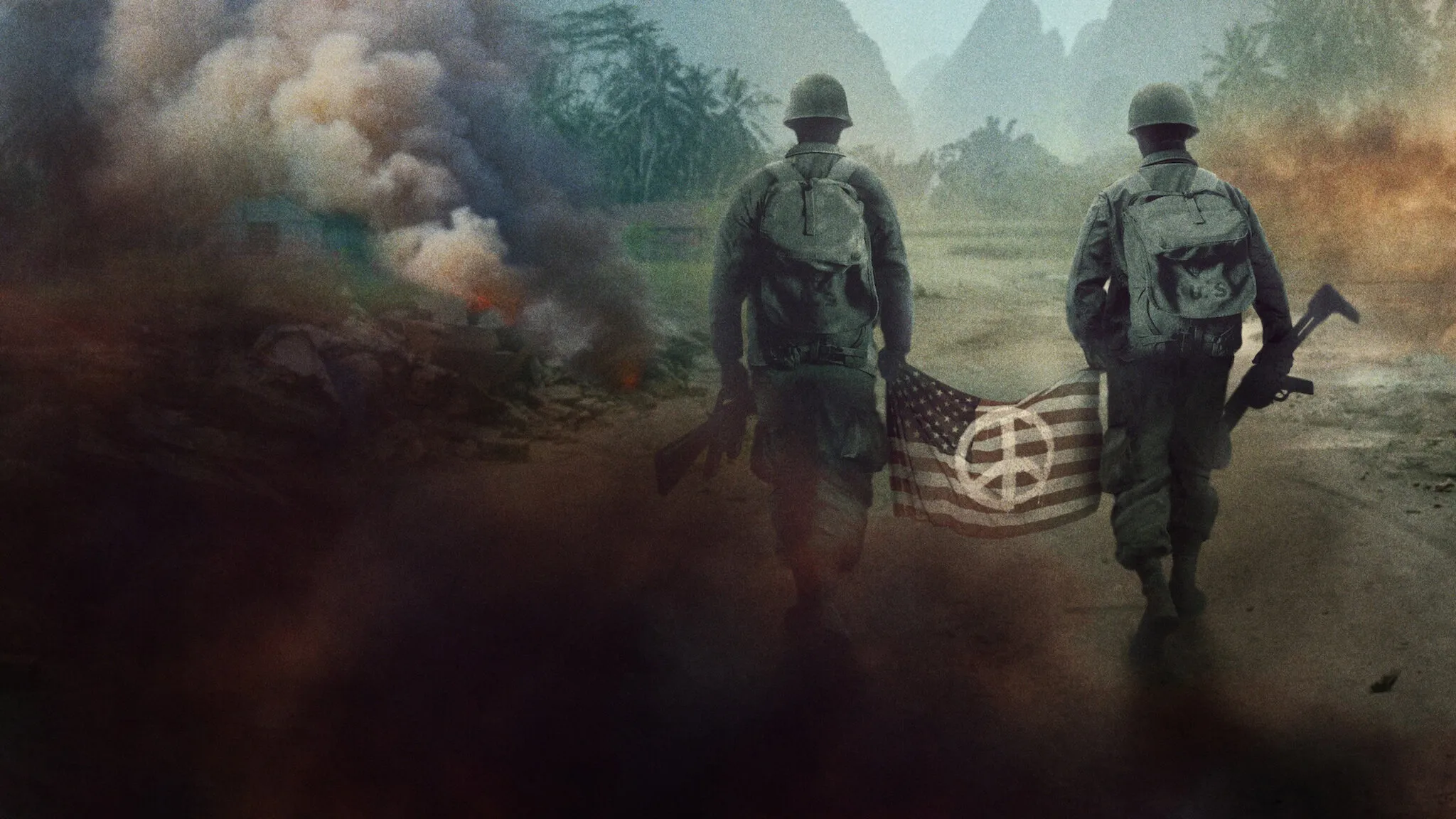
Then there’s the domestic fallout. You hear protest chants over shots of flag-draped coffins, and it doesn’t feel like history—it feels recent. There’s a directness in how the series handles mistrust: the government said one thing, the reality was another, and people stopped believing. The music choices aren’t just period markers. They’re part of the mood. When a protest song cuts in, it doesn’t sound nostalgic—it sounds angry, current, like it’s still asking the same questions.
The Past, Projected: Image, Tape, and Sound in Turning Point
There’s a tactile quality to Turning Point: The Vietnam War that sets it apart visually from most historical docuseries. The archival footage isn’t there to pad out transitions—it’s essential to the rhythm and voice of the film. News clips from CBS, old Department of Defense reels, and rarely heard White House recordings are not just included, they’re allowed to breathe. You hear Nixon and Johnson in their own words—mumbling, grasping, hedging—and it feels eerily close, like flipping through a stranger’s unfiltered voicemail.
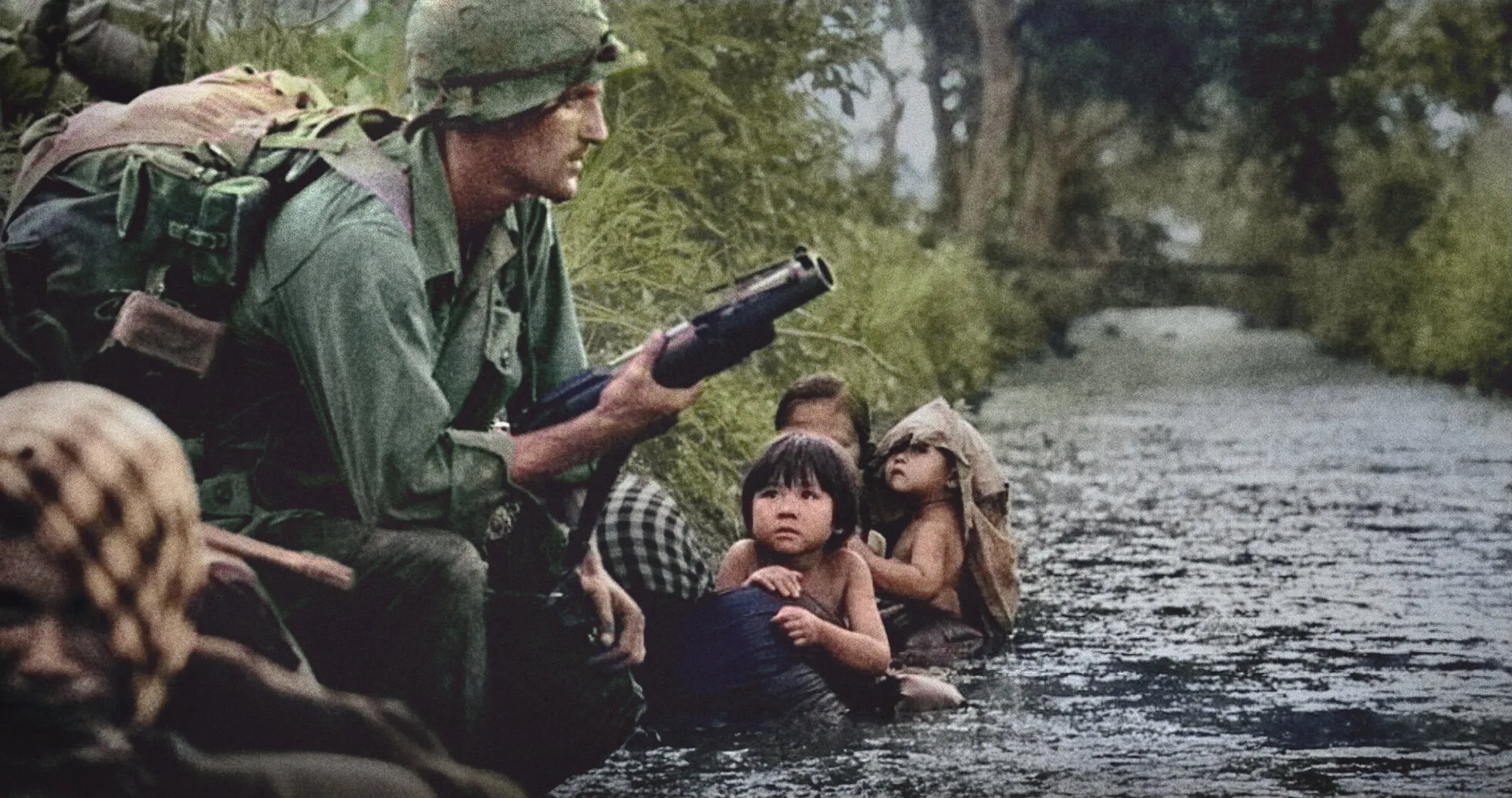
The visual language leans on contrast. One minute, we’re looking at wide battlefield shots, scorched fields, helicopters hovering over treetops; the next, we’re face to face with a veteran in his living room, his voice soft, his eyes unfixed. The black-and-white stills, particularly the ones of civilian casualties, don’t feel like stock history images. There’s something raw in how they’re timed—often left onscreen for just long enough to feel uncomfortable. But nothing about this feels exploitative. The editing makes a clear choice: to witness, not to sensationalize.
Sound works on a similar principle. Period songs like “Gimme Shelter” make their appearances, but even these familiar cues are justified—anchored to specific emotional peaks rather than used as shorthand. What struck me more was the subtle use of ambient sound—the scratch of a tape reel, the hollow tone of a distant explosion, the quiet between questions. It reminded me of how The Thin Blue Line uses negative space, trusting that silence, when handled well, can carry as much tension as dialogue. This series gets that. It doesn’t raise its voice. It just waits for you to listen.
Full Credits
Director: Brian Knappenberger
Writers: Information not publicly disclosed
Producers: Sarah Huisenga, Clare Tucker
Executive Producers: Brian Knappenberger
Cast: Scott Camil, Ken Hughes, Lien-Hang Nguyen, Fredrik Logevall, Dan Rather, Peter Arnett, Jan Barry, Ronald Haeberle, Winston Lord, John Negroponte, Lê Kiên Thành, Hoàng Đức Nhã
The Review
Turning Point: The Vietnam War
Turning Point: The Vietnam War is a rare documentary that doesn’t just recount history—it confronts it. With its unflinching narrative, layered perspectives, and restrained visual craft, it turns archival footage into something immediate and personal. Brian Knappenberger avoids easy nostalgia or moral shortcuts, instead offering a portrait of war that feels painfully relevant. It’s not comfortable viewing, but it’s necessary, especially in a time where historical memory often gets reduced to slogans. This is nonfiction filmmaking at its most precise and human.
PROS
- Thoughtful and emotionally grounded storytelling
- Rich mix of American and Vietnamese perspectives
- Powerful use of archival footage and presidential recordings
- Honest, unfiltered testimony from veterans and civilians
- Strong visual and audio composition without sensationalism
- Clear historical framing across political eras
CONS
- Pacing may feel slow for viewers seeking a more traditional documentary format
- Some emotional sequences are difficult to watch
- Could have spent more time on postwar Vietnamese civilian experiences