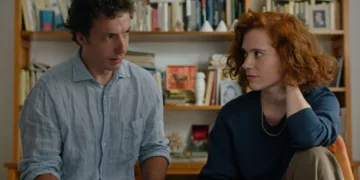










Director Jonás Trueba takes audiences on a thought-provoking journey with his 2020 film, The Other Way Around. The movie tells the story of Ale, a film editor played by Itsaso Arana, and her actor partner Alex, portrayed by Vito Sanz.
After over a decade together, Ale and Alex make the unconventional decision to throw a party celebrating the end of their long-term relationship. With the support of their friends and family, the couple humorously commits to moving forward independently.
As Ale and Alex immerse themselves in preparations for their separation soiree, they begin reflecting more deeply on the complex realities of love, change, and what it means to say goodbye. Full of heart and intelligence, The Other Way Around explores existential themes through Trueba’s signature down-to-earth lens and compelling central performances.
The Unconventional Celebration
The film follows director Ale and actor Alex as they embark on their unusual plan. In their Madrid apartment, Ale proposes the idea of a separation party to mark the end of their decade-long relationship. While Ale views it as an intellectually freeing concept, Alex is less sure. Still, they agree to move forward with the unconventional celebration.

Ale and Alex contacted their friends and family to invite them to the party. Reactions are mixed, with some openly questioning the logic of celebrating a breakup. Actors in Ale’s upcoming film, in which Alex stars, place casual bets on whether the couple will actually go through with ending things. This reflects how the future of Ale and Alex’s relationship becomes a reflection of others’ hopes and fears for their own bonds.
As preparations begin in earnest, Ale and Alex realize the emotional and logistical challenges of separating after so many years entwined. Packing up a shared life exposes doubts buried beneath surface-level certainty. Their platonic interactions take on new weight as individual identities must be redefined.
Further, the couple finds that organizing the party involves more work than expected. Disagreements arise in decision-making as two become one no longer. Where once they moved in harmony, now friction develops. Ale and Alex see that untangling themselves will be a longer process than anticipated.
With the date approaching, signs indicate Ale and Alex may have second thoughts. As conflicts emerge in planning, their closeness reemerges. An undercurrent of intimacy remains despite discussions of ending things. It becomes increasingly plausible that the party will not mark the conclusion but instead the beginning of something new.
Cinematic Storytelling With Heart
Director Jonás Trueba crafted The Other Way Around with his signature aesthetic sensibilities. The dialogue is spare yet poignant, conveying emotion between the lines. Scenes flow with a casual realism that feels almost documentary-like at times. Through meandering conversations and day-to-day details, the film explores profound themes in an intimate, down-to-earth manner.
Narrative elements like interweaving plot lines and nonlinear editing invite viewers deep into the characters’ mindsets. Flashbacks and fantasy sequences illustrate the frayed edges of Ale and Alex’s brave faces. The technique draws us empathetically into their personal journeys of self-reflection and doubt. Literary and cultural references provide philosophers with further probing the ideas beneath the surface.
Cinematographer Santiago Racaj brings Madrid vibrantly to life. His roving camera soaks in the city’s details, from winding streets to cozy cafes. Natural lighting and muted color tones imbue each frame with a sense of place. Wide establishing shots contextualize Ale and Alex’s story within their community. In intimate interiors, subtle framing and composition reflect shifts in their dynamics.
A lover of the French New Wave, Trueba pays homage through his improvisational style. Fly-on-the-wall realism, literary narratives, and social commentary call to mind cinematic forebears like Godard and Truffaut. The director engages in playful postmodernism as well, offering nods to classic Hollywood genres and boldly tackling modern issues.
Through his artistry, Trueba conveys deep affection for his characters and subjects. With tremendous emotional intelligence, he navigates complex topics to discover profound truths about human connection. At its core, The Other Way Around is a thoughtful rumination on change, challenging viewers as much as its unconventional protagonists.
Bringing Ale and Alex to Life
At the heart of the film are director Ale and actor Alex, played passionately by Itsaso Arana and Vito Sanz. Their characters feel wholly authentic in how their traits diverge yet complement each other. Ale tends to be serious and philosophical, seeking profound understanding. Alex accepts life’s uncertainties with an easygoing charm.
This imbalance creates realistic tension. Alex appears content to let Ale steer the relationship journey. Yet beneath placid surfaces, inner doubts linger for them both. Arana and Sanz imbue their roles with nuanced stillness, letting vulnerability shine through in subtle moments.
The actors showcase their characters’ evolving dynamics superbly. As Ale and Alex grapple with separating, their once smooth coordination turns choppy. formerly understood silences become strained. Though friction mounts, the romance’s echoes remain palpable. Arana and Sanz convey this delicately, keeping viewers hopeful that connection can regain ground.
Most remarkable is the pair’s rapport. Sharply written, authenticated by their lived-in comfort. They understand each other without words. A simple, thoughtful look or gentle touch resonates with years of intimacy. This authentic foundation anchors even bizarre plot twists in emotional truth.
Arana, in particular, dazzles, bringing Ale to life with depth and grit. As a director herself, she commands scenes of cinematic reverie or heart-sinking doubt with consummate artistry. Ale feels profoundly real through each inflection and gesture.
Sanz provides sublime balance, letting Alex’s calm waters run deep. Steadfast and compassionate, he’s the perfect counterpoint for Ale’s journey. Their chemistry makes even fleeting glimpses of tenderness linger long after the closing credits.
Together, Arana and Sanz make Ale and Alex’s unconventional story profoundly touching. It’s a virtuosic demonstration of actors wholly inhabiting souls at a crossroads, guiding viewers with each thoughtful step.
Thoughts on Relationships and Change
The Other Way Around delves into rich themes surrounding romance, identity, and life’s unpredictability. Director Trueba draws from great thinkers, posing questions instead of answers.
Ale’s father first sparks the film’s premise, suggesting separations deserve celebration too. This challenges social norms prescribing fulfillment through union. Are we most free alone or through connection? The film explores this tension thoroughly.
The philosopher Kierkegaard lingers as an influence as well. His notion of chasing the familiar resonates with how Ale and Alex clung to each other, resisting change even as they grew independently. In separating, they test discomfort versus comfort—will new horizons broaden them or leave them longing for what’s known?
Trueba also weaves in Hegel’s dialectic of growth. When the thesis (Ale and Alex’s relationship) meets the antithesis (their breakup), what might arise is an intriguing synthesis. As they invest in the separation, familiar intimacies fade, yet new appreciation emerges. Their bond matures from a rigid form into something adaptable to life’s flow.
Throughout prickly moments and heartfelt exchanges, fundamental questions permeate: What makes for a “successful” partnership as individuals change? How do we accept impermanence while finding purpose and connection? Ale’s journey reflects seeking answers inward and in philosophical pondering with her father.
At its core, the film portrays relationships as complex verbs, not static nouns. Intimacy requires maintenance, compromise, and faith that love can outlive any single expression of it. Ale and Alex remind us that separation need not mean disappearance—with care, affection can persist as feelings transform.
The other way around leaves their future uncertain, as life often does. But through dignifying questions of loyalty, identity, and how we can support one another compassionately, it gives hope that we too might meet life’s puzzles with courage, honesty, and care for our fellow travelers.
A Cinephile’s Dream
Trueba fills The Other Way Around with subtle homages to beloved classics. The story evokes great remarriage romps from Hollywood’s golden age, like His Girl Friday and The Awful Truth.
We glimpse this in small prop details—I loved spotting Ale and Alex’s tarot cards showcasing Bergman stills. Moments like this add richness for any cinema lover playing “spot the reference.”
Contrasts with today’s American rom-coms also shine through. Modern ones often plump for predictable plots and stereotypes, diluting the genre. The Other Way Around feels refreshingly real about relationships messily evolving beyond “happy ever after.”
Where many current romances play things safe, Trueba’s picture dignifies life’s indefinite quality. He celebrates the film’s potential to pose meaningful questions instead of pat answers. In this way, it pays tribute while boldly forging its own path.
Comparisons show how far many studio flicks have strayed from characters we truly root for. The Other Way Around sticks close to Ale and Alex’s intimate struggle to accept change within deep caring for one another.
Rather than a Hollywood ending, it offers something rarer—the courage to stay curious about where the journey may lead. Like the best movies, it leaves us with its characters, respecting their truths that remain unfinished, like life’s own story.
Sticking With You After the Credits Roll
The Other Way Around presents so much more than a standard romantic drama. It crafts living, breathing characters and dedicates screen time not to spectacle but to exploring what makes them tick.
Trueba’s film poses thoughtful questions about relationships without simple answers. It dignifies the complexity of how real people navigate intimacy and change over time. Thanks to the compassion shared between Ale and Alex, their story stays with you long after.
In a media landscape growing more fleeting, works like this deserve attention for sparking meaningful dialog. The Other Way Around challenges audiences rather than panders. It leaves you still turning over insights long after the final scene.
While not a perfect piece, Trueba’s direction and the nuanced performances shine. I appreciated how it brought warmth and wisdom to topics often glossed over. Its willingness to start conversations sets an example that more films may do well to follow.
For those seeking to dive deeper into what makes us human, The Other Way Around has plenty to offer. Though ambiguous in its resolution, its characters felt authentic enough to keep me company long after saying goodbye. That’s why I’d certainly recommend giving it a chance.
The Review
The Other Way Around
The Other Way Around proves itself to be a sincerely thoughtful work exploring relationships with nuance and care. Trueba crafts complex, compassionate characters and poses meaningful questions without easy answers. For anyone seeking a film that dignifies life's messy realities over formulaic stories, this one deserves to be experienced.
PROS
- Thoughtful exploration of relationships and how people evolve over time
- Complex, compassionate characters that are fully realized
- Raises meaningful questions about intimacy and change without easy answers.
- Positively depicts communication and understanding between a couple.
CONS
- The plot moves slowly with minimal events.
- It may be too philosophical for some viewers seeking flashy entertainment.
- The ending is ambiguous and doesn't fully resolve the characters' fate.