









Christopher Nolan has addressed the online debate surrounding his choice to have characters in “The Odyssey” speak contemporary English rather than language echoing Homer’s original text. Speaking with the Los Angeles Times ahead of the film’s July 17 release, the director said he wanted dialogue with emotional rather than intellectual meaning for audiences, a decision that pulled his adaptation of the roughly 2,700-year-old epic away from the formal, verse-heavy register audiences might expect from ancient Greek storytelling.
Trailers had already revealed characters speaking modern English with largely American accents, sparking pointed reaction online after lines featuring contemporary phrasing and casual terms of address surfaced months before release. Nolan acknowledged the gamble directly, telling the Times the approach was maybe naïve and could backfire, but that he wanted an earthy narrative.
Academics who study language and classical texts have offered some support for Nolan’s reasoning. Northeastern University linguistics director Adam Cooper and English professor Kathleen Kelly told the university’s news service that the poem was performed for audiences long before it was first written down, and was continually reinterpreted by each performer across centuries.
Media historian Tomas Elliott added that there is no stronger claim for English accents over American ones in an ancient Greek adaptation, since both are equally distant from the poem’s original world. Cooper suggested the modern-sounding dialogue could make the story feel more immediate to today’s viewers precisely because American English carries no historical association with prestige epics.
The dialogue choice was not the only creative decision to draw scrutiny before release. Some viewers compared the film’s blackened bronze armor to Batman’s suit from Nolan’s own “Dark Knight” trilogy, prompting the director to tell Time magazine that ancient metalworkers likely produced similar dark finishes by blending bronze with gold, silver and sulfur, and that costume designer Ellen Mirojnick used the material to signal Agamemnon’s elevated status. Nolan also defended casting rapper Travis Scott as a bard, saying the choice nodded to the poem’s roots as oral poetry, which he compared to rap.
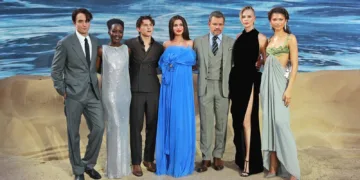
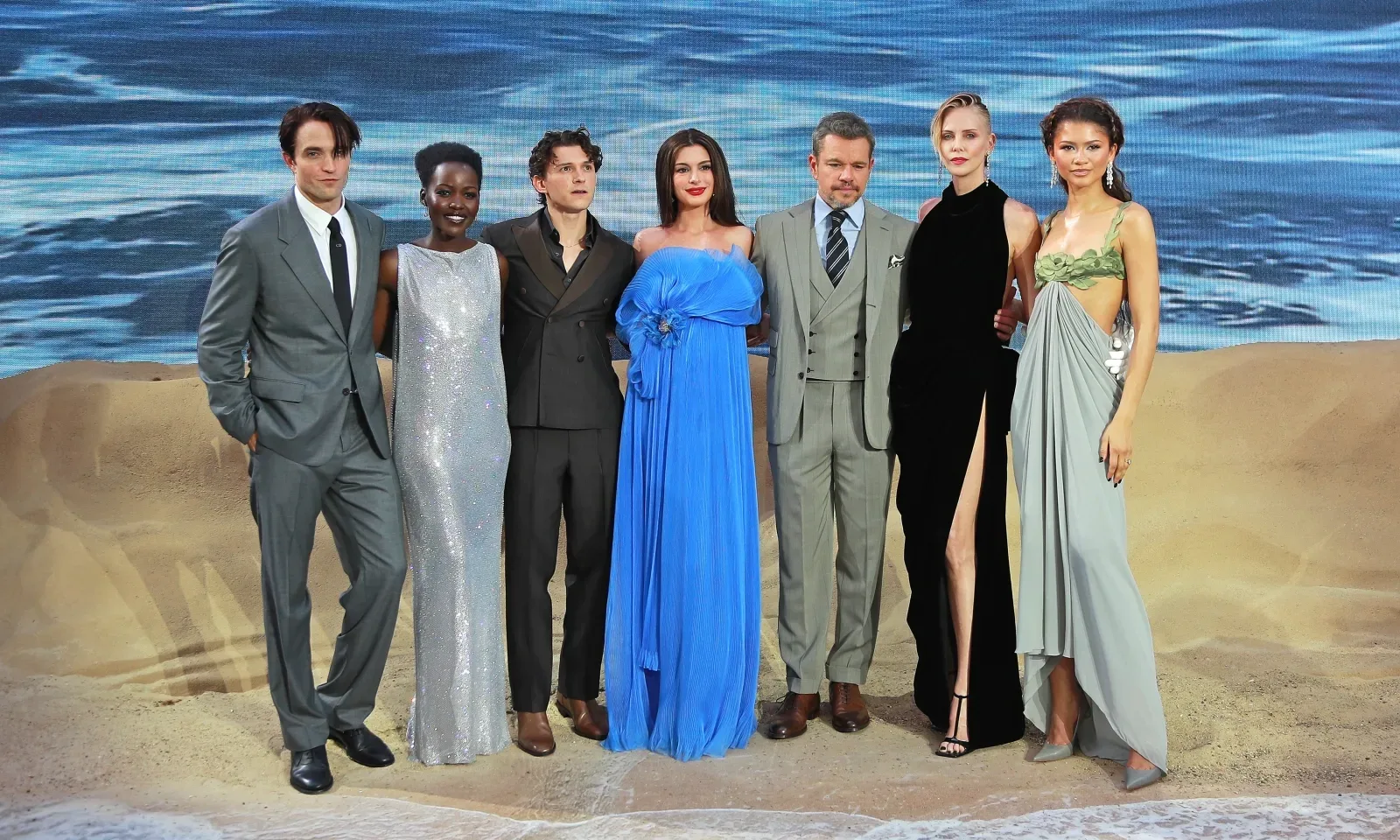
The film assembles an ensemble that includes Matt Damon as Odysseus, Anne Hathaway as Penelope, Tom Holland as Telemachus, Zendaya, Charlize Theron, Robert Pattinson and Lupita Nyong’o. Nolan said the starry cast serves a purpose similar to the modernized dialogue, noting the characters function as recognizable mythological figures and that familiar faces help contemporary audiences settle into an unfamiliar ancient setting. Early reactions from critics following the film’s world premiere in London have been largely favorable, with several calling it among Nolan’s most accessible work to date despite the pre-release controversy over its language and design choices.









oh yeah, dad comes home, & let’s go, both have very emotional meaning…Nolan is so full of s*** that’s not even funny. he didn’t make the Odyssey,he made odeissey for woke idiots who know jack s** abt history,geography & Greece/Greeks. talking abt cr** all over an entire ethnicity history/culture by casting africans & latin americans to play Greeks when both ancient & modern day Greeks are freaking caucasian based on dna. hollywood race swapping Greeks is racist/cultural erasure.