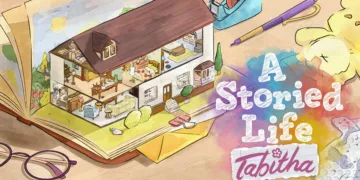

























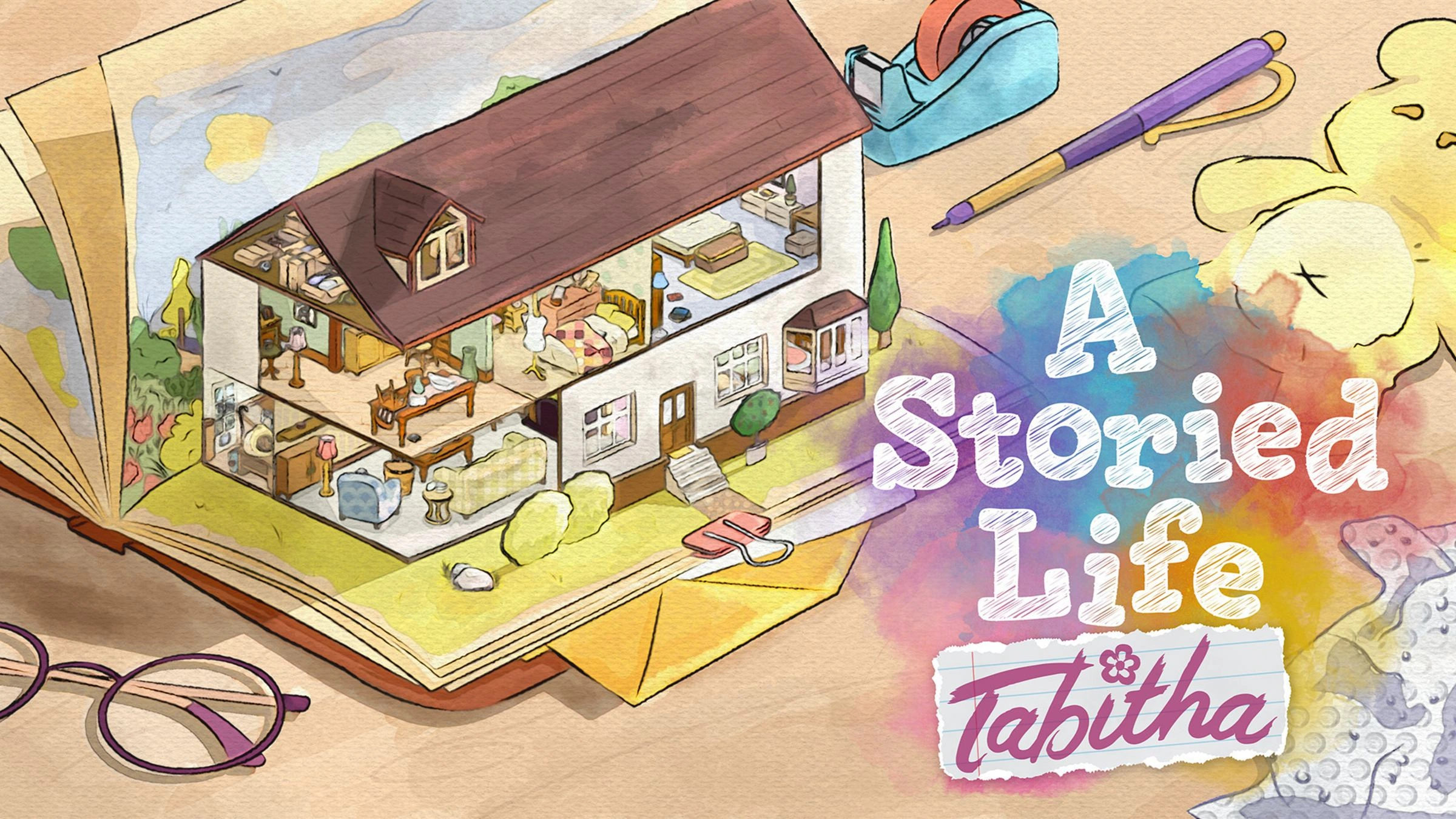

Three photographs can tell a family story. A medical bag can turn the same woman into a lifelong nurse. Pack a haunted doll instead and things get considerably stranger. Lab42 builds A Storied Life: Tabitha around that simple act of selection. Mrs Kettlewell, the titular Tabitha, has died and left an unnamed relative to clear her home.
Her possessions can be recycled, sold at auction to help fund a holiday, or squeezed into a box and taken home. Then you discover her damaged memoir. Water has erased key words, and the objects you keep provide the vocabulary needed to repair each chapter.
The comparison to Unpacking is unavoidable, yet the emotional direction has been reversed. That game let you infer a person’s fixed history through placement. Here, the belongings are evidence and you are allowed to decide what they prove. At least, that is what the game initially seems to promise.
Every Keepsake Costs Space
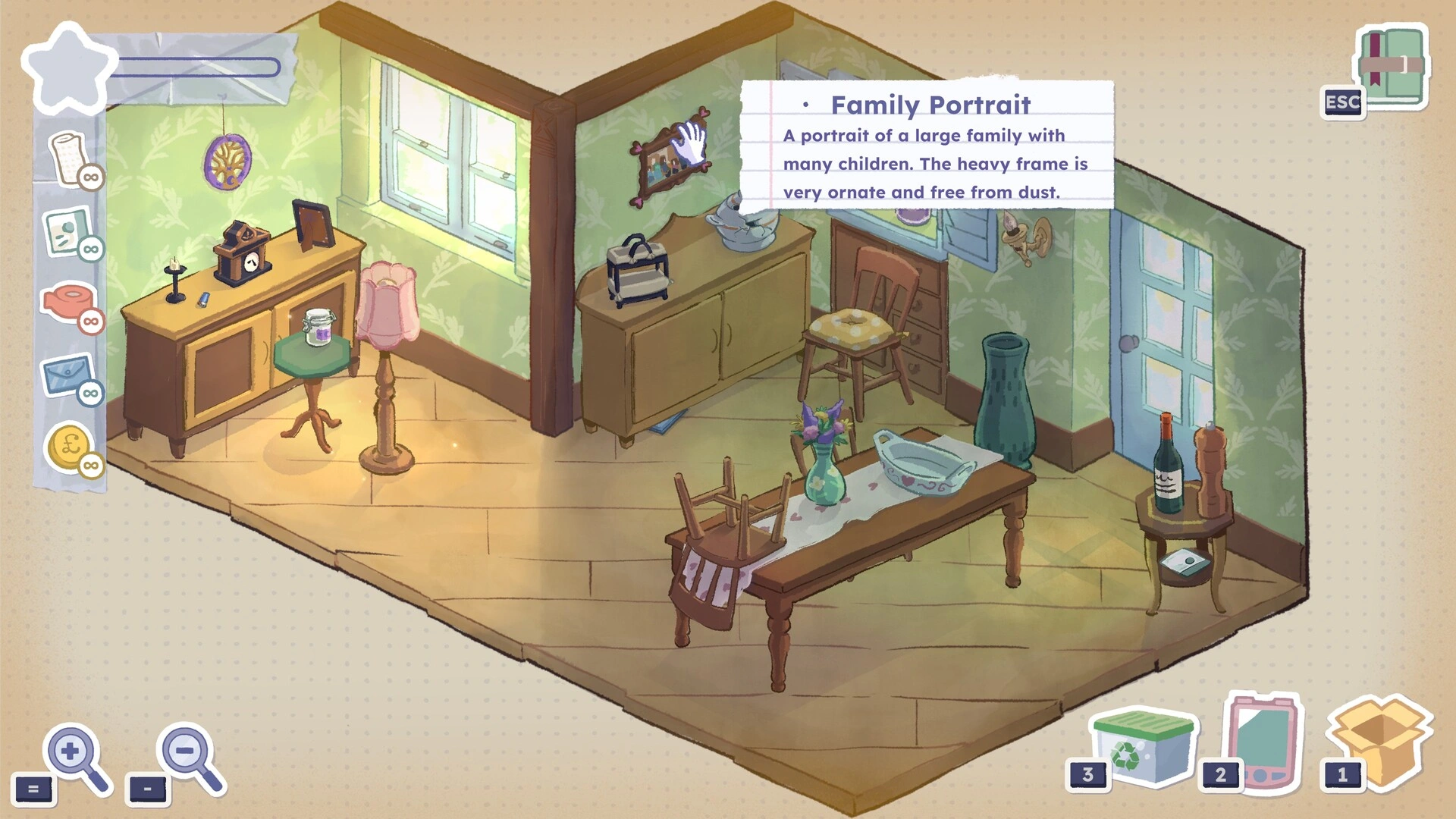
Clearing each room quickly settles into an easy rhythm. Open drawers. Check cupboards. Move furniture aside. Search for keys. Tabitha’s home rewards curiosity with concealed belongings, and rifling through her possessions has the slightly improper pleasure of reading a diary you were definitely meant to leave closed. Then comes the box.
Items sit on a grid and can be rotated to make better use of the available space. Weight matters too. A fragile object may need bubble wrap, tape can reinforce the box, packing bags compress soft belongings, and envelopes reduce the footprint of suitable objects. The system has enough resistance to make every saved possession feel intentional.
That matters emotionally. A large porcelain piece can take the room needed for several letters or photographs. You are effectively deciding how much physical space one memory deserves compared with another. It is a clever way to turn inventory management into something quietly sentimental.
The box can also be irritating. Certain flat or awkwardly shaped items consume surprising amounts of room, and there were chapters where keeping one large object left room for little else. Since the memoir draws its vocabulary from saved possessions, poor packing can affect the story waiting at the desk.
An alternate mode relaxes some of these requirements, which helps players who care mainly about Tabitha’s history. I kept wishing the standard rules had expanded instead. A second box or a wider range of packing tools could have created harder choices without making the current box feel so stingy.
Daily packing challenges separate this system from the memoir and confirm that the grid puzzle works on its own. The strange part is that I cared about fitting objects together much less once those objects stopped belonging to Tabitha.
The Memoir Has Preferred Answers
Every kept item provides four words. At the end of a chapter, you sit at a desk with Tabitha’s damaged manuscript and drag those words into empty spaces.
The first time through, this can be wonderfully ridiculous. Keep whatever catches your attention and Tabitha may leap from nursing to horticulture before making an abrupt confession inspired by something occult. A haunted doll, suspicious hammer, or literal piece of cat waste can become part of the historical record. Poor publisher. Yet the nonsense exposes the weakness inside the design.
Tabitha’s possessions belong to underlying story strands. Hearts point toward romance and family. Medical items build her nursing history. Damaged belongings support a life shaped by mourning. Moons, stars, and stranger discoveries lead toward occult possibilities. There are six broad versions of her life to uncover, and coherent chapters depend heavily on packing objects from the same group.
When this clicks, the memoir can be genuinely affecting. Follow the Lover path, for example, and Tabitha’s relationship with her husband and children begins to take shape. Individual word choices still matter. A passage can hint at an affair or stay focused on a long marriage, giving you some control over the tone of the memory.
The problem is the lesson the game teaches along the way. My instincts said a family photograph, a plant, and a literary object could reveal different sides of one woman. The memoir often treated that combination like I had spilled three separate biographies onto the same page.
A second run is cleaner because you understand the rules. It can also be sadder, warmer, and far easier to follow. Yet something shifts once you start scanning rooms for matching symbols instead of reacting to possessions. You are no longer asking what you would save from Tabitha’s home.
You are asking which items belong to the route you selected. The progress menus make these connections easier to trace by listing missing objects, secrets, and belongings tied to specific characters. Useful, yes. They can also transform a mysterious house into a checklist with furniture.
Returning to the Same Rooms
Tabitha’s home carries much of the game’s warmth. Cupboards hide small surprises, furniture conceals objects, and the motion-comic-style memoir panels give each completed chapter the feeling of a family story being illustrated as it is remembered.
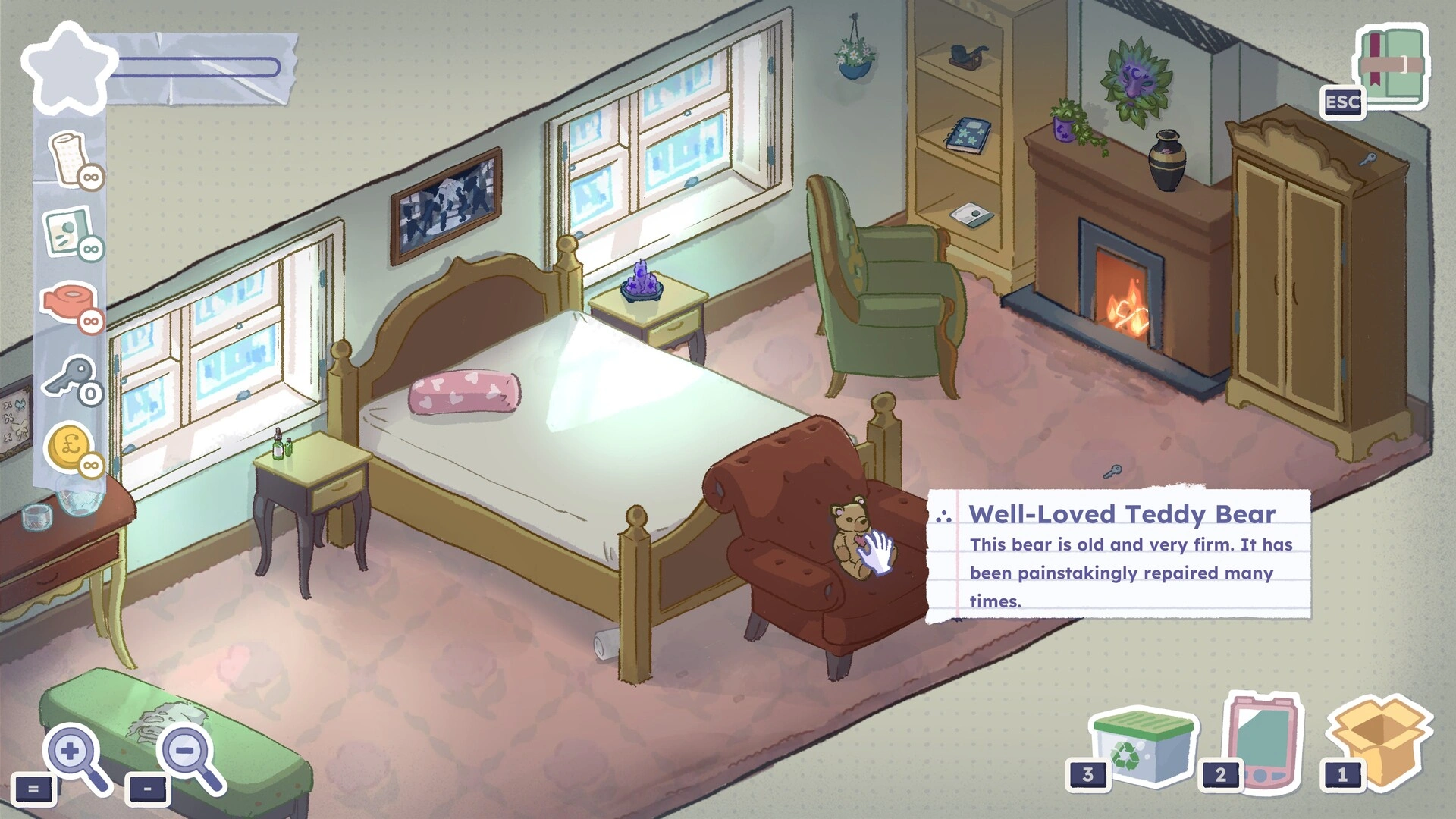
The classical music, including “Greensleeves” and the “William Tell Overture,” gives room clearing a gentle rhythm. My favorite recurring moment is much smaller: returning to the desk, peppermint tea nearby, and confronting another damaged page. After the practical work of selling and recycling, that quiet ritual restores some intimacy.
A first playthrough can pass in under two hours, but uncovering Tabitha’s different lives stretches the game much further. Repetition arrives quickly. Once you know where objects are hidden, what sells well, and which symbols serve your chosen path, familiar rooms become a corridor between memoir chapters.
That creates a strange emotional curve. The less I understood Tabitha, the closer I felt to her belongings. The better I learned the game’s systems, the easier her life became to organise. Some memories probably should resist the box.
The Review
A Storied Life: Tabitha
A Storied Life: Tabitha is most affecting when a cramped box forces you to leave part of someone's history behind. The packing puzzles turn keepsakes into choices with weight, yet the memoir system weakens that feeling by rewarding players who learn its hidden categories. Follow the symbols and Tabitha's life can be tender, strange, or quietly devastating. Follow your instincts and her memories may collapse into nonsense. There is real warmth in these rooms, especially before replaying them teaches you where everything belongs.
PROS
- Packing choices carry emotional weight
- Warm, detailed presentation
- Inventive memoir mechanic
- Several affecting story paths
CONS
- Hidden categories restrict player expression
- Mixed item choices create messy stories
- Repeated rooms become mechanical
- Limited box space can frustrate