














Half a century separates the young bodies throwing themselves into the Colorado River from the older faces watching those bodies on a screen. The distance is almost indecent. Robb Moss has spent decades filming Cathy, Barry, Jim, Danny, and Jeff, friends who once worked together as river guides and lived with the confidence of people for whom tomorrow seemed inexhaustible. The Bend in the River returns to them in their sixties and seventies, after careers, marriages, illnesses, political campaigns, and accumulating losses have given time a physical shape.
Moss first filmed them for Riverdogs, capturing canyon climbs, songs, communal living, and plenty of casual nudity. He returned around middle age with The Same River Twice. His third visit finds fewer dreams spoken aloud. Bodies have weakened. Some ambitions have hardened into biography. Death has stopped being an abstraction. The river still runs. The people beside it cannot remain the same.
The Violence of an Edit
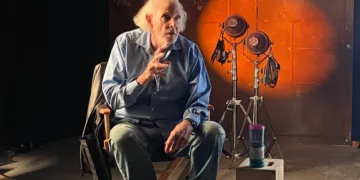
Moss understands that fifty years need no dramatic narration when a cut can contain them. He places his friends beside their former selves, letting skin, posture, movement, and voice perform the mathematics of aging. Jeff realizes that Moss is asking him virtually the same question in the same room where another version of him answered it decades earlier.
Danny watches footage of her younger self and laughs, yet the scene carries an unease beneath its warmth. The person on the screen feels both intimately familiar and inaccessible. She possesses the same name, memories, and gestures, yet time has made her unreachable.
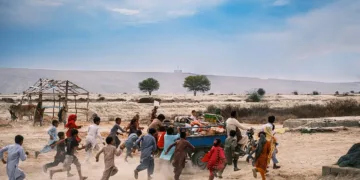
The older footage is frequently ecstatic. These young river guides climb canyon walls, swim naked, sing together, and behave as if the body were an endlessly renewable resource. Moss cuts from that freedom to computer screens, suburban routines, health concerns, and conversations about retirement. One wonderfully mundane moment involves speculation about anyone ever finishing a huge box of business cards. Once, existence meant rapids and nakedness. Eventually, apparently, it means stationery.
The joke never becomes cruelty. Moss refuses to frame adulthood as surrender. Cathy, Barry, Jim, Danny, and Jeff retain pieces of their younger convictions, especially their attachment to nature, community, and political involvement. Life altered the form those convictions took. The old selves did not replace the young ones. They carry their ghosts.
Bodies Keeping Score
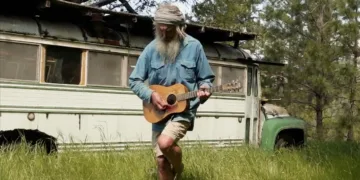
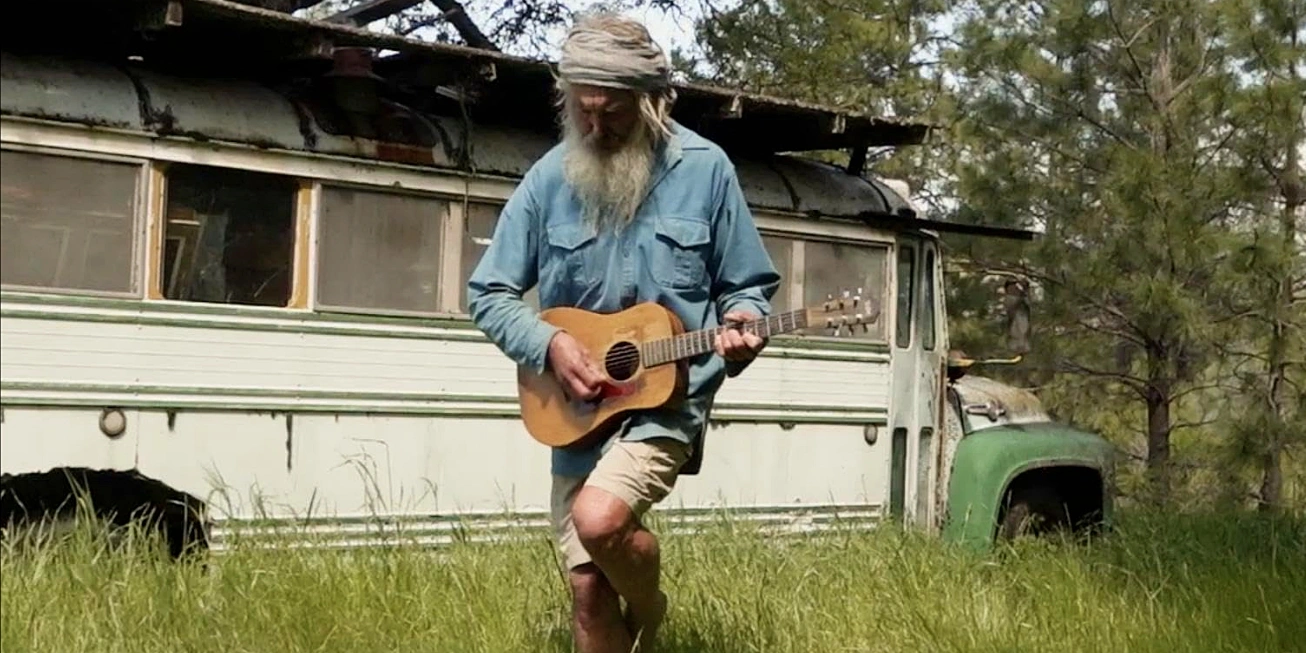
Jim gives the film its most painful human measure. In the early footage, he appears nearly fused with the wilderness, described with an almost mythical reverence by his friends. He remains near the river long after others move toward conventional lives, leaving only when his health forces the issue. Decades later, he is heavily bearded, isolated, and physically incapable of pursuing many of the adventures that once organized his identity.
Beside Jim sits an unfinished house. Barry speaks of accepting “the perfection of what is,” ostensibly discussing the structure, though Moss allows the words to drift toward the man living beside it. The house remains incomplete. So does every life, if observed long enough.
Illness spreads quietly through the film. Barry discusses cancer without theatricality. Retirement confronts another member of the group with the loss of usefulness he once recognized in older patients. The women remember fearing invisibility during middle age, then describe reaching their seventies and discovering a harsher version of it. One man keeps photographs of his younger, handsome self visible in assisted living, hoping the staff will understand that the frail person before them once inhabited another body.
Jeff faces a stranger consequence of being filmed for so long. His earlier admission of infidelity survives him as evidence, resurfacing during a political campaign and becoming material opponents can use against him. Cathy, once his wife, now lives near him and shares a friendship shaped by history without being released from it. Film preserves everything except innocence about permanence.
The Man Behind the Camera
Moss has spent so long recording his friends that his documentaries have entered their lives as events rather than records. Some remember strangers recognizing them from earlier films. Jeff learns that documentary candor can remain politically alive decades after the moment that produced it. The camera does not merely remember. It waits.
The natural world carries a parallel wound. These friends built much of their youthful identity around rivers, wilderness, and environmental ideals. When the film returns to familiar water and finds dramatically diminished levels, the landscape appears to have aged beside them. Human bodies shrink from their former capacities; the river itself seems diminished. Moss never needs to force the parallel.
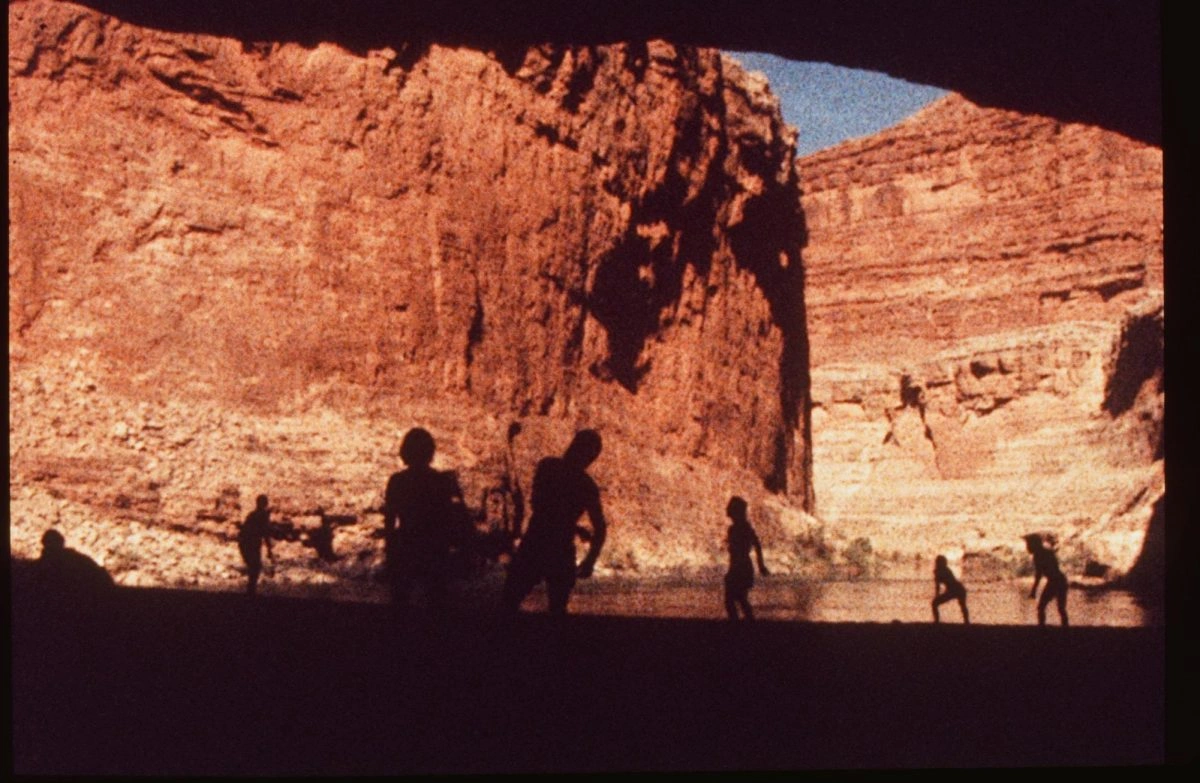
His occasional visual flourishes are less affecting than the accidents he has spent a lifetime making possible. Old Riverdogs footage catches the friends’ shadows projected against a cavern wall while they play baseball, an image with an almost embarrassingly perfect philosophical resonance. Far better is a moment nobody designed.
An infant grandson crawls toward Moss and knocks over his camera. For once, the apparatus turns back on the filmmaker. There he is, white-haired and smiling, suddenly visible inside the archive he created. For decades he watched time happen to everybody else. The camera finally catches him too.
The Bend in the River premiered at the Telluride Film Festival on August 30, 2025, and is available for streaming on Netflix. Spanning nearly fifty years of footage, the documentary follows a group of close friends from their youth in the 1970s through their seventies, offering a poignant look at aging, memory, and the passage of time.
Full Credits
Title: The Bend in the River
Distributor: Netflix
Release date: August 30, 2025 (Telluride Film Festival)
Running time: 82 minutes
Director: Robb Moss
Writers: Not Available
Producers and Executive Producers: Kristin Feeley, Lisa Remington, Shane Boris, Trevor Burgess, Joel Coen, Frances McDormand
Cast: Cathy, Barry, Jim, Danny, Jeff
Director of Photography (Cinematographer): Robb Moss
Editors: Jeff Malmberg
The Review
The Bend in the River
Time does not merely pass through The Bend in the River. It settles into faces, weakened bodies, unfinished houses, old betrayals, and a river carrying less water than it once did. Robb Moss gains extraordinary emotional force from placing youth beside age without treating either as an illusion. Jim’s isolation, Barry’s illness, Jeff’s recorded past, and the infant who knocks Moss’s camera aside turn fifty years of filming into an intimate record of people learning that memory preserves what the body cannot. Gentle, painful, and quietly devastating.
PROS
- Powerful decades-spanning structure
- Remarkably intimate archival footage
- Unsentimental portrait of aging
- Jim’s haunting later-life story
- Thoughtful use of environmental change
CONS
- Some archival footage looks understandably rough
- Occasional philosophical imagery feels overly deliberate
- Emotional severity can become exhausting