
























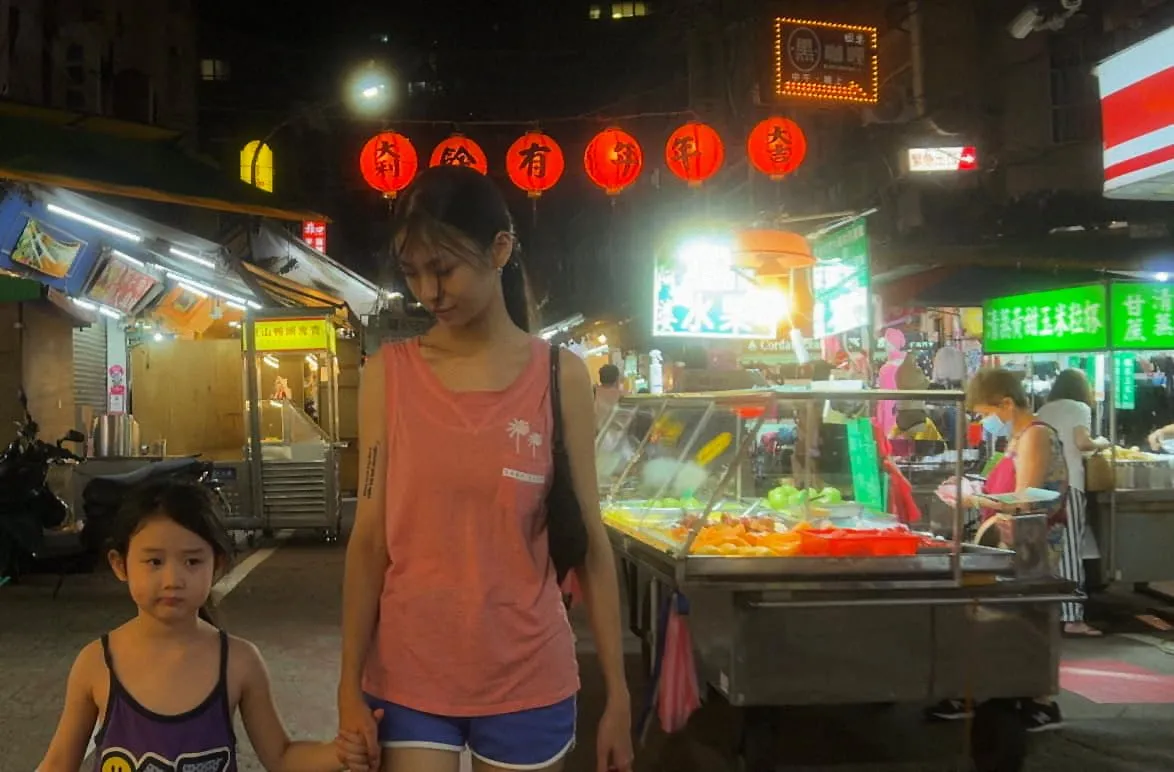

Shih-Ching Tsou steps into the director’s chair with a quiet confidence that belies her two-decade collaboration with Sean Baker. Her solo debut unfolds in Taipei’s labyrinthine night market—streets alive with neon chatter, simmering woks and the restless shuffle of countless feet.
At its core lies a family portrait drawn in three hues: Shu-Fen, the weary mother clutching hope like a tattered umbrella; I-Ann, the restless teenager trading dreams for survival; and I-Jing, the five-year-old whose left hand carries a cultural curse.
Tsou co-writes and Baker edits with precision, grounding each scene in lived reality. Early sequences move with a gentle inevitability: Shu-Fen sorting noodles, I-Ann counting betel nuts, I-Jing darting between stalls (her perspective often framed low, as if we’re sharing her wonder).
Then the tonal compass spins. A 60th-birthday banquet erupts in melodrama so audacious it flirts with soap-opera territory—yet never collapses under its own weight. The shift feels startling, almost dialectical: realism confronts ritual, restraint collides with spectacle.
That juxtaposition isn’t mere gimmick. It speaks to modern Taiwan’s tug between tradition and change—a society where filial piety and filial revolt coexist in uneasy harmony. Tsou’s film becomes a social mirror: fragmented families seeking cohesion under lantern light.
Urban Exile and Inherited Curses
Tsou frames the family’s relocation as a microcosm of rural-to-urban displacement—a motif as old as industrialization itself. Shu-Fen, I-Ann and I-Jing arrive in Taipei clutching frayed ambitions (think Dickensian migrants reimagined for neon-lit alleys). Initial scenes brim with naive optimism. Then reality seeps in: the apartment is tinier than the photo, rent looms like a silent creditor.
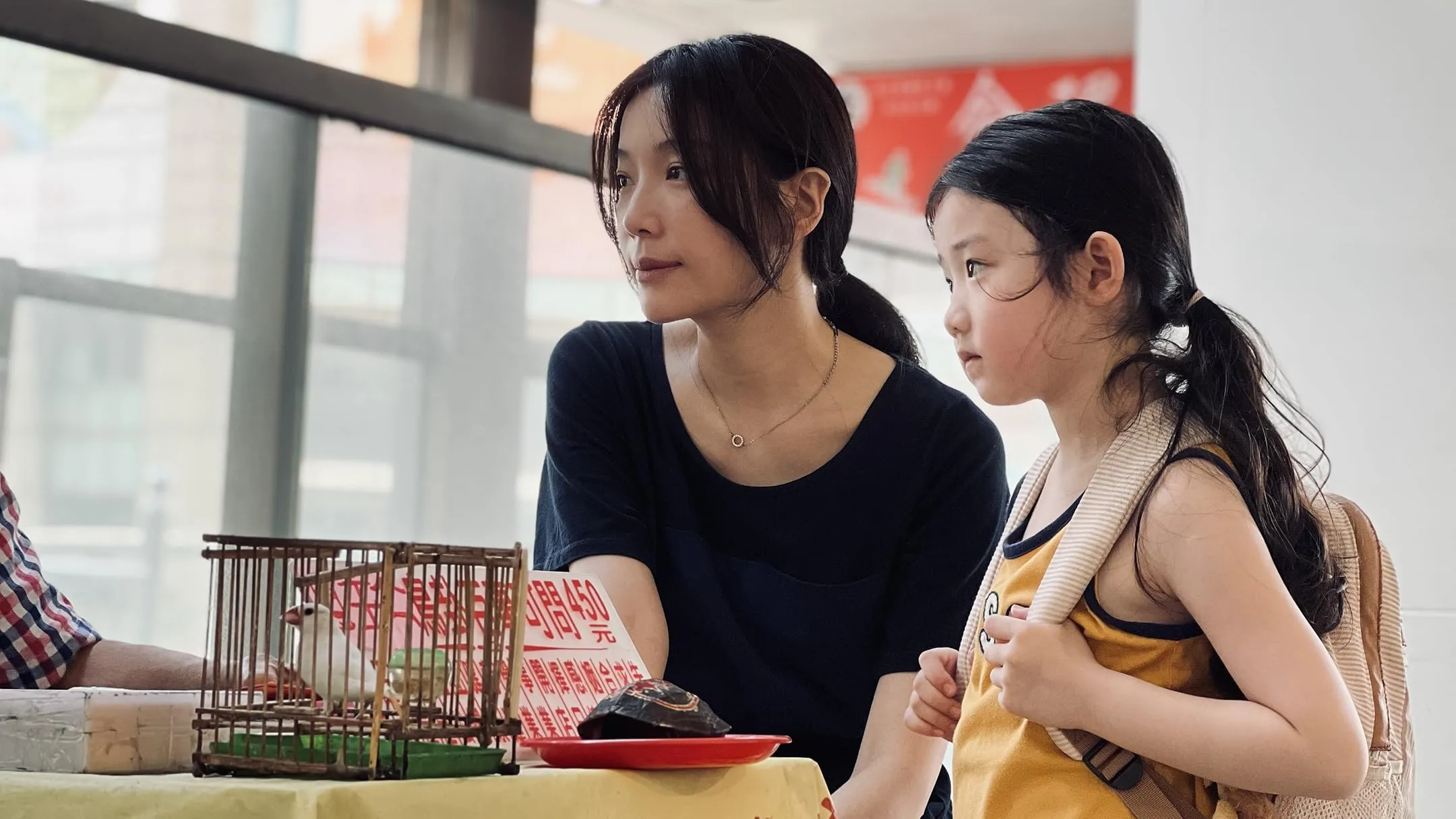
Superstition drapes every interaction in shadow. The grandfather’s decree that the left hand is “the devil’s hand” turns I-Jing’s appendage into a symbol of otherness. She hesitates at chalk drawings, drops her spoon. One moment she’s carefree, the next she’s suspended in existential dread—childhood stripped of innocence by patriarchal lore.
Economic survival plays out in parallel. Shu-Fen battles an unforgiving landlord while boiling broth for customers who pay in promises. Her noodle stall becomes a battleground between tradition’s relics and market forces. Meanwhile, I-Ann’s betel-nut gig offers quick cash but exacts a moral toll: flirty encounters with biker toughs, stolen glances traded for credit. She juggles filial duty and self-interest—a conflict that feels modern yet echoes ancient bargaining with fate.
Underneath the surface simmers a history of unspoken debts. Subtle hints—a wilted family photo, furtive text exchanges—signpost buried resentments. Tsou’s editing teases these revelations, delaying gratification until the grandmother’s birthday banquet. There, buried grievances erupt in a blood-red crescendo: tears replace lantern light, confessions ring louder than firecrackers.
These narrative strands weave a “neo-melodramatic tapestry” (Tsou’s term) that probes Taiwan’s social fabric. It poses a question: Can roots withstand the shock of city life, or will inherited curses fracture even the strongest bonds?
Faces of Resilience and Reckoning
Nina Ye’s I-Jing embodies what one might call “moral ambivalence in miniature.” Her wide-eyed runs through the night market evoke both childlike wonder and burgeoning self-awareness. A single shot of her shoplifting a trinket—left hand hovering like a deus-ex-machina limb—speaks volumes about innocence weaponized by superstition. One moment she marvels at firecracker sparks; the next, her gaze falters beneath guilt’s weight. It’s a performance that makes mischief feel existential.
Shih-Yuan Ma’s I-Ann is a study in tension: a former top student turned streetwise operator. She oscillates between sardonic quips (to numb frustration) and moments of raw vulnerability—especially when she defends I-Jing against patriarchal decrees. Ma captures teenage restlessness not as mere rebellion but as a dialectic between duty and desire. She codes her body language with subtle defiance—leaning into the breeze on her scooter, hair whipping like a banner of youthful revolt.
Janel Tsai’s Shu-Fen carries the film’s emotional ballast. We see tradition’s toll etched into her lines—each wrinkle a ledger of unpayable debts. Yet in quieter scenes—passing a bowl of noodles to a hungry customer, sharing a furtive smile with neighbor Johnny—Tsai reveals an unspoken tenderness, a resilience that refuses to break. Her chemistry with Brando Huang’s Johnny offers a glimmer of hope (call it “marketplace romance”), though she remains wary of entangling love with livelihood.
Supporting figures sharpen the family’s internal conflicts. The grandfather’s rigid superstition looms like a cultural specter, his admonitions turning harmless gestures into symbols of doom. In contrast, Johnny’s unrequited admiration provides comic relief and human warmth—his presence underlining how outside kindness can both soothe and unsettle. The grandmother, matriarchal nexus of past and present, anchors the narrative’s historical echoes: through her, we glimpse generational power dynamics that shape every character’s fate.
Together, these performances transform Left-Handed Girl into a multi-voiced symphony of agency, inheritance and the heavy cost of survival.
Chromatic Hustle and Domestic Claustrophobia
Tsou’s camera swims in neon tides, turning Taipei’s night market into a “marketscape” of shimmering commerce (an apt metaphor for late-capitalist hustle). Stalls glow with saturated pinks and electric greens, as if each vendor jockeys for visual territory.
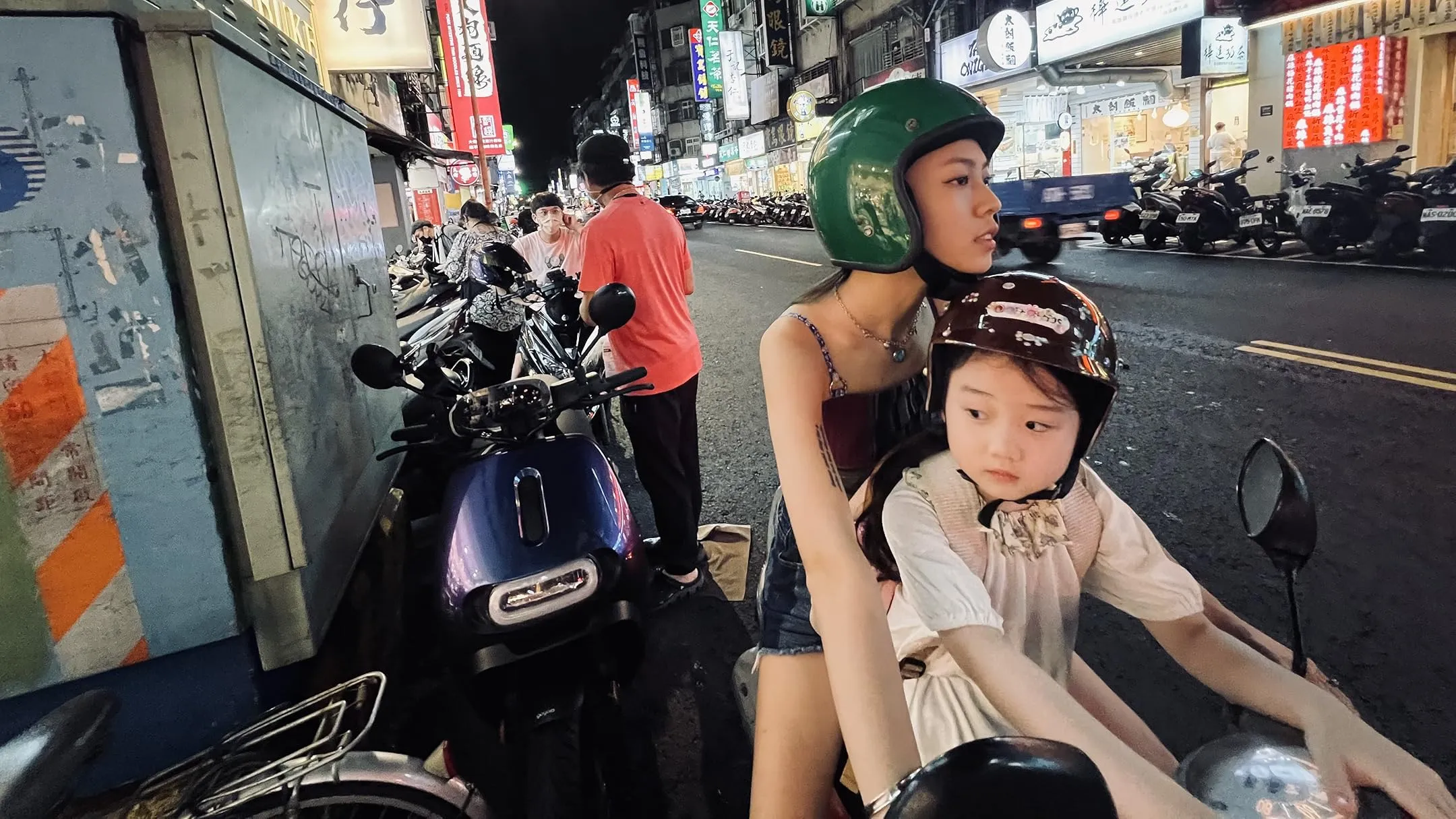
Kinetic movement defines much of the film’s visual logic. Low-angle tracking shots tail I-Jing’s left hand through narrow aisleways, granting us a child’s-eye immersion in sensory overload. The effect isn’t mere style—it suggests how urban life overwhelms innocence, echoing postwar industrial migration narratives.
Interiors feel almost womb-like in comparison. Cramped apartment frames press against characters, walls closing in like unpaid debts. Wide lenses distort corners, heightening claustrophobia. You can almost feel the financial strain pressing through the plaster.
Lens flares punctuate moments of emotional intensity—light leaking through shutters during a charged confrontation at the family home, or dancing across noodle-simmered steam as Shu-Fen labors. High-contrast lighting unites warmth (the communal glow of cooking) with unease (shadows lurking). It’s chiaroscuro for the gig economy.
Perspective shifts underscore generational divides. Child-centric compositions place I-Jing at the frame’s center, dwarfed only by neon giants overhead. Adult scenes retreat to more detached framing—long takes that observe from a distance, as if questioning agency within social strictures.
Tsou and cinematographers Ko-Chin Chen and Tzu-Hao Kao achieve a visual dialectic: the market’s frenetic life against the home’s stifled quiet. The result is a film both luminous and oppressive, capturing the paradox of hope amid systemic pressures.
Sonic Chiaroscuro and Market Cadence
A whimsical opening score ushers us into I-Jing’s world with a playful leitmotif—flute trills that resemble kaleidoscopic glints in her young eyes. This theme recurs, suggesting her fractured sense of self as she alternates between joy and dread under the “devil’s hand” superstition.
Beneath the music lies an aural tapestry of ambient market sounds. Layered chatter rises and falls like a living organism; sizzling woks hiss their steam-laced secrets; scooter engines hum a bassline to the city’s nocturnal symphony. These everyday noises ground the film in social realism, evoking post-colonial migration stories where survival depends on constant motion.
When I-Jing pauses mid-theft, the market’s din vanishes, leaving only her ragged breathing. During I-Ann’s solitary scooter rides, the absence of score magnifies her solitude (tonal inversion as narrative device). In these quiet pockets, emotional tensions crystallize, reminding us that sound can both expose and conceal.
At the grandmother’s birthday banquet, the music swells into melodramatic crescendos. Strings spiral into full-throated urgency, mirroring the eruption of long-suppressed truths. It’s a moment of sonic excess that borders on theatricality—but Tsou wields it with restraint, ensuring the crescendo doesn’t drown out the human voices at its heart.
In Left-Handed Girl, sound design becomes a philosophical partner to image: a dual commentary on tradition’s weight and the ceaseless rhythms of urban life.
Temporal Weave and Tonal Turn
Early scenes unfold with a deliberate slowness, as if time itself were savoring each noodle stir and scooter rev. This “leisurely build” grants the viewer space to inhabit Shu-Fen’s fatigue, I-Ann’s restlessness and I-Jing’s curious gaze. Moments stretch: a glance held, a hand hovering mid-theft, all underscored by an almost meditative calm.
Soon, rhythmic montage knits together the three women’s daily routines. We cut from Shu-Fen counting coins to I-Ann slicing betel nuts, then to I-Jing threading through stalls—the juxtaposition creating a narrative tapestry that feels both cohesive and kaleidoscopic. It’s as if the city’s pulse beats through their intertwined struggles.
Then, without warning, the film vaults from observational poise into melodramatic spectacle. The 60th-birthday banquet erupts in flaring emotions—shouts ricochet like firecrackers. Yet this tonal jump never feels jarring. Baker’s editorial precision—his knack for calibrating cut length and camera rhythm—cushions the shift, guiding us smoothly from hush to clamor.
Tight cuts sustain suspense during each revelation: a secret glance, a trembling confession, an accusation hanging in mid-air. Though echoing classic melodrama, the editing resists excess; it illuminates character fractures rather than drowning them in chaos. In this film, pacing and tone become philosophical instruments, probing how family bonds stretch—and sometimes snap—under societal and personal pressures.
Tradition’s Echoes and Market Reverberations
In Left-Handed Girl, patriarchal norms aren’t relics of a distant past but active currencies—spent and hoarded within family hierarchies. The grandmother, paradoxically both victim and enforcer of these customs, channels “saving face” logic to police her daughters’ choices (a phenomenon anthropologists might term “reverent repression”).
Superstition, too, wields material power. Labeling I-Jing’s left hand as demonic does more than scare a child; it curtails her autonomy, illustrating how collective belief systems can calcify into social coercion. One wonders if, in some alternate market, superstition might be sold alongside noodles: spiritual side dish optional.
Economic survival underscores every interaction. The night market becomes a metaphorical pressure cooker—vendors hustling under neon halos, each transaction a negotiation with precarity. Shu-Fen’s rent arrears and I-Ann’s betel-nut sales underscore how urban capitalism demands emotional tolls in exchange for subsistence.
Yet Tsou’s film also stages an intergenerational dialogue. I-Ann’s defiance and I-Jing’s budding conscience push back against ancestral strictures. Their rebellion isn’t grandiloquent but manifest in small acts: a stolen bracelet, a sharp retort, a refusal to conform silently.
Through this lens, Left-Handed Girl speaks to contemporary Taiwan’s tension between preserving lineage and embracing individual will—an evolving narrative that mirrors global reckonings with tradition in an age of rapid social change.
Full Credits
Director: Shih-Ching Tsou
Writers: Shih-Ching Tsou, Sean Baker
Producers: Shih-Ching Tsou, Sean Baker, Mike Goodridge, Jean Labadie, Alice Labadie
Executive Producers: Aditya Chand, Alex C. Lo, Jennifer Jao
Cast: Janel Tsai, Shih-Yuan Ma, Nina Ye, Brando Huang, Akio Chen, Xin-Yan Chao
Directors of Photography (Cinematographers): Ko-Chin Chen, Tzu-Hao Kao
Editors: Sean Baker, Shih-Ching Tsou
The Review
Left-Handed Girl
Tsou’s debut fuses social realism with melodramatic flair, anchored by vivid performances and immersive visuals. Its tonal leaps (from market bustle to banquet tumult) may jar, but they amplify the film’s exploration of tradition, superstition and survival. An engaging portrait of resilience under pressure.
PROS
- Vivid, deeply felt performances across three generations
- Immersive depiction of Taipei’s night-market ecology
- Sharp exploration of superstition’s impact on identity
- Confident tonal shifts that amplify emotional stakes
- Nuanced cultural commentary on tradition and survival
CONS
- Climactic melodrama feels sudden, leaving little fallout
- Several secondary plot threads underexplored
- I-Jing’s final emotional arc compresses too quickly