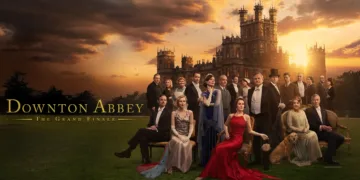




















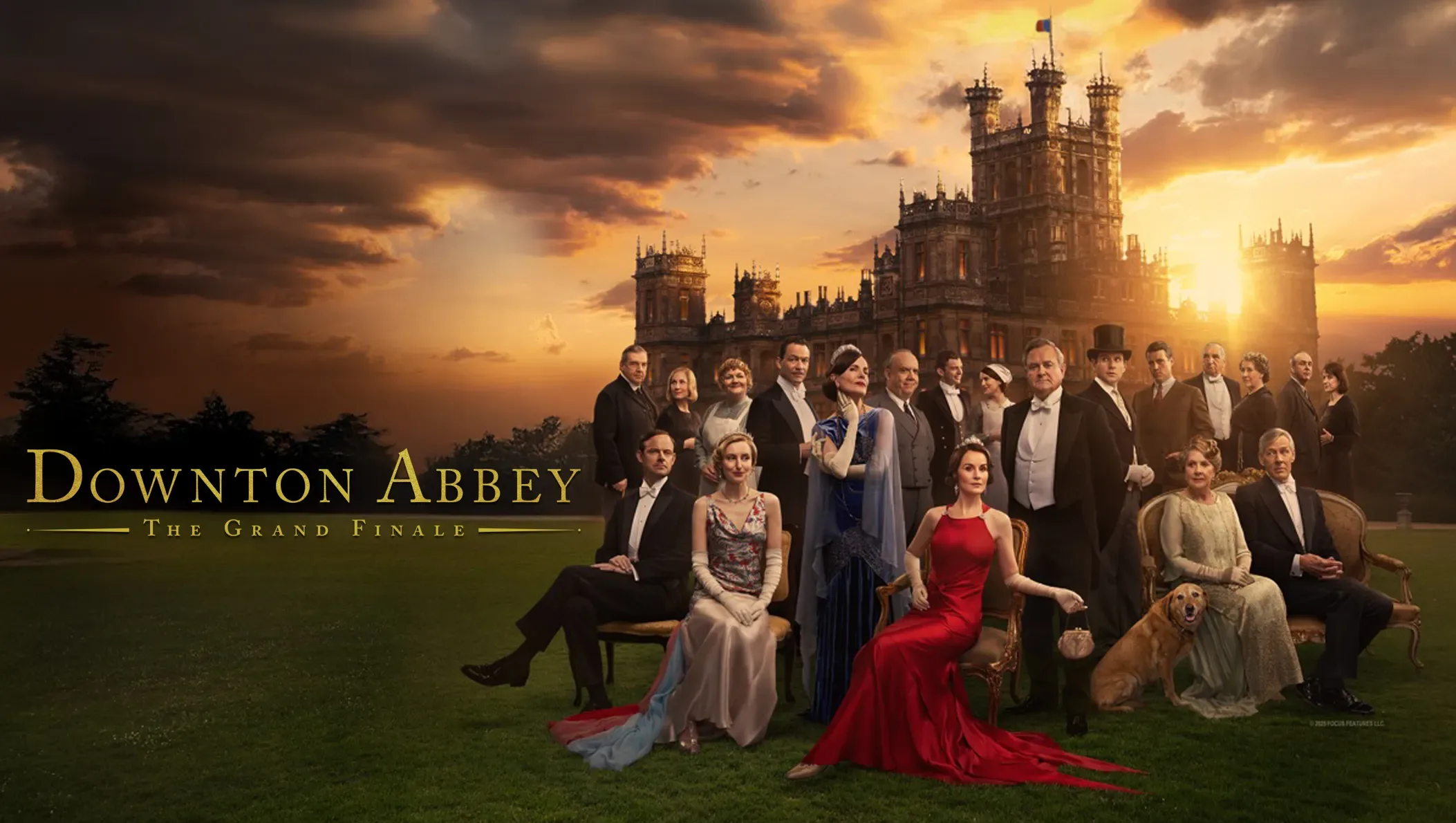

The year is 1930. The world, teetering on the edge of economic collapse and ideological transformation, has little time for the genteel problems of the British aristocracy. Yet, within the stone walls of Downton Abbey, time moves differently. The film opens with a sentiment that one of its characters speaks aloud but which hangs unspoken over every scene: the past is a more comfortable place than the future.
Downton Abbey: The Grand Finale is less a story and more a curated farewell tour of that comfortable past. It returns us to the Crawley family as they face what might be their final chapter, a story defined by legacy, the bitter taste of public scandal, and the profoundly difficult art of letting go.
Personal and financial tempests are gathering. A scandal threatens to make Lady Mary a pariah, while a ruinous investment scheme from across the Atlantic jeopardizes the estate’s very existence. This is presented as the definitive chronicle, a moment where the insulated world of masters and servants must finally reckon with the encroaching pressures of a modern, less forgiving society.
Scandal as Social Currency
The narrative’s initial momentum comes from a source both trivial and catastrophic: the public confirmation of Lady Mary’s divorce. In the hermetically sealed ecosystem of 1930s high society, this is not a private sorrow but a public transgression, a crack in the porcelain façade of aristocratic propriety. The sequence where she is effectively ejected from a London ball is a masterful piece of social horror, presented with the straight-faced absurdity of a drawing-room comedy.
Her immediate social death underscores the foundational principle of this world: what one is matters far less than what one appears to be. Mary’s subsequent affair with the American financier Gus Sambrook is a predictable, almost scripted, act of defiance. It is the sort of thing a woman like Mary does when her reputation is already in tatters, a brief, reckless assertion of agency that ultimately changes nothing.
This personal drama is soon overshadowed by a more tangible threat, one that cannot be solved with a stiff upper lip. The arrival of Cora’s American relations brings with it the vulgar arithmetic of modern finance. Harold, her brother, has squandered the family’s capital through the schemes of his partner, Gus. These Americans are not villains; they are something more unnerving.
They are agents of an impersonal economic reality that the Crawleys, with their traditions and titles, are utterly unequipped to combat. The threat of selling their London house ignites a flash of raw fury in Robert.
It is the cry of a man watching the very symbols of his identity being appraised for liquidation. This is the film’s core conflict, the true elegiac obsolescence of a class discovering its own irrelevance. Robert’s quiet conversations with Carson about his legacy are the film’s most poignant moments, showing a man grappling not with the loss of wealth, but with the loss of purpose.
Echoes in the Halls and Fields
This theme of a changing of the guard reverberates throughout the house. Mr. Carson’s retirement is a perfect microcosm of Lord Grantham’s larger predicament. His difficulty in handing over his duties to the younger, more efficient Andy is not about pantry protocol; it is about the quiet agony of being replaced.
The film wisely treats this with a mix of pathos and gentle humor, understanding that the resistance to change is an institutional condition, not just a personal one. Below stairs, the tone is lighter. Mrs. Patmore’s anxieties about her impending marriage, and the surprisingly frank advice she receives from Mrs.
Hughes, offers a delightful glimpse into the personal lives that underpin the great house. It is a small but important reminder that these characters are not merely their functions. Mr. Molesley’s continued success as a published author provides another welcome thread of upward mobility, a quiet victory for the everyman.
Beyond the estate, the annual County Fair serves as a miniature battlefield for the war between tradition and modernity. Isobel’s advocacy for progressive reforms, like including servants on the planning board, is met with sputtering indignation from Sir Hector Moreland, a man who appears to be a walking caricature of Tory intransigence.
Their conflict is played for laughs, yet it skillfully illustrates the film’s central tension. Into this carefully balanced world step the catalysts. The appearance of Noël Coward is an interesting narrative device. He represents a new kind of power, an aristocracy of wit and celebrity that can solve social dilemmas with a well-placed bon mot. He is a walking, talking shortcut, a sign that influence is shifting from landed titles to brand names.
The Gilded Cage
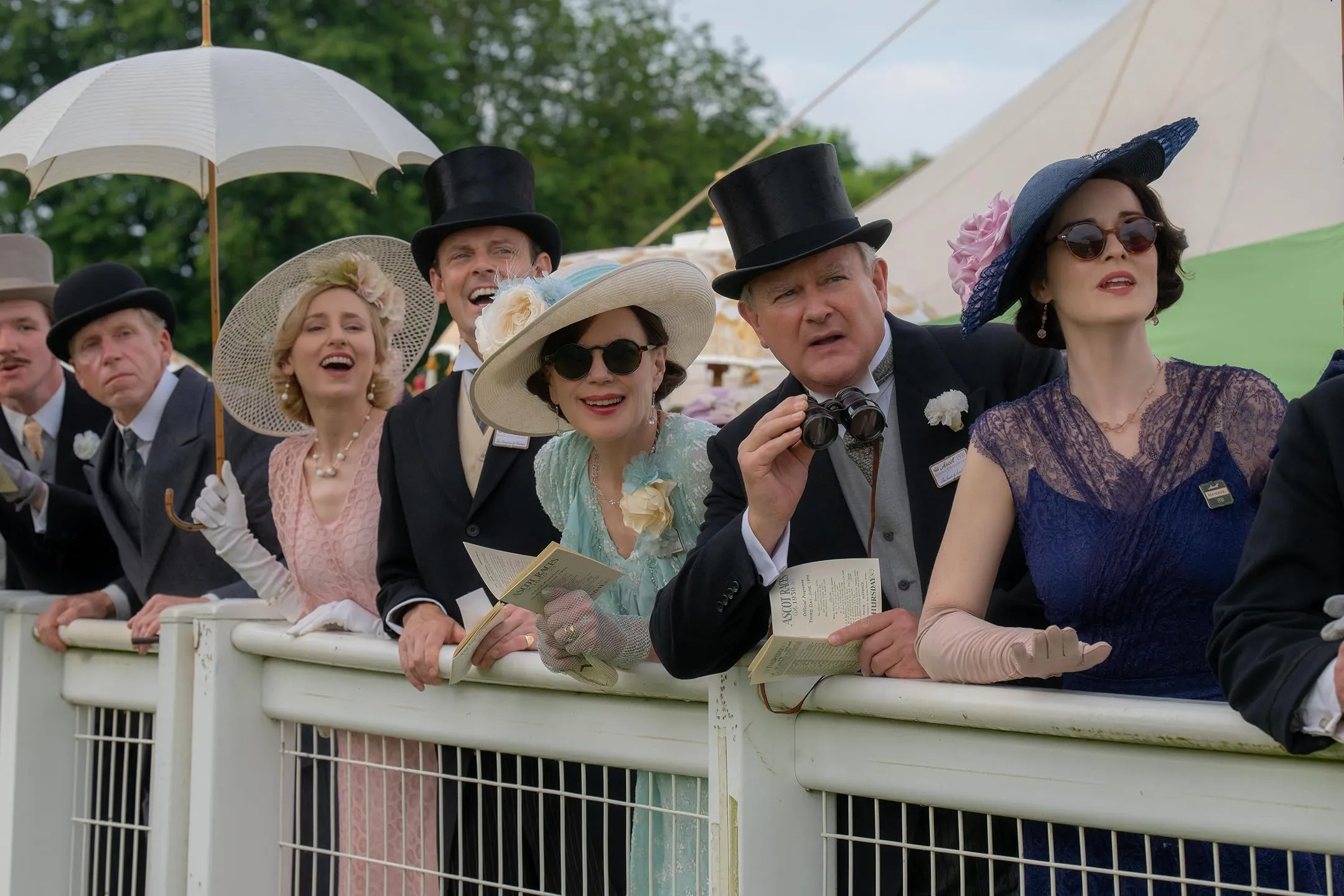
Visually, the film is an act of meticulous curation. The camera glides through the halls of Downton and the ballrooms of London with a reverent grace. The production design creates a kind of hyper-reality, a past polished to an impossible sheen.

This is not history as it was, but history as it is longed for: orderly, beautiful, and free of dust. This aesthetic is a core part of the film’s argument, a defense of beauty and tradition against the perceived chaos of the present. The opulence is the point. It is a gilded cage, and the film invites us to admire its construction without questioning its purpose.
The costume design by Anna Robbins operates with similar intelligence. The clothes are not merely decorative; they are narrative tools. We see the clear evolution into 1930s silhouettes, particularly in the gowns worn by Mary and Edith, which are sleeker and less restrictive than those of the older generation. This visual progression wordlessly communicates the march of time that the characters are so busy discussing.
Director Simon Curtis approaches the material not as an auteur but as a masterful conservator. His direction is unobtrusive and confident, skillfully managing the sprawling ensemble and its multitude of stories. He keeps the narrative moving at a stately but efficient pace, ensuring that each character gets their moment without letting the film feel episodic or overstuffed. It is the work of a director who understands that his primary job is to preserve the integrity of a beloved institution.
An Inheritance of Memories
The Grand Finale is, in the end, an exercise in providing a profound sense of completion. The film functions as a service to its devoted audience, tying up every remaining narrative thread with a satisfying neatness that reality rarely affords.

The resolution of the financial peril and Mary’s confident acceptance of her role as the estate’s new leader offers the kind of orderly succession that defines comforting fiction. This delivery of “managed closure” is the essential product of a franchise like this, selling a fantasy of stability in a world that offers none.
The film’s purpose becomes clearest in its final sequences. A montage of moments from the television series is a direct and powerful appeal to the viewer’s emotional investment over the years. It is a shared inheritance of memories. This is followed by a graceful and touching tribute to the late Maggie Smith. The Dowager Countess’s portrait hangs over the family like a patron saint, and the film’s final dedication to the actress is a meta-textual acknowledgment of her monumental importance.
It is the film paying respect to its own queen. The story concludes with a hopeful message about the duty of one generation to permit the next to take charge. Whether one sees this as an earnest plea for graceful transitions of power or simply a well-told fairy tale for the privileged is a matter of perspective. The film exists as both, a handsome and deeply felt goodbye to a world that was likely never as elegant as we remember it, but which we cannot help but miss.
Downton Abbey: The Grand Finale, the third and final film in the series, is slated for a worldwide theatrical release on September 12, 2025, distributed by Focus Features and Universal Pictures International. An NBC special, Downton Abbey Celebrates The Grand Finale, will air on September 10, 2025, followed by streaming on Peacock the next day. All prior seasons and films will be available on Peacock starting September 1, 2025.
Full Credits
Director: Simon Curtis
Writers: Julian Fellowes
Producers and Executive Producers: Gareth Neame, Julian Fellowes, Liz Trubridge, Nigel Marchant, Mark Hubbard, Peregrine Kitchener-Fellowes
Cast: Hugh Bonneville, Michelle Dockery, Elizabeth McGovern
Director of Photography (Cinematographer): Ben Smithard
Editors: Adam Recht
Composer: John Lunn
The Review
Downton Abbey: The Grand Finale
Downton Abbey: The Grand Finale is a beautifully crafted, deeply sentimental elegy for a bygone era. While its dramatic conflicts are as delicate as its teacups, the film succeeds as an exercise in managed closure. It provides a satisfying and visually splendid farewell for its devoted audience, focusing on the poignant transfer of legacy from one generation to the next. It is less a compelling film and more a perfect, polished final portrait.
PROS
- Visually stunning with impeccable production and costume design.
- Offers satisfying and complete resolutions for nearly every character.
- Features a strong, nuanced performance from Hugh Bonneville.
- Effectively explores themes of legacy, change, and obsolescence.
CONS
- Narrative conflicts are low-stakes and resolved with convenient ease.
- Relies more on nostalgia than on compelling dramatic tension.
- Can feel more like a luxurious television special than a cinematic event.