




















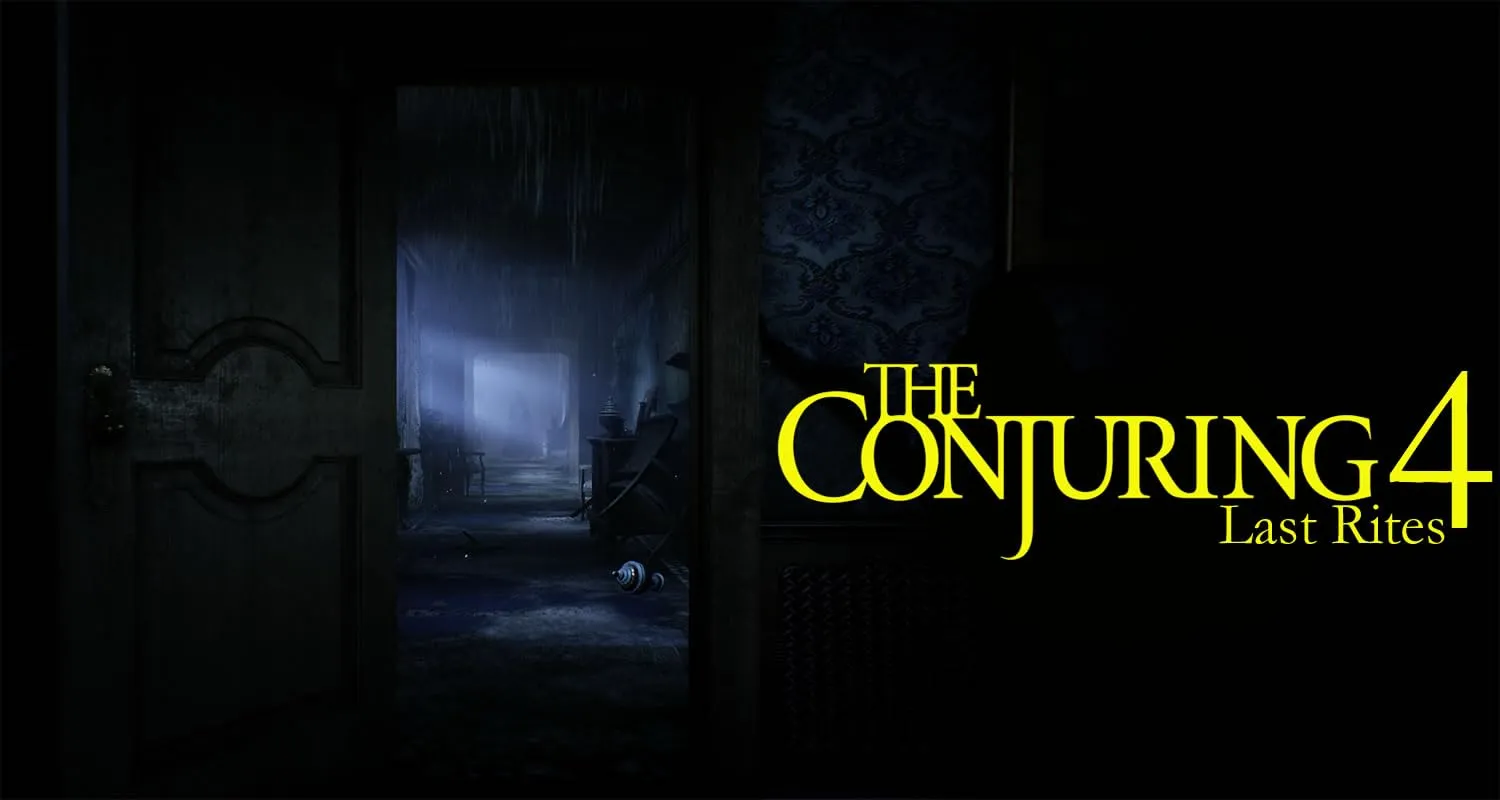

A hand-carved wooden mirror, presented as a confirmation gift, begins the trouble. Its glass reflects something more than the Pennsylvania home of the Smurl family. For Ed and Lorraine Warren, now fixtures in the landscape of cinematic horror, this object is a whisper from their past.
The Conjuring: Last Rites brings them out of a quiet, 1986 semi-retirement, a time when their brand of supernatural investigation is being heckled by lecture-hall youths enamored with Ghostbusters. Ed’s heart is failing, a physical manifestation of a long career spent confronting darkness, and the couple seems ready for peace.
Yet this final case demands their attention, entwining their professional legacy with the fate of their own family. The story is steeped in concerns of aging and mortality, questioning what remains when the fight is over.
The central conflict is one of inheritance: their daughter Judy is now a young woman wrestling with the same clairvoyant sight that defined her mother. The question left lingering in the dusty air of their artifact room is whether this last rite is a powerful exorcism or simply another story to be filed away, a familiar echo in a collection of haunted curiosities.
A Tale of Two Houses
For a frustratingly long portion of its bloated 135-minute runtime, Last Rites is a film cleaved in two, its narrative energy bleeding out from the gash. One half is a genuinely effective haunted house picture, presenting the kind of focused, atmospheric dread that first defined this series.
It introduces the Smurls, a sprawling Pennsylvania family whose new home is almost immediately poisoned by the presence of a cursed antique mirror. Director Michael Chaves, who has helmed several entries in this universe, demonstrates a notably improved command of tension in these early sequences. The camera follows Janet Smurl through mundane household chores while the sound design plants unsettling noises just at the edge of hearing.
A descent into the family basement uses deep, impenetrable shadows and fleeting glimpses of a hostile presence to create a palpable sense of dread. The film introduces multiple spirits, including a particularly intense axe-wielding entity, suggesting a story with sharper teeth and a more complex mythology.
The other half of the movie unfolds miles away, steeped in the warm, gentle tones of a family drama. Here, in the Warrens’ Connecticut home, the concerns are entirely terrestrial. Ed’s fragile health is a constant worry, and their public lectures on demonology now play to sparse, dismissive crowds who view them as relics in the age of proton packs.
The primary focus is domestic: their now-adult daughter, Judy, is navigating a serious relationship with a cheerful ex-cop named Tony, and the couple’s main challenge is grappling with their daughter getting married. The tonal clash is jarring. The film cuts from a terrifying levitation or a vision of bloody murder to a lively game of ping-pong set to David Bowie’s “Let’s Dance.”
The film allows these two distinct narratives to run in parallel for well over an hour, a structural choice that proves fatal to its momentum. The Smurls’ desperate, escalating plight feels like a long, isolated prelude. When the Warrens are finally brought into the case, the convergence is so abrupt it feels less like a narrative inevitability and more like a contractual obligation, robbing the eventual confrontation of its potential power and emotional weight.
Passing the Torch, Forgetting the Victims
The warm, lived-in chemistry between Patrick Wilson and Vera Farmiga has always been the emotional anchor of this series, and it remains the single most effective element of Last Rites. Their portrayal of Ed and Lorraine’s steadfast, dorky affection gives the film a heart that beats even when the scares falter. They have a relaxed, shorthand communication that makes their bond feel authentic.
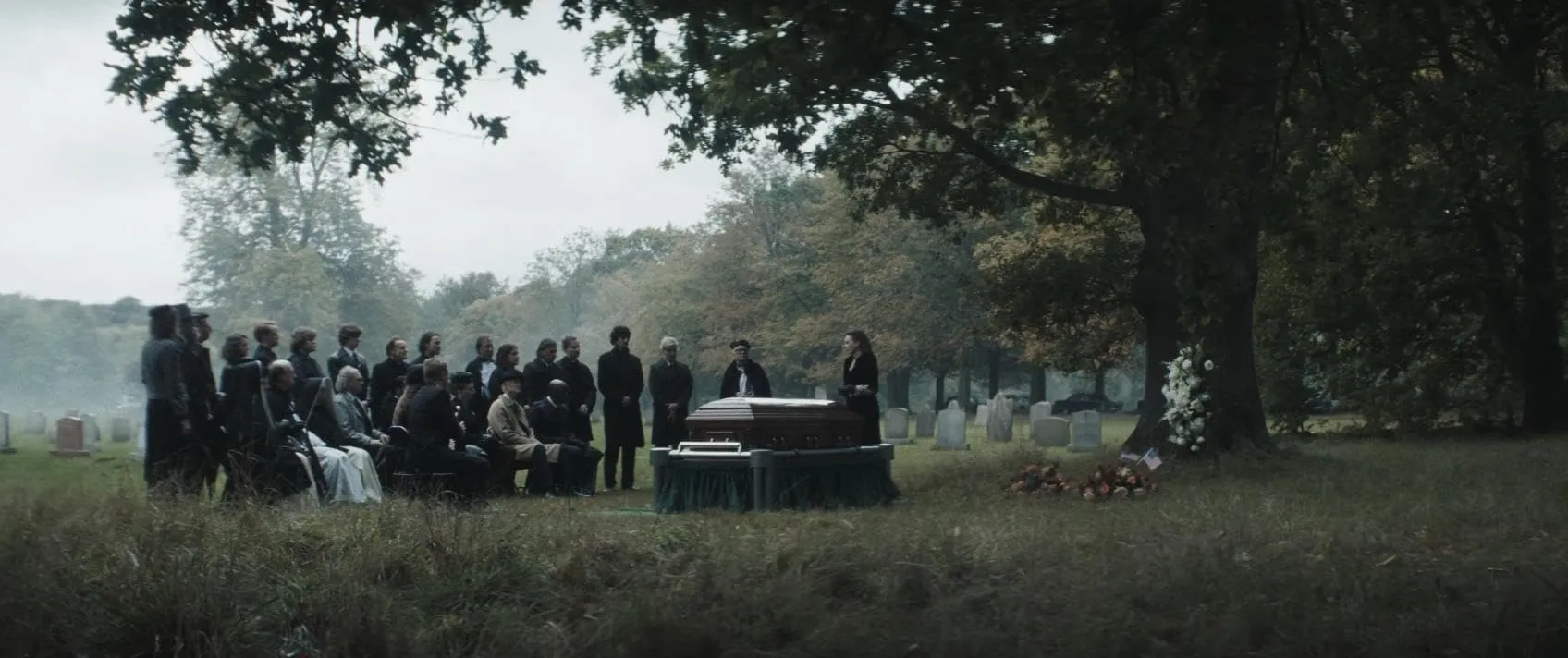
Yet the script sidelines its most valuable assets for long stretches, reducing them to passive figures who react to a haunting they learn about secondhand. Their involvement feels reactive, a delayed response rather than a determined investigation driven by their expertise and conviction.
This narrative space is instead ceded to their daughter, Judy. The film invests heavily in her story, framing her psychic abilities not just as a gift but as a heavy, frightening burden. Mia Tomlinson gives the character an anxious intensity, showing a young woman overwhelmed by visions she cannot control.
Her own personal terrors, particularly a well-staged sequence in a department store fitting room surrounded by mirrors, are presented as a parallel haunting that connects her thematically to the Smurls’ plight. The focus on her arc suggests a clear effort to set up a new path for the franchise, making this movie feel like a transition piece designed to pass the torch.
This generational shift, however, comes at a steep cost. The Smurl family, the very people enduring the demonic siege, are rendered as little more than horror archetypes. They exist to be terrified, to scream, and to wait for rescue.
Heather, the daughter who receives the mirror, is positioned as a central character in the first act, only to become an insignificant, peripheral figure by the film’s climax. The story’s emotional core remains squarely with the Warren family’s personal drama, leaving the terror inflicted upon the Smurls feeling strangely impersonal, functional, and ultimately disposable.
A Compendium of Conjuring Tropes
The horror in Last Rites operates like a greatest hits album, a curated collection of scares that feel both familiar and obligatory. It dutifully plays all the franchise’s signature tracks: mysteriously moving swing sets, rattling doorknobs, battery-operated toys that spring to life, and the sudden, loud appearance of a leering, monstrous face.
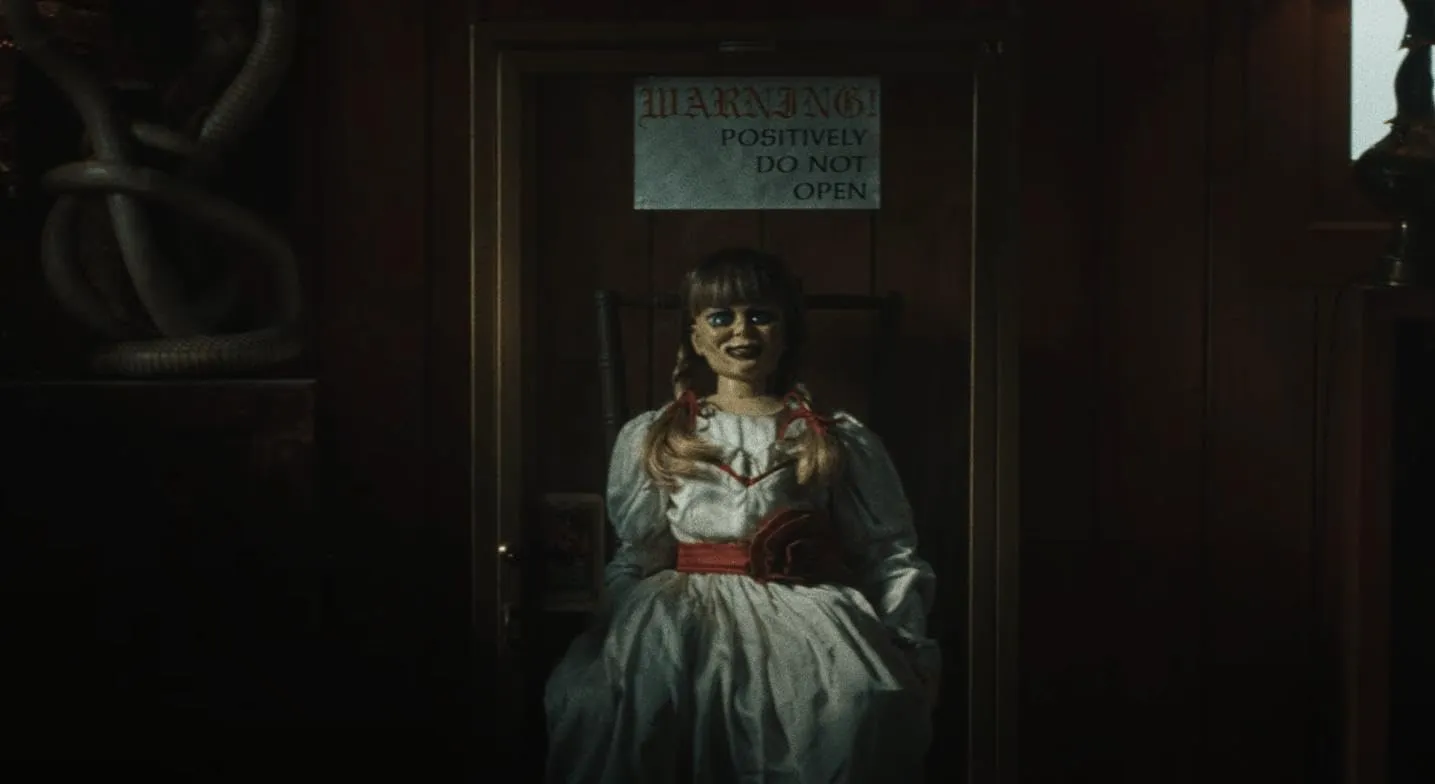
The franchise’s porcelain mascot, the doll Annabelle, makes several cameo appearances, her presence feeling more like a contractual nod to the fans than a narrative necessity. Michael Chaves’ direction favors a louder, bloodier, and more direct style that leans heavily on computer-generated monsters. This approach is a distinct departure from the atmospheric tension and suggestive, slow-burn scares that defined James Wan’s original films, which found terror in negative space and things left unseen.
Many of the film’s set-pieces feel distinctly familiar, echoing moments from previous Conjuring entries or borrowing liberally from other horror staples like Oculus and Insidious. The result is a lack of invention that renders the frights predictable for anyone acquainted with the genre’s modern conventions. The film seems less interested in creating new fears than in celebrating its own cinematic legacy.
The narrative is littered with callbacks and references to past adventures, creating a comfortable, self-referential loop for longtime viewers. This nostalgic approach produces a tone that is celebratory, a quality that works against the film’s aim to generate any real sense of peril or suspense.
The experience becomes safe, a guided tour through a well-known haunted attraction where the ghosts perform on cue at expected intervals. It transforms a horror film into a piece of fan-focused media, offering the comfort of the familiar instead of the thrill of the unknown.
A Finale Without Finality
Marketed as the monumental final case for Ed and Lorraine Warren, Last Rites fails to deliver a story with the necessary weight or scale for such a definitive send-off. The haunting of the Smurl family, while containing moments of genuine fright, never feels epic enough to be the supernatural event that forces the world’s most famous demonologists into permanent retirement.
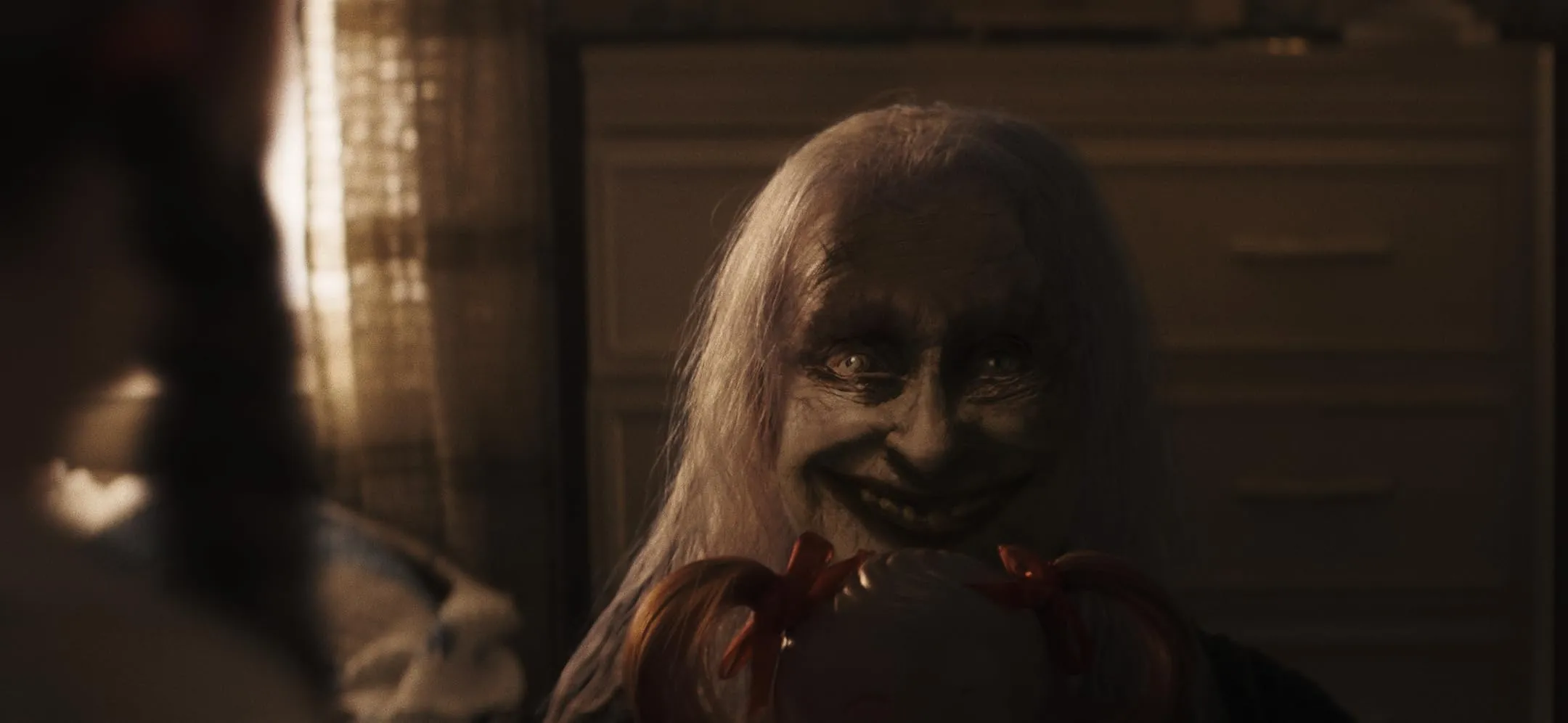
It lacks the institutional stakes of The Conjuring 2 or the legal system entanglement of The Devil Made Me Do It. Because the Warrens arrive so late to the conflict, their personal connection to the sinister entity feels manufactured, a hastily added backstory that lacks the deep emotional resonance of their predicaments in earlier films. The film solidifies the Conjuring Universe’s evolution from a horror series into a dependable mainstream franchise, one that prioritizes a reliable, repeatable formula over genuine innovation.
Its epilogue, featuring archival photographs and clips of the real-life couple, attempts to provide a sense of poignant closure. The sentimentality it evokes, however, feels earned by the decade-long performances of Wilson and Farmiga, not by the specific events of this story.
While possessing some effective early scares and the undeniable appeal of its leads, the film’s bloated runtime, disjointed plot, and predictable horror make it a serviceable but ultimately disappointing finale. It functions as a gentle, nostalgic farewell tour, content to revisit past glories instead of carving out a terrifying, memorable final investigation. The Warrens deserved a more resonant last rite.
The Conjuring: Last Rites is an American supernatural horror film and the ninth and final installment in the main series of the Conjuring Universe franchise. It was released in the United States on September 5, 2025. As a theatrical release from Warner Bros. Pictures, it is currently available in cinemas. After its theatrical run, it will become available on digital platforms and is expected to eventually be streamed on Max.
Full Credits
Director: Michael Chaves
Writers: Ian Goldberg, Richard Naing, David Leslie Johnson-McGoldrick, James Wan, Chad Hayes, Carey W. Hayes
Producers: James Wan, Peter Safran
Executive Producers: Michael Chaves, Michael Clear, David Leslie Johnson-McGoldrick, John Rickard, Hans Ritter, Natalia Safran, Judson Scott
Cast: Vera Farmiga, Patrick Wilson, Mia Tomlinson, Ben Hardy, Steve Coulter, Rebecca Calder, Elliot Cowan, Kíla Lord Cassidy, Beau Gadsdon, John Brotherton, Shannon Kook, Molly Cartwright, Peter Wight, Kate Fahy, Orion Smith, Madison Lawlor
Director of Photography (Cinematographer): Eli Born
Editors: Gregory Plotkin, Elliot Greenberg
Composer: Benjamin Wallfisch
The Review
The Conjuring: Last Rites
The Conjuring: Last Rites is a disappointing send-off for the Warrens. While the enduring chemistry between Patrick Wilson and Vera Farmiga provides a warm emotional center, the film sabotages itself with a fractured narrative and a bloated runtime. It functions more as a nostalgic tour of the series' greatest hits than a genuinely frightening or climactic final chapter. A few well-crafted scares in the first half cannot save a story that feels both overstuffed and underdeveloped, offering a gentle farewell where a terrifying one was needed.
PROS
- Patrick Wilson and Vera Farmiga’s chemistry remains a compelling anchor.
- Effective and atmospheric horror sequences in the film's first half.
- A strong performance from Mia Tomlinson in the expanded role of Judy Warren.
CONS
- A disjointed narrative structure that separates the main characters from the central haunting for too long.
- Excessive runtime and poor pacing that create a sluggish viewing experience.
- Over-reliance on familiar franchise tropes and predictable jump scares.
- The victimized Smurl family is underdeveloped and emotionally distant.
- The central case lacks the scale and stakes expected of a final chapter.