






















Spain’s summer celebrations collapse when television screens announce Miguel Ángel Blanco’s abduction. The cut defines the emotional logic of Miguel Ángel Blanco: The 48 Hours That Changed Spain. Joy is interrupted. Directors Jon Sistiaga and Juanjo López then build the film around a deadline everyone knows will end in death, so tension comes from watching hope continue after history has settled the outcome.
Blanco, a 29-year-old Partido Popular councillor in Ermua, was kidnapped by ETA on July 10, 1997. The group gave the Spanish government 48 hours to transfer imprisoned members to facilities in the Basque Country. The government refused. Millions waited, marched, prayed, and watched the clock move toward July 12. The documentary treats that waiting as the central event rather than a corridor leading to the murder.
Before the Symbol
Miguel enters the film through details small enough to survive politics. He played drums, loved sports, listened to Héroes del Silencio, and wanted to improve his hometown. Each fact changes how the abduction feels. A public figure becomes a young man with cassette tapes, weekend plans, and a family expecting him home.
Marimar Blanco carries much of this emotional weight. Her testimony moves between the public crisis and the terror inside the family. The hardest moment comes through her memory of their mother refusing food. Asked to eat, she replies that she cannot because her son may be dying at that moment. The film leaves the sentence exposed, without dramatic scoring.
That restraint matters. Pauses and strained voices preserve the sense that some memories have never become safe to recount. Journalists, friends, police officers, and politicians widen the frame, but the family keeps pulling it back toward one house and one unanswered telephone.
Hope Measured in Hours
The countdown structure could have become a cheap thriller device. Instead, it reveals several kinds of helplessness inside the same 48 hours. Newsrooms race to confirm details. Investigators struggle with communication systems that now look painfully slow. Blanco’s photograph must be scanned, reproduced, and carried into public space through physical flyers. Each lost hour becomes visible.
Archival broadcasts do much of the emotional work. Reporters repeat the ultimatum. Blue ribbons spread across television screens. Crowds gather with white hands raised. The film returns to faces waiting for news, creating tension between collective scale and individual fear. Millions are present, yet nobody can reach the room where Blanco is held.
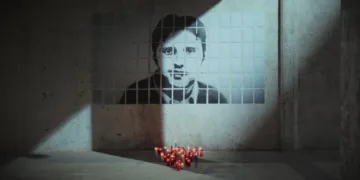
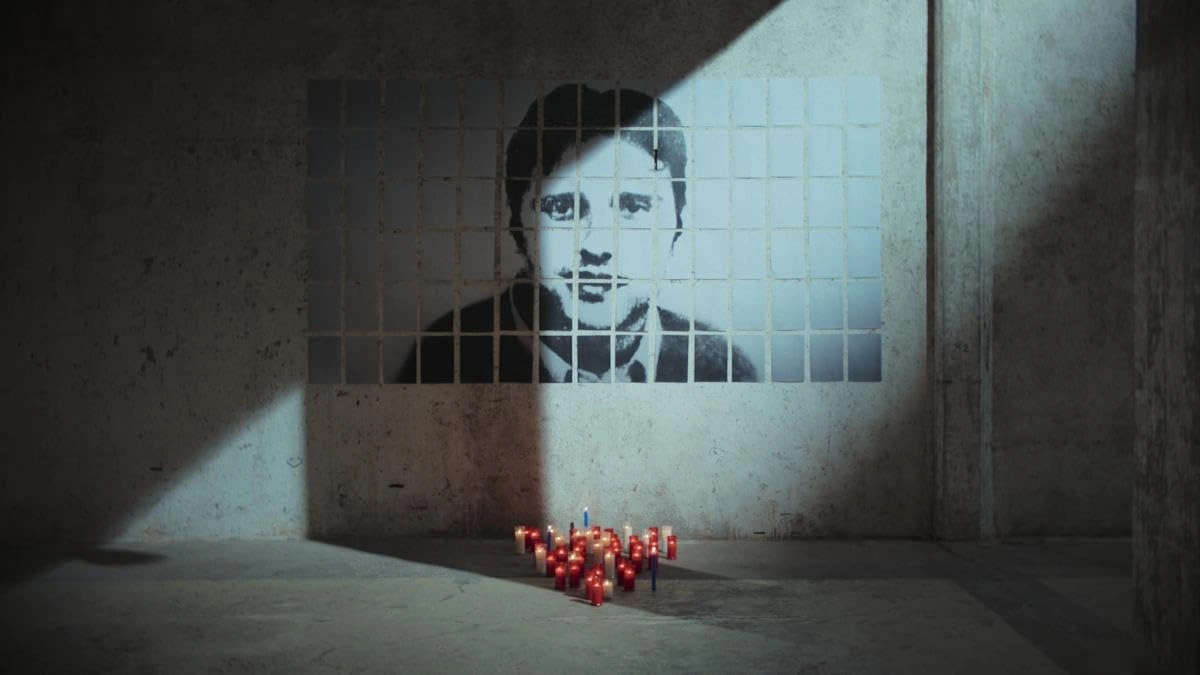
Candles give that tension a visual form. Red and white flames burn beside the shrinking clock, while a blue candle connects the search to the anti-terrorism symbol worn across Spain. The image is direct, at times too carefully arranged. When the blue flame goes out after Blanco’s death is announced, the symbolism leaves little space for interpretation. Still, it works because time has already been made physical, something consumed in front of us.
Music remains sparse, and interview rooms often carry only breath, room tone, and silence. Radio and television reports break into that quiet like intrusions. The nation receives the news through voices trying to stay professional while language fails them.
The Moment Hope Breaks
Blanco is found near Lasarte-Oria with his hands bound and two gunshot wounds to the head. The documentary allows a brief, unbearable interval in which his being alive still sounds like rescue. Doctors then explain that survival is impossible.
This passage avoids reenactment and graphic imagery. Attention stays on people receiving information. Faces change before sentences finish. Family members prepare for what they already understand. Medical language creates a thin barrier between knowledge and acceptance. The emotional design is precise here. Viewers remain among those who can do nothing except wait. That position is ordinary, and the ordinariness hurts.
A Country in the Streets
The public response shifts the film from private grief to civic refusal. Archival images show enormous crowds raising white hands and shouting “Basta ya.” The scale moves through individual gestures: a ribbon pinned to a shirt, strangers embracing, a face collapsing when the news arrives.
The documentary links this response to the Spirit of Ermua, the point at which fear began losing its control over public silence. Its framing is persuasive when it stays close to the streets. It becomes less secure when it compresses the political history around them. Many Basques condemned ETA while holding complex views on nationalism, autonomy, and Spain. The marches expressed a shared rejection of murder, not a single national identity.
The film gives useful background on ETA’s violence and the pressures surrounding the ultimatum, yet its narrow timeline leaves Franco-era repression, allegations of state violence, and doubts about the search at the edges. These gaps expose the limits of its chosen lens.
Near the end, the blue candle is relit to represent a country refusing terror. The image has been arranged for maximum clarity. The earlier details carry deeper force: Miguel at the drums, his music still playing in the memories of people who knew him.
This documentary premiered on Netflix on July 10, 2026. The film revisits the two harrowing days in July 1997 when the Spanish public mobilized in a desperate, widespread effort to prevent the assassination of Miguel Ángel Blanco, a young councilor who had been kidnapped by the separatist group ETA.
Where to Watch Miguel Ángel Blanco: The 48 Hours That Changed Spain (2026) Online


Full Credits
Title: Miguel Ángel Blanco: The 48 Hours That Changed Spain
Distributor: Netflix
Release date: July 10, 2026
Running time: 1 hour 33 minutes
Director: Jon Sistiaga, Juanjo López
Writers: Jon Sistiaga, Nacho López Murria, Javier Carneros, Juanjo López
Producers and Executive Producers: Silvia Domínguez Vidal, Juanjo López
Cast: Jon Sistiaga, Jaime Segales, Jimmy Guerra, King Felipe VI of Spain, Verónica Elorza, Jaime Mayor Oreja, Mari Mar Blanco, Marcial Piriz
Director of Photography (Cinematographer): Pedro Vendrell
Editors: Javier Carneros Lorenzo
Composer: Carlos M. Jara
The Review
Miguel Ángel Blanco: The 48 Hours That Changed Spain
Miguel Ángel Blanco: The 48 Hours That Changed Spain turns a known historical outcome into a painful experience of hope running out. Its archival broadcasts, restrained soundscape, and testimony from Blanco’s family keep the victim human while the countdown gives every delay emotional weight. The candle symbolism can feel overly arranged, and the narrow timeline leaves parts of the Basque conflict insufficiently examined. Still, the documentary understands that memory matters most when it restores the ordinary life hidden behind a public symbol.
PROS
- Intimate family testimony
- Powerful archival footage
- Effective countdown structure
- Restrained sound and music
- Humanizes Blanco with specificity
CONS
- Limited historical scope
- Crowded interview roster
- Heavy-handed candle symbolism