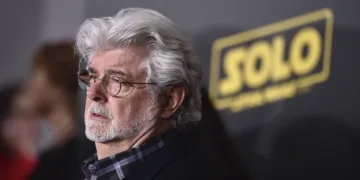































George Lucas has stirred debate among “Star Wars” fans after comparing resistance to artificial intelligence in filmmaking to clinging to horse-drawn carriages over automobiles, arguing the technology’s rise in Hollywood is inevitable regardless of how creators feel about it.
Speaking with A Rabbit’s Foot, Lucas said AI simplifies the moviemaking process and drew a direct parallel to early 20th-century skepticism toward cars. Someone dismissing AI outright, he said, resembles a person insisting horses remain superior because automobiles “break down, they need gas” and could eventually be weaponized. He closed the analogy bluntly: there’s nothing to be done about it, since it represents progress and the direction the industry is heading.
Lucas extended the argument to concerns about misinformation, suggesting AI itself could serve as a check on its own misuse. He said the technology could flag manipulated content and trace its origin, a task he argued humans lack the capacity to perform reliably on their own. He also emphasized personal accountability, saying people remain responsible for what they create and should face consequences for illegal uses, much as in any other part of life.
The comments arrive as sentiment in Hollywood runs largely in the opposite direction. Christopher Nolan recently praised younger audiences for what he described as a swift and harsh rejection of AI-generated content, and numerous directors and video game developers have publicly refused to incorporate the technology into their work, citing concerns over its reliance on scraped creative material and its environmental costs.
Reaction to Lucas’s remarks split sharply online, though many observers noted the position tracks with his decades-long history of pushing new tools into filmmaking, from digital cameras to computer-generated characters to green-screen production, often ahead of the rest of the industry.
Some fans expressed disappointment that a director closely associated with practical effects and handcrafted worldbuilding would embrace a technology built partly from mass ingestion of existing human work. Others said the stance fit a familiar pattern for a filmmaker who founded Industrial Light & Magic specifically to build technology that didn’t yet exist.
In the same conversation, Lucas separately criticized studios for leaning too heavily on fan feedback and focus groups when shaping films, arguing the practice undermines directors with a genuine story to tell.