
























![Kingdom Hearts Collection [I-III] Review](https://gazettely.com/wp-content/uploads/2026/10/Kingdom-Hearts-Collection-I-III-1-360x180.webp "Kingdom Hearts Collection [I-III] Review: KHII Holds Steady as Newer Entries Fluctuate 37")



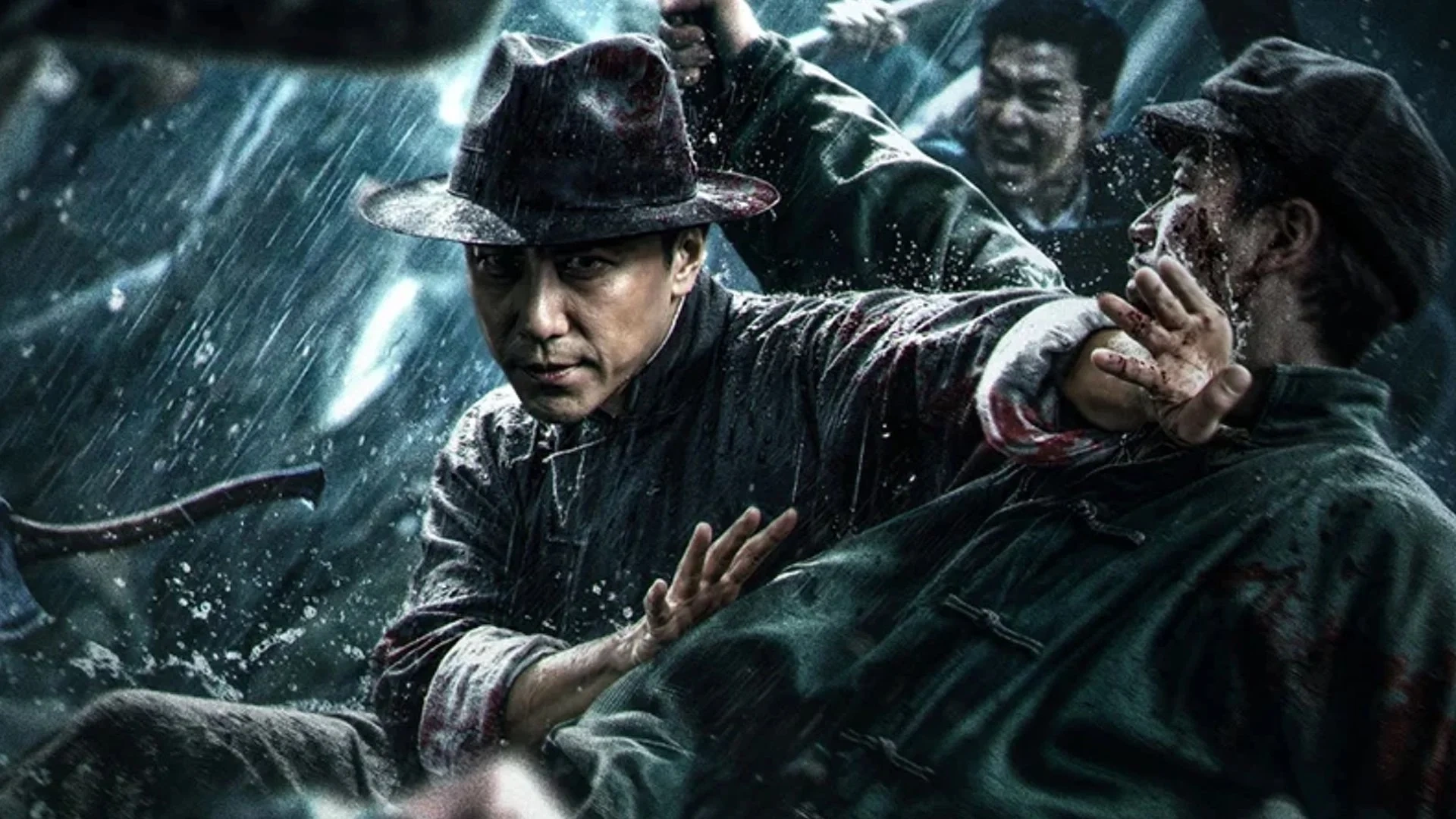

Ip Man has become less a historical figure on screen than a reusable vessel for Chinese martial virtue. Every generation of films reshapes him according to its needs: Wilson Yip turned him into a national hero, Wong Kar-wai treated him as a fading guardian of tradition, and the Chinese streaming market has converted him into reliable action content. Ip Man: Kung Fu Legend belongs firmly to that final category.
Director Li Liming reunites with Dennis To for a sequel to Ip Man: Kung Fu Master, sending the Wing Chun master from Foshan to colonial Hong Kong with his wife and young son. Before Ip can establish a school, the local martial arts guild requires him to pass three trials. His success places him beside Master Hong just as Western businessman Pike arrives with plans to purchase Hong’s school and dock.
The film has physical talent, period sets, and a protagonist whose cultural meaning has already been established by stronger productions. What it lacks is a reason for this particular version to exist.
The Same Old Enemies
The opening trials provide the film with its most promising stretch. Ip fights by candlelight, faces blades while blindfolded, and enters a lion-dance challenge built around balance and spatial awareness. Each test draws from a different branch of martial arts spectacle, briefly suggesting a film interested in how distinct traditions coexist within Hong Kong.
Pike’s arrival ends that curiosity. Played by Steven Dasz with constant sneering aggression, he wants to demolish Chinese schools, establish a Western boxing academy, and use the surrounding property for criminal business. His scheme joins colonial power, capitalist exploitation, and cultural hostility into one convenient villain. The film gives him no quality beyond contempt.
Master Hong’s student Lei Yuehn initially appears to have a human motive for accepting Pike’s money. His mother is dying, and loyalty offers no financial remedy. That conflict lasts only a few scenes. Lei slicks back his hair, puts on sunglasses, kidnaps a factory director, and embraces villainy with the enthusiasm of a performer who has spotted the wardrobe department’s evil rack.
His plan to kill Master Hong and frame Ip depends on a black robe, a fedora, and the assumption that no other man in Hong Kong owns either. Ip is arrested, Pike moves closer to securing the land, and Officer Mei begins investigating the murder. The machinery is familiar from decades of nationalist kung fu cinema, where corrupt local collaborators prove nearly as dangerous as foreign occupiers. Such stories can turn martial arts into political language. Here, the language has only two words: Chinese dignity.
Chain Punches in Tight Spaces
Dennis To remains the production’s strongest physical asset. His competitive wushu background gives his movements clean lines, controlled speed, and convincing balance. He can sell the disciplined economy of Wing Chun without turning every exchange into acrobatics.
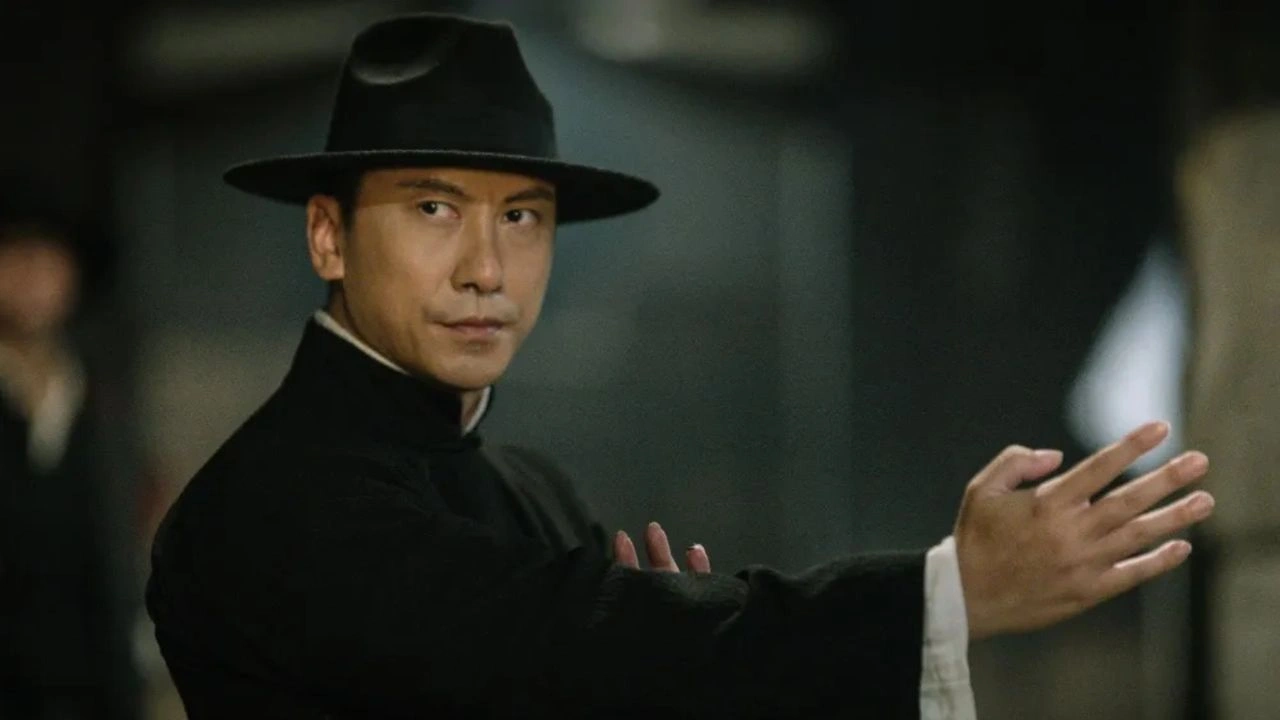
His dramatic performance is less persuasive. To speaks in low, measured tones and maintains a near-permanent expression of calm concern. The restraint suits Ip Man in principle, yet it leaves domestic scenes with little emotional friction. When Ip’s wife voices her wish to return to Foshan, the conversation should expose the cost of his moral interventions. It lands as another solemn pause before somebody enters with bad news.
The action improves whenever Liming traps Ip inside a confined location. A prison riot places him in handcuffs against inmates carrying improvised weapons. A ruptured water pipe floods the space, changing the fighters’ footing and giving the sequence a rough physical texture. The house battle uses furniture and narrow corridors to force abrupt changes in direction.
A knife-wielding assassin brings greater speed and danger, pressing Ip hard enough to puncture his usual invincibility. Those moments matter because the finest martial arts films build character through combat. A fighter’s response to pain, space, and an unfamiliar style reveals his discipline with greater honesty than patriotic dialogue ever could.
Other confrontations are weakened by weightless strikes, wire assistance, slow motion, and editing that interrupts combinations before their rhythm develops. The finale moves through Pike’s hired boxer before Pike removes his shirt and joins the fight himself, an escalation that feels imported from the Donnie Yen films without their buildup or force. The chain punches arrive on schedule. The excitement does not always accompany them.
The Web-Movie Ceiling
Lei and Pike perform in a theatrical register that clashes with the production’s grim presentation. They smoke cigars, adjust their hair, issue threats, and parade their corruption, while the rest of the cast speaks as if loud voices have been banned from the colony. Liming films labor exploitation, murder, family tension, and political corruption with the same drained solemnity.
Lei Guo’s cinematography occasionally finds texture in candlelight, prison shadows, and cramped interiors. The camera often remains far enough from the performers to preserve the choreography, a welcome choice in an action market filled with frantic cutting. Yet the washed-out palette and flat digital finish make the film resemble a streaming release from a decade earlier.
The pacing causes deeper damage. Conversations about property ownership and colonial influence stretch between brief bursts of combat. A persistent score drones beneath exchanges that lack tension, instructing the audience to feel urgency while every actor takes their time. At 94 minutes, the film should move briskly. It trudges.
Officer Mei’s late intervention provides a rare jolt, followed by an extended scene of applause at the martial arts school that continues until celebration begins to resemble ritual captivity. Recent Chinese streaming films have shown that restricted budgets need not prevent forceful staging, strong photography, or imaginative choreography. Ip Man: Kung Fu Legend possesses the resources to escape its format’s cheapest habits and chooses to live among them.
The martial arts film premiered on July 14, 2026. Audiences can watch the movie across several digital platforms or purchase it physically on Blu-ray and DVD. The story follows the Wing Chun master as he leaves his career in law enforcement to start a martial arts school, forcing him to defend local traditions against a rival Western boxing gym.
Where to Watch Ip Man: Kung Fu Legend (2026) Online





Full Credits
Title: Ip Man: Kung Fu Legend
Distributor: Well Go USA
Release date: July 14, 2026
Running time: 1 hour 38 minutes
Director: Li Liming
Writers: Li Liming, Qingshui Shi
Producers and Executive Producers: Xu Huidan, Doris Pfardrescher, Aymeric Contat-Desfontaines, Hugo Luquet
Cast: Dennis To, Wang Wanzhong, Zhang Tingfei, Zhao Jingshuyu, Zhang Jie, Wu Xinzun, Tong Xiaohu, Zhou Xiaofei, Steven Dasz, Li Yaojing, Philip Condron
Director of Photography (Cinematographer): Guo Lei
The Review
Ip Man: Kung Fu Legend
Ip Man: Kung Fu Legend packages familiar franchise mythology for another international release, yet its portrait of colonial Hong Kong reduces cultural conflict to sneering Western villains and spotless Chinese virtue. Dennis To retains physical credibility, especially during the candle trial and prison brawl, but the hushed drama, weak impact, and tired property conspiracy drain the fights of momentum. A few confined set pieces hint at a sharper martial arts film trapped inside this faded web-movie production.
PROS
- Inventive candlelit trial
- Chaotic prison brawl
- Dennis To’s martial arts control
- Effective confined locations
CONS
- Blunt nationalist messaging
- Caricatured Western villains
- Sluggish dramatic passages
- Dated digital presentation
- Uneven fight impact







