
























![Kingdom Hearts Collection [I-III] Review](https://gazettely.com/wp-content/uploads/2026/10/Kingdom-Hearts-Collection-I-III-1-360x180.webp "Kingdom Hearts Collection [I-III] Review: KHII Holds Steady as Newer Entries Fluctuate 37")



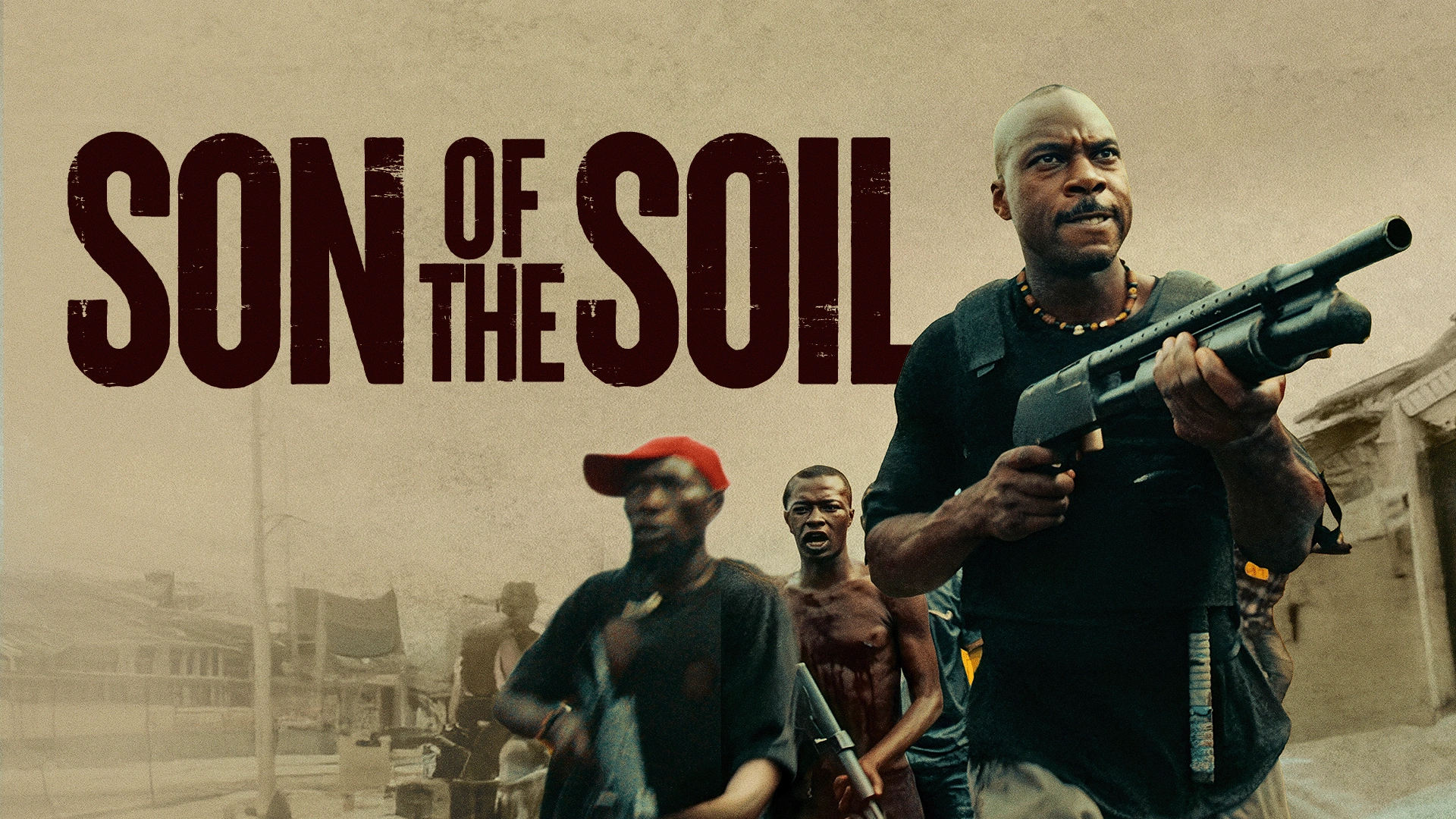

Zion’s military résumé and his street-level decisions seem to belong to two different men. A dishonourably discharged former soldier who has spent years abroad, he returns to Lagos after his sister Ronke is murdered by people connected to drug kingpin Dr. Baptiste. He brings physical strength, old criminal contacts, and enough grief to flatten a neighbourhood. Preparation appears to have missed the flight.
Ronke’s death follows a clean genre setup. Working at a hotel, she witnesses Baptiste killing a woman and learns too much about Matrix, the lethal fentanyl mixture spreading through the city. Her attempt to contact Zion fails to save her, leaving him to pursue justice through the gangland routes his mother hoped he had abandoned.
Writer and lead actor Razaaq Adoti gives Zion a solid physical presence. His anger feels credible when he confronts Ronke’s body or listens to his mother’s warnings. The screenplay gives that grief one function, however: it points him toward the next dangerous location. His prison term, military service, separation from Nigeria, and implied gang history could have created a conflicted man returning to a city that no longer recognises him. Instead, those details function like items listed on an action hero’s application form.
The oddest choice is Zion’s tactical incompetence. He enters hostile territory without support, overlooks obvious traps, and repeatedly receives vicious beatings. One escape sends him stumbling from intensive care into a public market wearing a backless hospital gown. It is memorable, certainly. It may not be the demonstration of elite fieldcraft the script intended.
The Street Knows Better
Zion becomes easier to follow once Remi begins helping him. Played with brisk confidence by Ijelu Folajimi, the young street hustler quickly proves herself the film’s sharpest judge of character and danger. Zion initially buys her assistance with cash, yet she keeps saving him long after the transaction should have expired.
Their pairing gives the story a necessary human connection. Remi can read Lagos in ways Zion cannot, spotting risks, finding people, and slipping through spaces that defeat his blunt approach. Folajimi’s relaxed delivery also exposes the stiffness elsewhere. She sounds like a person responding to events rather than an actor waiting for the next plot instruction.
Several supporting criminals leave stronger impressions than Baptiste. Shaka Bulla switches from playful intimidation to cold violence within a scene, giving Taye Arimoro room to create genuine uncertainty. Damilola Ogunsi’s Jagunlabi brings history and menace as Zion’s former associate, particularly once their alliance expands the conflict from private revenge into gang warfare.
Baptiste is less interesting. Philip Asaya gives him a controlled authority, but the character remains the familiar respectable professional hiding a criminal empire. His Matrix operation connects Ronke’s murder to addiction, corruption, and institutional protection, yet the film rarely examines those elements once Zion starts breaking down doors. The drug network matters mainly because it supplies rooms full of armed men.
Lagos Takes the Hits
Director Chee Keong Cheung handles violence with far greater confidence than the script handles character. Punches land hard, machetes tear into bodies, and gun battles carry a rough physical pressure. Zion is shot, stabbed, beaten, hospitalized, and sent back into danger before his injuries have had time to introduce themselves.
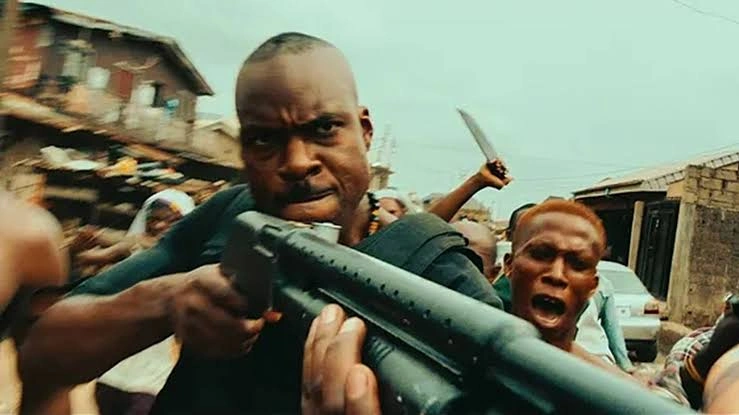
The action often favours readable movement over frantic cutting. Fighters remain visible within the frame, allowing impacts to register instead of hiding them inside editing. The performers do not display the specialised technique associated with elite screen fighters, which limits the choreography. Zion’s military background never produces a distinctive combat style. Several encounters become ordinary exchanges of punches, blades, and improvised weapons.
Cheung compensates through aggression. Immolations, bludgeonings, and close-range attacks create the bruising texture of an older revenge picture, where pain is the principal special effect. Awkward muzzle flashes and occasional sound choices reveal the independent budget, yet the film never treats that budget as permission to become timid.
Lagos supplies the scale the plot lacks. The camera moves through hotels, markets, industrial spaces, crowded streets, and gang compounds, building a city divided between public activity and private violence. Handheld photography gives Zion little control over his surroundings. People and vehicles press into the frame, turning each pursuit into a collision with the city itself.
The repeated Dutch angles are less effective. A tilted frame can express instability or distorted power, and Baptiste’s world has plenty of both. Used this often, the technique stops carrying information. The camera leans because it has become accustomed to leaning.
Revenge on Schedule
Every major plot turn arrives with the punctuality of public transport in a fictional country. Zion finds a contact, walks into danger, survives an ambush, loses an advantage, and gathers allies for the next confrontation. Betrayals and rescues appear where the genre has trained viewers to expect them.
That familiarity need not ruin an action film. A conventional structure can work when character decisions sharpen each stage. Here, the plot moves because Zion repeatedly ignores clear risks, while allies appear whenever his choices corner the screenplay. The hero’s determination is convincing. His decision-making occasionally resembles a request for another fight scene.
The international production carries interest beyond the revenge mechanics. British and Nigerian collaborators have built an action film that presents Lagos as a living environment rather than decorative scenery. Zion’s return from abroad hints at diasporic estrangement, especially through his uncertain command of the streets and strained relationship with his mother. The screenplay leaves that conflict largely untouched.
Ronke suffers a similar fate. Her discovery begins the entire story, yet her perspective disappears once Zion arrives. The film trades a woman who understood Baptiste’s operation for a man who must punch his way toward the same information.
Still, Son of the Soil has momentum, physical commitment, and a location capable of surviving the plot laid across it. Zion keeps advancing through injuries that should end the film several times over. The story follows the same strategy.
The action-thriller film Son of the Soil had its theatrical release on November 21, 2025, and is available for streaming globally on Netflix. The story follows Zion Ladejo, a haunted former special ops soldier who returns home to the criminal underbelly of Lagos after his sister is mysteriously murdered by a ruthless synthetic drug syndicate. Driven by grief and an unyielding desire for justice, he sparks a violent, high-stakes war against the corrupt figures dominating the local gangland.
Where to Watch Son of the Soil (2025) Online




Full Credits
Title: Son of the Soil
Distributor: Netflix
Release date: November 21, 2025
Running time: 106 minutes
Director: Chee Keong Cheung
Writers: Razaaq Adoti, Chee Keong Cheung
Producers and Executive Producers: Andreas Roald, Ioanna Karavela, Chee Keong Cheung, Razaaq Adoti
Cast: Razaaq Adoti, Patience Ozokwor, Iretiola Doyle, Sharon Rotimi, Philip Asaya, Sunshine Rosman, Taye Arimoro, Damilola Ogunsi, Ijelu Folajimi
Director of Photography (Cinematographer): Samuel “Sammie” Opoku
Editors: Chee Keong Cheung, Chris Gill
Composer: Chris Onslow
The Review
Son of the Soil
Son of the Soil gives Lagos grit, colour, and punishing physicality, then drops them into a revenge plot whose every turn arrives on schedule. Chee Keong Cheung stages violence with force, and Razaaq Adoti carries Zion’s grief through sheer presence, yet the screenplay keeps mistaking poor judgment for heroic resolve. Remi and Shaka Bulla bring sharper character work than the central feud receives. The film has the energy of a bruising action thriller and the narrative imagination of a checklist. Entertaining, uneven, and stubbornly alive.
PROS
- Visceral practical action
- Strong Lagos locations
- Remi’s scene-stealing presence
- Forceful visual texture
- Adoti’s physical commitment
CONS
- Predictable revenge plotting
- Thin central characters
- Inconsistent military competence
- Repetitive Dutch angles
- Uneven editing and dialogue







