











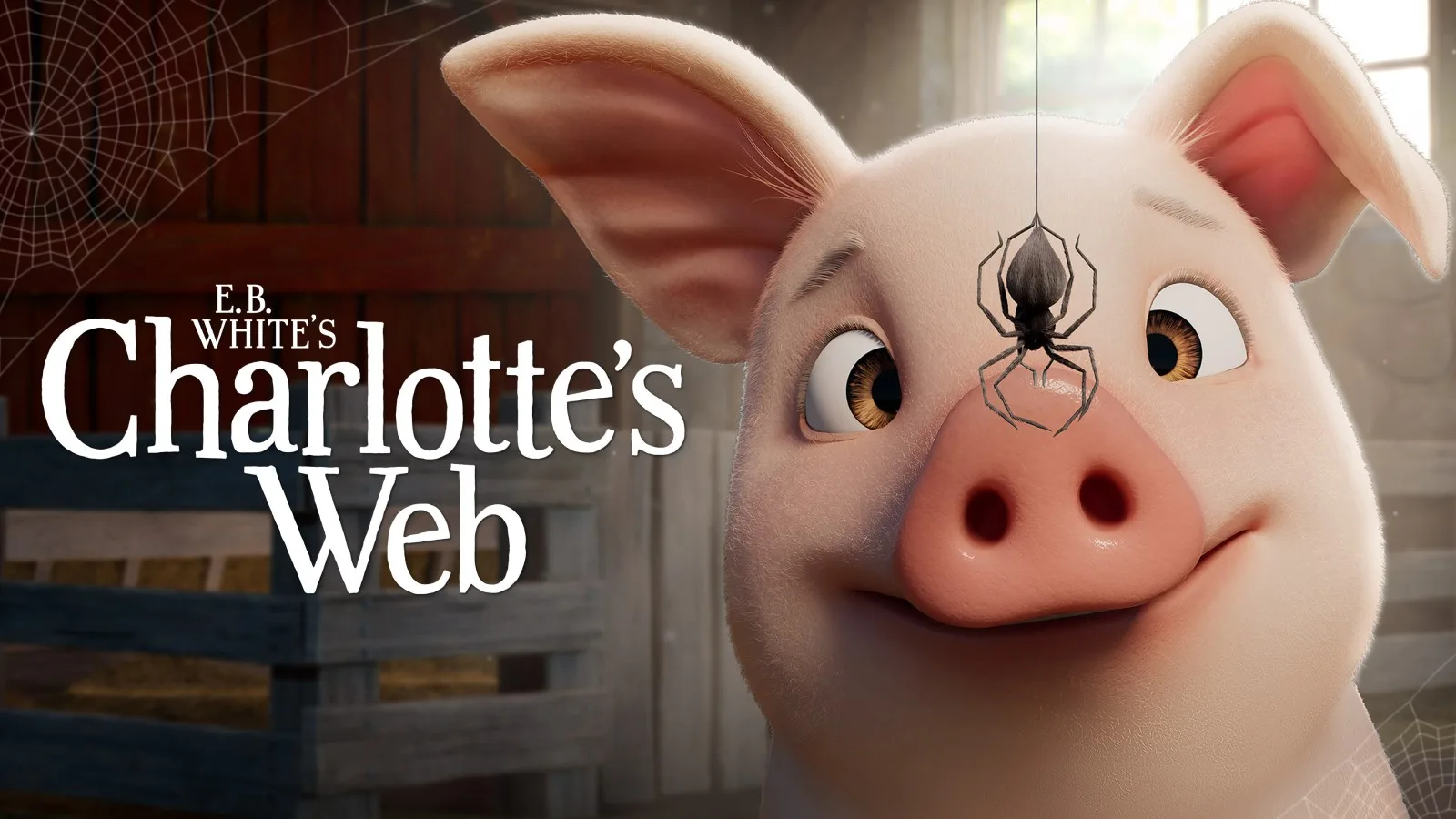

Certain narratives operate on a scale so intimate that their primary tension comes from the quiet march of time. HBO Max’s Charlotte’s Web is an exercise in translating that specific, gentle anxiety into a modern streaming format. Presented as a three-part special, this adaptation from Sesame Workshop must solve a fundamental problem: how to expand a story known for its elegant simplicity without diluting its power.
The premise remains unchanged. Wilbur, a piglet deemed the runt of his litter, finds his life hangs by a thread, first saved by the farmer’s daughter, Fern, and later by the intellectual prowess of a barn spider named Charlotte. Her method, weaving declarations of the pig’s virtues into her web, is a form of public relations that feels strangely current.
The series commits to the story’s core examination of friendship as a bulwark against oblivion and its frank look at the cycles of life and death. It approaches the material not as a text to be reinvented, but as a structure to be built upon, adding new rooms and hallways to a familiar, beloved home.
A Barnyard of Digital Contrasts
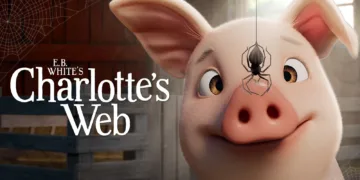
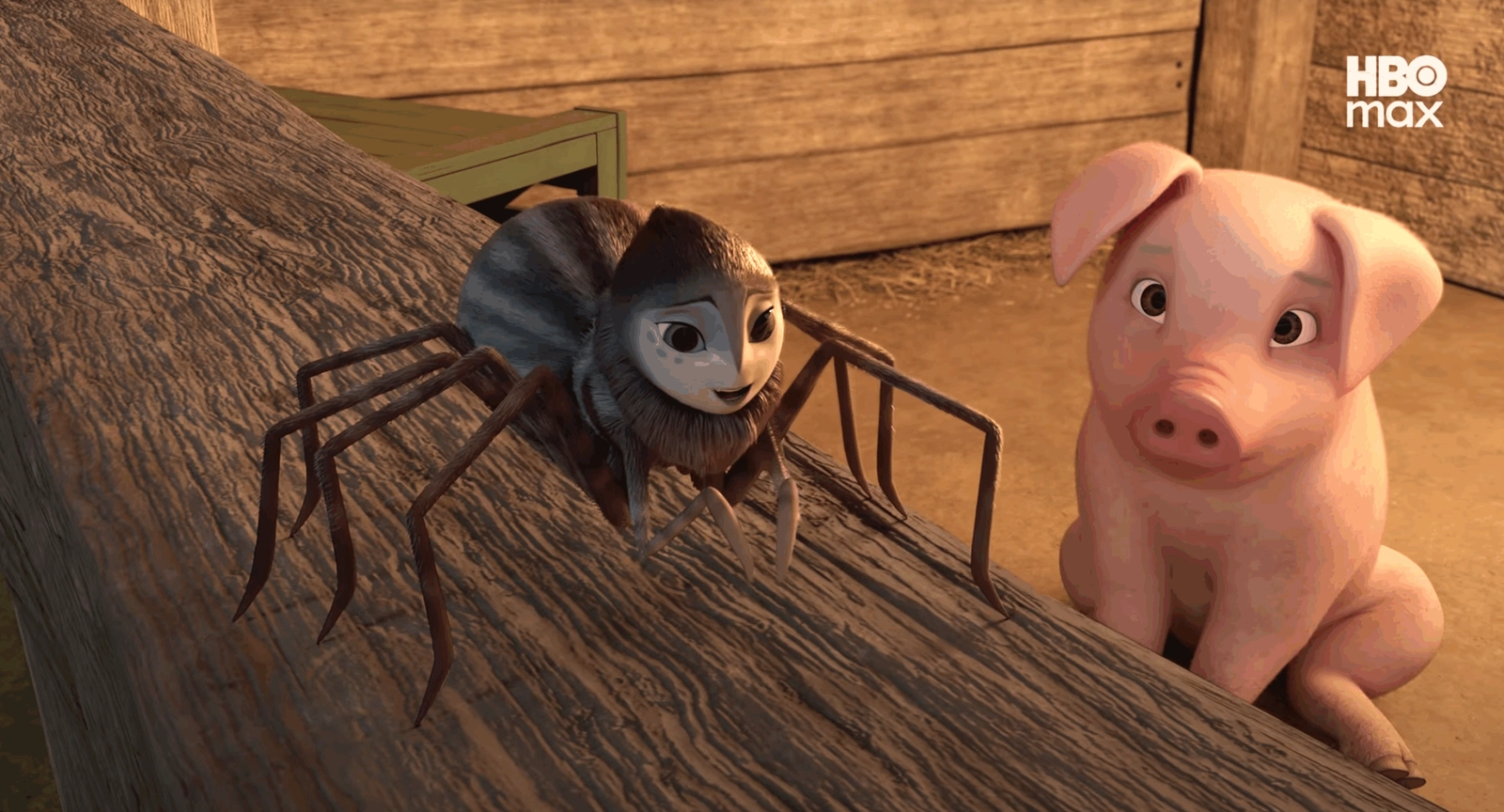
The series’ visual grammar is a study in divided priorities. The animation lavishes attention on its animal cast, rendering them with a tactile quality that grounds the story. Wilbur is animated not just as a generic pig, but as a creature of subtle textures, from the fine fuzz on his skin to the smudges of dirt on his snout. This detail extends to Templeton the rat, whose perpetually matted fur speaks to his life as a scavenger.
The artists use these designs to communicate character effectively; the animals’ faces are expressive, their movements believable within the story’s world. This focus, however, makes the portrayal of the human characters all the more jarring. Fern and her family are rendered with a smooth, waxy finish that evokes dated computer animation from an earlier era. Their movements can be stiff, their faces lacking the nuance afforded to the barn’s non-human residents.
This aesthetic choice creates an unintentional separation, pushing the human world to the visual periphery. The environments themselves, from the dim corners of the barn to the bright chaos of the county fair, are painted with a rich, vibrant palette. Yet the direction often frames these settings in a conventional way, making them feel more like serviceable backdrops than a living, breathing world.
The Sound of Friendship
A story so reliant on dialogue and internal feeling lives or dies by its vocal performances, and the cast here builds a convincing community. Amy Adams gives Charlotte a voice of calm authority, her steady, measured delivery conveying the spider’s intelligence and deep empathy. There is a weariness in Adams’ tone that hints at Charlotte’s own finite existence, making her sacrifice feel all the more resonant.
Opposite her, Elijah Wood captures Wilbur’s progression from a naive, frightened piglet to a more contemplative adult who understands gratitude. His performance traces a clear emotional arc. The most vibrant work comes from Randall Park, whose Templeton is a masterpiece of comedic self-interest.
Park’s delivery turns the rat’s every complaint and negotiation into a highlight, finding the humor in his unvarnished greed. The strength of the ensemble bolsters these central performances. The narration by Jean Smart provides a warm, omniscient guide through the story, her tone shaping the audience’s emotional response to key events.
The supporting animal voices, like Cynthia Erivo’s frantic Goose, create a rich auditory tapestry that makes the barn feel populated and alive. The interactions feel authentic, establishing the network of relationships that forms the story’s foundation.
Stretching the Story’s Strands
Adapting this tale into three distinct episodes fundamentally alters its narrative architecture. The structure allows for a slower, more deliberate pace than a feature film, but it also necessitates the creation of new material to fill the expanded runtime. This leads to mixed results. The story is padded with minor detours, such as an inconsequential chase sequence that provides a brief burst of action but does little to advance the plot or characters.
The most significant addition is a subplot dedicated to Fern’s mother, Dolores, and her artist sister, Edith. By giving them a Puerto Rican heritage and a conflict rooted in their differing life philosophies, the writers attempt to deepen the human side of the story and explore themes of family and practicality versus art. This narrative thread is an ambitious effort to grant the human characters the kind of interiority the book mostly reserves for the animals.
The execution, however, feels hesitant. The conflict is introduced and resolved without the emotional weight it seems to be aiming for, and it pulls focus from Wilbur’s central plight at key moments. This choice reflects a current trend in adaptations to find contemporary relevance, but here it feels less like a seamless integration and more like a separate story running parallel to the main event.
The series remains emotionally effective because the original story’s core is so powerful. The bittersweet conclusion, with its focus on legacy and the continuation of life, retains its ability to move, proving the durability of White’s design.
This three-part animated special, an adaptation of E.B. White’s classic novel, is a heartwarming retelling of the friendship between a pig named Wilbur and a kind barn spider named Charlotte. The limited series, which features a star-studded voice cast including Amy Adams and Elijah Wood, premiered in its entirety on Thursday, October 2 2025, and is available for streaming exclusively on HBO Max (now Max) in the U.S. The project was produced by Sesame Workshop and utilized stylized 3D CGI animation brought to life by Guru Studio.
Full Credits
Director: Yurie Rocha
Writers: Luke Matheny
Producers and Executive Producers: Luke Matheny, Kay Wilson Stallings
Cast: Amy Adams, Elijah Wood, Griffin Robert Faulkner, Jean Smart, Cynthia Erivo, Natalie Chan, Danny Trejo, Randall Park, Chris Diamantopoulos, Rosario Dawson, Ana Ortiz, Tom Everett Scott, Leith Burke, Keith David, Patricia Richardson, Dee Bradley Baker
The Review
Charlotte's Web
This adaptation of Charlotte's Web is a sincere effort that leans heavily on the strength of its source material and an excellent voice cast. The series captures the story’s profound emotional center, and the animal animation is often lovely. It is held back by visually jarring human characters and new subplots that feel more like filler than meaningful expansion. The result is a faithful retelling that tugs at the heartstrings, even if its own creative additions do not quite stick.
PROS
- A powerful and emotionally resonant story that respects its source material.
- Outstanding voice performances from the entire cast, with Randall Park as a standout.
- The animal characters are rendered with expressive detail and texture.
CONS
- The animation for human characters appears dated and visually inconsistent with the rest of the world.
- Newly added narrative subplots feel underdeveloped and can detract from the central story.
- The expanded three-part format occasionally slows the narrative pacing.