







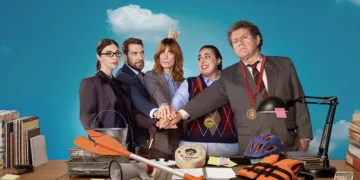
















The fluorescent lights of the Hollywood DMV branch hum a low, persistent note. It is the sound of institutional patience, a sonic backdrop to the worn linoleum floors, the scuffed laminate counters, and the silent, slow-moving queue of supplicants. This is the stage for DMV, a comedy that positions itself within the universally recognized purgatory of American civic life.
The series endeavors to extract humor from the shared ordeal of bureaucracy, focusing on the small band of civil servants tasked with presiding over this realm of expired licenses and failed vision tests. Its foundation is that of the traditional network sitcom, a reliable format designed to deliver familiar comforts through an ensemble of eccentric characters navigating the small dramas of their monotonous work. The show’s challenge is not merely to make a joke out of an old punchline, but to find some semblance of humanity in a place seemingly engineered to suppress it.
The Unending Queue
An environment like the Department of Motor Vehicles offers a rich, layered canvas for comedy. It is a crucible where the citizen must confront the abstract power of the state in its most tangible and often frustrating form. The inherent absurdity of the situation—the labyrinthine paperwork, the arbitrary rules, the collective exasperation of both employees and the public—presents a fertile ground for satire. DMV, however, chooses to cultivate this ground with predictable tools.
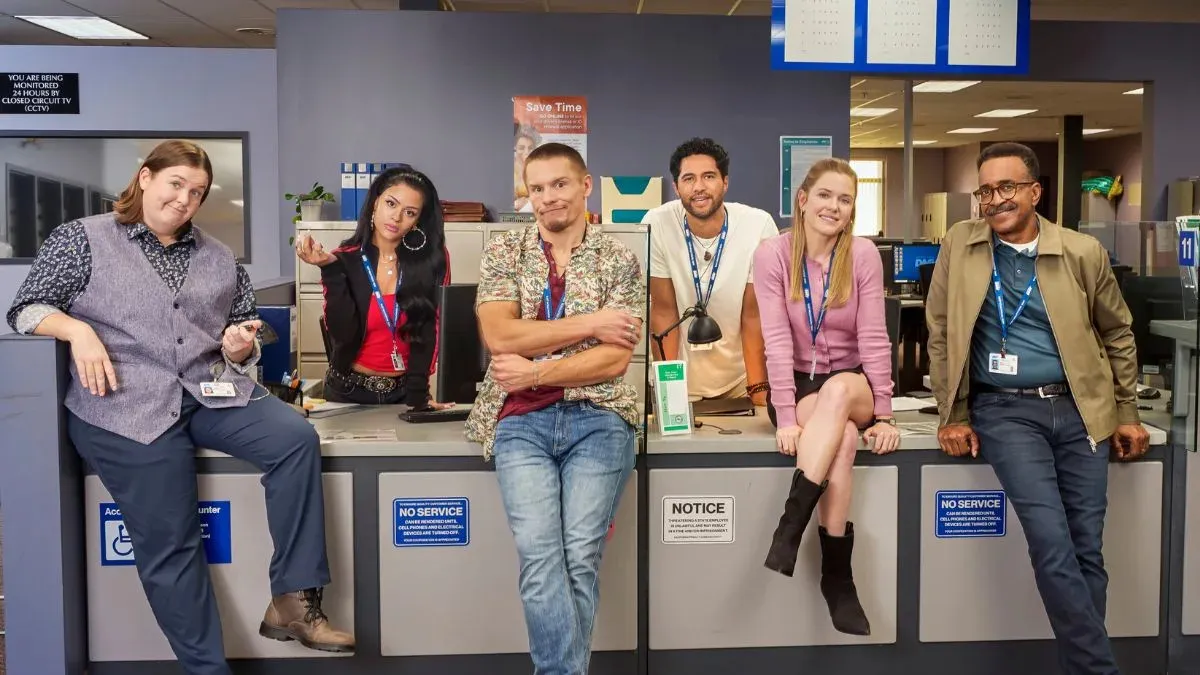
It leans heavily on established clichés, presenting them as if they were fresh observations. We see the elderly driver mowing down a forest of test cones, the irate, self-important man who has failed to bring the correct documentation, and the perennially horrifying state of the communal office refrigerator. These moments are executed with a certain procedural competence, but they lack the spark of original insight. They confirm what the audience already believes about the DMV instead of revealing something new.
There are fleeting instances where the humor feels specific and earned. A whiteboard maintained by the driving testers meticulously tracks the “number of days since we were almost killed,” a small, dark joke that speaks directly to the particular anxieties of their profession. Such details are exceptions. For the most part, the series treats its setting as a generic office space that happens to have a government seal on the door.
It forgoes a deeper examination of the unique psychological pressures that come with being a low-level state employee. The subtle power dynamics of a unionized workplace, the anxieties over pensions, the peculiar relationship one has with the public when one is both a servant and an enforcer of rules—these complex realities are left unexplored in favor of broader, more accessible office comedy tropes.
Faces Behind the Counter
The show’s intended anchor is Colette, a driving tester whose buoyant optimism feels profoundly out of place. Harriet Dyer imbues the character with an earnest, fumbling energy, but the writing leaves her stranded between two conflicting archetypes.
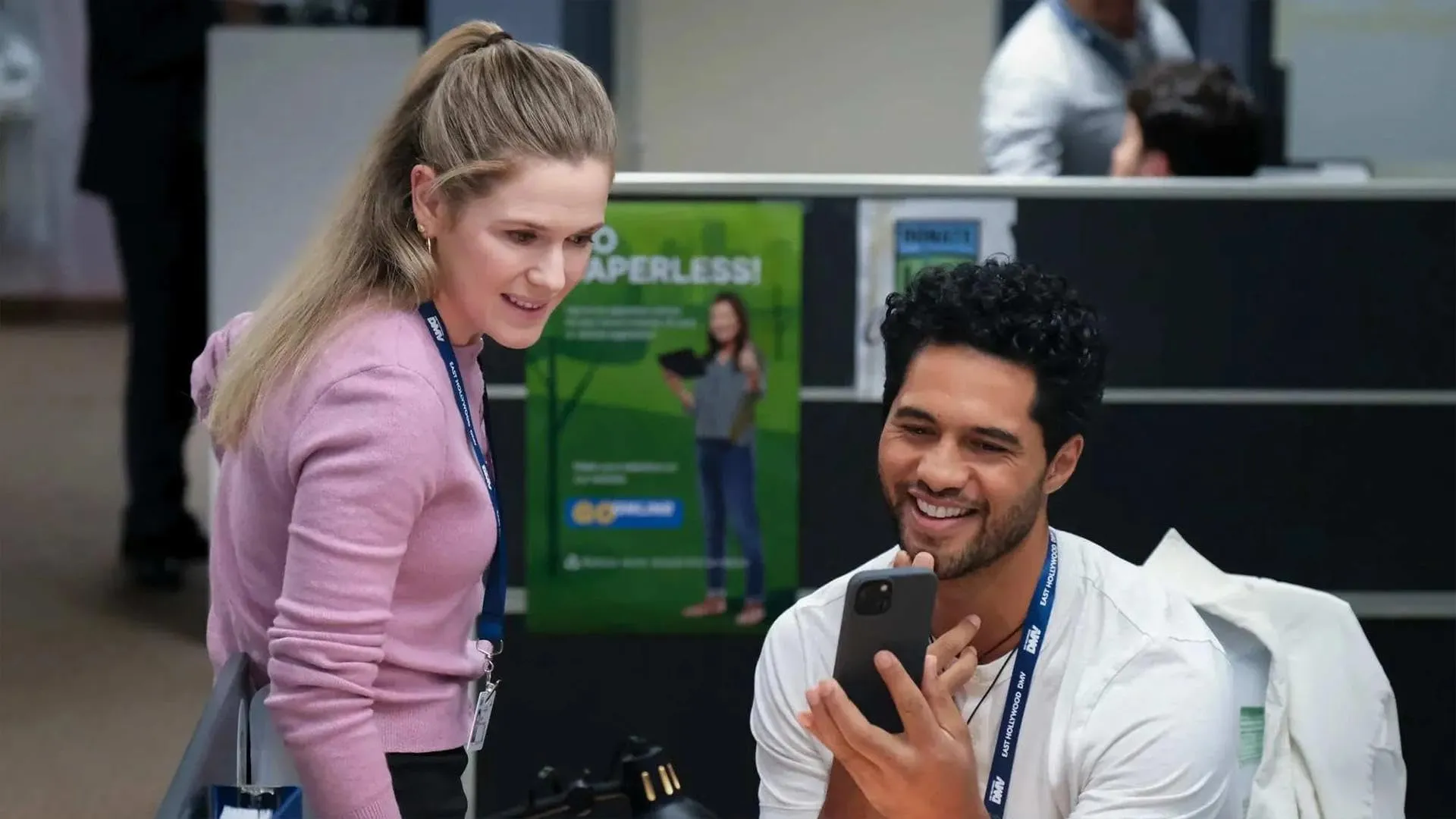
One moment she is a classic sitcom klutz, stumbling into physically compromising situations; the next, she is a naive idealist trying to find the good in a soul-crushing system. The show never commits to a coherent vision for her, leaving Dyer to navigate these jarring tonal shifts. Her proven comedic abilities, so sharp in other projects, are diluted here by the character’s lack of a solid core.
Providing the cynical counterpoint is Gregg, the branch’s most seasoned employee. Tim Meadows portrays him with a masterful undercurrent of weariness. His is not an active bitterness, but a deep, settled cynicism born of long-term exposure to the system’s absurdities.
He is a steadying presence in the ensemble, though the role confines him to a more subdued register than his talents might suggest. His small rebellions, like pantomiming a cigarette on a smoke break he is not actually taking, are perfect encapsulations of his philosophy: finding minuscule pockets of freedom in a place that offers none.
The newly appointed manager, Barbara, is less a character than a single, repeating comedic device. Molly Kearney commits fully to the role of an insecure boss whose profound ignorance of the outside world leads to a constant stream of inadvertent sexual innuendo. The joke, however, is one-dimensional and wears thin almost immediately. It speaks to a less sophisticated comedic sensibility, a throwback to an era when such characterizations could sustain themselves over entire seasons.
The supporting cast fills out the roster of types. Tony Cavalero’s Vic is the abrasive oddball instructor, a caricature of misplaced machismo. Gigi Zumbado’s Ceci, the sharp and stylish photo technician, feels like a placeholder, a character waiting for a purpose. As Colette’s romantic interest, Alex Tarrant’s Noa suffers from the same inconsistent writing as the lead, his competence and intelligence waxing and waning to suit the demands of a given scene.
This makes him a frustratingly opaque romantic foil. The ensemble feels assembled rather than formed, a collection of sitcom parts that have not yet found a way to operate as a cohesive, functioning whole. Their interactions lack the easy rhythm of a group with genuine history or chemistry.
Plotting a Course to Nowhere
The show hangs its primary emotional narrative on the tentative romance between Colette and Noa. Their path toward an inevitable pairing is strewn with obstacles drawn from a dusty playbook of sitcom contrivances. An attempt to escape through a bathroom window results in shirtless impalement on a nail; a driving test becomes a minefield of awkward tension.
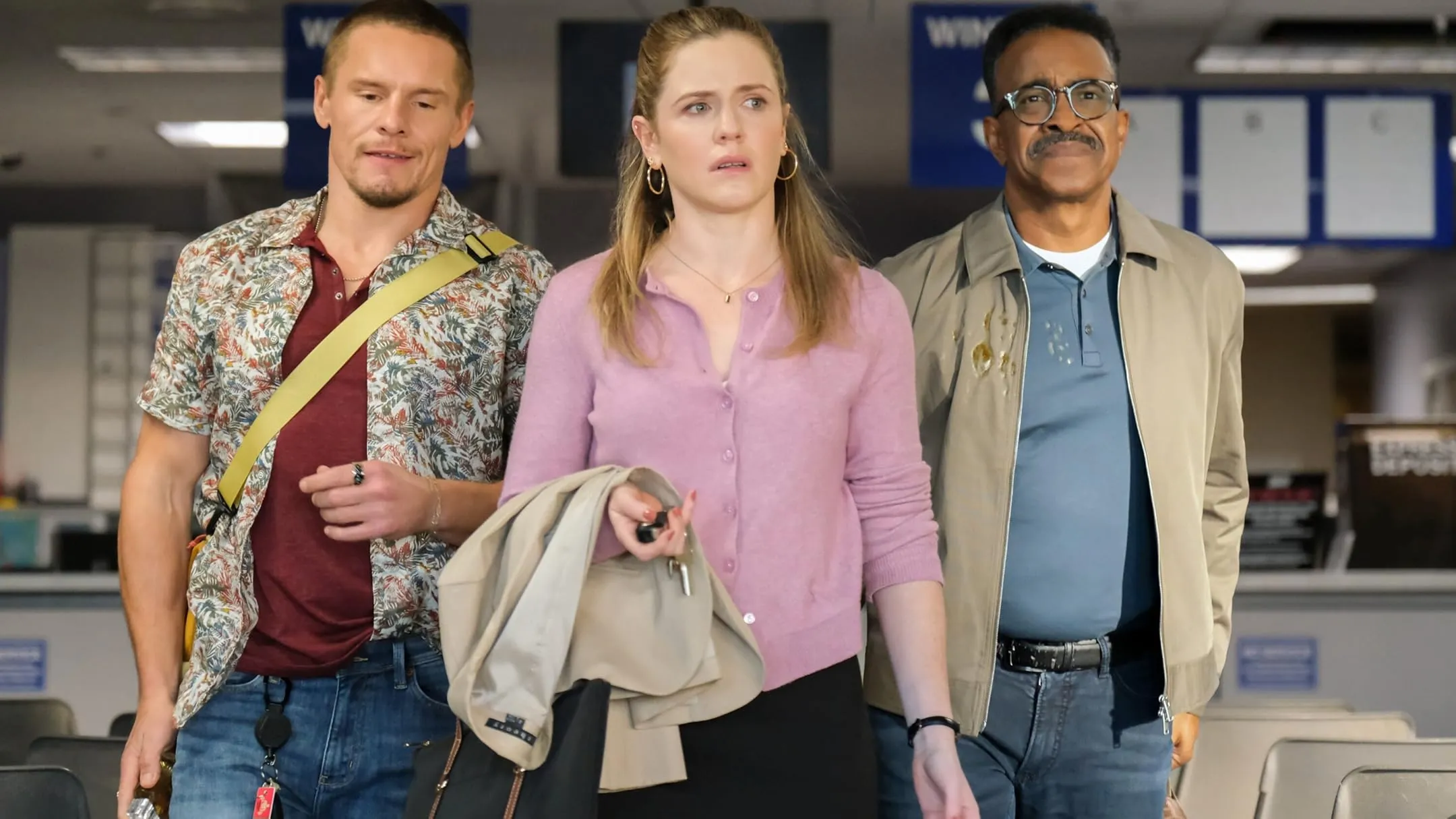
These are not conflicts that arise organically from character, but external, plot-driven impediments designed to delay the unavoidable. They are “wheezy” plot mechanics that generate situational awkwardness rather than genuine romantic tension. The chemistry between Dyer and Tarrant is polite but lacks the spark needed to make the audience invest in their union. Their scenes together are functional, moving the romantic subplot from one point to the next without generating any memorable emotional resonance.
This sense of aimlessness is amplified by a significant structural flaw introduced in the pilot. The episode establishes a compelling, season-long threat: government inspectors are evaluating their branch, along with several others, for potential closure. This ticking clock should infuse every subsequent scene with a sense of consequence and shared purpose.
It should force the characters to work together, raising the stakes of their daily squabbles. Instead, the storyline vanishes completely after the first episode. This decision is telling. It signals a lack of commitment to narrative momentum, reducing the series to a string of disconnected, low-stakes situational plots. The audience learns early on that nothing truly matters in this world, which makes it exceedingly difficult to remain engaged.
An Exercise in Monotony
The comedic style of DMV is resolutely broad, favoring caricature over character and predictable punchlines over witty observation. It is a product of a particular television tradition, one that values formula and reliability. Within this safe framework, its occasional forays into cruder humor, particularly the jokes surrounding Barbara’s naivete, feel jarring and miscalculated, as if attempting a shallow edginess. The prevailing tone is one of creative exhaustion.
There are fleeting gestures toward finding some noble purpose in the work; Barbara delivers a speech about the DMV being a great equalizer, a place of “democratic drudgery” for all. The sentiment is unearned, delivered by a cartoonish figure and immediately contradicted by the show’s own depiction of the place as a miserable hellscape.
The series begins with a premise that is both sturdy and universally relatable, yet it brings almost no new ideas to the workplace comedy. Its capable cast of performers is constrained by thinly written roles and narrative paths that feel overly familiar. The experience of watching the show ultimately mirrors the experience of the errand from which it takes its name. One enters with managed expectations, endures a period of tedious and largely forgettable activity, and leaves feeling faintly drained, with little to show for the time spent.
DMV is an upcoming American single-camera workplace comedy series created by Dana Klein. The show is scheduled to premiere on CBS on October 13, 2025. It follows a crew of lovable misfits who navigate the everyday chaos of a Department of Motor Vehicles office, tackling bureaucracy and bad attitudes with humor and sarcasm.
Full Credits
Director: Trent O’Donnell
Writers: Dana Klein, Matt Kuhn, Ira Ungerleider
Producers and Executive Producers: Dana Klein, Trent O’Donnell, Aaron Kaplan, Wendi Trilling, Robyn Meisinger
Cast: Tim Meadows, Harriet Dyer, Molly Kearney, Alex Tarrant, Tony Cavalero, Gigi Zumbado, Brenda Ngo, Samantha Helt, Gerry Dee, Samuel Israilov, Chance Jones, Mylene Carino
The Review
DMV
DMV takes a universally understood setting and delivers a perfunctory and forgettable sitcom. While a capable cast attempts to breathe life into the proceedings, they are hampered by one-dimensional characters, predictable plotting, and a script that mistakes cliché for comedy. The series forgoes any real insight into bureaucratic life in favor of tired gags and a narrative that lacks stakes or ambition. It is a show that feels as routine and uninspired as the errand it depicts, leaving no lasting impression.
PROS
- A relatable premise grounded in a universal experience.
- Features the steadying presence of seasoned comedic actors like Tim Meadows.
- Contains rare glimmers of clever, setting-specific humor.
CONS
- Heavy reliance on stale clichés and predictable sitcom tropes.
- Characters are thinly written, inconsistent, or based on a single joke.
- The narrative lacks meaningful stakes or a clear direction.
- Weak chemistry within the ensemble cast.
- An unambitious and dated comedic tone.